

Compra 10 libros por 10 € aquí!
Bookbot

Hans Georg Gadamer

    11 de febrero de 1900 – 13 de marzo de 2002
    Hans Georg Gadamer
    Plato's dialectical ethics
    The Enigma of Health
    Philosophical Hermeneutics, 30th Anniversary Edition
    The Relevance of the Beautiful and Other Essays
    The Gadamer Reader: A Bouquet of the Later Writings
    Gadamer in conversation
    • Gadamer in conversation

      • 176 páginas
      • 7 horas de lectura

      This volume presents six lively conversations with Hans-Georg Gadamer (born 1900), one of the twentieth century's master philosophers. Looking back over his life and thought, Gadamer takes up key issues in his philosophy, addresses points of controversy, and replies to his critics, including those who accuse him of having been in complicity with the Nazis. A genial and direct conversationalist, Gadamer is here captured at his best and most accessible. The interviews took place between 1989 and 1996, and all but one appear in English for the first time in this volume. The first three conversations, conducted by Heidelberg philosopher Carsten Dutt, deal with hermeneutics, aesthetics, and practical philosophy and the question of ethics. In a fourth conversation, with University of Heidelberg classics professor Glenn W. Most, Gadamer argues for the vital importance of the Greeks for our contemporary thinking. In the next, the philosopher reaffirms his connection with phenomenology and clarifies his relation to Husserl and Heidegger in a conversation with London philosopher Alfons Grieder. In the final interview, with German Nazi expert Dorte von Westernhagen, Gadamer describes his life
      Gadamer in conversation
    • Exploring the extensive contributions of Hans-Georg Gadamer, this work delves into his insights on hermeneutics, aesthetics, and practical philosophy, alongside critical essays on influential philosophers like Plato, Hegel, and Heidegger. Each essay is prefaced with introductory remarks that highlight its significance within Gadamer's broader intellectual framework and clarify essential concepts, providing readers with a comprehensive understanding of his philosophical legacy.

      The Gadamer Reader: A Bouquet of the Later Writings
    • Contains 13 essays from Kleine Schriften, dealing with hermeneutical reflection, phenomenology, existential philosophy, and philosophical hermeneutics. This book applies hermeneutical analysis to Heidegger and Husserl's phenomenology.

      Philosophical Hermeneutics, 30th Anniversary Edition
    • In this important new book, Hans-Georg Gadamer discusses the transformation in human self-understanding wrought by the scientific worldview, focusing in particular on the unparalleled achievements of modern medicine. He explores the ethical and humanist issues raised by the technological successes of modern clinical practice, and relates them to the classical conception of "praxis" in the philosophical tradition. In a series of lucid and engaging analyses, Gadamer eloquently defends the idea of medicine, not only as a "science of health, but as an "art" of hermeneutic relevance, requiring the exercise of practical judgment and personal interpretation. We should, he argues, recognize the limits of purely technical approach to healing, as well as the importance of a qualitative approach to medical treatment. Written by one of the leading philosophers of the twentieth century, this brilliant meditation on health, illness, and the art of healing will be of interest to general readers as well as students of philosophy and social thought.

      The Enigma of Health
    • Plato's Dialectical Ethics, Gadamer's earliest work, has now been translated into English for the first time. This work, published in 1931 and reprinted in 1967 and 1982, is still important today, both as one of the most extensive and imaginative interpretations of Plato's Philebus and as an introduction to Gadamer's thinking, showing how his influential hermeneutics emerged from his application of his teacher Martin Heidegger's phenomenological method to classical texts and problems.

      Plato's dialectical ethics
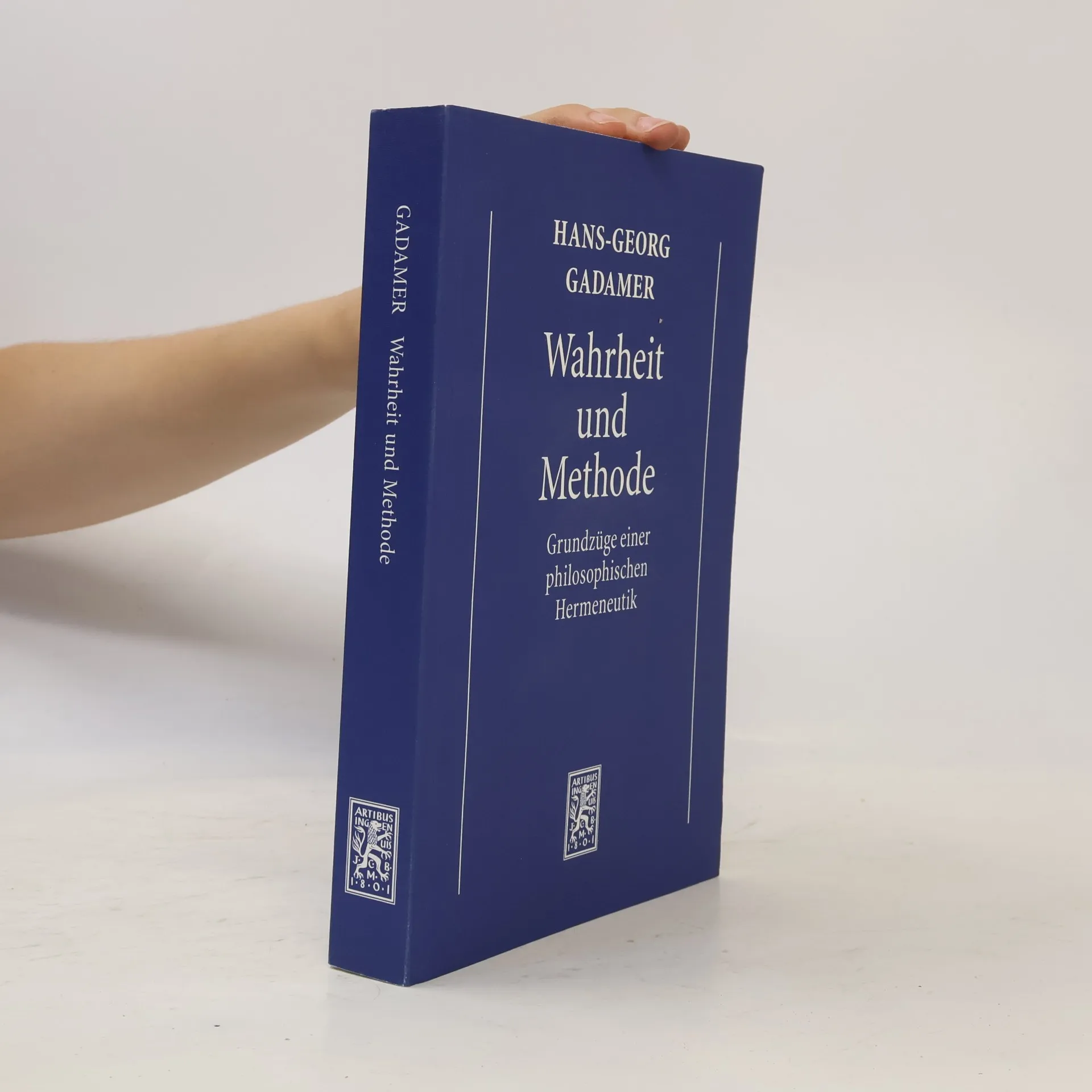
    • Written in the 1960s, TRUTH AND METHOD is Gadamer's magnum opus. Looking behind the self-consciousness of science, he discusses the tense relationship between truth and methodology. In examining the different experiences of truth, he aims to "present the hermeneutic phenomenon in its fullest extent.

      Truth and method
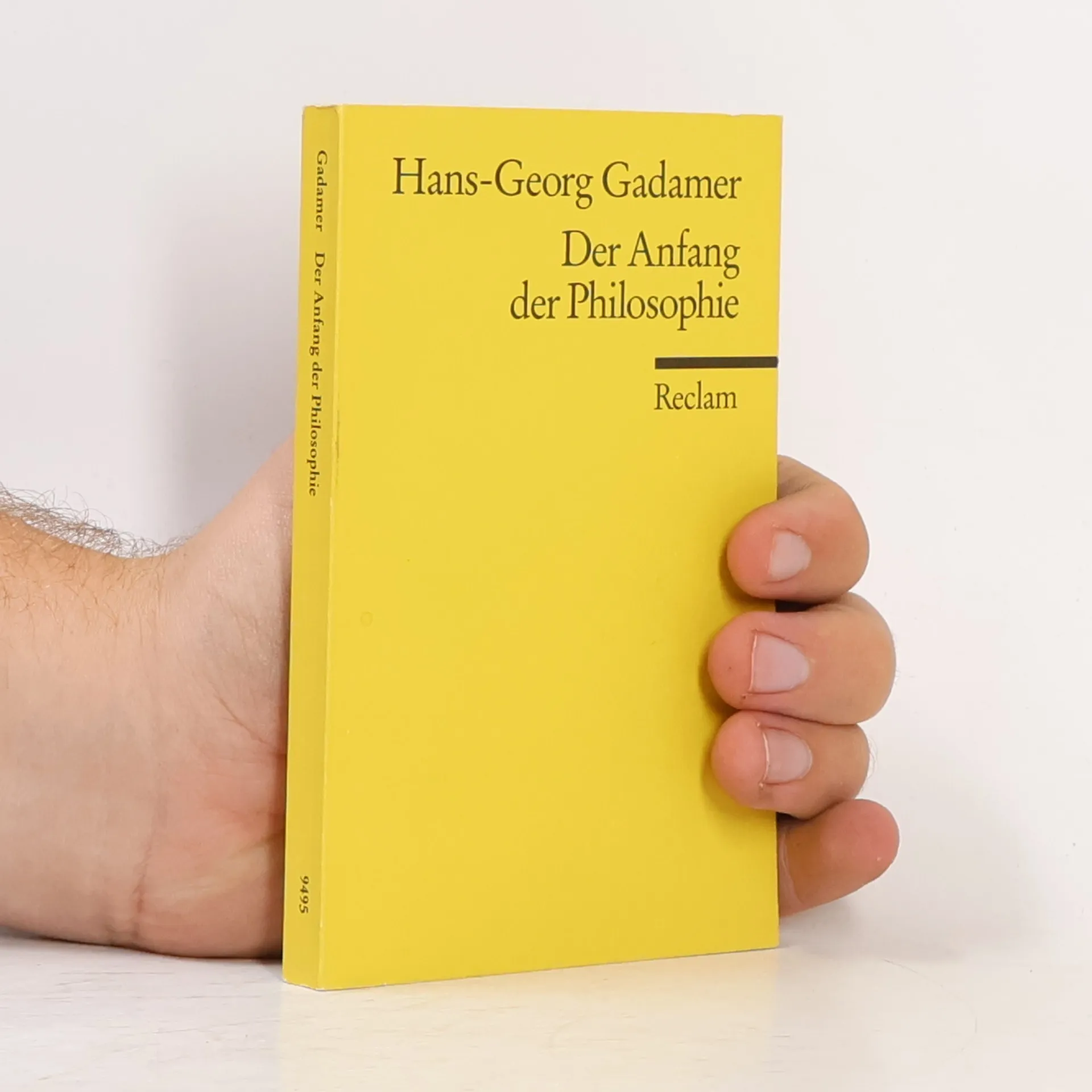
    • The Beginning of Philosophy

      • 117 páginas
      • 5 horas de lectura

      In The Beginning of Philosophy Gadamer explores the layers of interpretation and misinterpretation that have built up over 2500 years of Presocratic scholarship. Using Plato and Aristotle as his starting point his analysis moves effortlessly from Simplicius and Diogenes Laertius to the 19th-century German historicists right through to Hegel, Nietzsche and Heidegger. Gadamer shows us how some of the earliest philosophical concepts such as truth, equality, nature, spirit and being came to be and how our understanding of them today is deeply indebted to Presocratic thinkers. The book is based on a series of lectures delivered by Gadamer in 1967 which were then translated into English and edited by Gadamer for this collection. This is a major philosophical-historical work from one of the 20th century's greatest thinkers.

      The Beginning of Philosophy
    • Gadamer on Celan

      "Who Am I and Who Are You?" and Other Essays

      • 200 páginas
      • 7 horas de lectura

      The collection offers a comprehensive compilation of Gadamer's writings on Celan's poetry, now available in English for the first time. It provides insightful and accessible commentary, making the complexities of Celan's work more approachable for readers.

      Gadamer on Celan
    • The Beginning of Knowledge

      • 144 páginas
      • 6 horas de lectura

      The Beginning of Knowledge brings together almost all of Gadamer's essays on the Presocratics. In each of the essays Gadamer discusses the origins of knowledge in the western philosophical tradition. Beginning with a hermeneutical and philological investigation of the Heraclitus fragments he moves on to a discussion of the Greek Atomists and the Presocratic cosmologists. In the final two essays he elaborates on the profound debt that modern science owes to the Greeks and shows how their works have shaped modern day physics, mathematics and medicine. The philosophers discussed include Plato, Aristotle, Socrates, Anaximander, Heraclitus and Parmenides. This is a major work from one of the 20th century's greatest thinkers.

      The Beginning of Knowledge