

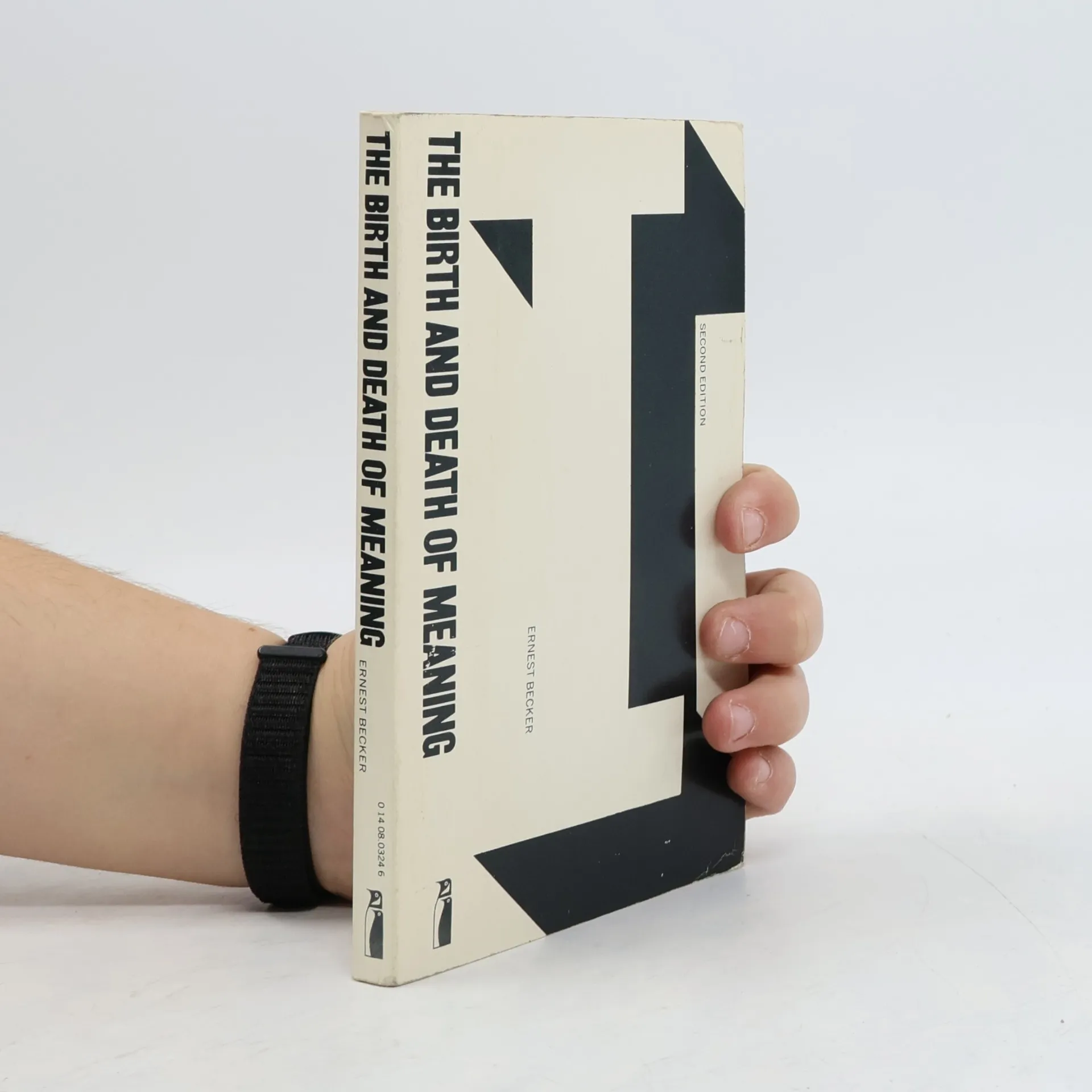


Bookbot

Ernest Becker

    27 de septiembre de 1924 – 6 de marzo de 1974

    Ernest Becker fue un reconocido antropólogo cultural y pensador científico que exploró temas interdisciplinarios. Su obra profundizó en los aspectos psicológicos y filosóficos de la existencia humana, particularmente en cómo los individuos lidian con la conciencia de su propia mortalidad. Becker propuso que nuestras estructuras de carácter e incluso nuestras civilizaciones están en gran medida moldeadas por los mecanismos de negación de la muerte que nos permiten funcionar. Sin embargo, esta necesidad de negar la muerte, argumentó, inevitablemente conduce al mal al alienarnos del autoconocimiento genuino y fomentar el conflicto. Basándose en pensadores como Kierkegaard, Freud y Otto Rank, sus ideas ofrecieron una perspectiva revolucionaria sobre la psique y la sociedad humanas.

    Die Überwindung der Todesfurcht
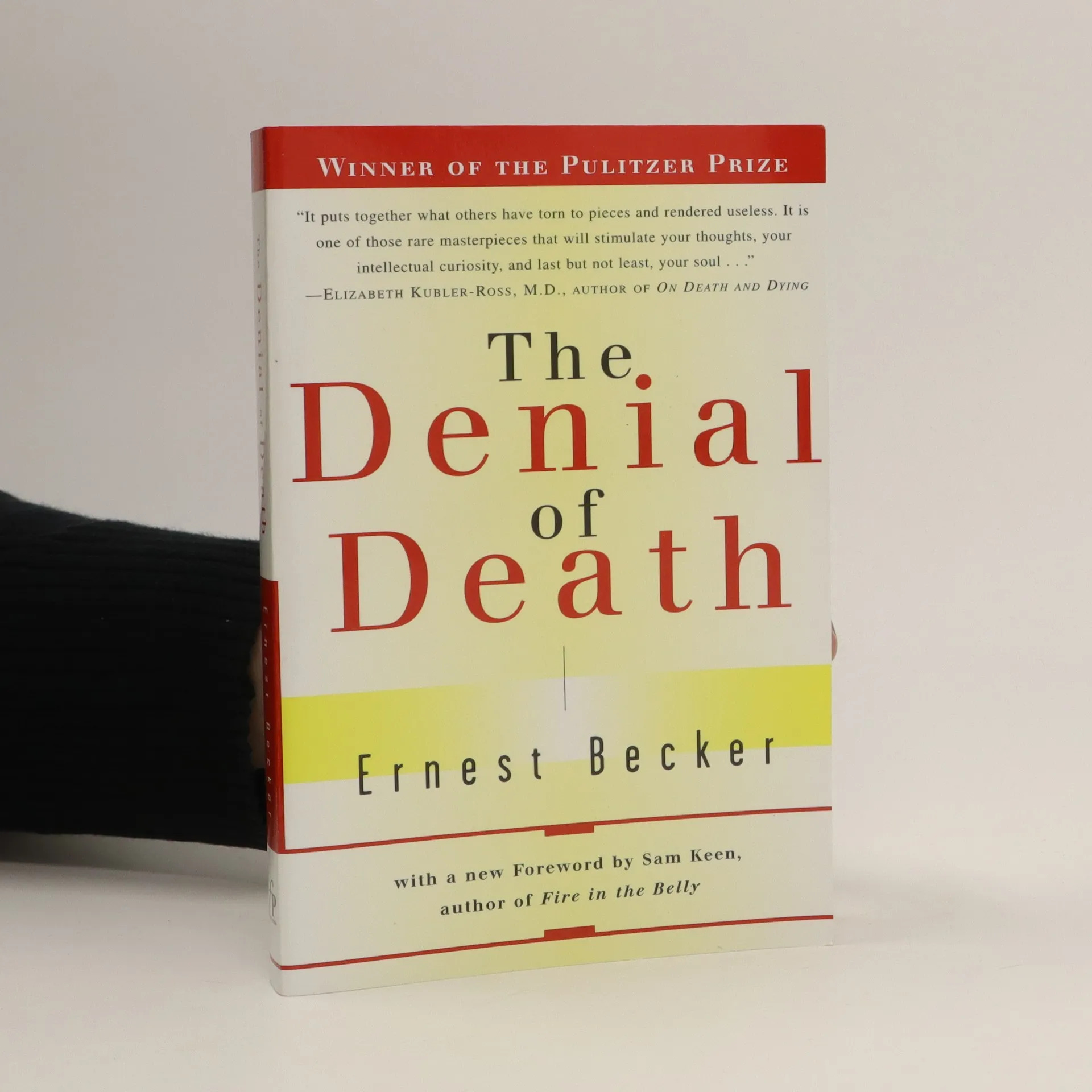
    The denial of death
    The Truth About the Truth
    Escape from Evil
    The Ernest Becker Reader
    • The Ernest Becker Reader

      • 248 páginas
      • 9 horas de lectura

      Ernest Becker (1924-1974) was a keen observer of society and human behavior during America's tumultuous 1960s and 1970s. With a background in social anthropology, he was driven by a deep curiosity about human motivations, persistently asking, "What makes people act the way they do?" Frustrated by the fragmented approaches of contemporary social sciences, Becker sought a comprehensive, empirical understanding of humanity. He developed an interdisciplinary vision where each discipline is rooted in a fundamental truth about the human condition, creating a broad perspective on human motivations that spans biological, psychological, and social sciences, as well as the humanities and various studies. Best known for his later works, including the Pulitzer Prize-winning "The Denial of Death" (1974) and "Escape from Evil" (1975), Becker's influential ideas were built upon a distinguished foundation of earlier writings. His early works, rich in insight, provide context for his later contributions and illuminate the evolution of his thoughts. Despite his life being cut short, Becker’s writings remain in print, engaging new generations of readers. The Ernest Becker Reader compiles much of his early work, placing his later achievements in context and significantly contributing to the enduring interest in his ideas.

      The Ernest Becker Reader2004
      4,5
    • The Truth About the Truth

      De-confusing and Re-constructing the Postmodern World

      • 272 páginas
      • 10 horas de lectura

      Includes essays and excerpts from the works of prominent modern thinkers such as Umberto Eco, Jacques Derrida, and Isaiah Berlin among others.

      The Truth About the Truth1995
      3,9
    • Escape from Evil

      • 188 páginas
      • 7 horas de lectura

      From the Pulitzer Prize-winning author of The Denial of Death, a penetrating and insightful perspective on the source of evil in our world."A profound, nourishing book…absolutely essential to the understanding of our troubled times." —Anais Nin"An urgent essay that bears all the marks of a final philosophical raging against the dying of the light." —Newsweek

      Escape from Evil1985
      4,4
    • Der Autor stellt verschiedene humanwissenschaftliche (psychoanalytische) und theologische Theorien nebeneinander und beleuchtet die Erklärungen zur Todesfurcht. Im Mittelpunkt stehen Theorien von Kirkegaard und Rank.

      Die Überwindung der Todesfurcht1976
      4,0
    • Addresses the issue of mortality discussing how humans universally share a fear of death and examines the theories of leading thinkers on this subject including Freud, Rank, and Kierkegaard

      The denial of death1972
      3,9