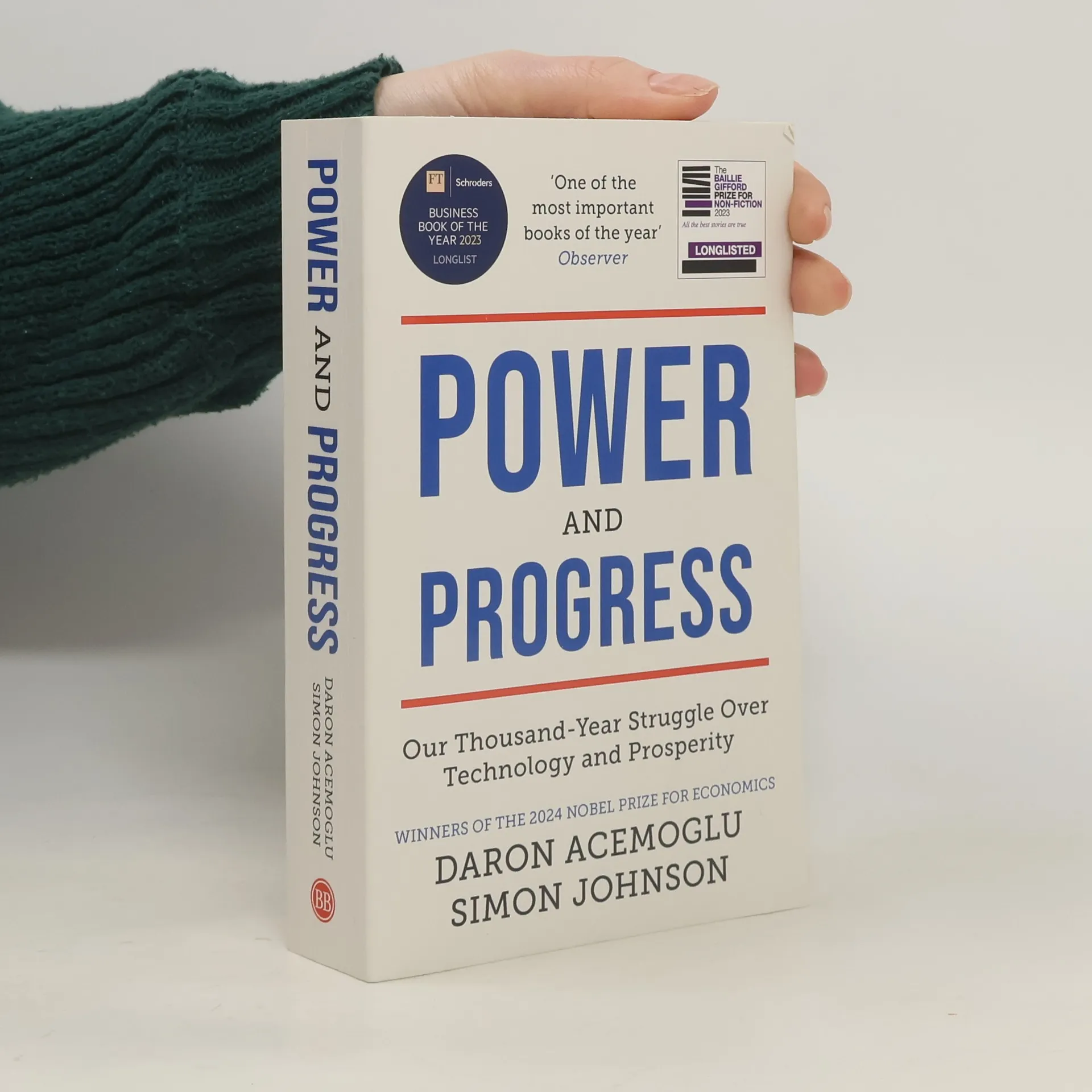
Throughout history, technological change—whether through agricultural advancements, the Industrial Revolution, or modern artificial intelligence—has been seen as a key driver of prosperity in the public interest. However, technology often reflects the desires of the powerful, generating wealth and influence for elites while creating an illusion of progress for the majority. Daron Acemoglu and Simon Johnson challenge contemporary techno-optimism by revealing how technological choices have historically shaped society. They illustrate this through compelling narratives, such as the appropriation of medieval economic surplus by an ecclesiastical elite for grand cathedrals while peasants suffered, and the vast fortunes amassed from digital technologies today amid rising poverty. To unlock the true potential of innovation, it is essential to ensure that technology fosters new jobs and opportunities rather than marginalizing people through automation and political disengagement. The authors argue for harnessing recent digital advancements to develop empowering tools instead of technologies that merely displace workers without enhancing productivity. Their groundbreaking economic theory and vision advocate for a reimagined technological landscape that promotes shared prosperity and counters the interests of a small elite of self-serving tech leaders.
Simon Johnson Orden de los libros
Simon Johnson es un economista británico-estadounidense cuyo trabajo a menudo profundiza en las complejidades del emprendimiento y los sistemas económicos. Es conocido por su perspicaz análisis de cómo las estructuras económicas influyen en la innovación y el crecimiento, basándose a menudo en su amplia experiencia académica y política. Su investigación explora la intrincada relación entre las instituciones económicas y el éxito de las empresas, proporcionando una perspectiva matizada para los lectores interesados en la dinámica de las economías modernas. Las contribuciones de Johnson ofrecen una profunda comprensión de las fuerzas que dan forma al comercio mundial.




- 2023
- 2023
A bold new interpretation of why technology has all too often benefited elites - and how we must reshape the path of innovation to create true shared prosperity.
- 2021
No matter what you teach, there is a 100 Ideas title for you! The 100 Ideas series offers teachers practical, easy-to-implement strategies and activities for the classroom. Each author is an expert in their field and is passionate about sharing best practice with their peers. Each title includes at least ten additional extra-creative Bonus Ideas that won't fail to inspire and engage all learners. _______________ An essential collection of 100 practical, tried-and-tested ideas for teaching computing in secondary schools. This is the perfect resource for computing teachers at all levels, whether specialist or non-specialist, newly qualified or experienced. From rubber duck debugging to teaching algorithm design through magic tricks and even setting up an escape room to raise awareness about cyber security, this is the ultimate toolkit for any teacher looking to diversify their lesson plans or revamp their teaching of computing. The activities are research-informed and ready to use in Key Stages 3 and 4 classrooms of all abilities, requiring minimum preparation and resources. 100 Ideas for Secondary Teachers: Outstanding Computing Lessons will ignite students' passion for coding, programming and computational thinking. Additional online resources for the book can be found at www.bloomsbury.com/100-ideas-secondary-computing
- 2012
By the authors of the national bestseller "13 Bankers," a chilling account of America's unprecedented debt crisis: how it came to pass, why it threatens to topple the nation as a superpower, and why hypocrisy about government deficits prohibits progress.
- 2010
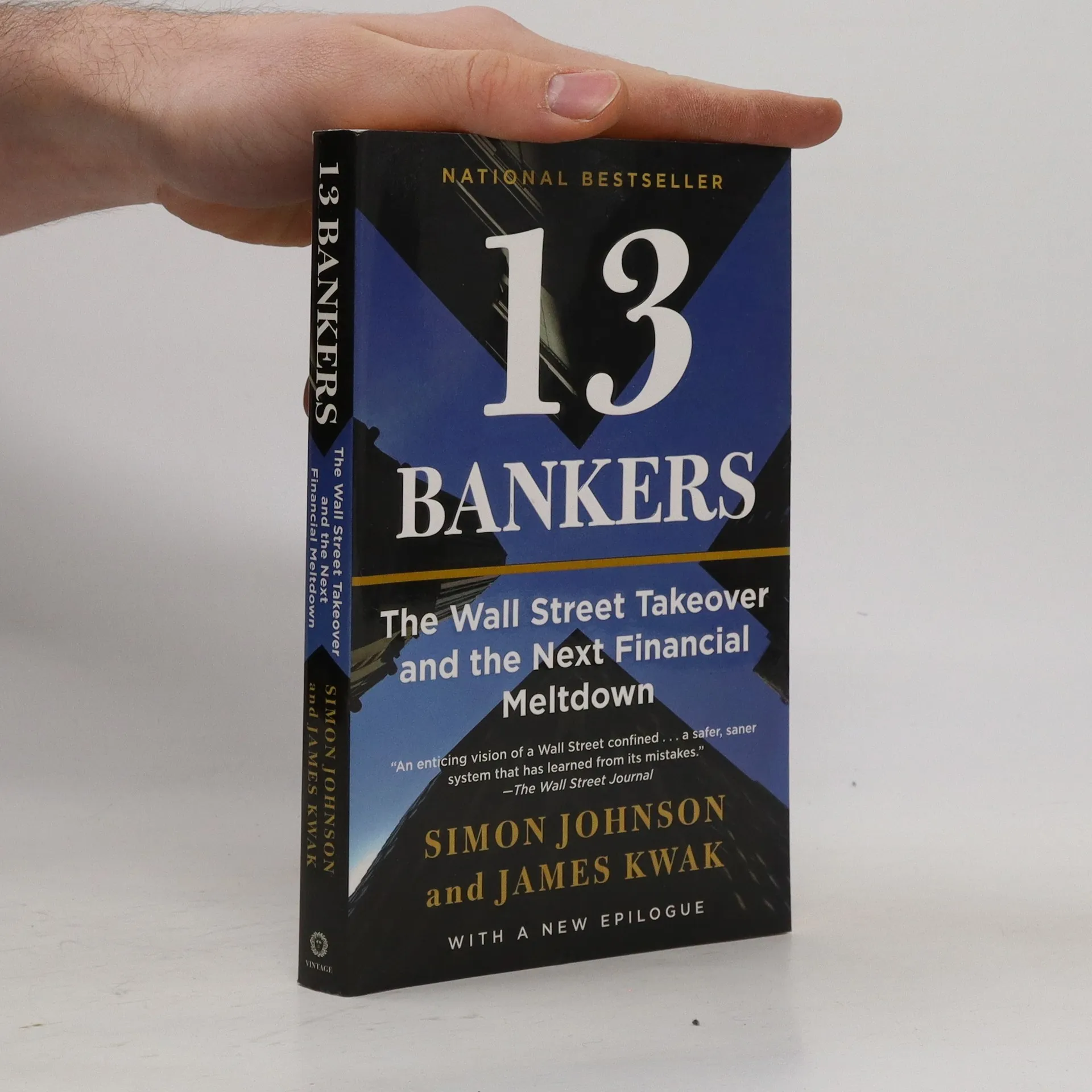
13 Bankers
- 316 páginas
- 12 horas de lectura
In spite of its key role in creating the ruinous financial crisis of 2008, the American banking industry has grown bigger, more profitable, and more resistant to regulation than ever. Anchored by six megabanks whose assets amount to more than 60 percent of the country’s gross domestic product, this oligarchy proved it could first hold the global economy hostage and then use its political muscle to fight off meaningful reform. 13 Bankers brilliantly charts the rise to power of the financial sector and forcefully argues that we must break up the big banks if we want to avoid future financial catastrophes. Updated, with additional analysis of the government’s recent attempt to reform the banking industry, this is a timely and expert account of our troubled political economy.
