Kristen R. Ghodsee es una autora y etnógrafa galardonada, especializada en las experiencias vividas del socialismo y el posocialismo en Europa del Este. Su trabajo profundiza en los matices de la vida cotidiana bajo estos sistemas políticos, descubriendo los complejos impactos en individuos y comunidades. A través de su investigación y escritura, Ghodsee ofrece una mirada penetrante a las formas históricas y contemporáneas de organización social y su influencia en las vidas humanas. Sus ensayos se publican en importantes medios globales, y sus artículos han sido traducidos a más de una docena de idiomas, lo que refleja la amplia resonancia internacional de su labor académica.
Kristen Ghodsee examines the legacies of twentieth-century communism on the
contemporary political landscape twenty-five years after the Berlin Wall fell,
reflecting on the lived experience of postsocialism and how many ordinary men
and women across Eastern Europe suffered from the massive social and economic
upheavals in their lives after 1989.
Using an interdisciplinary approach, this book evaluates the social consequences of the post-1989 transition from state socialism to free market capitalism in Central and Eastern Europe and Central Asia. Blending ethnographic accounts with economic, demographic, and public opinion data, the authors provide insight into the emergence of new, unequal social orders. It examines the contrasting narratives on transition promoted by Western institutions and their critics—one of qualified success and another of epic catastrophe—showing that data can support both perspectives for different countries and regions. While some citizens experienced significant improvements in living standards and life satisfaction, allowing them to catch up with the West after a brief recession, others faced demographic and social collapses due to rising economic precarity, the degradation of social welfare from privatization, and increasing gender, class, and regional disparities tied to neoliberal reforms. Transition recessions in many countries lasted decades, surpassing the severity of the US Great Depression. Some nations have yet to return to pre-1989 levels of economic production or mortality, with significant population losses projected. Thirty years after the fall of the Berlin Wall, this work presents a comprehensive array of data from various social science fields to offer a nuanced perspective on the successes and failures of the transition, ch
Anthropologist Kristen Ghodsee looks at pioneering experiments in communal living to present a rousing argument for rethinking what we mean by home. 'A must-read' THOMAS PIKETTY 'Just wonderful' ANGELA SAINI Throughout history and around the world today, forward-thinking communities have pioneered alternative ways of living together, sharing property and raising children. In Everyday Utopia, anthropologist Kristen Ghodsee explores what we can learn from these experiments - from the ancient Greek commune founded by Pythagoras to the trail-blazing feminists of the French Revolution, from the cohousing movement in contemporary Denmark to the flourishing ecovillages of Colombia and Portugal. She shows why utopian thinking is essential to making a fairer world and that many of the best ways of getting there begin at home. 'This warm, intelligent and lucid book takes us on a deep dive into how people have created better systems for living - systems that actually work' ROBERT WALDINGER, author of The Good Life and director of the Harvard Study of Adult Developmet 'Exhilarating. A powerful reminder that dreaming of better worlds is not just some fantastical project but also a very serious political one' REBECCA TRAISTER, author of Good and Mad 'Splendid. Invigorating writing for a cheerless era' YANIS VAROUFAKIS, author of Technofeudalism 'A vision of what our future could be if we dare to dream' SUSAN NEIMAN, Left Is Not Woke
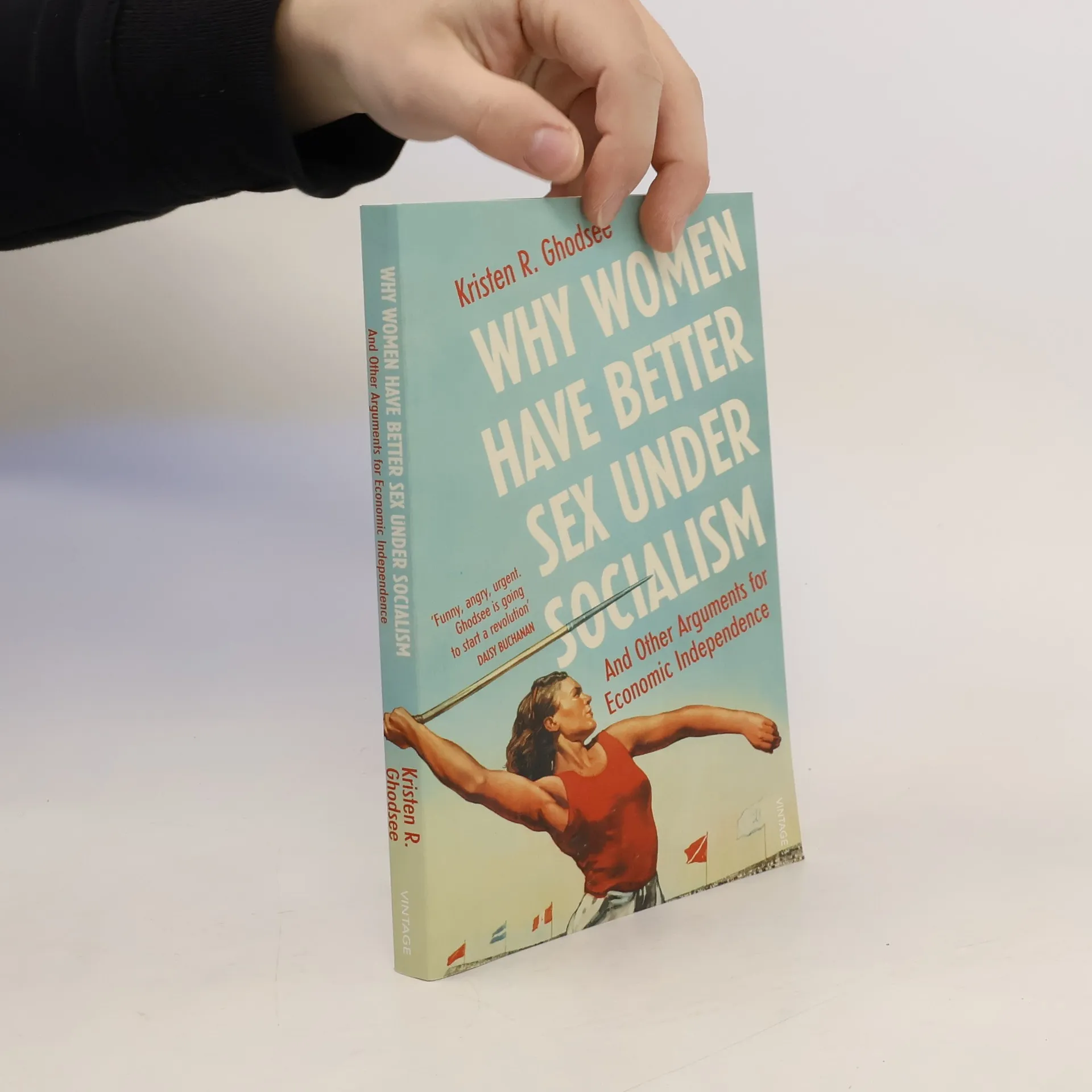
'Funny, angry, urgent. Ghodsee is going to start a revolution' Daisy Buchanan, author of The Sisterhood A witty, fiercely intelligent exploration of why capitalism is rigged against women and what we can do about it. Unregulated capitalism is bad for women. Socialism, if done properly, leads to economic independence, better labour conditions, better work/family balance and, yes, even better sex. If you like the idea of such outcomes, then come along for an exploration of how we can change women's lives for the better.
The lives of five socialist women and their legacy for modern-day feminists Red Valkyries explores the history of socialist feminism in Eastern Europe. Through the revolutionary careers of five prominent socialist women active in the nineteenth and twentieth centuries—the aristocratic Bolshevik Alexandra Kollontai; the radical pedagogue Nadezhda Krupskaya; the polyamorous firebrand Inessa Armand; the deadly sniper Lyudmila Pavlichenko; and the partisan, scientist, and global women’s activist Elena Lagadinova—Kristen Ghodsee tells the story of the personal challenges faced by earlier generations of radicals. None of these women was a perfect leftist. Their lives were filled with inner conflicts, contradictions, and sometimes outrageous privilege. But they managed to fight for their own political projects with perseverance and dedication. Always walking a fine line between the need for class solidarity and the desire to force their sometimes callous male colleagues to take women’s issues seriously, these women pursued novel solutions with many lessons for those who might follow in their footsteps.
Prostredníctvom sviežich biografických esejí sa skúma história socialistického feminizmu vo východnej Európe. Autorka analyzuje revolučné kariéry piatich významných socialistických žien z 19. a 20. storočia: boľševickej aristokratky Alexandry Kollontajovej, radikálnej pedagogičky Nadeždy Krupskej, polyamornej buričky Inessy Armandovej, smrteľnej ostreľovačky Ľudmily Pavličenkovej a partizánky a vedkyne Jeleny Lagadinovej. Kristen Ghodsee sa zaoberá osobnými výzvami, ktorým čelili tieto ženy, pričom žiadna z nich nebola „dokonalou“ ľavičiarkou. Ich životy boli plné vnútorných konfliktov a protirečení, no napriek tomu dokázali posunúť svoje politické projekty vpred. Tieto ženy sa snažili nájsť rovnováhu medzi triednou solidaritou a potrebou presadiť problémy žien, čím hľadali nové riešenia pre dnešné aktivistky. V krátkych kapitolách, bohatých na historické príklady a aktuálne úvahy o postavení žien, Ghodsee približuje myšlienky socialistického feminizmu a inšpiruje súčasné emancipačné hnutia na celom svete.
»Utopia is back!« Thomas Piketty Ob Care-Arbeit, Erziehung oder Bildung: Viele Bereiche unseres Alltags sind ungerecht organisiert – zumeist tragen Frauen die Hauptlast. Sie sollen sich um die Kinder kümmern, den Haushalt besorgen, die kranke Verwandtschaft pflegen und ihre ökonomische Unabhängigkeit doch gefälligst für ein Leben in der Kleinfamilie aufgeben. Im Laufe der Geschichte haben Philosophen, Aktivistinnen und Pioniere nach alternativen Lebensformen gesucht: von den rein weiblichen »Beginenhöfen« im mittelalterlichen Belgien über die matriarchalischen Ökodörfer im heutigen Kolumbien; von der Kommune des Pythagoras bis hin zu Produktions- und Wohngenossenschaften frühsozialistischer Utopisten. Kristen Ghodsee hat zahlreiche inspirierende Beispiele zu einer radikal hoffnungsvollen Vision versammelt. Einige dieser Experimente waren ein kurzes Leuchtfeuer, andere sind der lebende Beweis dafür, dass eine andere Welt möglich ist. Utopien für den Alltag ist auch ein praktischer Leitfaden für alle, die auf der Suche nach Ideen sind, wie wir gleichberechtigter und glücklicher leben können.