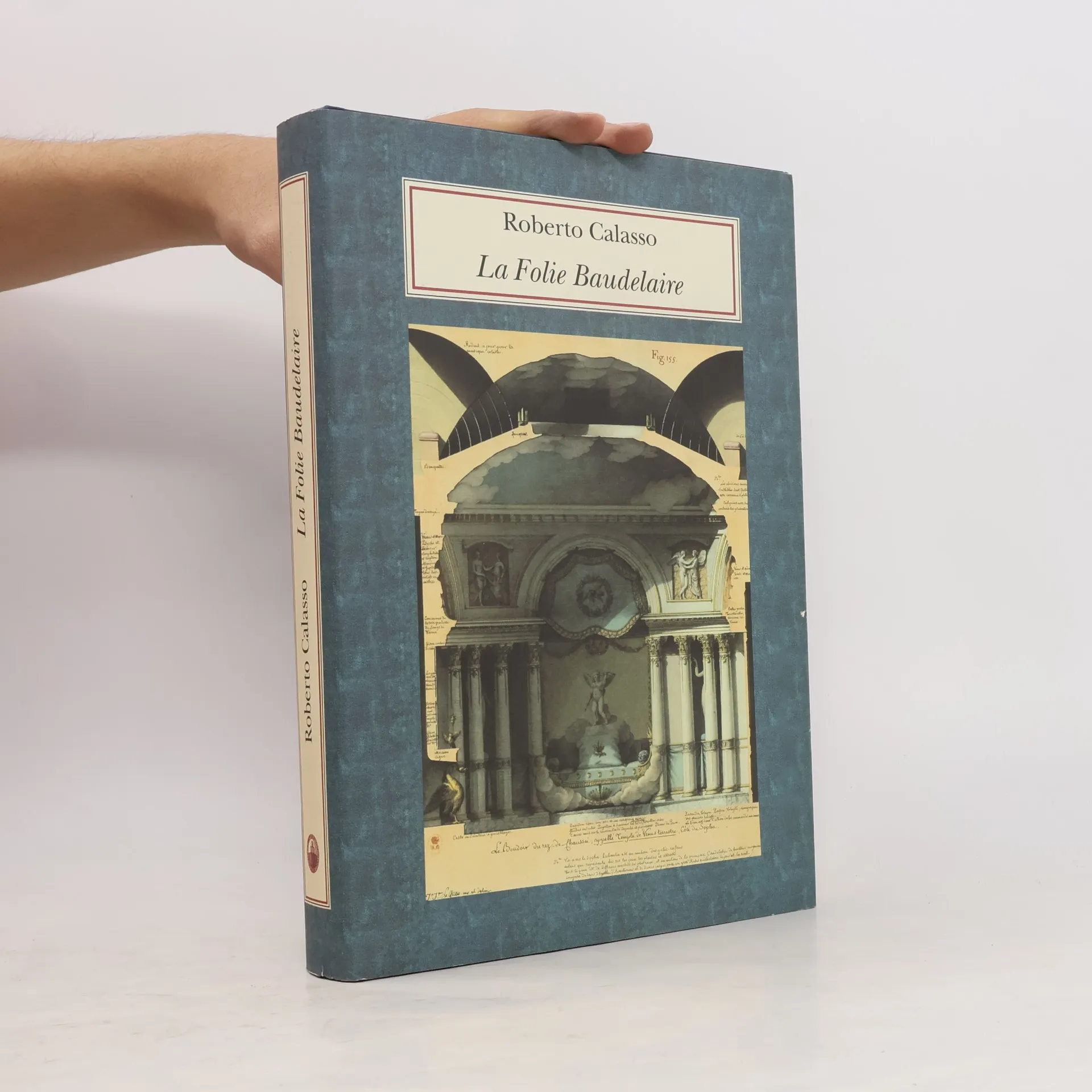
'When hunting began, it was not a man who chased an animal. It was a being that chased another being. No one could say with certainty who each of them were.' Connecting Greek and Egyptian myth, the stories of poets, shamans and gods, Roberto Calasso takes us on a spellbinding voyage that traces the beginnings of our detachment from the animal world; from the landmark evolutionary moment in which humans became the hunter rather than the prey. Roaming through time and across cultures - from the Palaeolithic era to Turing's Machine - The Celestial Hunter delves into the crucible of all our stories- the source of human grief, guilt, resilience and redemption with which we have wrestled throughout history.
Roberto Calasso Libros
30 de mayo de 1941 – 28 de julio de 2021
Roberto Calasso fue un editor y escritor italiano cuyas obras se sumergieron en las profundidades de la cultura y la mitología europea. Su escritura, a menudo inspirada en cuentos clásicos y figuras literarias, explora las conexiones entre el mundo antiguo y el moderno. Calasso entrelaza magistralmente temas complejos con un estilo ensayístico único que invita a los lectores a reflexionar sobre la naturaleza de la modernidad y el legado de la civilización. Su influencia en el panorama literario e intelectual es innegable, lo que lo convierte en una figura clave de la escritura de ensayos contemporánea.



K.
- 336 páginas
- 12 horas de lectura
What are Kafka's stories about? Are they dreams? Allegories? Symbols? Things that happen every day? But where and when? Countless answers have been offered, but the question still arouses feelings of acute uncertainty. Many solutions have been proposed, but the essential mystery remains intact. In this remarkable book, Roberto Calasso sets out not to dispel the mystery but to let it be illuminated by its own light. To that end, with his unique vision, imagination, and intellectual acumen, Calasso attempts to enter the flow, the tortuous movement, the physiology of the stories to discover what they are meant to signify and to delve into the most basic question along the way- Who is K.'The culmination of the author's lifelong fascination with Kafka, K. is a book of significant literary importance, the fourth part in a work in progress of which the previous volumes are THE RUIN OF KASCH, THE MARRIAGE OF CADMUS AND HARMONY, and KA.
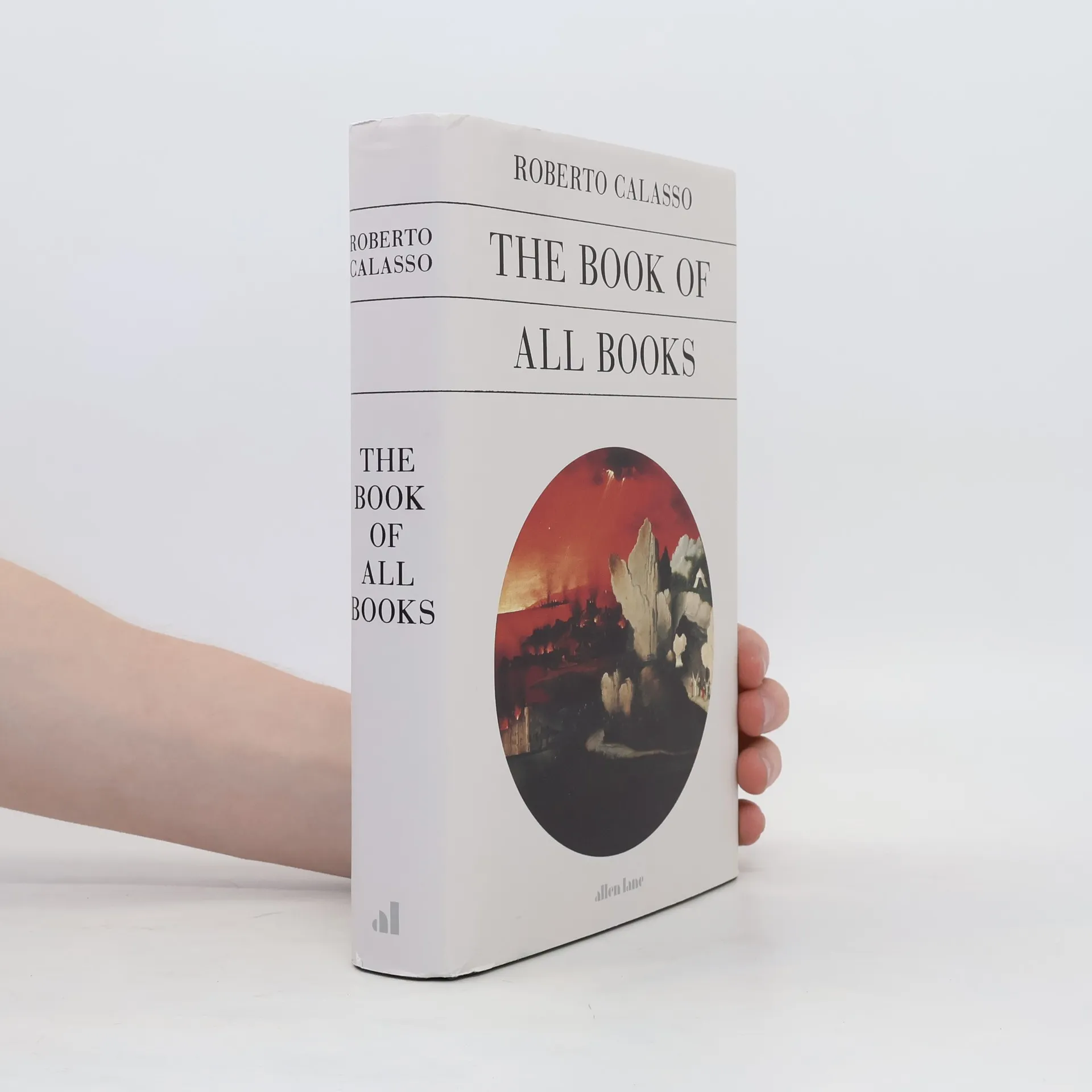
A splendid reimagining of key stories from the Bible, by the author of The Marriage of Cadmus and Harmony. A man named Saul is sent to search for some lost donkeys and on the way is named king of his people. The queen of a remote African realm travels for three years with her multitudinous retinue to meet the king of Jerusalem and pose him a few riddles. A man named Abraham hears a divine voice speaking words that reverberate throughout the Bible: 'Go away from your land, from your kindred and from the house of your father toward the land that I will show you'. In The Book of All Books, Roberto Calasso weaves together stories of promise and separation from one of the founding texts of Western civilisation. These tales of grace and guilt, of the chosen and the damned, cast many Biblical figures and indeed the whole book in a light as astonishing as it is disquieting. The Book of All Books is part of a larger work which began with The Ruin of Kasch (1983) and includes The Marriage of Cadmus and Harmony, Ka, and The Celestial Hunter.
Tiepolo Pink
- 304 páginas
- 11 horas de lectura
"Throughout his masterpiece, In Search of Lost Time, Proust repeatedly refers to colours as Tiepolo Pink or Tiepolo Red. Who exactly was the artist that he so memorable transformed into colour? The eighteenth-century Venetian painter Giambattista Tiepolo spent his life executing commissions in churches, palaces and villas, creating frescoes that are among the glories of Western art. The life of an epoch swirled around him - but though his contemporaries admired him, they failed to understand him. Few have attempted to tackle Tiepolo's series of bizarre and haunting etchings, but Roberto Calasso rises to the challenge, interpreting them as chapters in a dark narrative that contains the secret of Tiepolo's art. Blooming ephebes, Oriental sages, owls, snakes- we will find them all within the pages of this book, along with Venus, Time, Moses, angels, Cleopatra and Beatrice of Burgundy - a gypsyish company always on the go. Calasso makes clear that Tiepolo was more than a dazzling intermezzo in the history of painting. Rather, he represented a particular way of meeting the challenge of form- endowed with a seemingly effortless style, Tiepolo was the last incarnation of that peculiar Italian virtue sprezzatura, the art of not seeming artful"--Publisher's description.
The Tablet of Destinies
- 128 páginas
- 5 horas de lectura
A beguiling new reimagining of one of the most ancient and mysterious origin myths of human civilization 'The Flood didn't come suddenly as a big surprise. It came at the end of a long, tormented story. Men just went on multiplying and the noise they made was ever more irksome . . . I remember days of desperation.' A long time ago, the gods grew tired of humans and decided to send a flood to destroy them. But Ea, the god of fresh underground water, didn't agree. He advised one of his devotees, Utnapishtim, to build a quadrangular boat to house humans and animals, and saved these living creatures from the Flood. Rather than punish Utnapishtim for his disobedience, Enlil, King of the gods, granted the mortal eternal life and banished him to the island of Dilmun. Thousands of years later, when Sinbad the Sailor is shipwrecked and arrives on that very same island, the two begin a conversation about courage, loss, salvation and sacrifice. Following Calasso's masterful retelling of ancient Greek myths in The Marriage of Cadmus and Harmony and Indic myths in Ka, this richly imaginative work delves into the crucible of our collective consciousness to reimagine the origin stories of one of the earliest human civilizations.
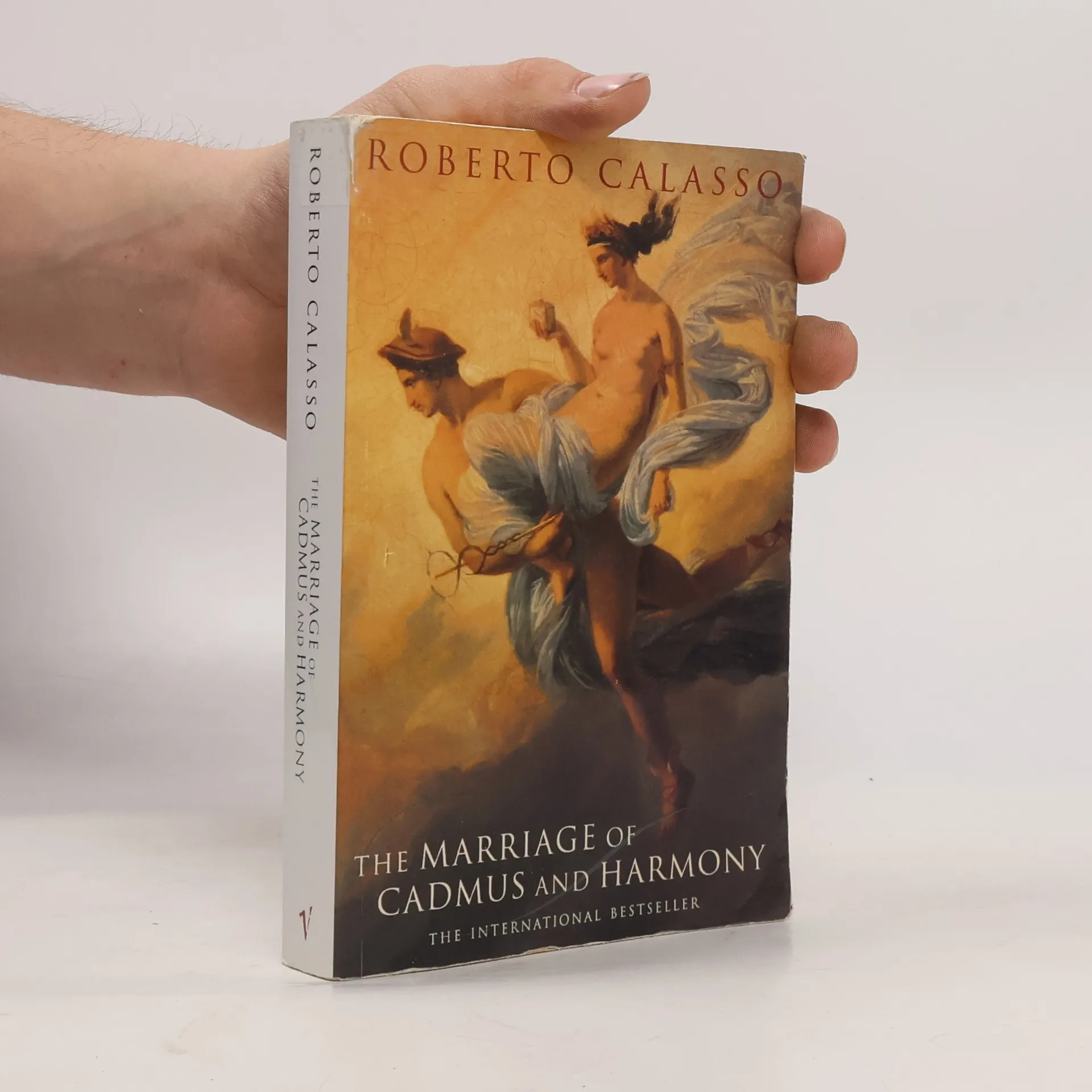
The Marriage Of Cadmus And Harmony
- 416 páginas
- 15 horas de lectura
THE MARRIAGE OF CADMUS AND HARMONY is a book without any modern parallel. Forming an active link in a chain that reaches back through Ovid's METAMORPHOSES directly to Homer, Roberto Calasso's re-exploration of the fantastic fables and mysteries we may only think we know explodes the entire world of Greek mythology, pieces it back together, and presents it to us in a new, and astonishing, and utterly contemporary way.The Marriage of Cadmus and Harmony is a masterful retelling of the ancient myths and fables we may only think we know. From the tale of Europa and the bull to the fall of Troy, Roberto Calasso weaves his way through the entire world of Greek mythology with a captivating sense of curiosity and intrigue that casts these classical stories in a whole new light for a modern reader.
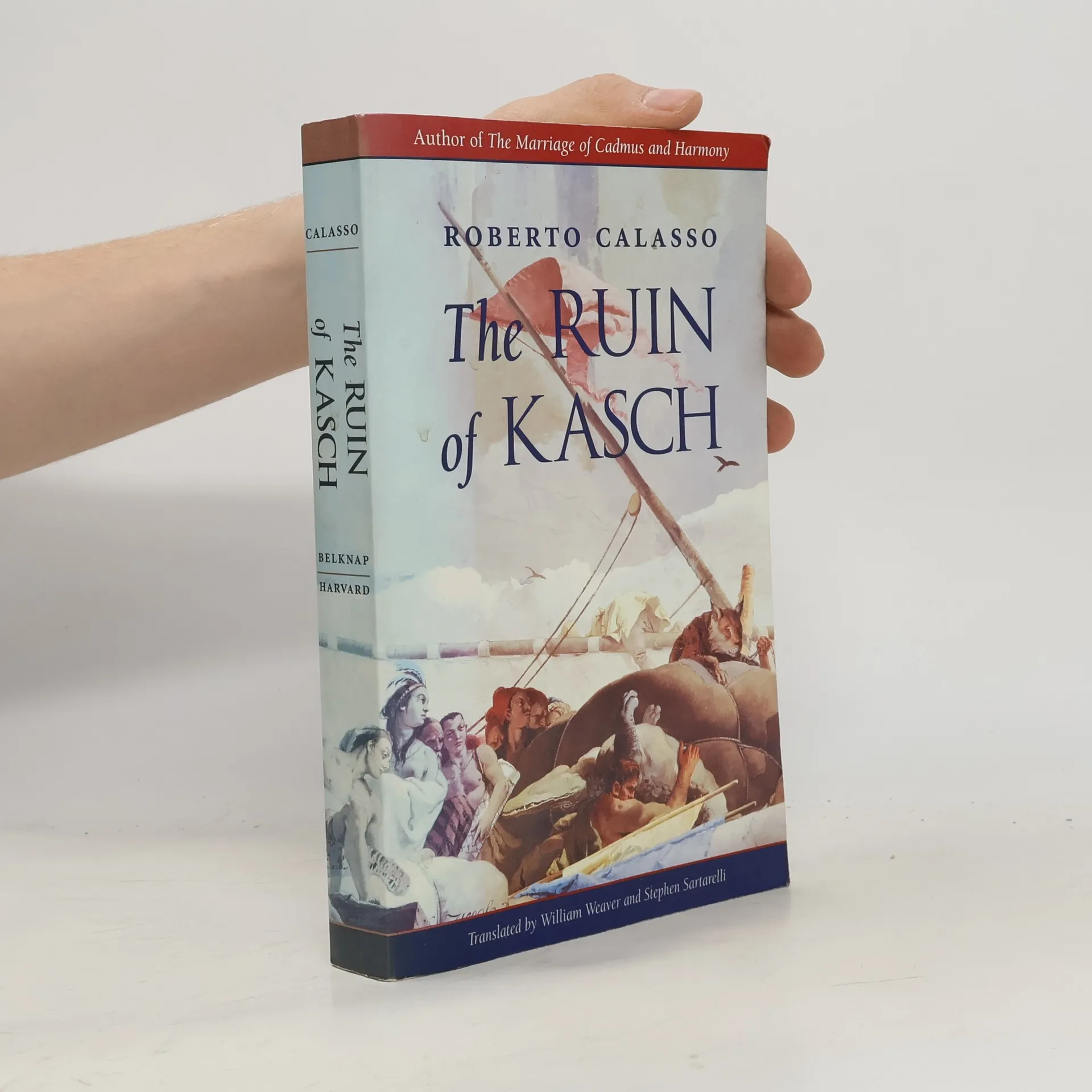
The Ruin of Kasch
- 400 páginas
- 14 horas de lectura
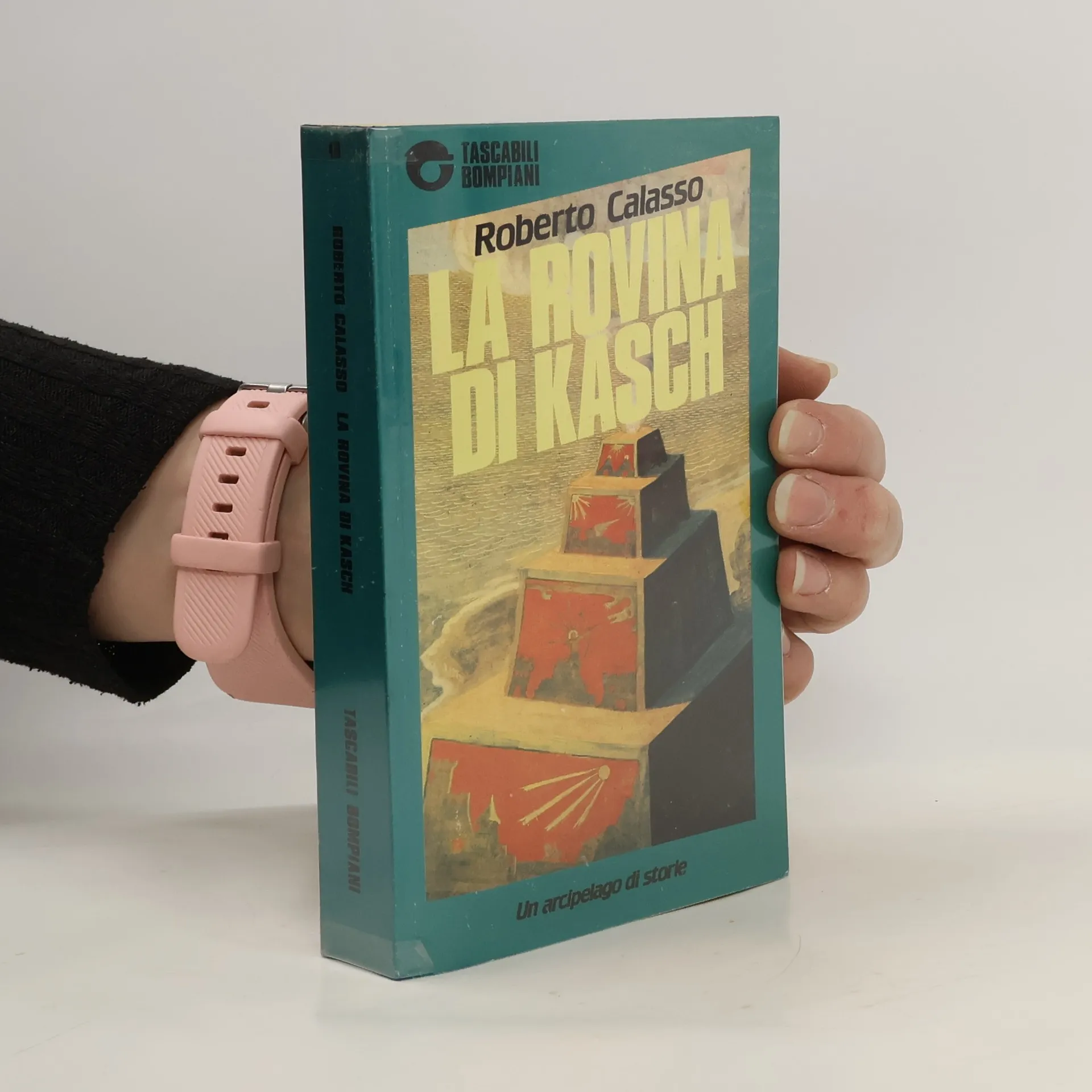
In this brilliant work, Roberto Calasso cracks the code of what Baudelaire named the Modern--the increasingly murderous period from the French Revolution to the end of World War II. From Talleyrand's France and the legendary African city of Kasch, to Lenin's Russia and the killing fields of Cambodia, Calasso leads us along an enticing maze of mythology, literature, art, and science to the pulsing heart of civilization, where he deciphers the deepest secrets of history.
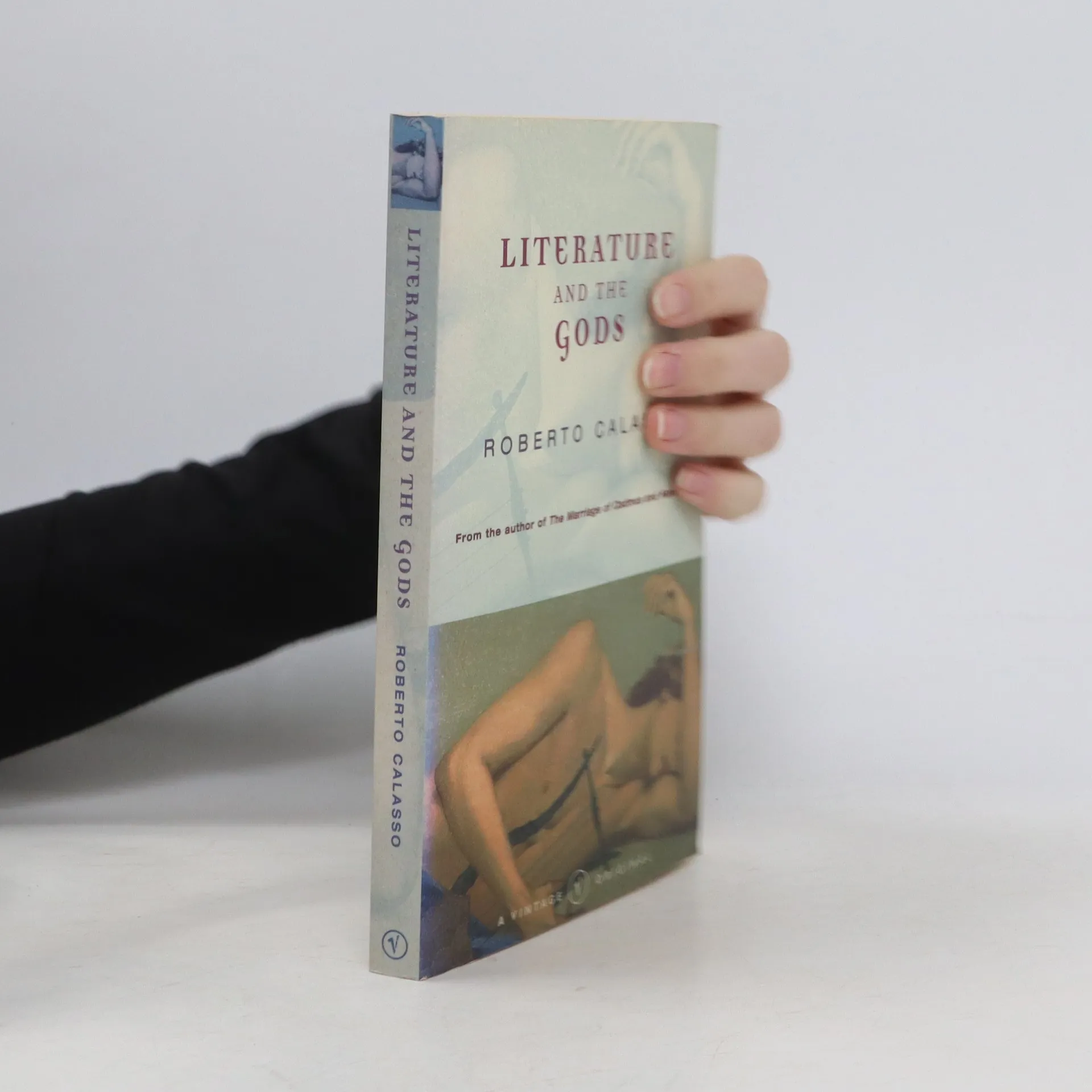
Literature and the Gods
- 224 páginas
- 8 horas de lectura
This title traces the return of pagan divinities to Western literature from their first reappearance at the beginning of the modern era to their place in the literature of our own time. It seeks to deepen our understanding of our literary tradition.
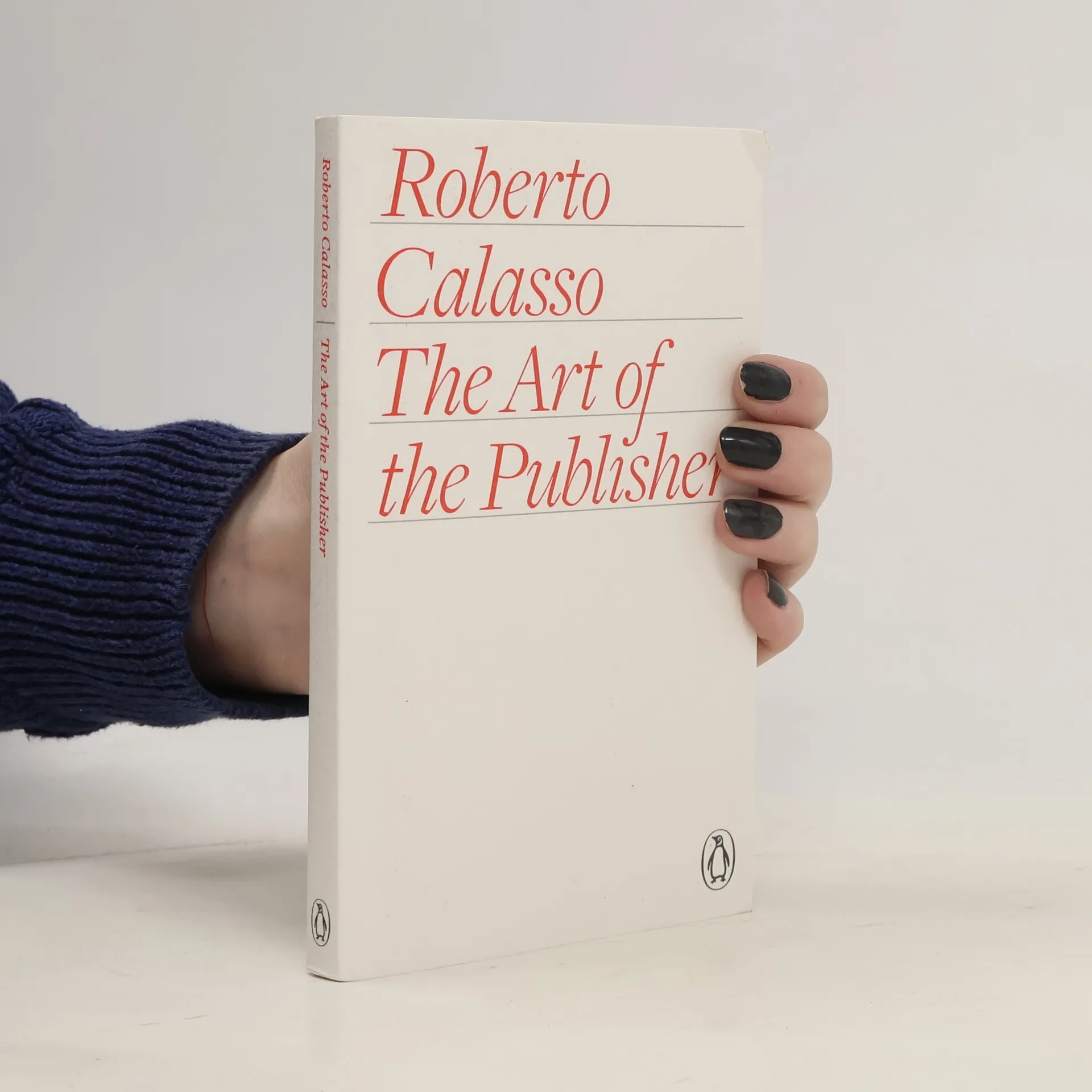
The Art of the Publisher
- 160 páginas
- 6 horas de lectura
'All the books published by a certain publisher could be seen as links in a single chain' In this fascinating memoir and manifesto the author and publisher Roberto Calasso meditates on the art of book publishing. With his signature erudition and polemical flair, Calasso transcends Adelphi to look at the publishing industry as a whole, from the essential importance of graphics, jackets and cover flaps to the consequences of universal digitization. And he outlines what he describes as the 'most hazardous and ambitious' profile of what a publishing house can be: a book comprising many books, akin to that of other twentieth-century publishers, from Giulio Einaudi to Roger Straus, of whom the book offers brief portraits.
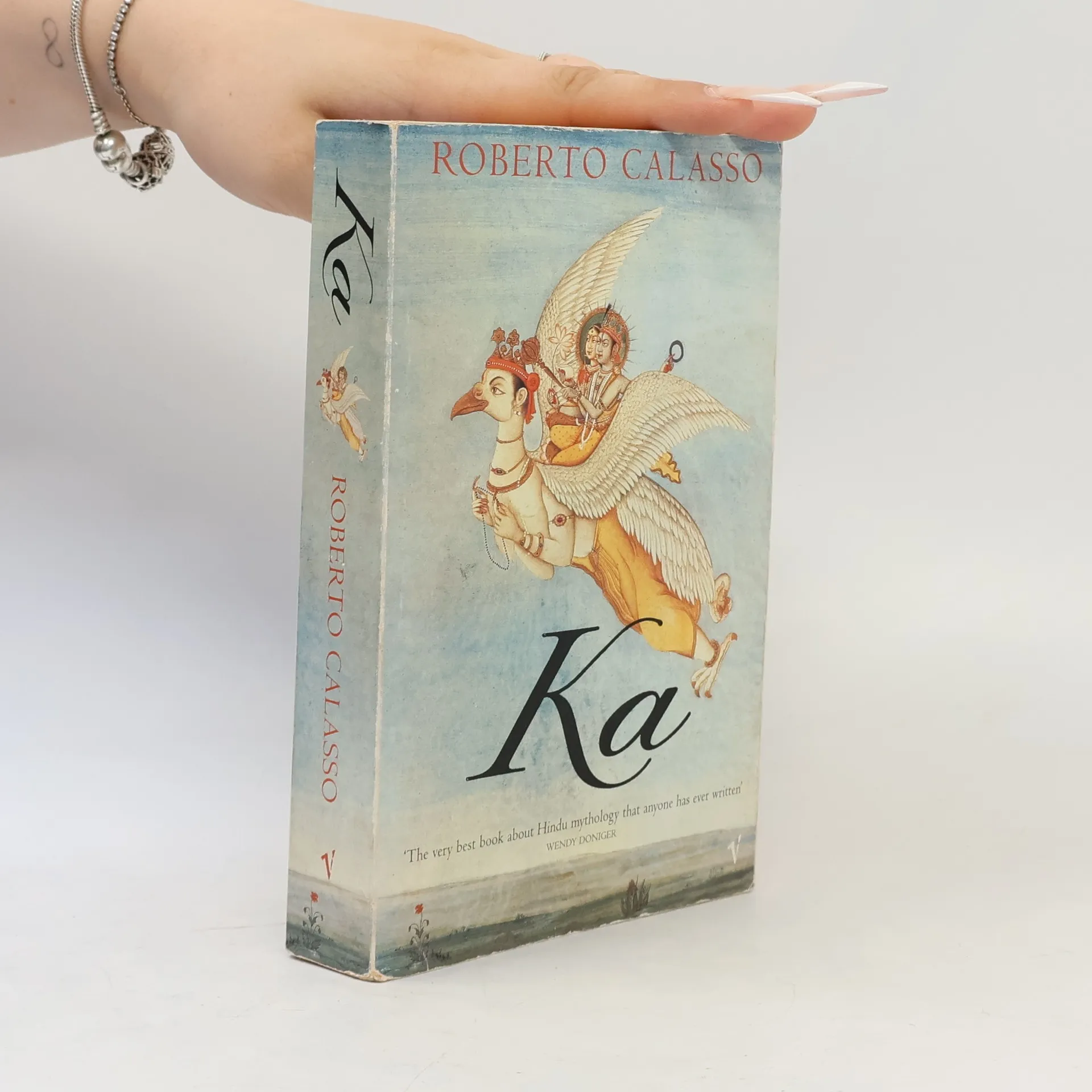
Ka
- 464 páginas
- 17 horas de lectura
The first impact of this text about the Indianness of India is one of strangeness, bewilderment and disorientation. However, slowly the strange becomes familiar, and as Ka folds and enfolds the world of Deva and the Seven Seers, of Siva, and through to the advent of Budhha, all becomes clear.
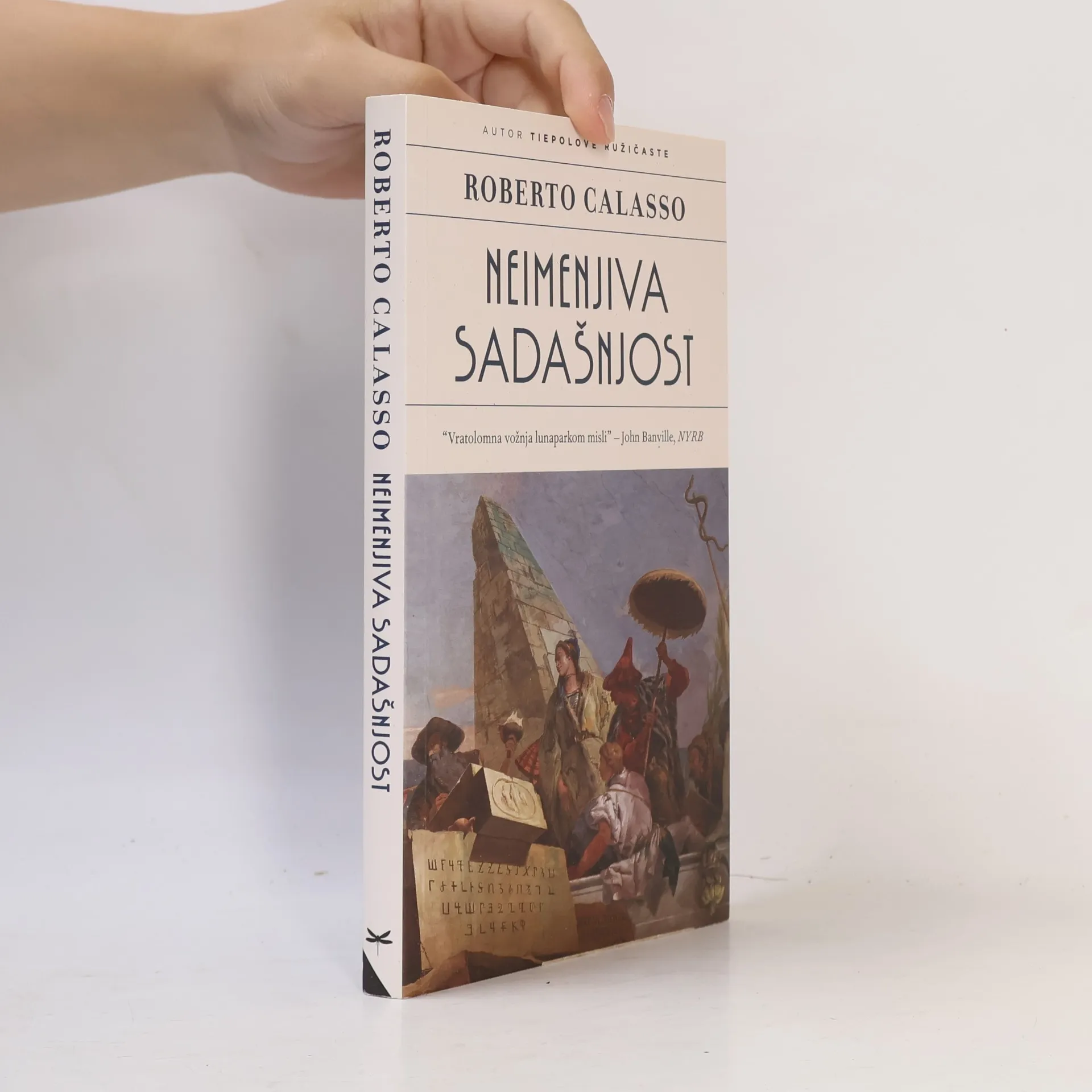
Neimenjiva sadašnjost
- 192 páginas
- 7 horas de lectura
Piccola Biblioteca - 767: Bobi
- 97 páginas
- 4 horas de lectura
Di Roberto Bazlen, universalmente noto come Bobi, non poco è stato scritto, ma il più rimane da dire e capire. Bazlen attraversò la prima parte del Novecento come un profilo di luce imprendibile. Nell’ultima fase della sua vita, fu l’ideatore di Adelphi, su cui riversò la sua sapienza, che non era solo quella – stupefacente – sui libri, ma investiva il tutto. L’idea e la fisionomia della casa editrice risalgono a lui. Quando Bazlen mi parlò per la prima volta di qualcosa che sarebbe stata Adelphi e non aveva ancora un nome mi disse: «Faremo solo i libri che ci piacciono molto».
Der unreine Tor
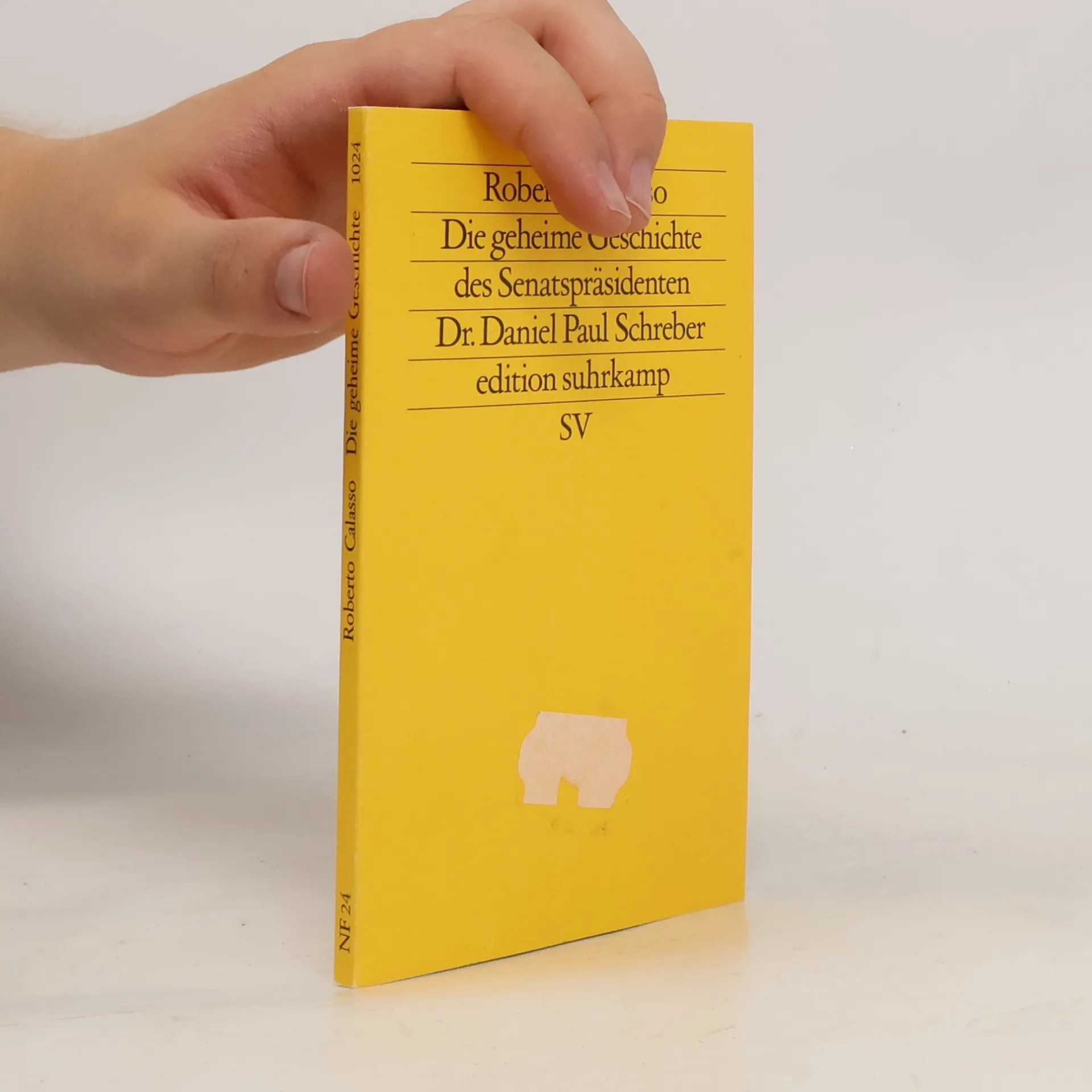
Die geheime Geschichte des Senatspräsidenten Dr. Daniel Paul Schreber
Roberto Calasso transponiert Schrebers berühmte »Denkwürdigkeiten eines Nervenkranken« (1903), deren Wahnsystem über alle Erklärungsversuche seit Freud hinweg seine Faszination behalten hat, in einen Roman, in dem Mythos und Ironie untrennbar verschmelzen – um Schrebers geheime Geschichte ans Licht zu bringen.
Come ordinare una biblioteca
- 127 páginas
- 5 horas de lectura
Chi prova a dare un ordine ai propri libri deve al tempo stesso riconoscere e modificare una buona parte del suo paesaggio mentale. Impresa delicata, piena di sorprese e di scoperte, priva di soluzione. Molti l’hanno sperimentata, dal dotto seicentesco Gabriel Naudé ad Aby Warburg. Qui se ne raccontano vari episodi, mescolati a frammenti di una autobiografia involontaria. A cui fanno seguito un profilo del breve momento in cui certe riviste, fra 1920 e 1940, operavano come impollinatrici della letteratura e una cronaca dell’emblematica nascita della recensione, quando Madame de Sablé si trovò nella improba situazione di dar conto pubblicamente delle Massime del suo caro e suscettibile amico La Rochefoucauld. Finché il tema del dare ordine riappare alla fine, questa volta applicato alle librerie di oggi, per le quali è una questione vitale, che si pone ogni giorno.
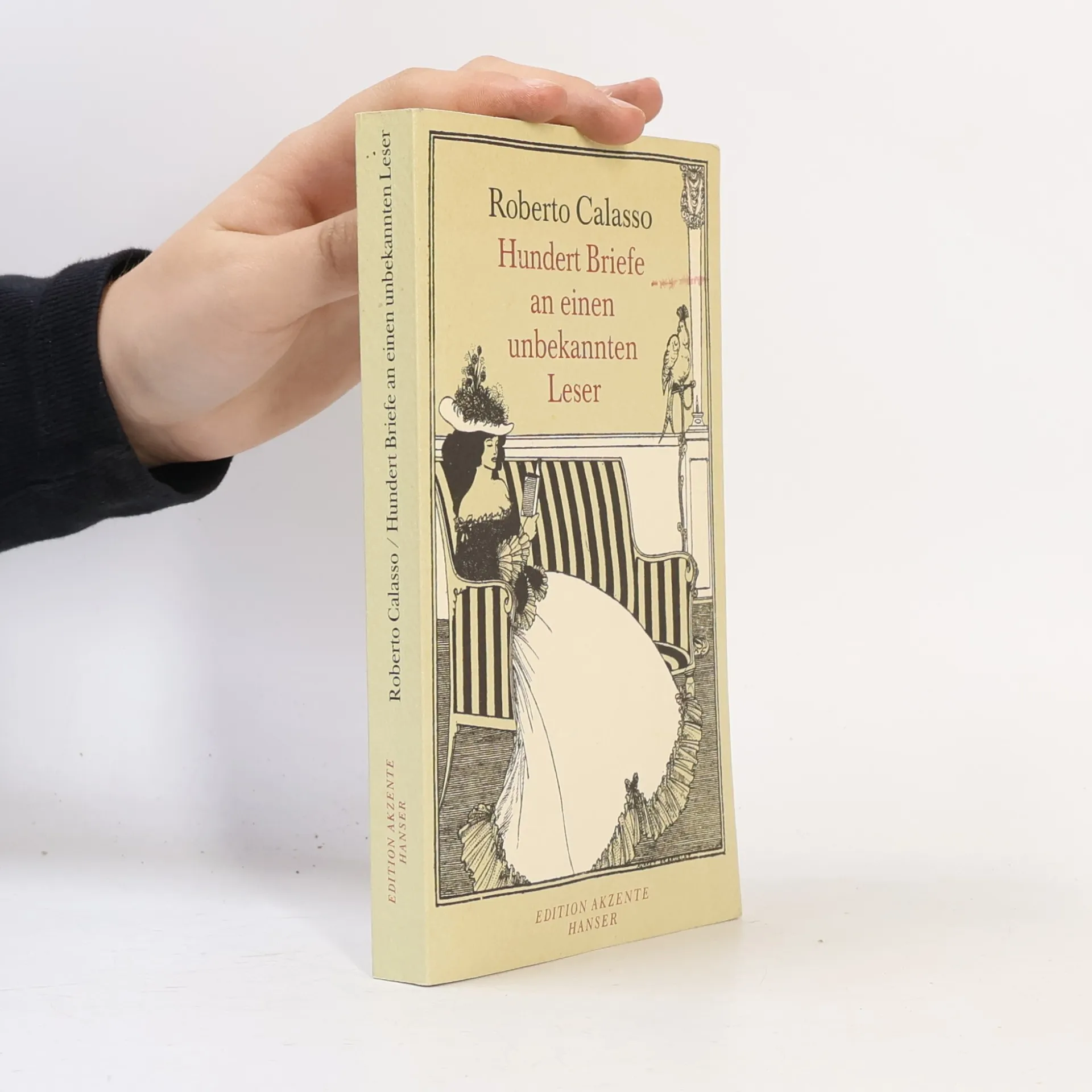
Hundert Briefe an einen unbekannten Leser
- 206 páginas
- 8 horas de lectura
Mit hundert anregenden, scharfsinnigen Klappentexten macht der Schriftsteller und Verleger Roberto Calasso den »unbekannten Leser« auf hundert Bücher seiner Wahl aufmerksam: Romane und philosophische Werke, Dramen und Gedichte.
La rovina di Kasch
- 496 páginas
- 18 horas de lectura
„Das Buch aller Bücher“ ist der zehnte Teil von Calassos monumentalem Werk, das sich mit der Bibel, insbesondere dem Alten Testament, beschäftigt. Der Autor bietet eine nüchterne Nacherzählung biblischer Geschichten und thematisiert das Opfer, während er die Rolle der Götter in der Kulturgeschichte des Nahen Ostens würdigt.
Il cacciatore celeste
- 507 páginas
- 18 horas de lectura
Ci fu un'epoca in cui, se si incontravano altri esseri, non si sapeva con certezza se erano animali o dèi o signori di una specie o demoni o antenati. O semplicemente uomini. Un giorno, che durò molte migliaia di anni, Homo fece qualcosa che nessun altro ancora aveva tentato. Cominciò a imitare quegli stessi animali che lo perseguitavano: i predatori. E diventò cacciatore. Fu un processo lungo, sconvolgente e rapinoso, che lasciò tracce e cicatrici nei riti e nei miti, oltre che nei comportamenti, mescolandosi con qualcosa che nella Grecia antica fu chiamato «il divino», tò theîon , diverso ma presupposto dal sacro e dal santo e precedente perfino agli dèi. Numerose culture, distanti nello spazio e nel tempo, associarono alcune di queste vicende, drammatiche ed erotiche, a una certa zona del cielo, fra Sirio e Orione: il luogo del Cacciatore Celeste. Le sue storie sono intrecciate in questo libro e si diramano in molteplici direzioni, dal Paleolitico alla macchina di Turing, passando attraverso la Grecia antica e l'Egitto ed esplorando le connessioni latenti all'interno di uno stesso, non circoscrivibile territorio: la mente.
Die geheime Geschichte des Senatspäsidenten
Dr. Daniel Paul Schreber
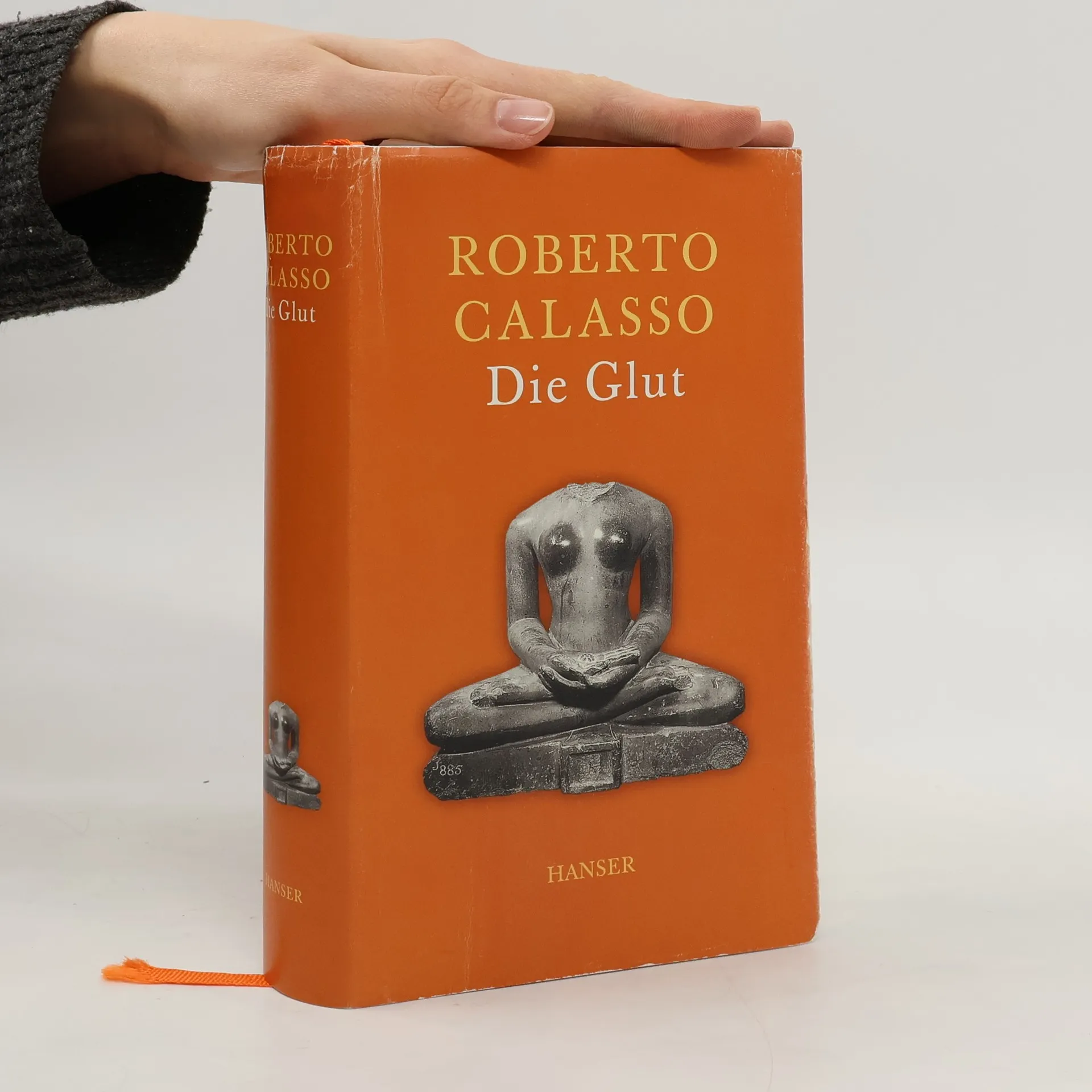
Die Glut
- 608 páginas
- 22 horas de lectura
Vor mehr als 3000 Jahren entwickelte sich in Indien eine so rätselhafte wie faszinierende Kultur. Sie hinterließ keine Kunstwerke und keine Ruinen, wir kennen nur ihren geistigen Kosmos. Die Schriften der Veden kreisen, in Hymnen, Mythen und Anweisungen für komplizierte Rituale, um die einfache und geheimnisvolle Tatsache, dass wir ein Bewusstsein haben. Dieses Bewusstsein verbindet sich für die vedischen Seher mit einer "Glut", die im Geist und in der Welt wirkt. So entstehen die Götter – und am Ende auch die Menschen. Roberto Calasso führt durch die Labyrinthe der vedischen Welt – und wenn wir sie wieder verlassen haben, sehen wir unsere heutige säkulare Welt mit neuen Augen.
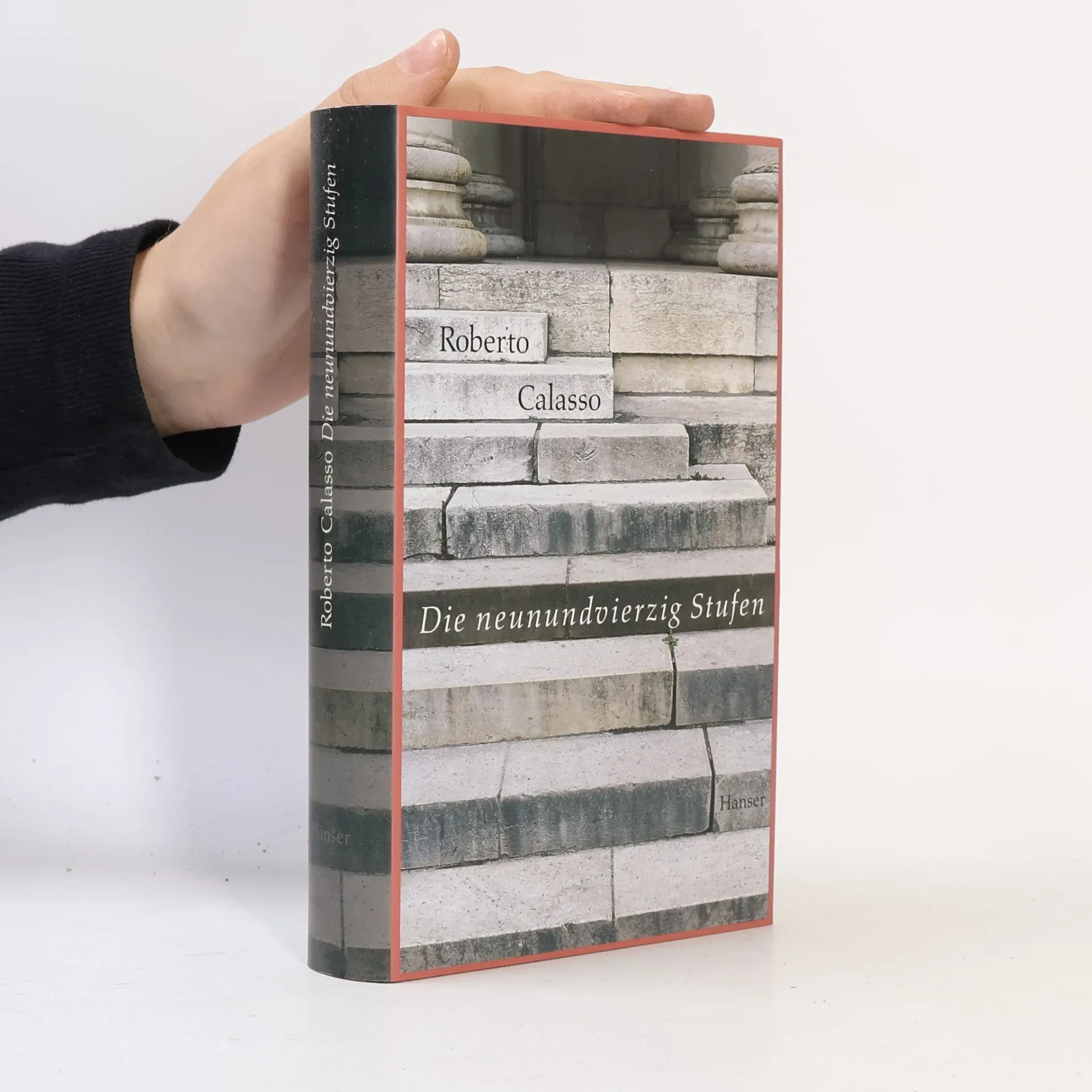
Die neunundvierzig Stufen
- 383 páginas
- 14 horas de lectura
Die neunundvierzig Stufen, auf die sich der Titel bezieht, sind die der talmudischen Tradition, in der sie den Zugang zur Wahrheit symbolisieren. Sie zollen hier einem der bedeutendsten Denker der Moderne, Walter Benjamin, sowie Alfred Hitchcock, dem Meister des Spannungsaufbaus und dem geborenen Forscher der menschlichen Seele, Tribut. Nietzsche, gleichzeitig Schöpfer und Zerstörer, ist der erste der klaren Geister, die in diesen Seiten heraufbeschworen werden. Unter dem scharfen und gelehrten Blick von Roberto Calasso ziehen illustre Intellektuelle und Schriftsteller wie Freud, Kraus, Robert Walser, Adorno, Benjamin, Brecht, Wedekind, Hofmannsthal, Weininger, Bloy, Reich, Gottfried Benn, Marx, Heidegger, Bazlen, Schreber, Stirner, Michelet, Stendhal, Flaubert, Céline, Léautaud und Simone Weil vorbei, die alle zu den Gründern der zeitgenössischen europäischen Kultur zählen. Durch die in diesem Band versammelten Essays, die Calasso über mehr als zwanzig Jahre hinweg verfasst hat, zeichnet der Autor mit bewundernswerter Strenge und nicht weniger bewundernswerter Subtilität eine umfassende und anregende Karte des intellektuellen Fundaments, das unsere Gegenwart nährt.