They say good things come in small packages.
Elliotte Rusty Harold Libros
1 de enero de 1960

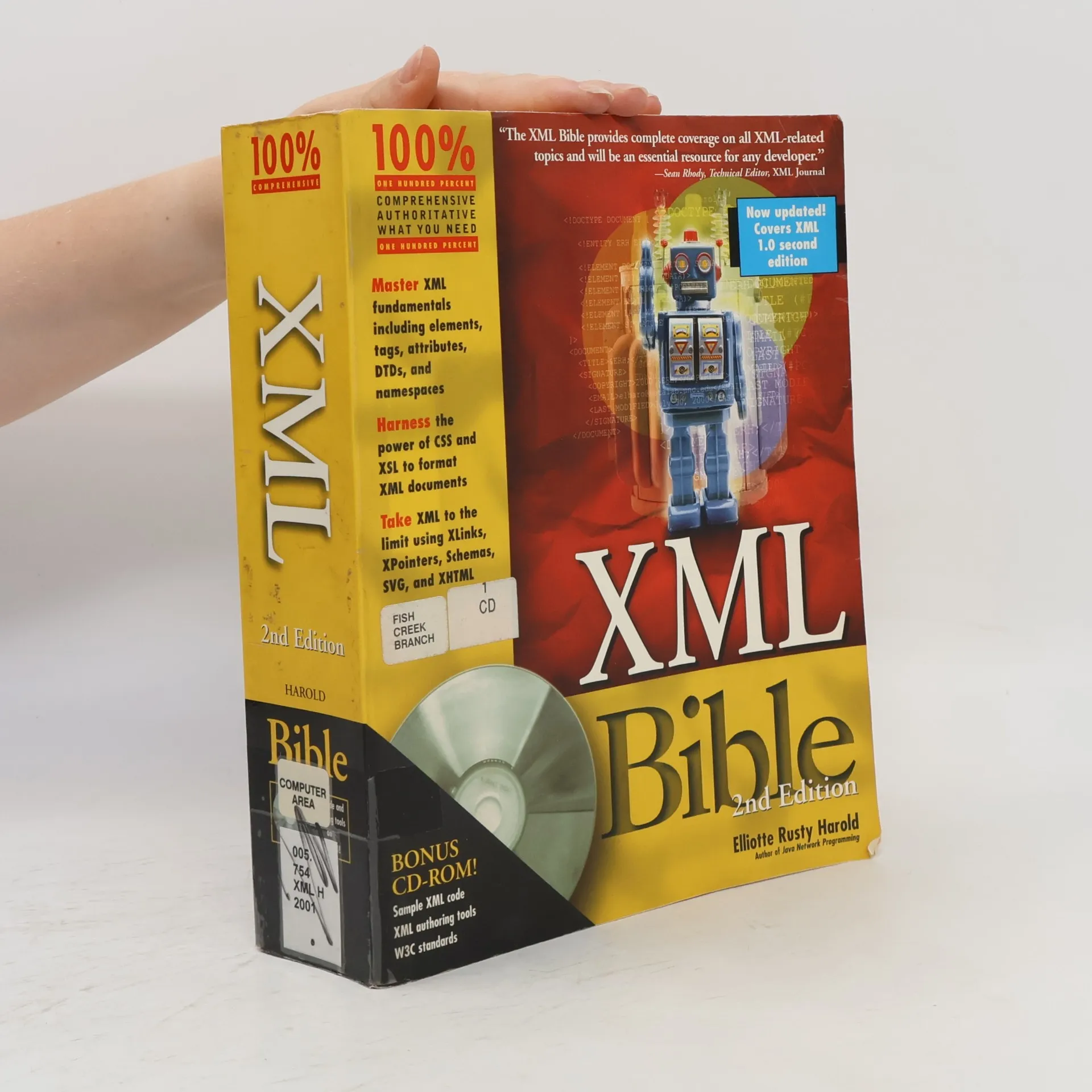
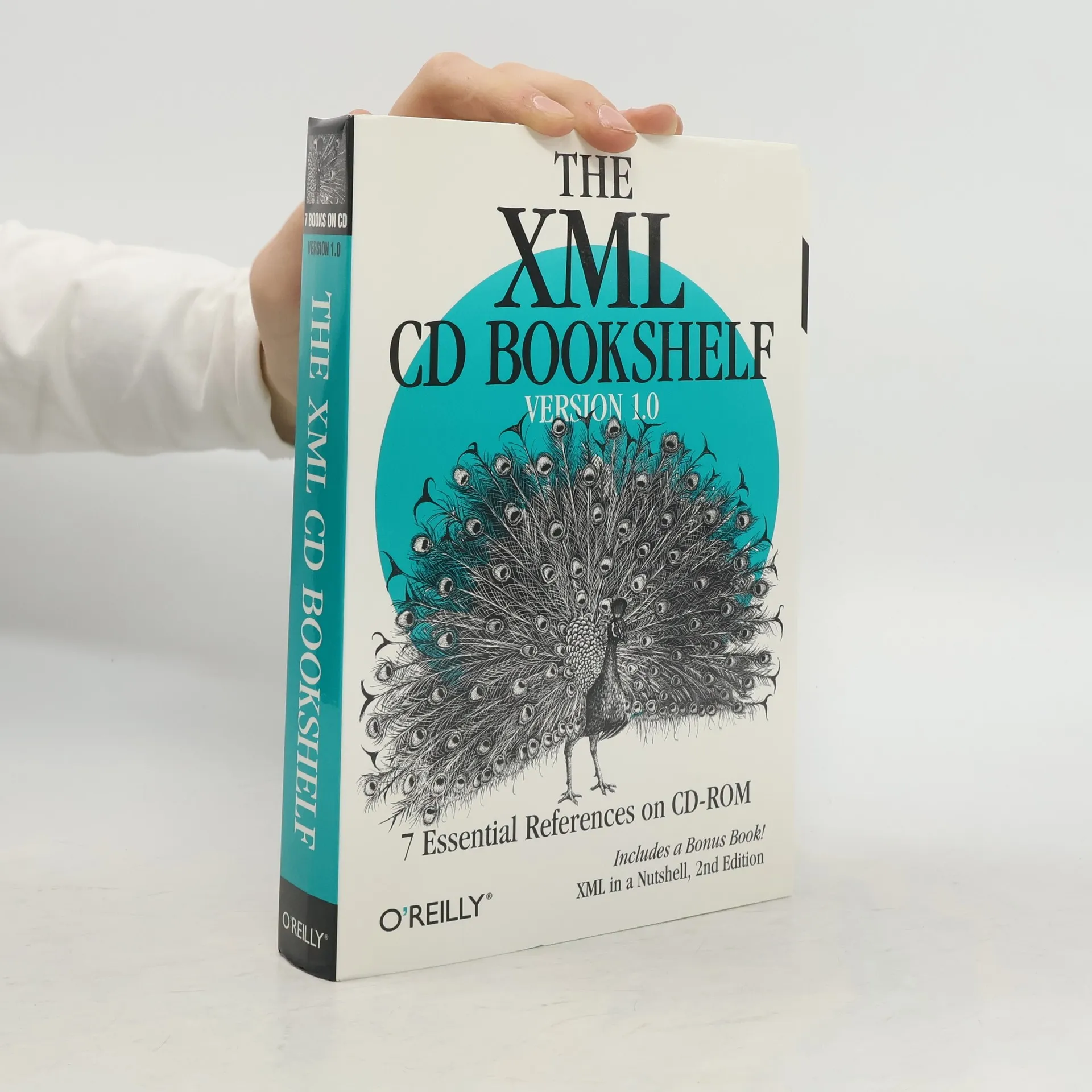
XML Bible
- 1206 páginas
- 43 horas de lectura
This fast-paced and thorough tutorial/reference contains everything an experienced web developer needs to put XML to work on established or new web sites. The book covers the fundamentals of the XML language, with emphasis on the creation of XML pages and their publication on the Web; the integration of XML with HTML, databases, and scripting languages to build complex applications; Cascading Style Sheets and XSL Transformation; and supplemental technologies such as XLinks and XPointers.
XML in a Nutshell
A Desktop Quick Reference - 2nd Edition - Covers XML Schema
- 640 páginas
- 23 horas de lectura
XML in a Nutshell thoroughly explains the basic rules that all XMNL documents--and all XML document creators--must adhere to. Quick-reference chapters also detail syntax rules and usage examples for the core XML technologies, including XML, DTDs, SPath, XSLT, SAX, and DOM.
Java I/O
- 726 páginas
- 26 horas de lectura
All of Java's Input/Output (I/O) facilities are based on streams, which provide simple ways to read and write data of different types. Focusing on Java 5.0 APIs, this book tells you about streams shows you how to control number formatting, use characters aside from the standard ASCII character set, and write multilingual software.
Java network programming
- 760 páginas
- 27 horas de lectura
A guide to developing network programs covers networking fundamentals as well as TCP and UDP sockets, multicasting protocol, content handlers, servlets, I/O, parsing, Java Mail API, and Java Secure Sockets Extension.
Websites, like any software system, accumulate “cruft” over time, leading to slower performance, broken links, and various compatibility and security issues. While rebuilding from scratch is ideal, it's often impractical due to time and budget constraints. Fortunately, refactoring offers a solution. This guide details how to enhance any website or application using proven techniques and tools from software development. The author provides insights for both programmers and non-programmers, demonstrating how to refactor for improved reliability, performance, usability, security, accessibility, and search engine optimization. Step-by-step instructions help migrate outdated code to modern standards like XHTML, CSS, and REST, addressing common issues such as presentation-based markup and “tag soup.” The book features an extensive catalog of detailed refactorings and practical recipes organized for quick access, enabling users to enhance site performance efficiently and ensure easier maintenance and scalability in the future. Key topics include identifying problematic Web code, transforming old HTML into valid XHTML, modernizing layouts with CSS, updating Web forms, and restructuring sites without altering user-facing URLs. This resource is invaluable for Web designers, developers, project managers, and anyone involved in maintaining or updating websites, particularly those looking to refresh their knowledge of current standar