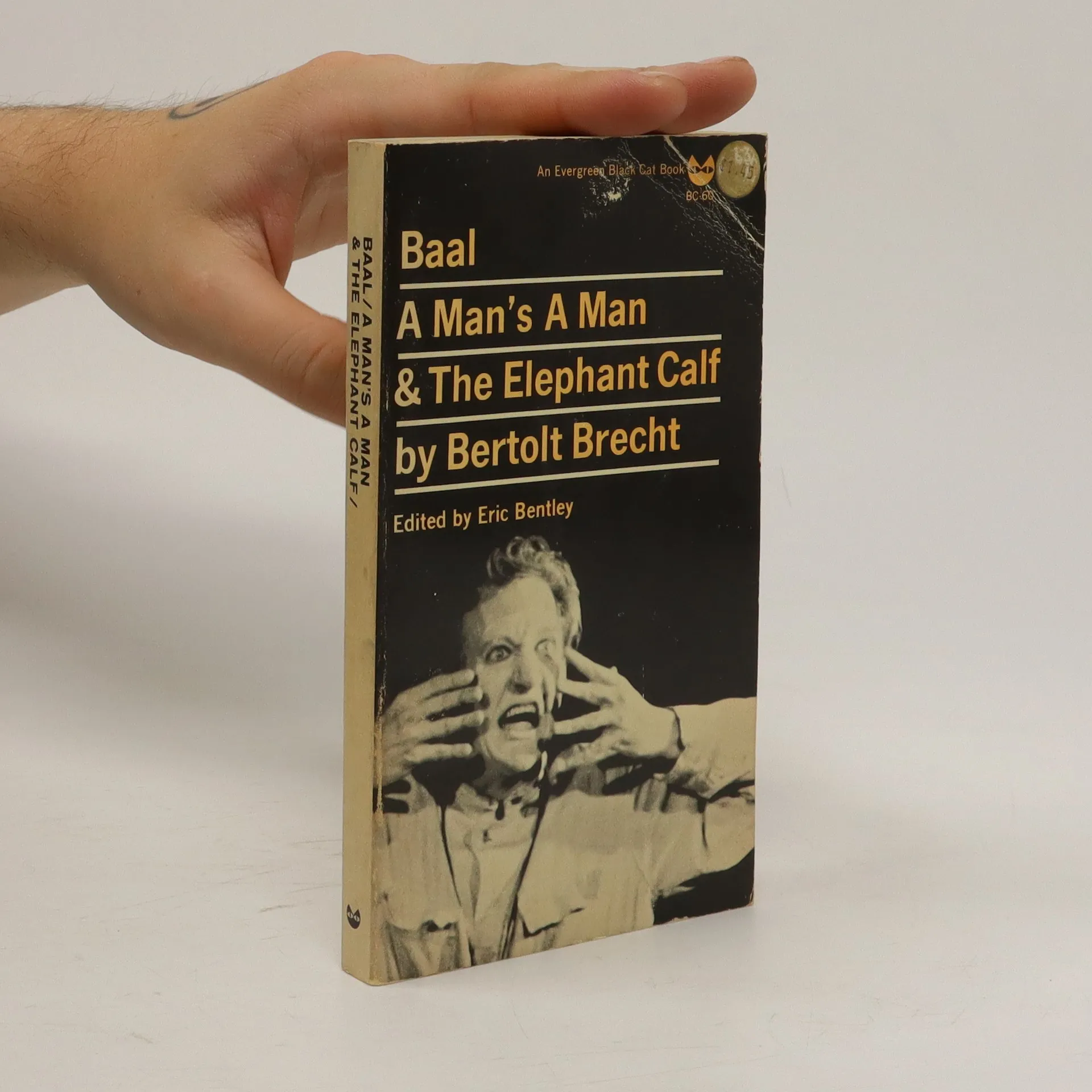
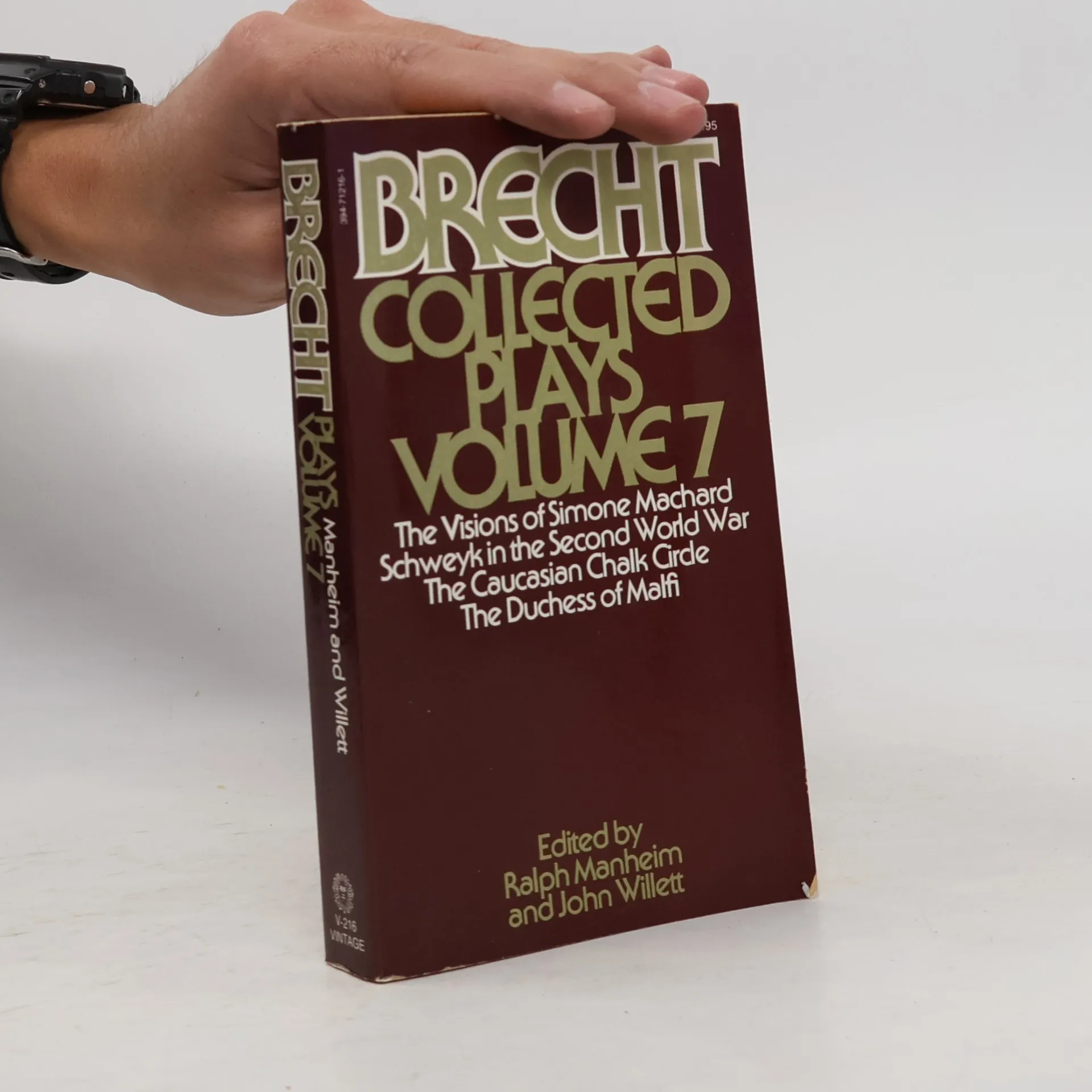
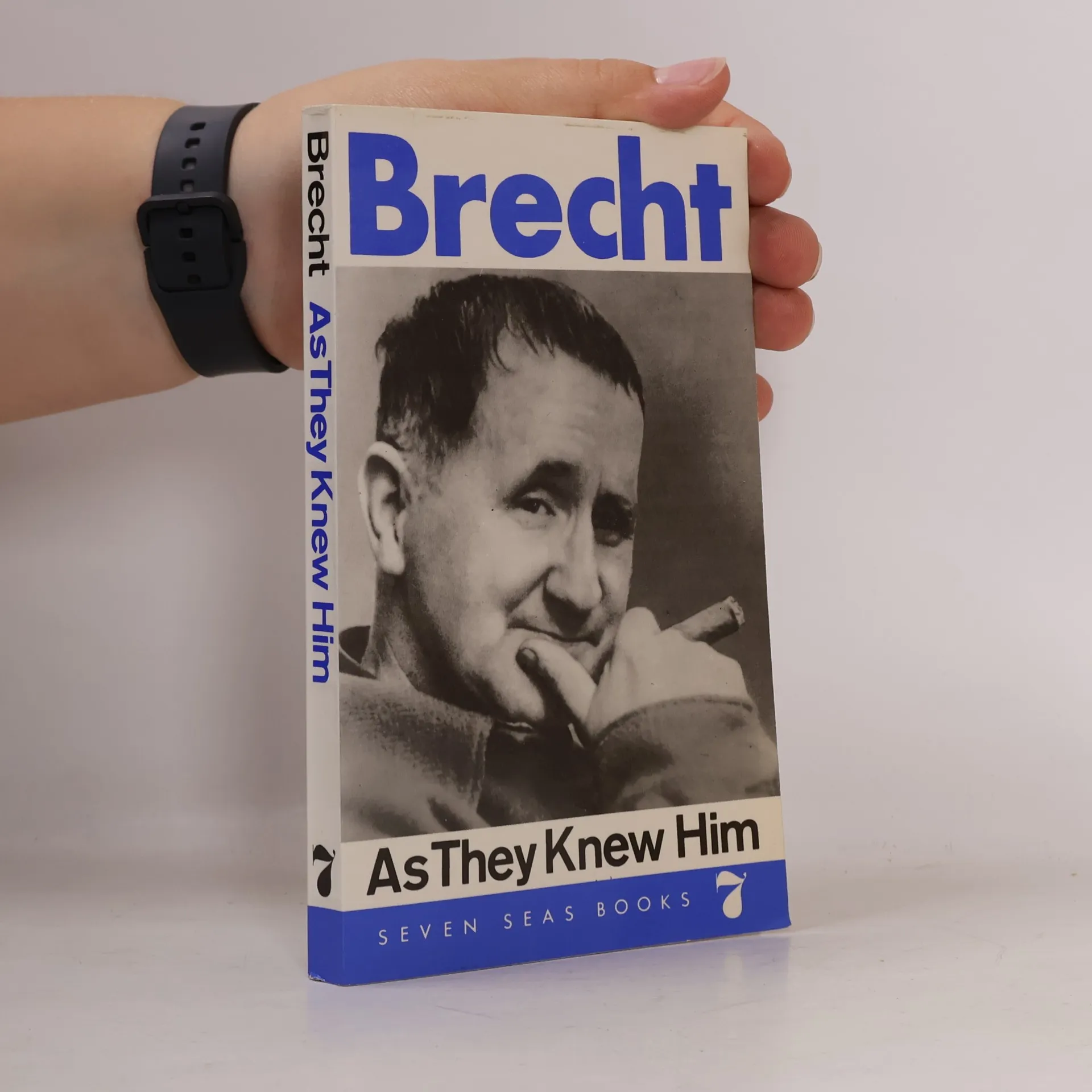
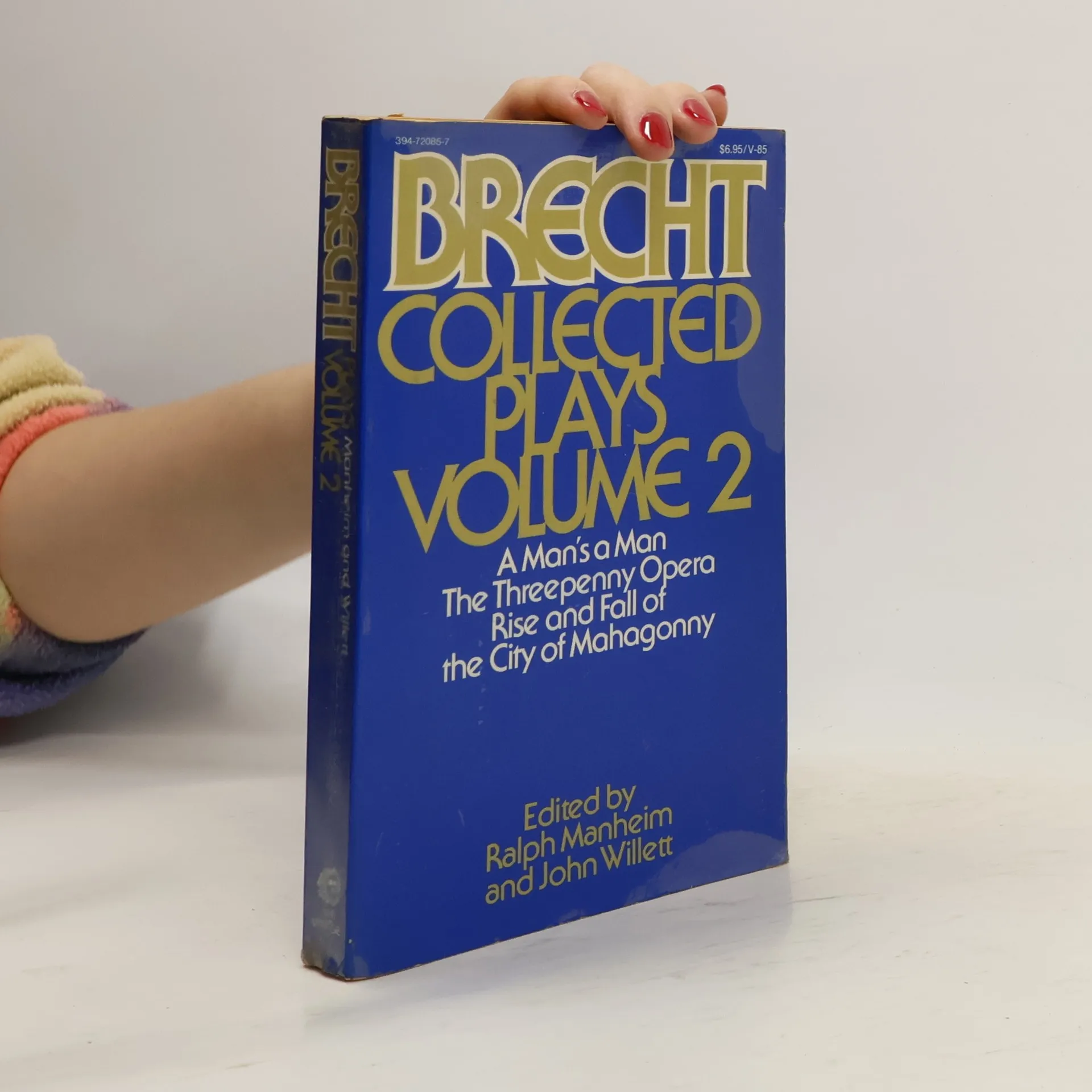
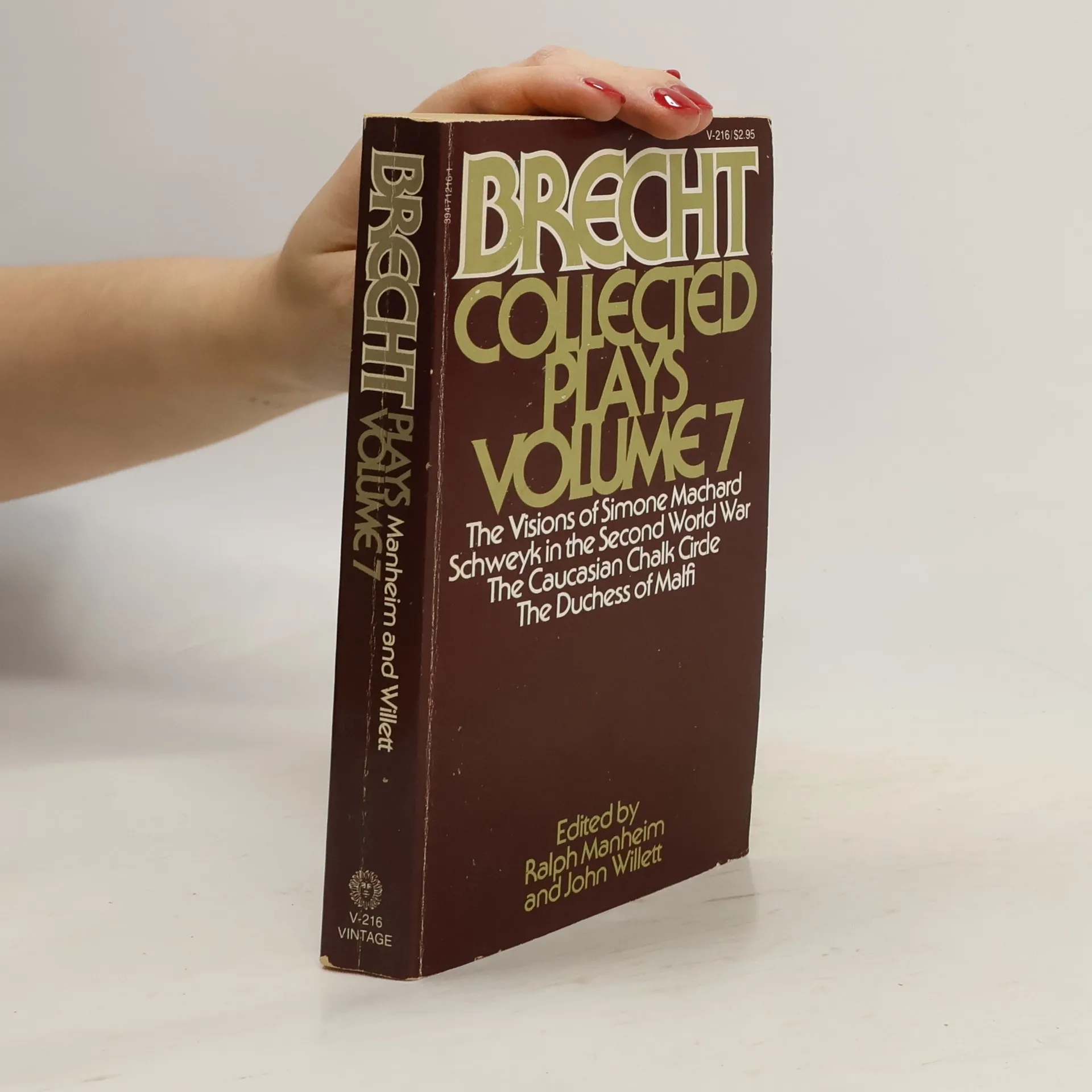
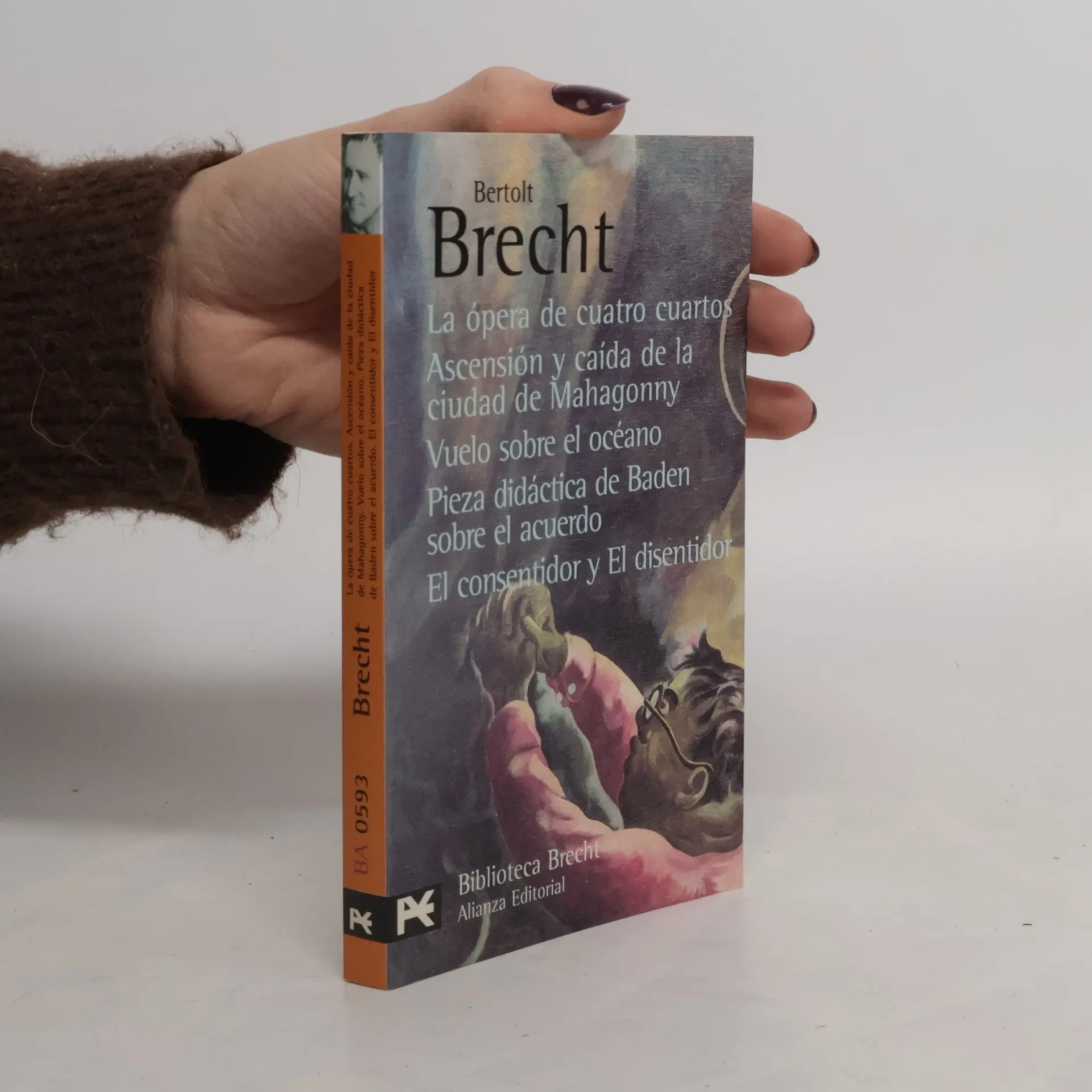
Las dos obras recopiladas en este volumen surgieron de la misma fructífera colaboración que dio origen a la Ópera de tres peniques de Bertolt Brecht y Kurt Weill. Ambas están ambientadas en una América mítica. En La ascensión y caída de la ciudad de Mahagonny, la parábola de Brecht sobre la codicia y la indiferencia, Mahagonny es una ciudad en auge que fusiona Miami con Sodoma y Gomorra. Fundada sobre el principio de que es más fácil prospectar oro de los bolsillos de las personas que de la tierra, es una ciudad amenazada por la catástrofe pero también obsesionada con el placer y el problema de cómo pagarlo. Los siete pecados capitales de la pequeña burguesía, el libretto de ballet sumamente irónico de Brecht, es la historia de dos hermanas que en siete años atraviesan siete ciudades. En cada una, una hermana es tentada por uno de los siete pecados capitales.
Bertolt Brecht Libros
Bertolt Brecht fue un poeta, dramaturgo y director de teatro alemán que transformó radicalmente el teatro del siglo XX. Su "teatro épico" sintetizó teoría y práctica, utilizando el escenario como foro para ideas políticas y estética crítica. Brecht buscó "re-funcionalizar" la producción teatral para nuevos usos sociales, distinguiéndose de otros enfoques vanguardistas. Su forma innovadora, que fusionó temas populares con estética experimental, creó un realismo modernista con un impacto duradero en el drama, el cine y la práctica teatral en todo el mundo.




Teatro completo 9
- 206 páginas
- 8 horas de lectura
En esta salvaje y aguda parábola escrita en el exilio en 1941, Brecht reinterpreta el ascenso de Hitler como la toma del comercio de verduras de la ciudad por parte de un gánster de Chicago.
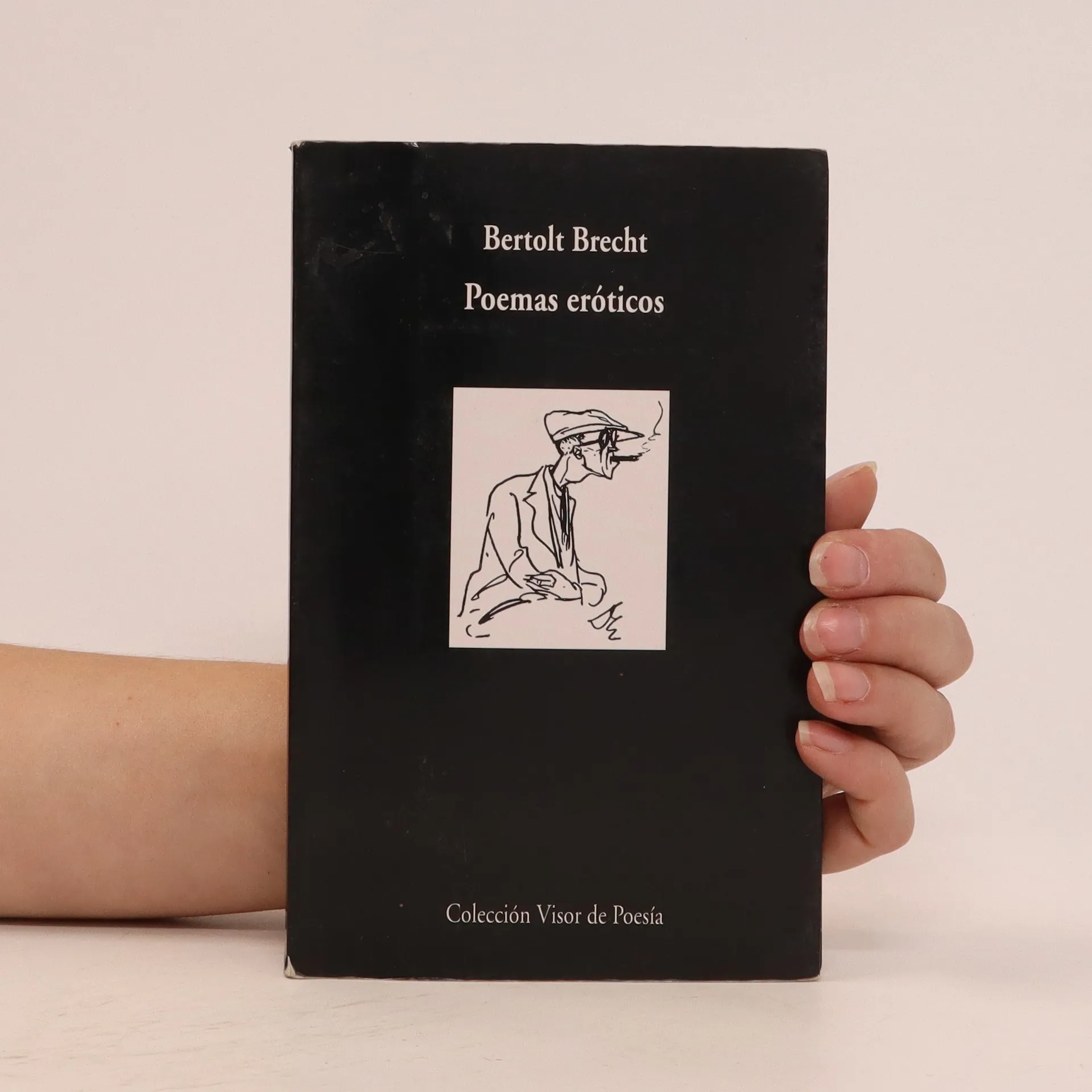
Poemas eróticos
- 120 páginas
- 5 horas de lectura
Bertolt Brecht, es uno de los más grandes dramaturgos de la primera mitad de nuestro siglo. No tanto por su teoría y praxis del como por la capacidad de crear conflictos emblemáticos, en los cuales se expresan las figuras y los mitos principales de nuestro tiempo. También la obra del Brecht poeta", posiblemente de más calidad que la teatral, tiene sus raíces en el lenguaje dramático; y es por ello, con tanta frecuencia, monólogo, balada, lied. Pero es también choque de afirmaciones, dialéctica abreviada. Cuando más desnuda, común e injuriosamente es la palabra, más recibe la violencia de la iluminación a la que está sometida la capacidad de alcanzar la incandescencia. Poesía de muchas voces y afirmaciones (desde la áspera o trabada de la juventud a la martilleante y estridente de la madurez, pasando por los de los últimos años), vuelve la espalda a la tradición europea del último simbolismo y del surrealismo para asumir, tal y como B. dice, , y explora todas las posibilidades rítmicas que se alejen de la melodía.
Paris Commune 150
- 112 páginas
- 4 horas de lectura
The book explores the Paris Commune of 1871, highlighting its brief but impactful experiment in democracy and workers' governance. It includes Marx's address on the Commune, Lenin's reflections on its significance for building socialism, and Bertolt Brecht's poetic tribute. Additionally, it features the Manifesto of the Paris Commune's Federation of Artists, showcasing the cultural and political aspirations of the time. Together, these texts provide insights into revolutionary thought and the enduring legacy of the Commune in shaping socialist ideals.
The title is ironic - How to make war, like, Oh, what a lovely war! A large format picture book containing over eighty photographs of the Second World War, each with a four line poem by Brecht written as the events unrolled. This is the first publication in English of a major work by Brecht.
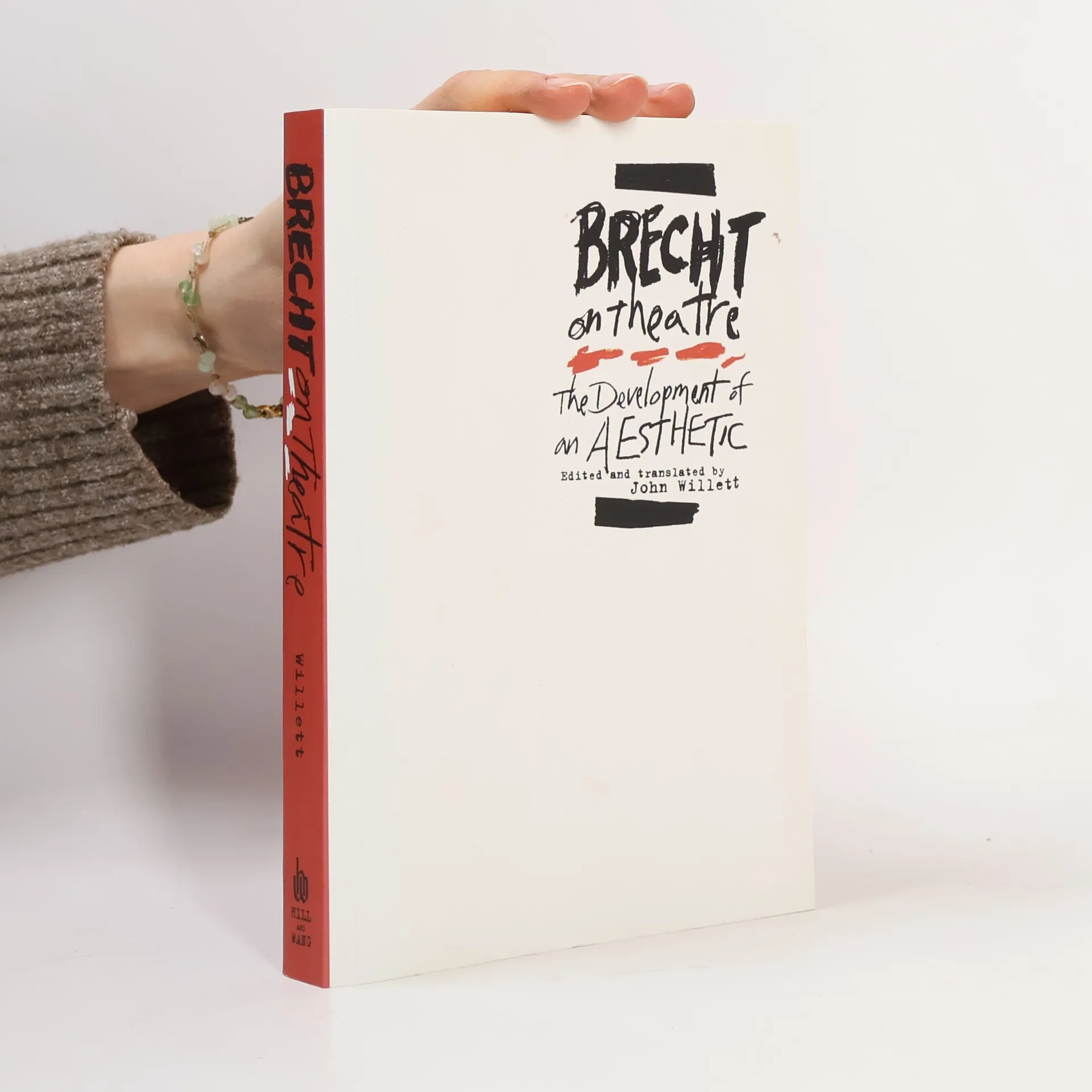
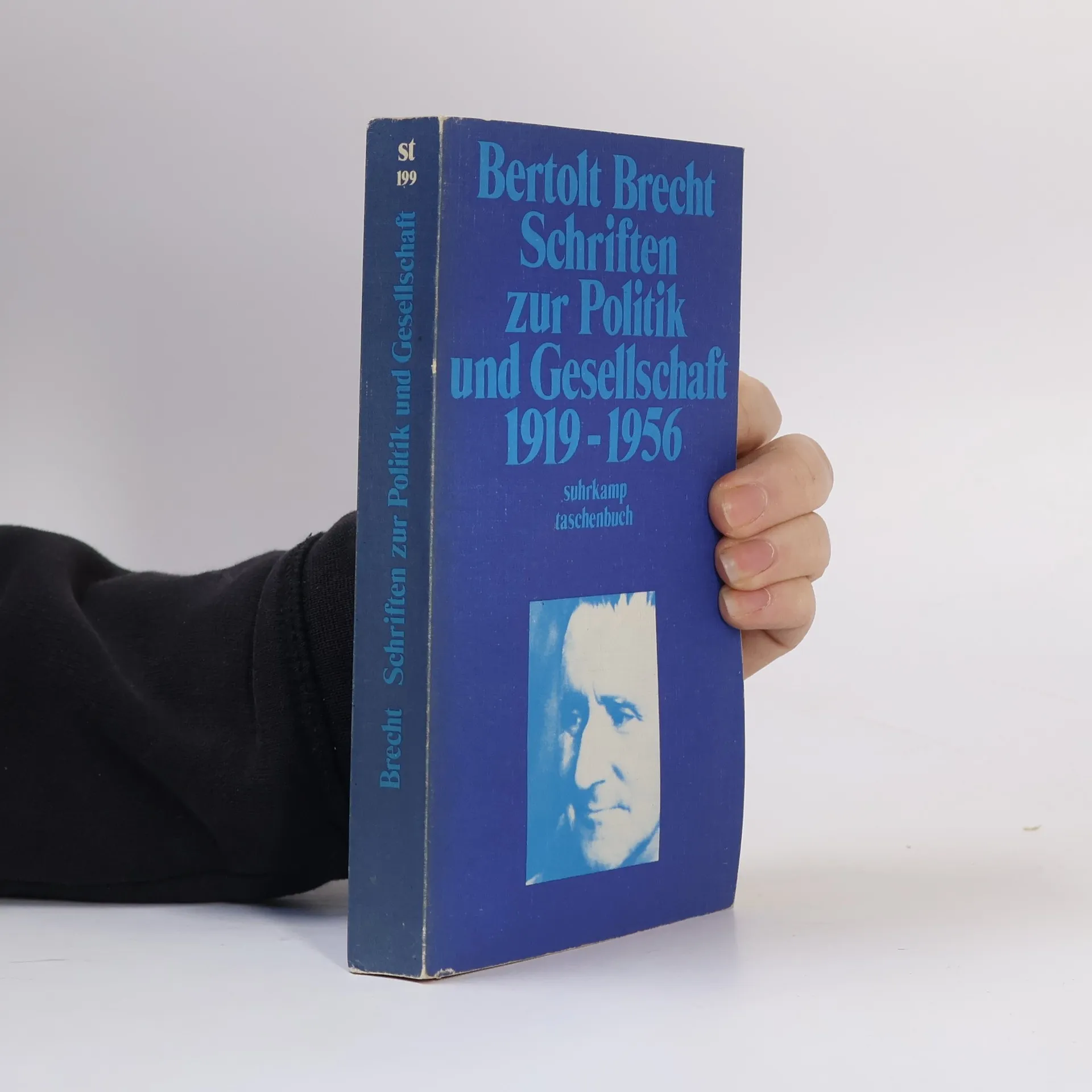
This volume offers a major selection of Bertolt Brecht's groundbreaking critical writing. Here, arranged in chronological order, are essays from 1918 to 1956, in which Brecht explores his definition of the Epic Theatre and his theory of alienation-effects in directing, acting, and writing, and discusses, among other works, The Threepenny Opera, Mahagonny, Mother Courage, Puntila, and Galileo . Also included is "A Short Organum for the Theatre," Brecht's most complete exposition of his revolutionary philosophy of drama. Translated and edited by John Willett, Brecht on Theater is essential to an understanding of one of the twentieth century's most influential dramatists.
Aesthetics and Politics
- 224 páginas
- 8 horas de lectura
An intense and lively debate on literature and art between thinkers who became some of the great figures of twentieth-century philosophy and literature
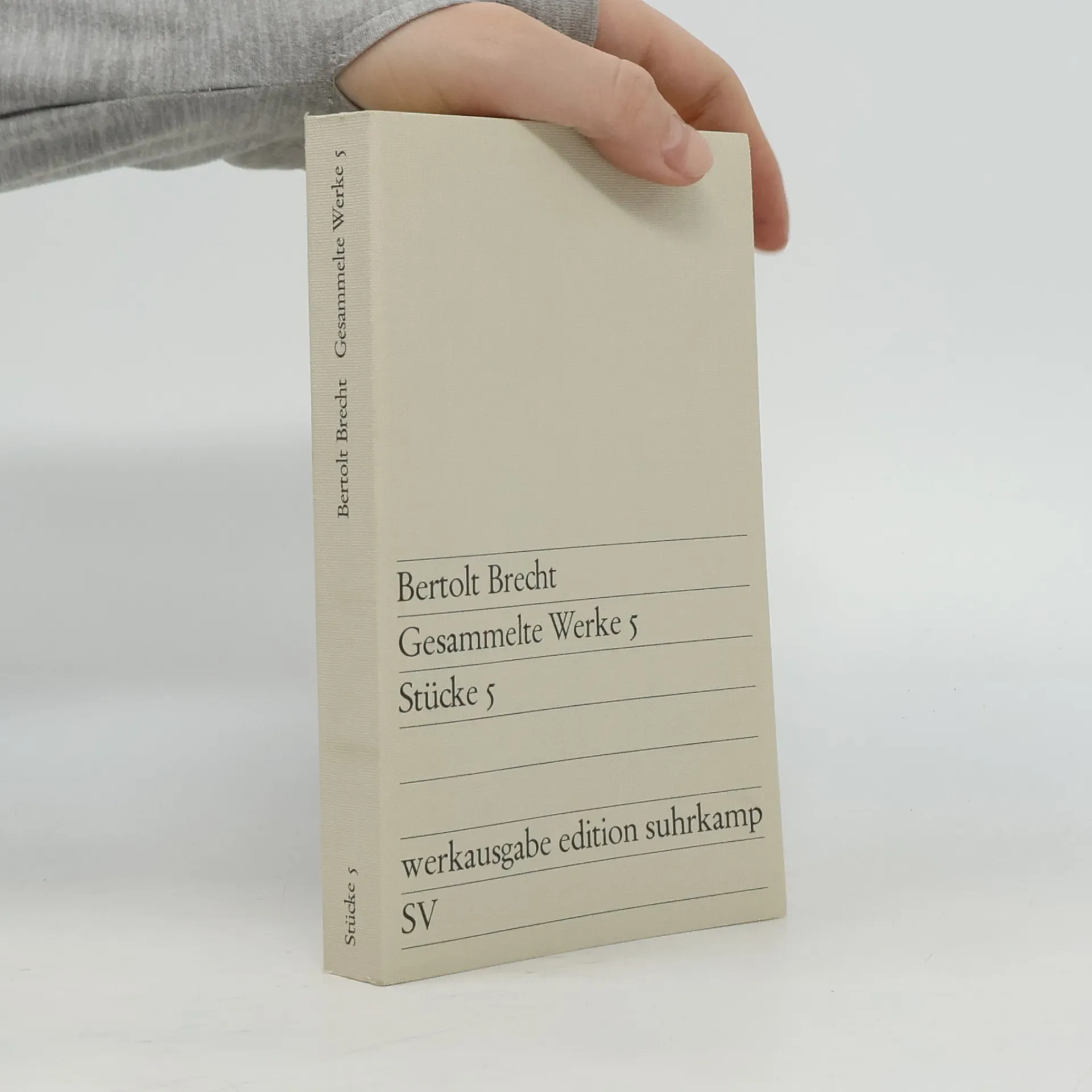
Stücke 5
- 446 páginas
- 16 horas de lectura
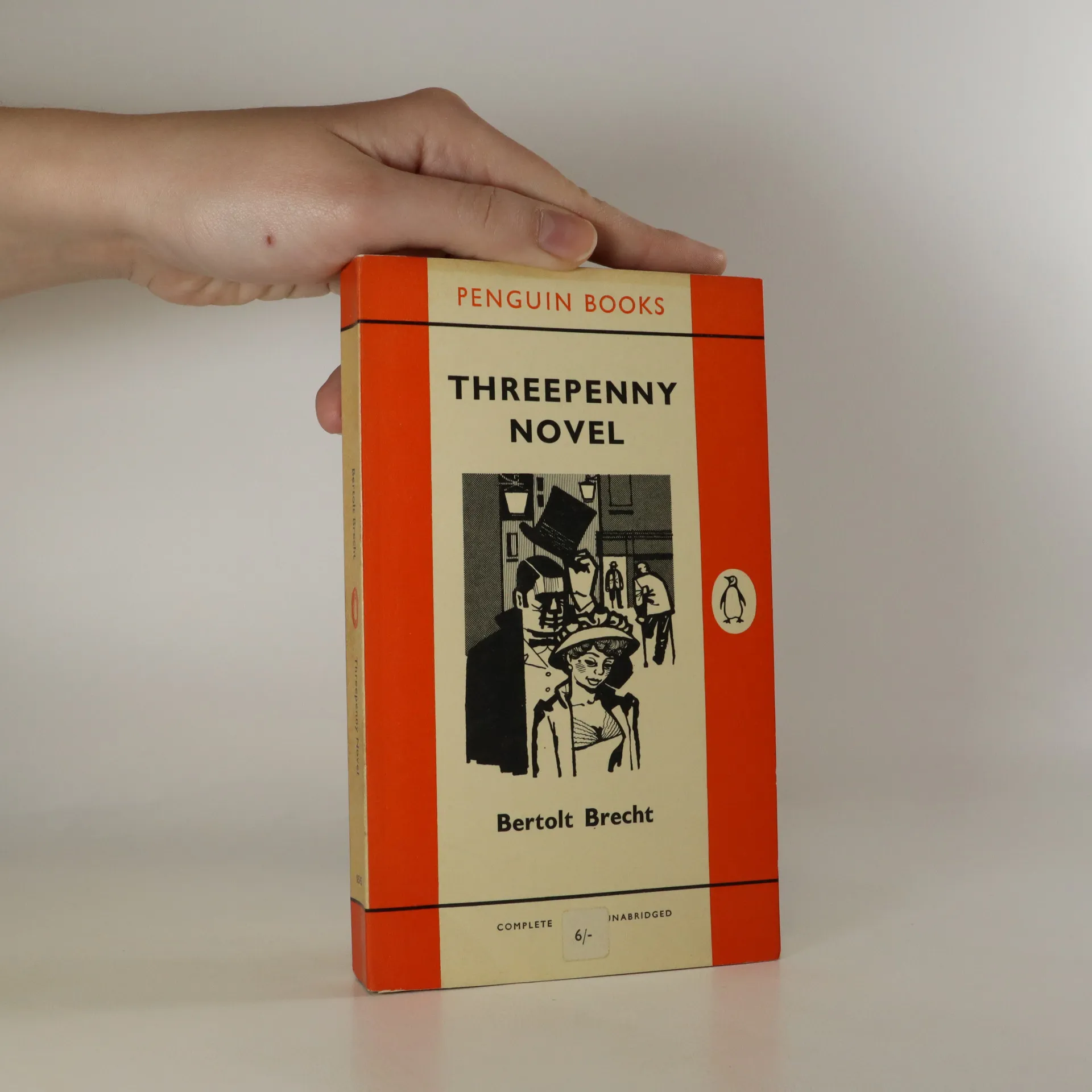
Based on a German translation of John Gay's "Beggar's opera", this work (originally presented in dramatic form as "The threepenny opera") is a satire on the decayed capitalism of the 1930s but set in the London of the 1900s
Stories of Mr. Keuner
- 128 páginas
- 5 horas de lectura
This book features fictionalized reflections on life and politics by Bertolt Brecht, renowned for "The Threepenny Opera." It offers insightful commentary and is recommended by Book Sense 76.
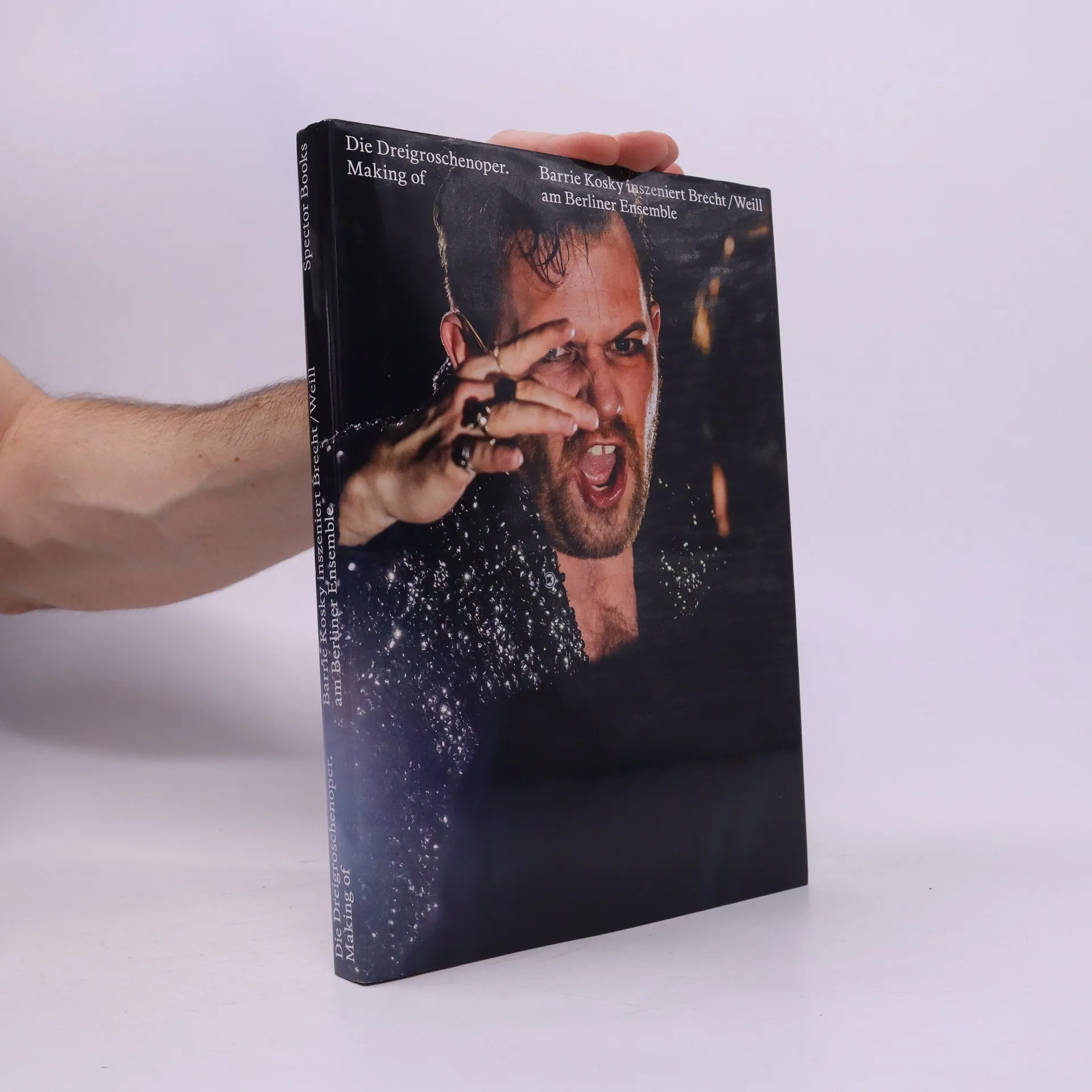
One of Bertolt Brecht's best-loved and most performed plays, The Threepenny Opera was first staged in 1928 at the Theater am Schiffbauerdamm, Berlin (now the home of the Berliner Ensemble). Based on the eighteenth-century The Beggar's Opera by John Gay, the play is a satire on the bourgeois society of the Weimar Republic, but set in a mock-Victorian Soho. With Kurt Weill's music, which was one of the earliest and most successful attempts to introduce the jazz idiom into the theatre, it became a popular hit throughout the western world. This new edition is published here in John Willett and Ralph Manhein's classic translation with commentary and notes by Anja Hartl.
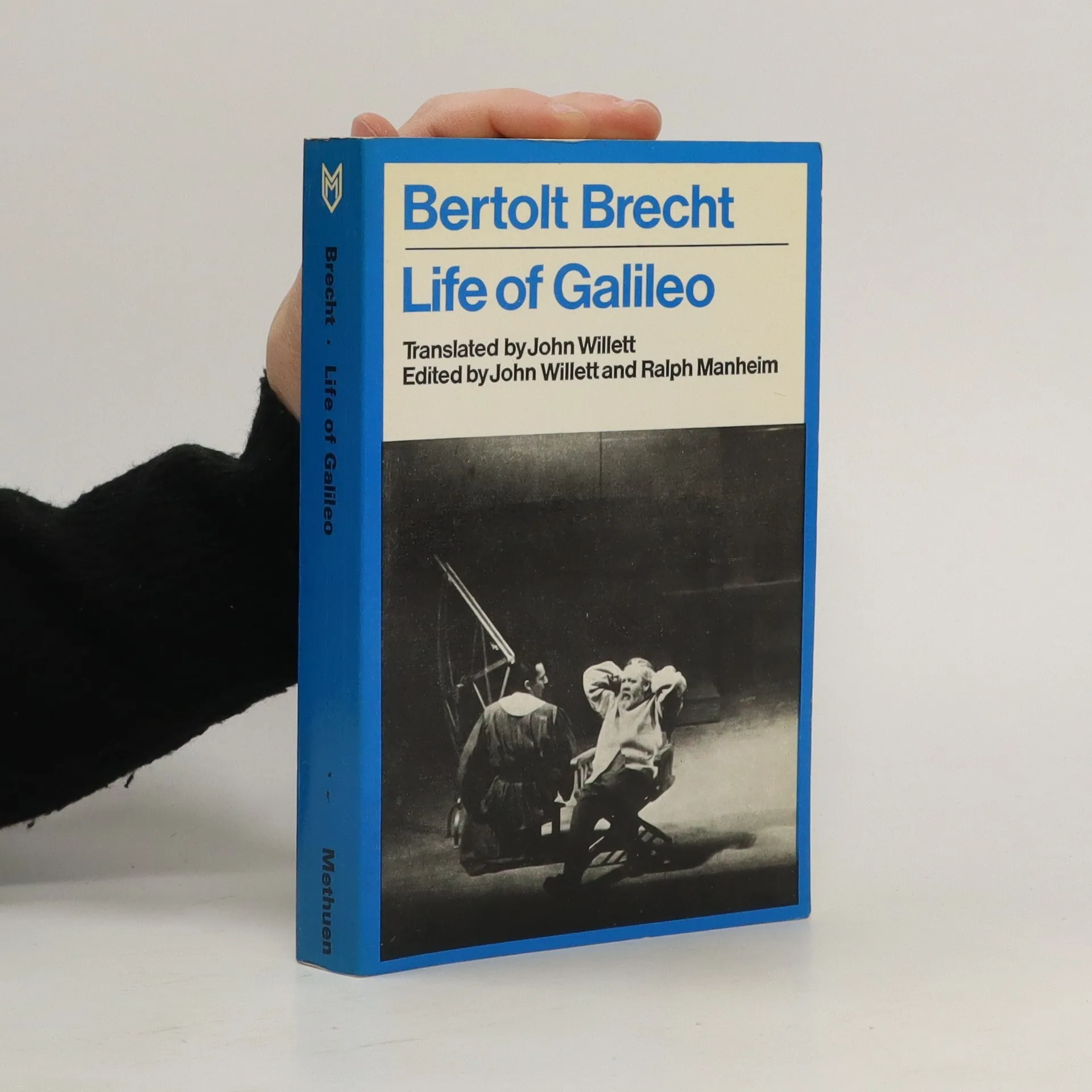
This play depicts the Renaissance scientist Galilei Galileo in a brutal struggle for freedom from authoritarian dogma. Unable to resist his appetite for scientific investigation, Galileo comes in conflict with the Inquisition and must publicly abjure his theories. schovat popis
The Resistible Rise of Arturo Ui
- 192 páginas
- 7 horas de lectura
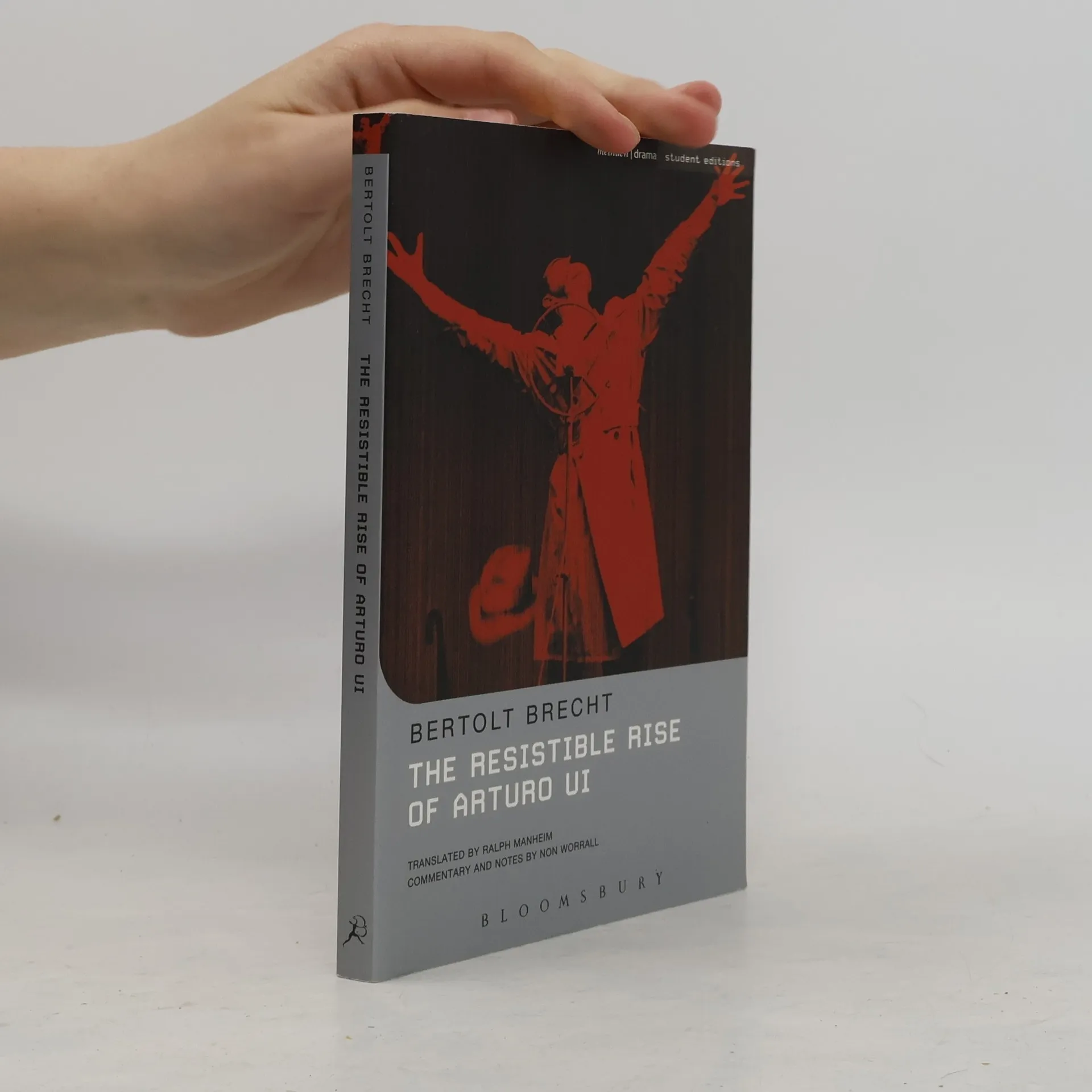
Described by Brecht as a gangster play that would recall certain events familiar to us all, Arturo Ui is a witty and savage satire of the rise of Hitler - recast by Brecht into a small-time Chicago gangster's takeover of the city's greengrocery trade.
The Rise and Fall of the City of Mahagonny
- 107 páginas
- 4 horas de lectura
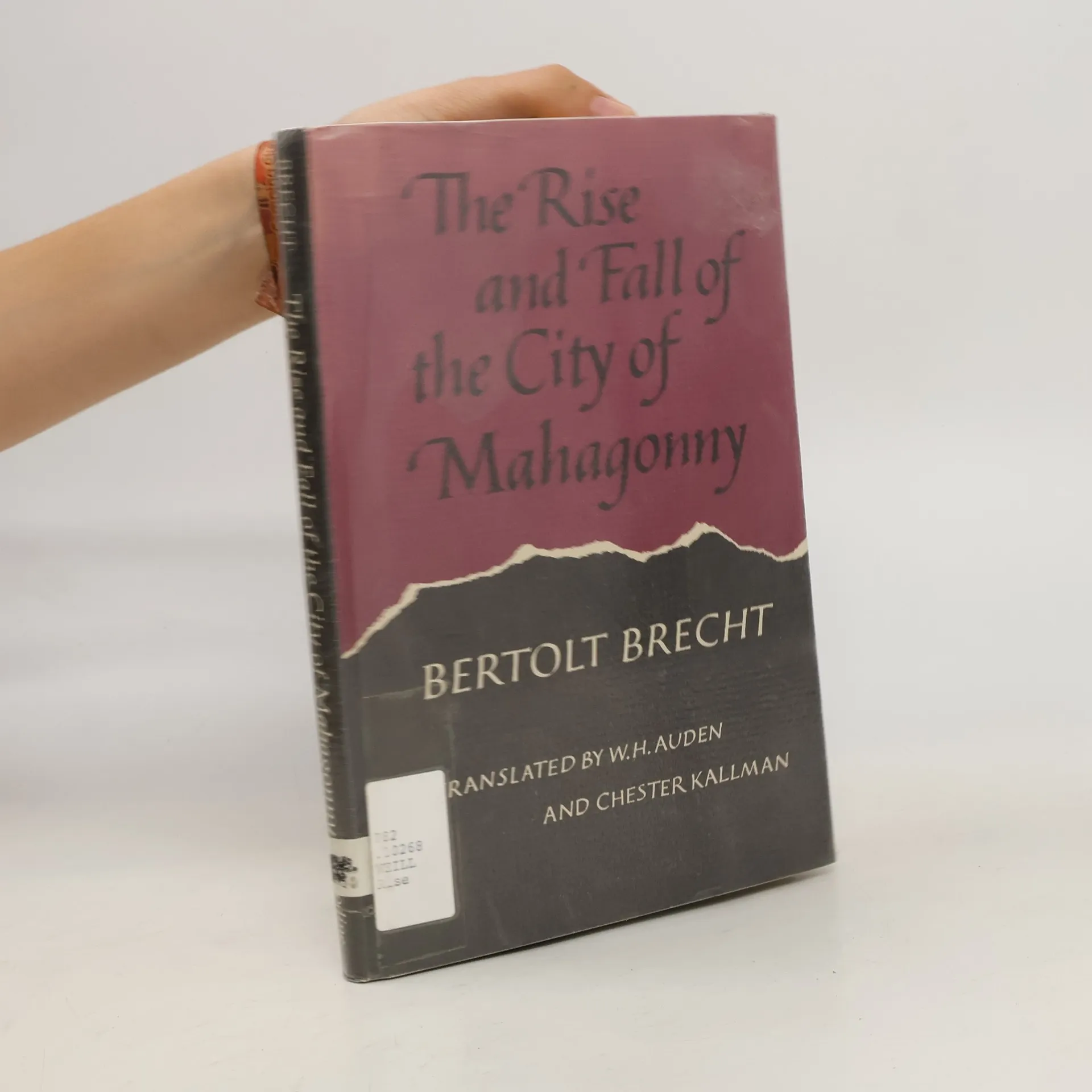
Welcome to Mahagonny, where sin is 'in' and love is always on sale. This Old West boomtown rises from the desert to become a razzle-dazzle mecca for lust and the pursuit of pleasure, where cash is king and poverty is punishable by death
Die heilige Johanna der Schlachthöfe
- 103 páginas
- 4 horas de lectura
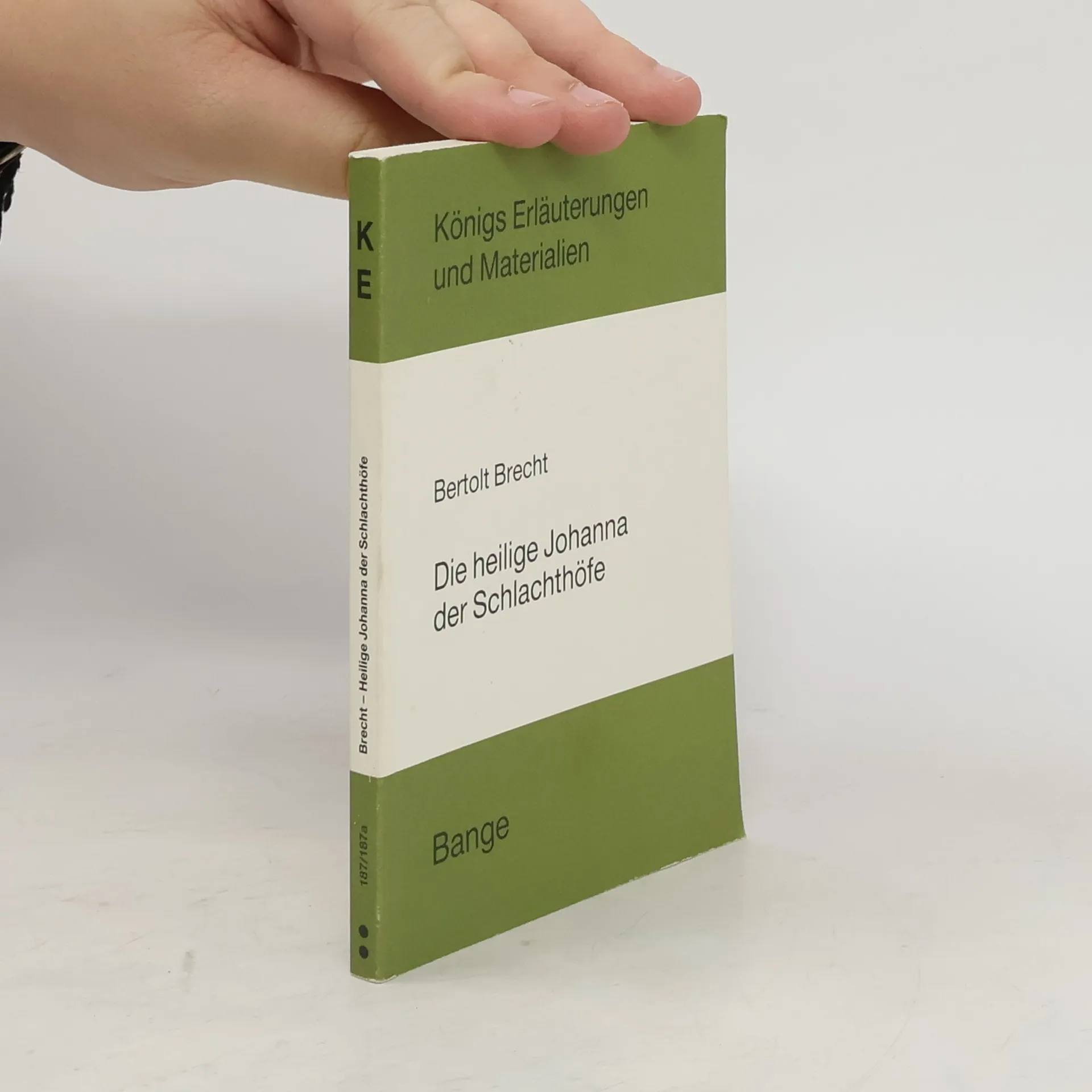
Brecht's "Saint Joan of the Stockyards" explores the rampant speculation in meat and livestock against the backdrop of a crisis of overproduction. Set in the stockyards and meat market of Chicago, the play reveals the contradictions of society exacerbated by advanced capitalism. Johanna Dark, a Salvation Army soldier, witnesses the plight of workers excluded and starving due to the meat factories. In her quest to understand the reasons behind their exclusion, she encounters the meat king, Pierpont Mauler, who unsuccessfully tries to win her over to his cause. Ultimately, Johanna, also rejected by the poor, meets her demise in the stockyards. The play makes the "entangled processes" transparent, illustrating their underlying laws and using them as a means to drive the events forward.
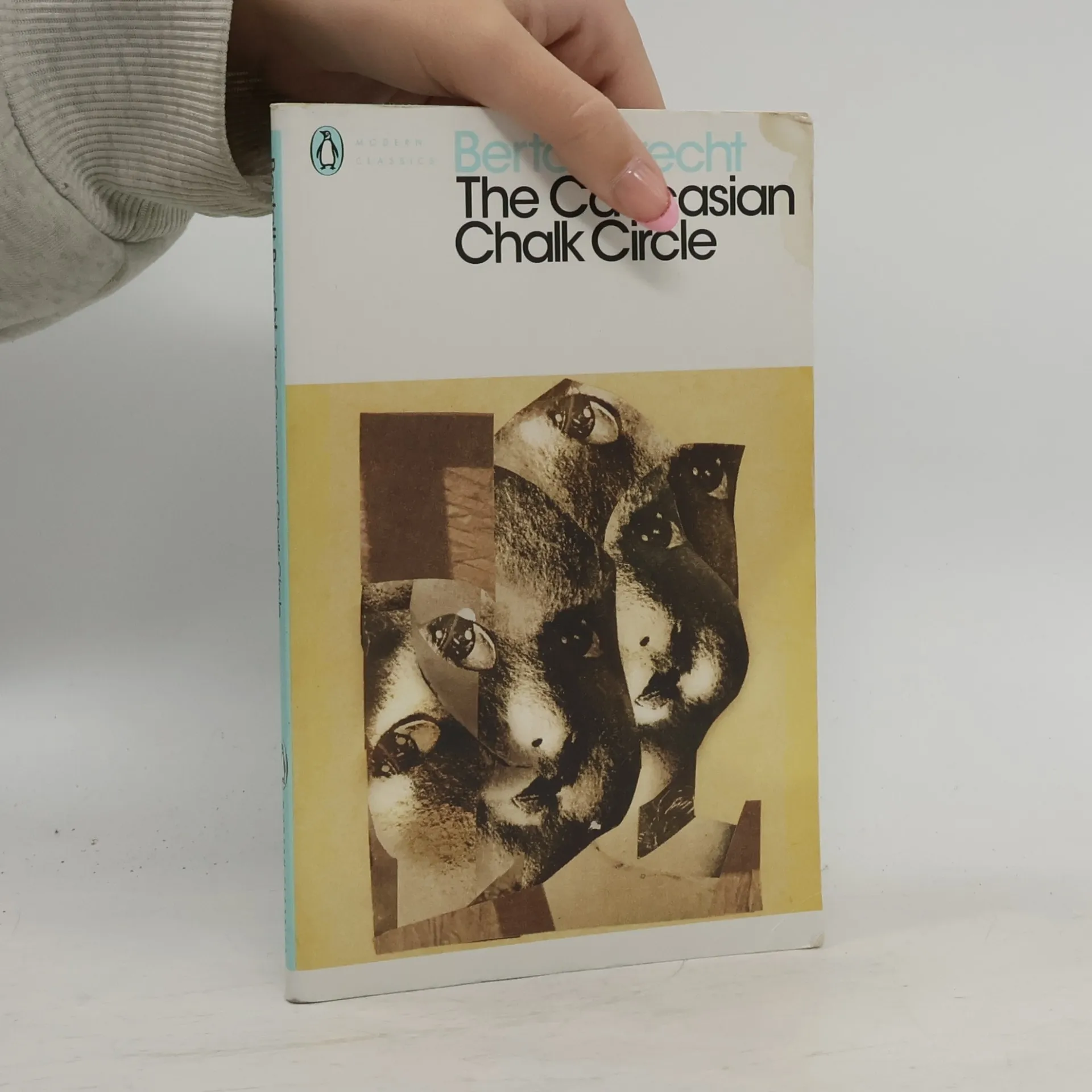
The Caucasian Chalk Circle
- 144 páginas
- 6 horas de lectura
Retells the tale of King Solomon and a child claimed by two mothers.
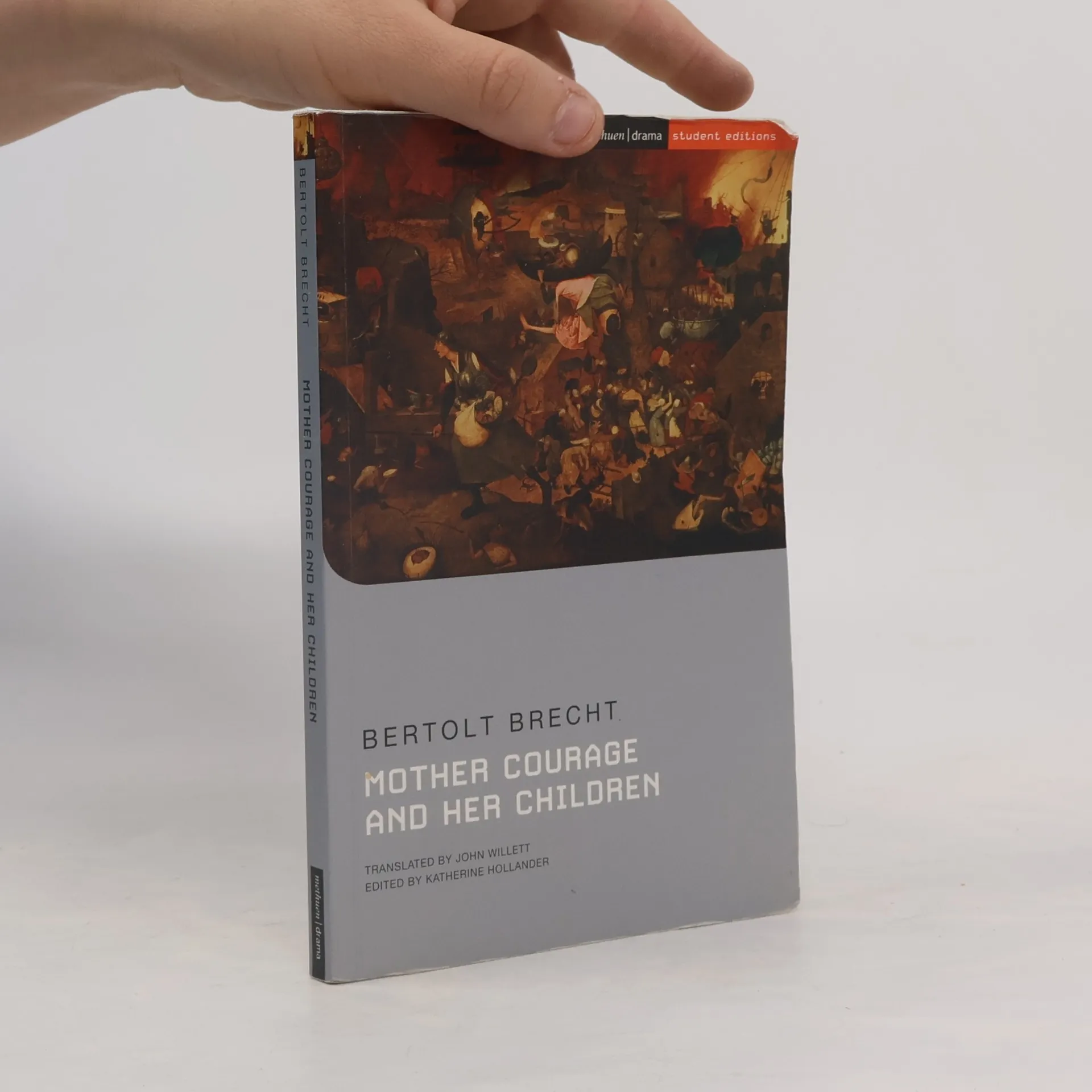
Mother Courage and Her Children
- 144 páginas
- 6 horas de lectura
This new Student Edition, featuring the classic John Willett translation of the play, includes an introduction by Katherine Hollander, which explores the following: * Contexts (Thirty Years War, 1618-1648; World War II and exile; sources; influential figures such as Brecht, Margarete Steffin, Helene Weigel and Karin Michaelis) * Themes (war; nature; capitalism) * Dramatic devices (epic theatre) * Production history and critical reception * Academic debate (Marxist, feminist and postmodernist) * Further study Widely regarded as Brecht's best work, Mother Courage and her Children was written in 1938-9 and received its premiere in Zurich in 1941. Mother Courage - a canteen woman serving with the Swedish Army during the Thirty Years War (1618-48) - follows the armies, selling provisions and liquor to the troops. Both her sons die in the war and her dumb daughter, Kattrin, is mortally wounded as she beats a drum to warn the town of Halle of an impending attack. Yet, all the while, Mother Courage continues her travels with her wagon, indomitably businesslike, calculating how she can make material profit from the war and turn conflict into capital.
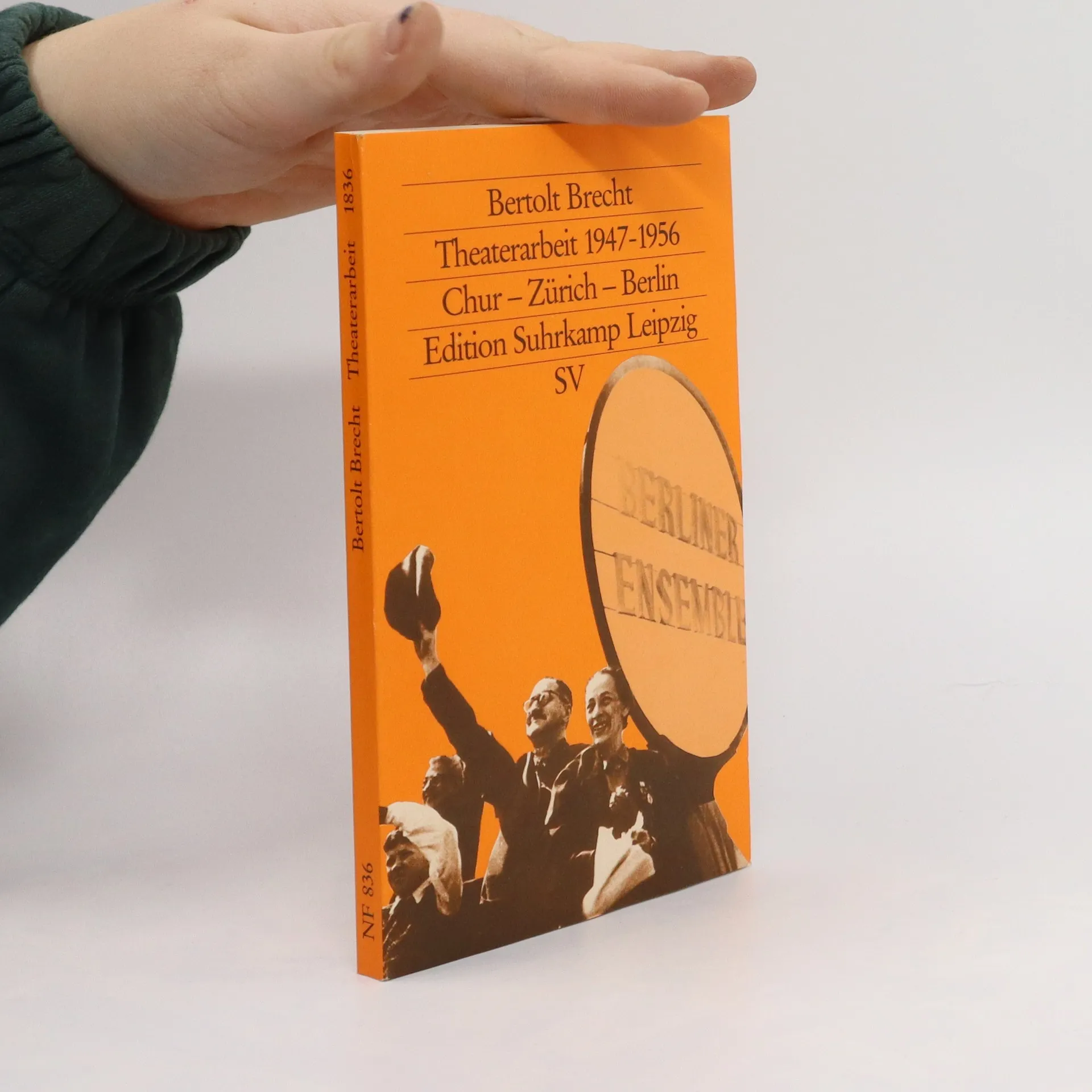
Theaterarbeit 1947 - 1956
- 172 páginas
- 7 horas de lectura
Bertolt Brecht wurde am 10. Februar 1898 in Augsburg geboren und starb am 14. August 1956 in Berlin. Von 1917 bis 1918 studierte er an der Ludwig-Maximilians-Universität München Naturwissenschaften, Medizin und Literatur. Sein Studium musste er allerdings bereits im Jahr 1918 unterbrechen, da er in einem Augsburger Lazarett als Sanitätssoldat eingesetzt wurde. Bereits während seines Studiums begann Brecht Theaterstücke zu schreiben. Ab 1922 arbeitete er als Dramaturg an den Münchener Kammerspielen. Von 1924 bis 1926 war er Regisseur an Max Reinhardts Deutschem Theater in Berlin. 1933 verließ Brecht mit seiner Familie und Freunden Berlin und flüchtete über Prag, Wien und Zürich nach Dänemark, später nach Schweden, Finnland und in die USA. Neben Dramen schrieb Brecht auch Beiträge für mehrere Emigrantenzeitschriften in Prag, Paris und Amsterdam. 1948 kehrte er aus dem Exil nach Berlin zurück, wo er bis zu seinem Tod als Autor und Regisseur tätig war.
Lieber Onkel, liebe Tante
Heitere Geschichten um Verwandte; erzählt von Tucholsky, Brecht, Wedekind, Thoma, Manzoni, u.v.a.
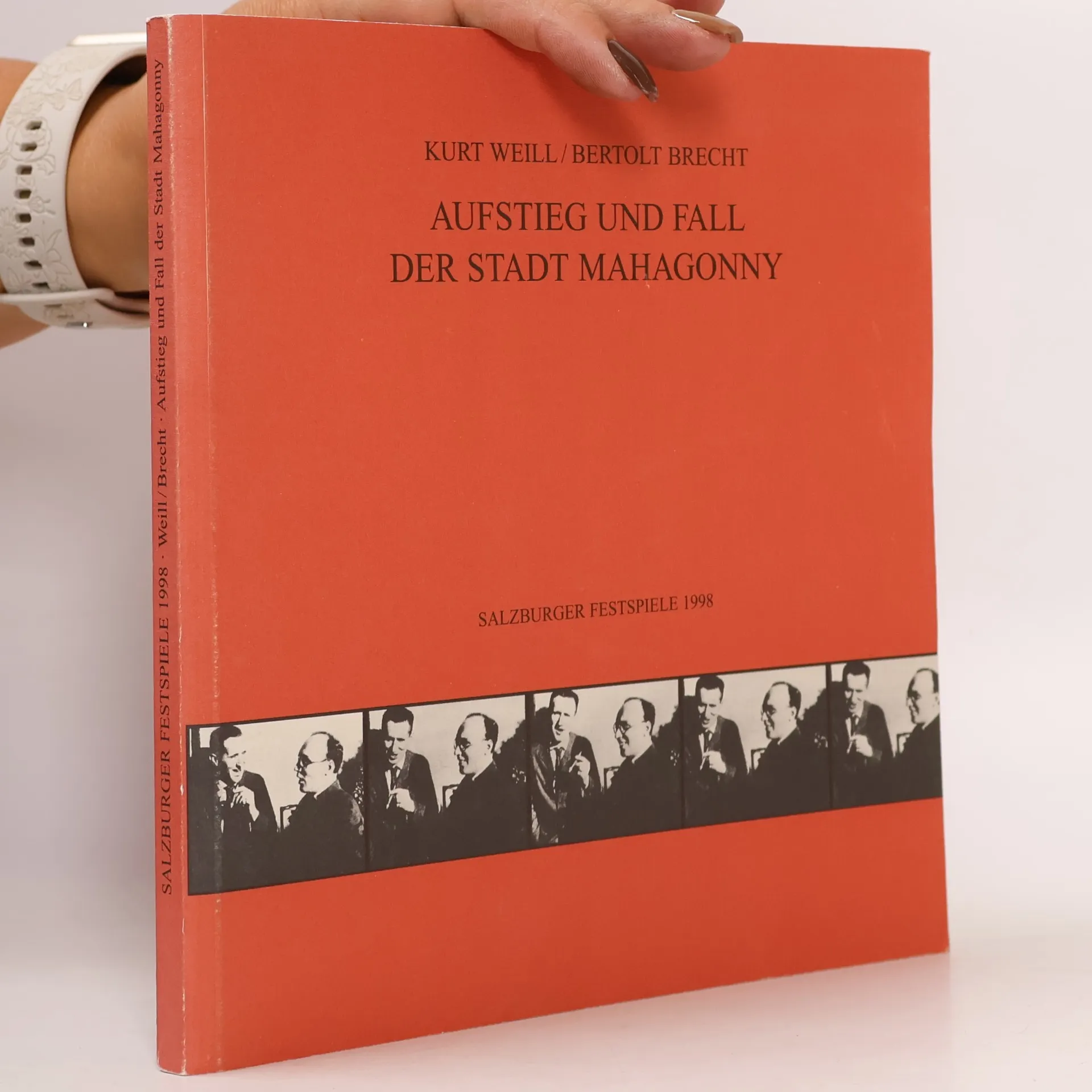
Aufstieg und Fall der Stadt Mahagonny
Salzburger Festspiele 1998
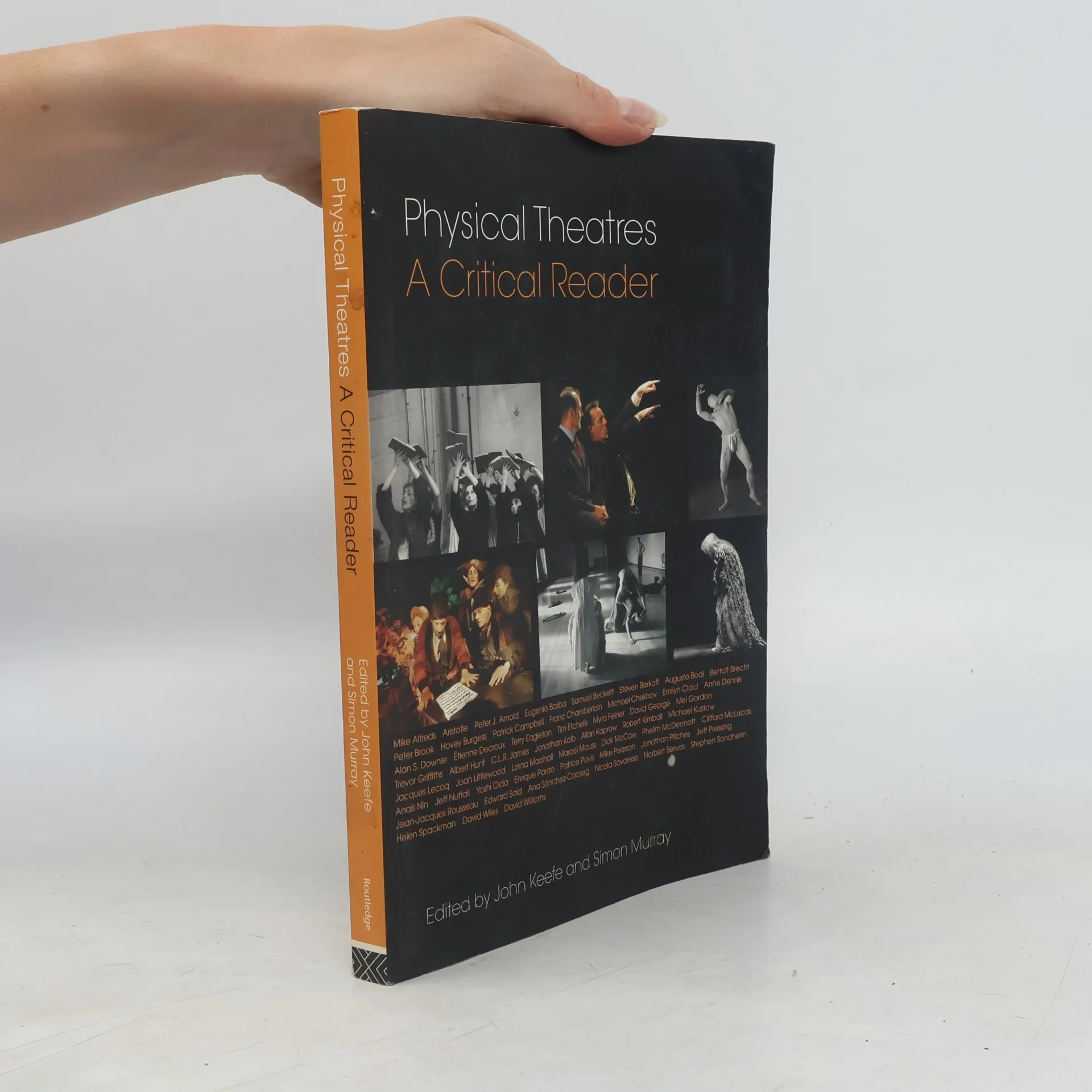
Physical Theatres: A Critical Reader is an invaluable resource for students of physically orientated theatre and performance. This book aims to trace the roots and development of physicality in theatre by combining practical experience of the field with a strong historical and theoretical underpinning.In exploring the histories, cross-overs and intersections of physical theatres, this critical Reader provides:six new, specially commissioned essays, covering each of the book s main themes, from technical traditions to contemporary practises discussion of issues such as the foregrounding of the body, training and performance processes, and the origins of theatre in both play and human cognition a focus on the relationship and tensions between the verbal and the physical in theatre contributions from Augusto Boal, Stephen Berkoff, tienne Decroux, Bertolt Brecht, David George, J-J. Rousseau, Ana Sanchez Colberg, Michael Chekhov, Jeff Nuttall, Jacques Lecoq, Yoshi Oida, Mike Pearson, and Aristotle.
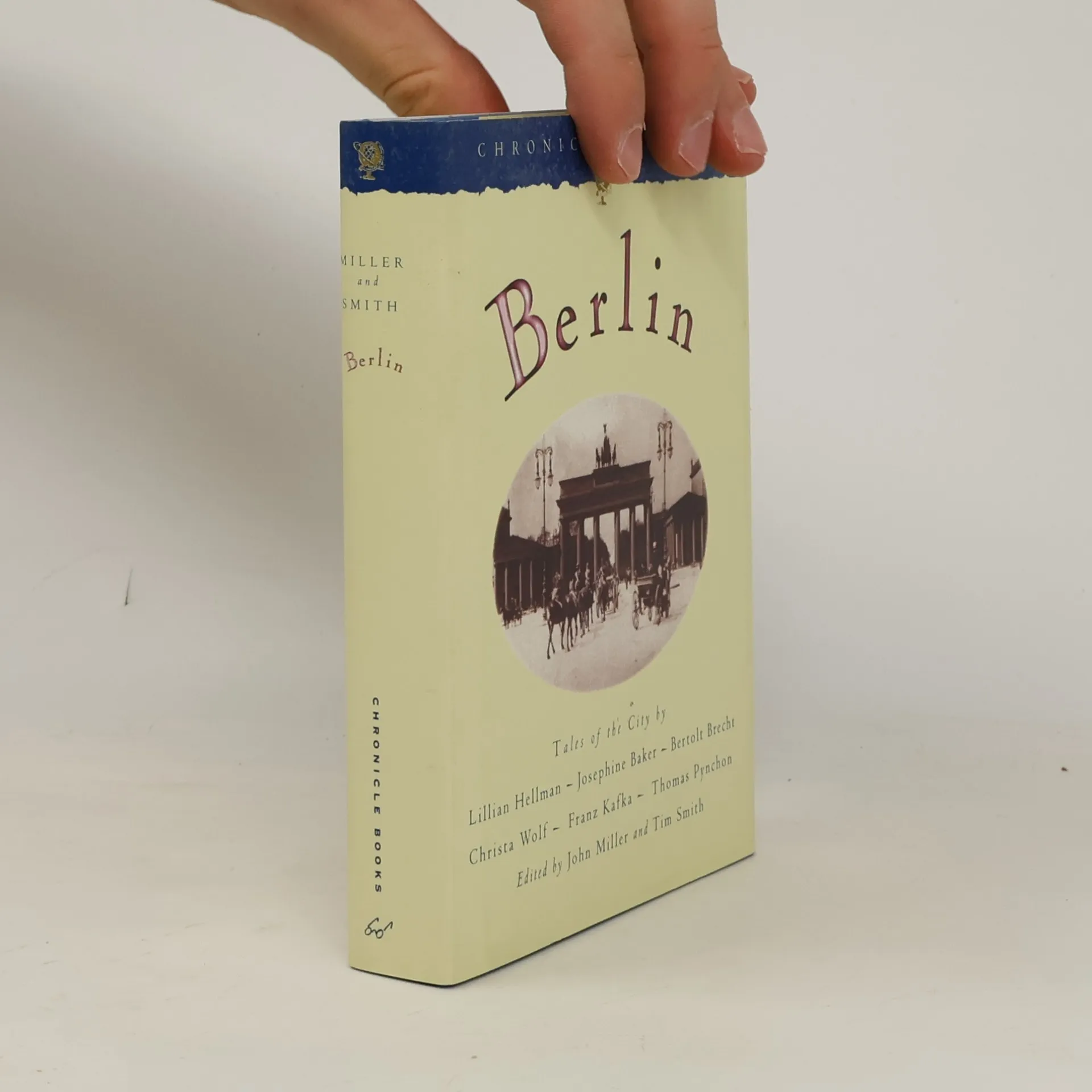
Berlin is one of the most intriguing cities in Europe. Despite its tumultuous history, it has remained the heart of Germany, even when the heart was divided in four. In one pocket-sized volume, Berlin collects the best fiction and nonfiction about the city from an array of writers of international stature. From chanteuse Josephine Baker on her second adopted home to playwright Bertolt Brecht on the decline of the Weimar Republic, and including an excerpt from Thomas Pynchon's Gravity's Rainbow, a resident's 1989 account of the fall of the Berlin Wall, and a description of Berlin from the 1912 edition of a Baedeker guide (written by Karl Baedeker himself), Berlin is an engaging literary stroll through a remarkable city. contents Preface / Vladimir Nabokov --The job / Bertolt Brecht --The Berlin diaries / Marie Vassiltchikov --Berlin Alexanderplatz / Alfred Doblin --Gravity's rainbow / Thomas Pynchon --Picture postcard, Berlin / Franz Kafka --The lavender lay / Marcellus Schiffer --The party at the wall / Bennett Owen --Julia / Lillian Hellman --Berlin's general aspect / Karl Baedeker --A Berlin diary / Christopher Isherwood --From Berlin to the Folies-Bergere / Josephine Baker --Berlin letter / Rainer Maria Rilke --Ritter Gluck / E. T. A. Hoffmann --The quest for Christa T. / Christa Wolf.
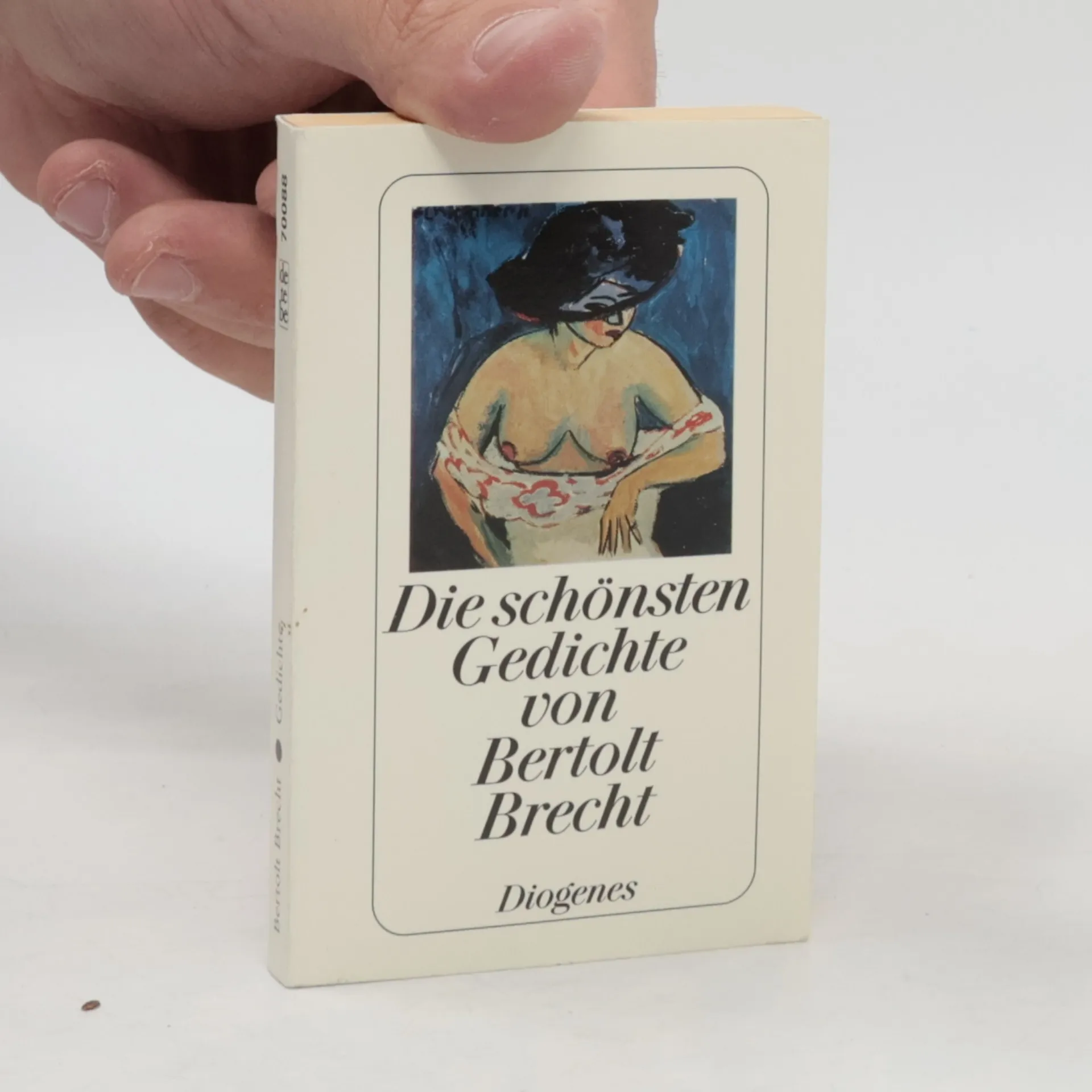
Die schönsten Gedichte
- 156 páginas
- 6 horas de lectura
Enth.: Die Bibel, Baal (1919), Baal (1922), Lebenslauf des Mannes Baal, Trommeln in der Nacht, Die Hochzeit, Der Bettler und Der tote Hund, Er treibt den Teufel aus, Lux in tenebris, Der Fischzug, Prärie, Im Dickicht, Im Dickicht der Städte
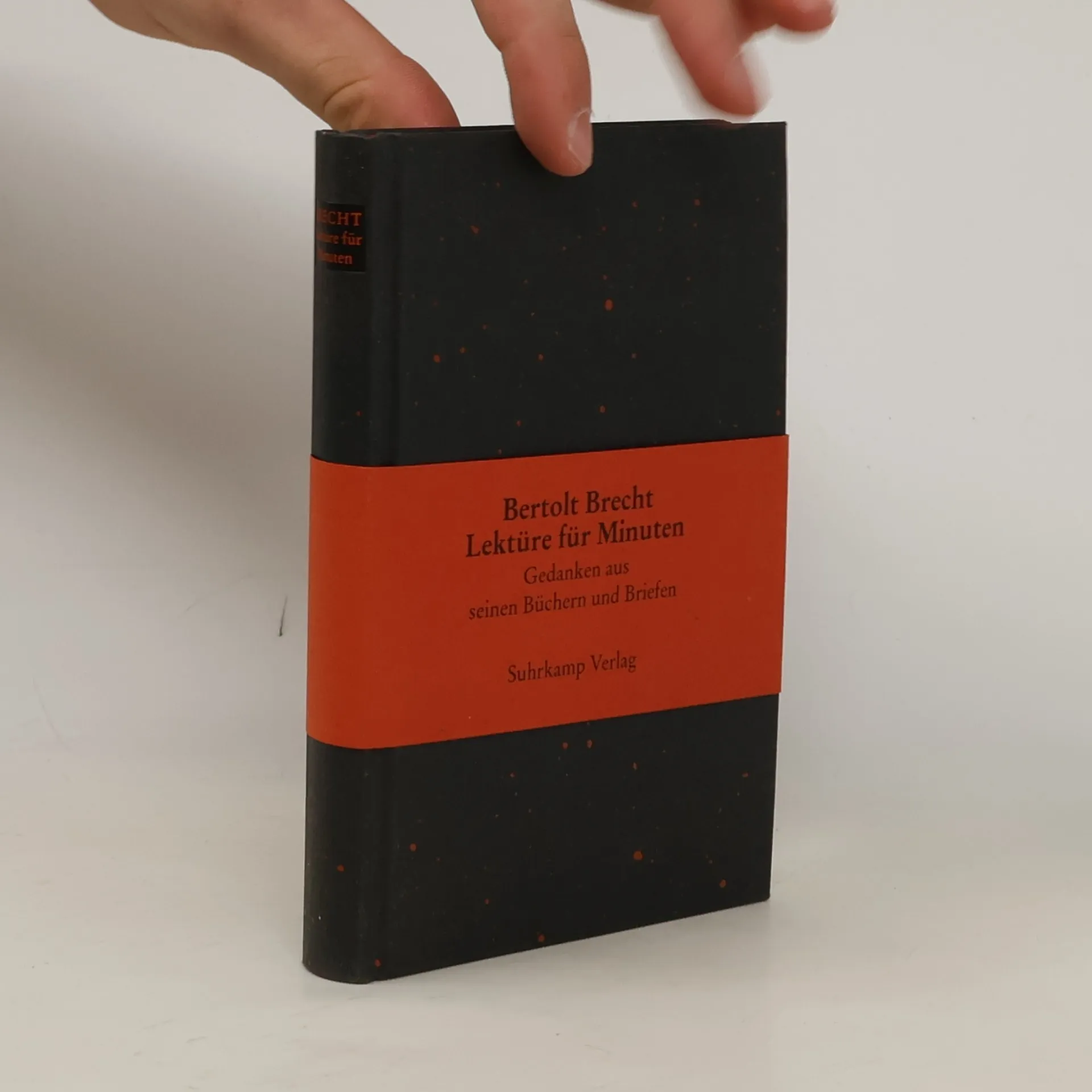
Lektüre für Minuten
- 232 páginas
- 9 horas de lectura
Die Gesamtausgabe der Gedichte von Brecht umfasst sieben Bände und enthält 90 ausgewählte Gedichte aus über tausend. Sie zeigt Brechts Meisterschaft in verschiedenen lyrischen Formen, beginnend mit seinen frühen Gedichten aus dem Ersten Weltkrieg bis zu seinen letzten lyrischen Äußerungen.
Gesammelte Werke 5
Stücke 5
Stucke 1-7 Gedichte 1-3 Prosa 1-? Zum theater 1-3 Zur Literatur und Kunst 1-2 Zur Politik und Gesellschaft canvas paper packs. 6 lbs
Für alle Fälle
- 109 páginas
- 4 horas de lectura
Stucke 1-7 Gedichte 1-3 Prosa 1-? Zum theater 1-3 Zur Literatur und Kunst 1-2 Zur Politik und Gesellschaft canvas paper packs. 6 lbs
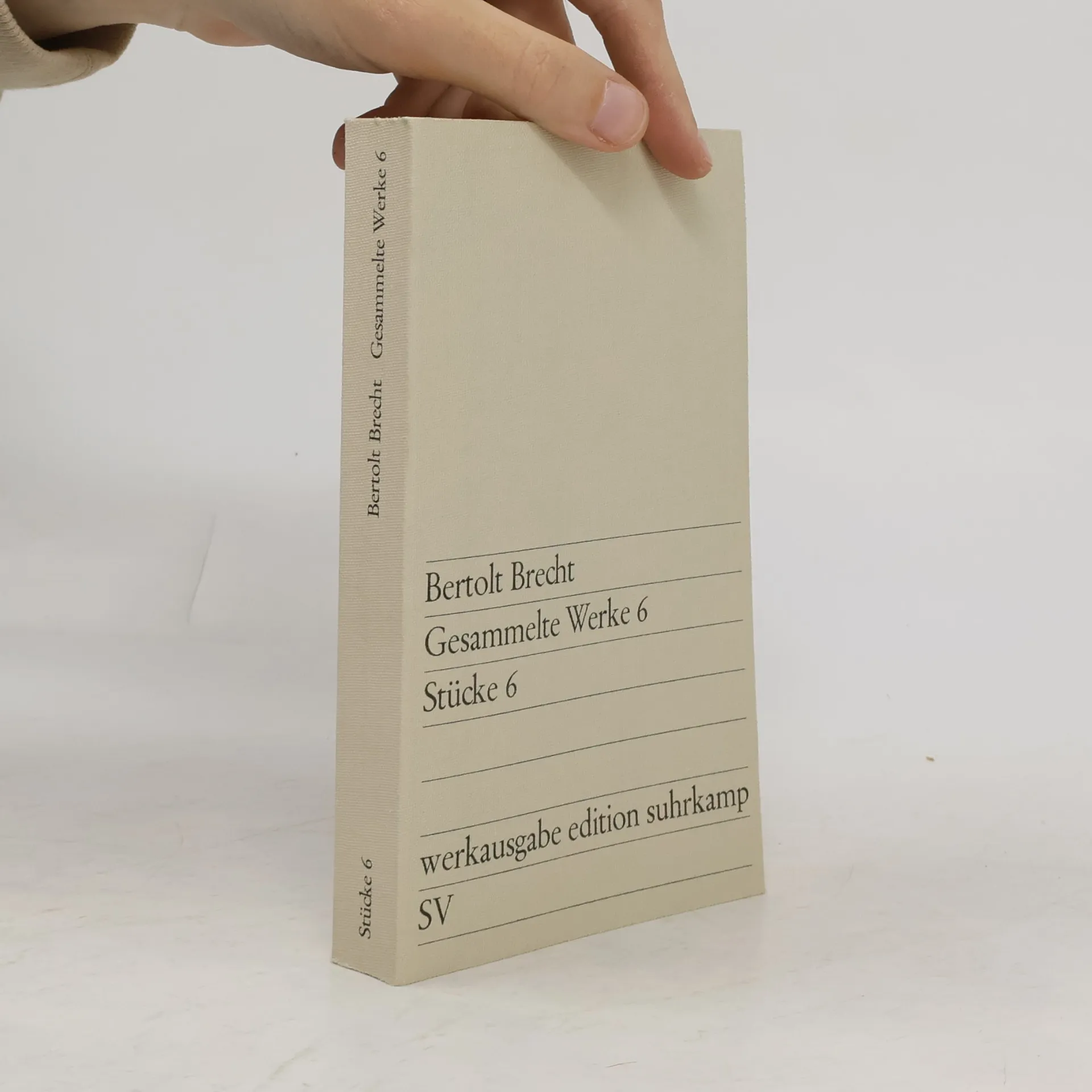
Gesammelte Werke 6
Stücke 6
Stucke 1-7 Gedichte 1-3 Prosa 1-? Zum theater 1-3 Zur Literatur und Kunst 1-2 Zur Politik und Gesellschaft canvas paper packs. 6 lbs
Stücke 9
- 462 páginas
- 17 horas de lectura
Contains the plays:Coriolanus / Anna Seghers. Der Prozeß der Jeanne d Arc zu Rouen 1431 / Turandot oder Der Kongreß der Weißwäscher / Don Juan von Moliére / Pauken und Trompeten
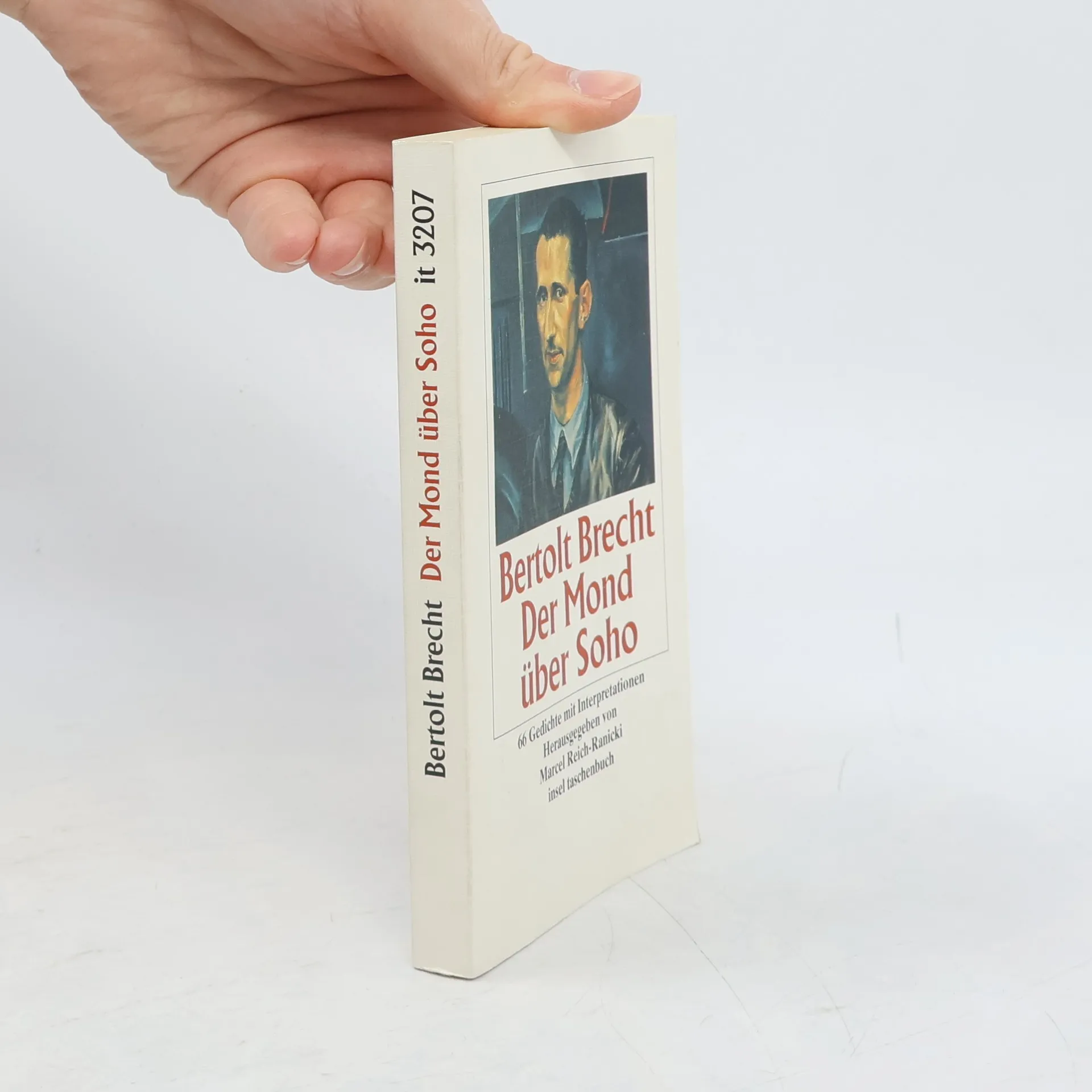
Der Mond über Soho
66 Gedichte mit Interpretationen
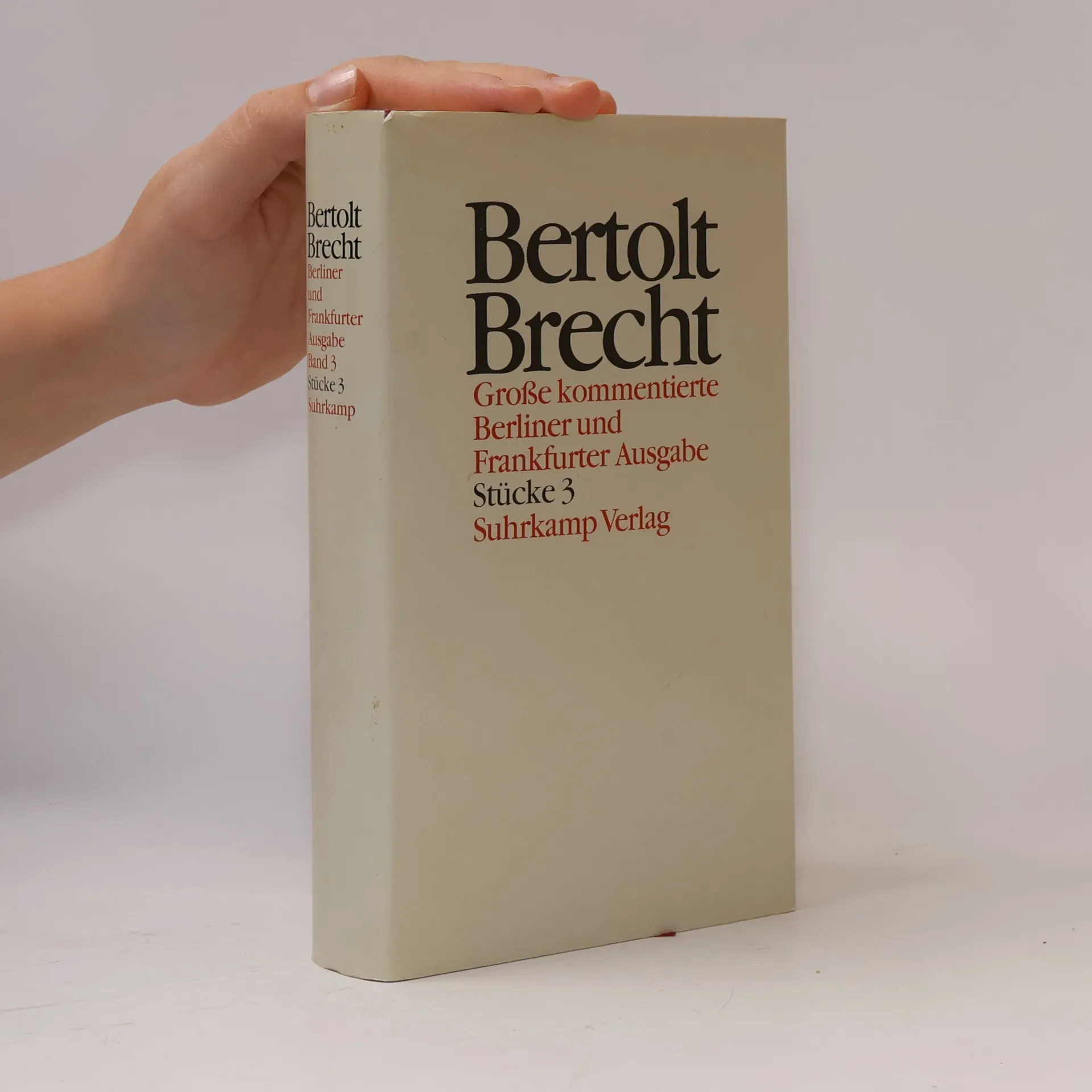
Stücke 3
- 502 páginas
- 18 horas de lectura
Enth.: Der Flug des Lindberghs, Das Badener Lehrstück vom Einverständnis, Der Jasager, Der Jasager. Der Neinsager, Die Maßnahme (1930), Die Maßnahme (1931), Die heilige Johanna der Schlachthöfe, Die Ausnahme und die Regel, Die Mutter (1933), Die Mutter (1938)
Stucke 1-7 Gedichte 1-3 Prosa 1-? Zum theater 1-3 Zur Literatur und Kunst 1-2 Zur Politik und Gesellschaft canvas paper packs. 6 lbs
Stucke 1-7 Gedichte 1-3 Prosa 1-? Zum theater 1-3 Zur Literatur und Kunst 1-2 Zur Politik und Gesellschaft canvas paper packs. 6 lbs
Stucke 1-7 Gedichte 1-3 Prosa 1-? Zum theater 1-3 Zur Literatur und Kunst 1-2 Zur Politik und Gesellschaft canvas paper packs. 6 lbs
Der vorliegende Band dokumentiert, daß Kunst vermag, »die Schönheit in ihrer reitzenden Gestalt«, wie Johann Jacob Bodmer 1741 zu Dantes Francesca-Darstellung formulierte, so abzuschildern, »als ob der Vorwurf derselben in der nackenden Natur vor Sinnen geleget wäre«. Die Schönheit von Brechts Versen, ihre nachhaltige Wirkung und der Vergleich mit lyrischen Bearbeitungen desselben Stoffs aus sechs Jahrhunderten beweisen: die Terzinen über die Liebe gehören ins Pantheon der Weltliteratur.
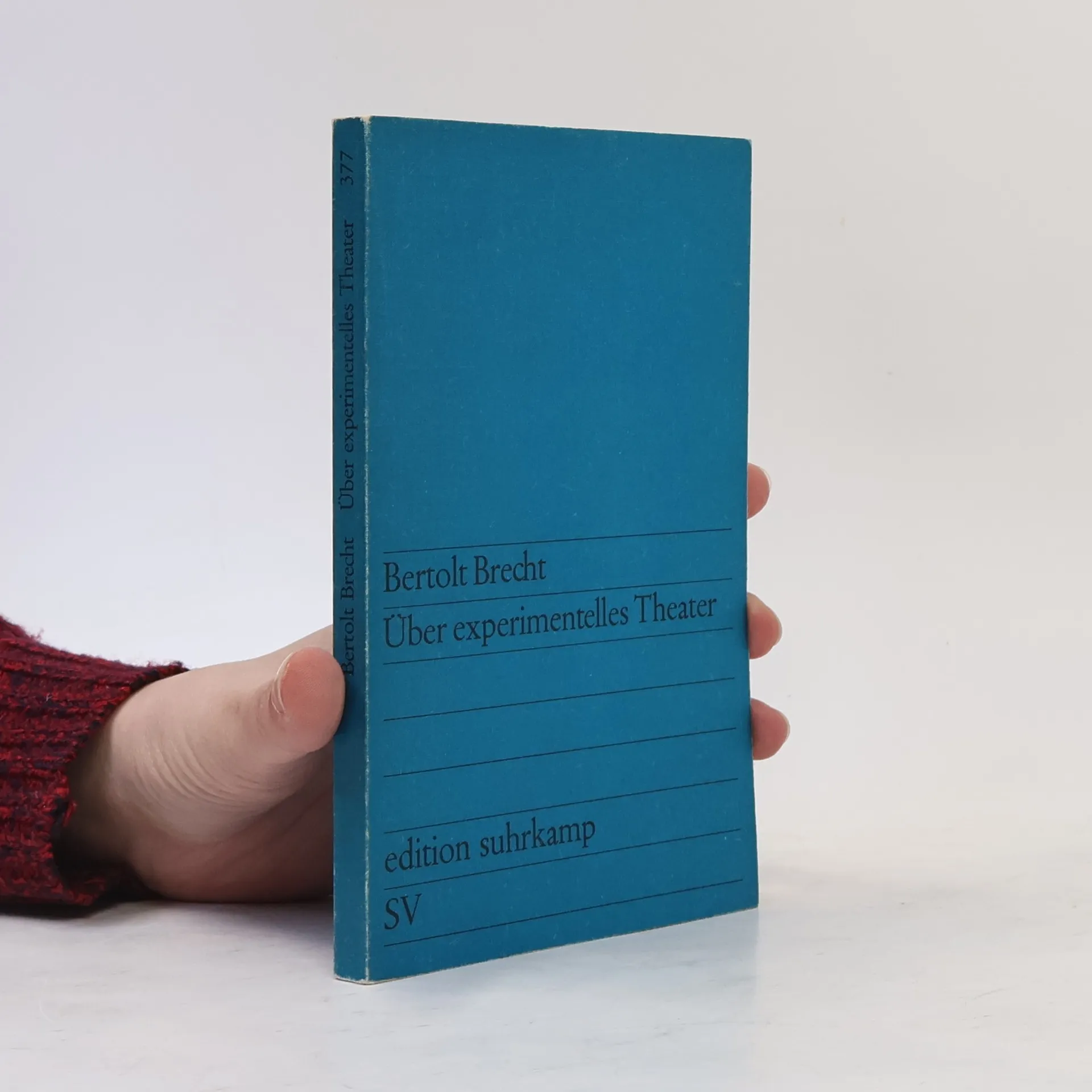
Über experimentelles Theater
- 168 páginas
- 6 horas de lectura
Obsahuje hry: Život Eduarda Druhého Anglického (1923) — Sofoklova Antigona (1947) — Proces Johanky z Arku v Rouenu 1431 (1952) — Don Juan (1952) — Bubny a trumpety (1954) — Coriolanus (1955) — Domácí učitel (1949). Doslov napsal Ludvík Kundera.
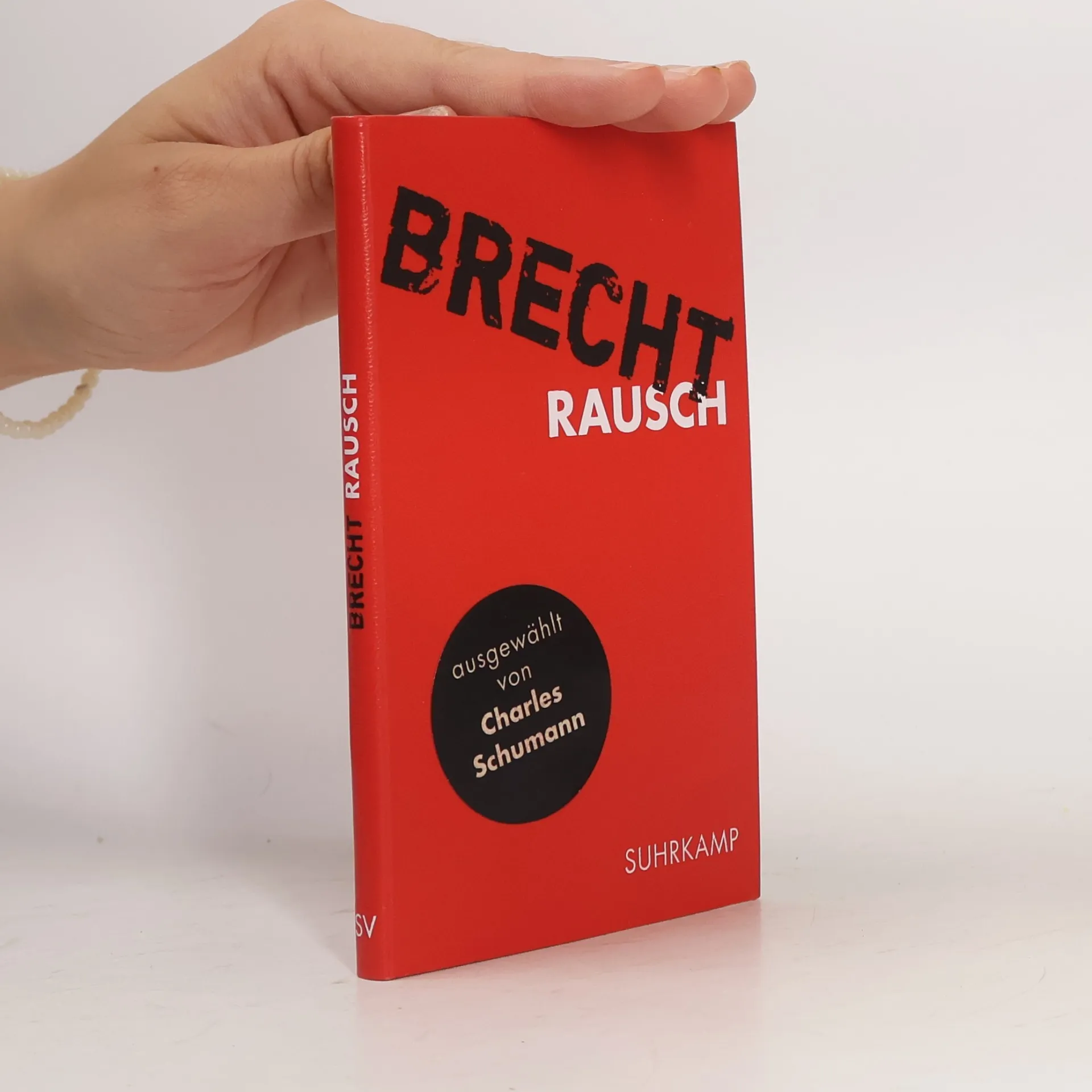
Rausch
- 104 páginas
- 4 horas de lectura
Die Texte, die wir veröffentlichen, wurden in den 30er und 40er Jahren verfasst, als der Schatten des Hitlerregimes bedrohlich über Europa fiel. Brecht war nicht nur ein großer Dichter und Dramatiker, sondern auch ein großer Denker, ein engagierter Künstler, für den Kunst und Politik wie die Finger einer Hand vereint waren. Er war vor allem ein Mensch der praktischen Handlung. Diese Texte streben nicht an, diesen untrennbaren Aspekt umfassend zu erfassen. Sie eröffnen jedoch Perspektiven, um auch die andere Seite Brechts kennenzulernen, und lassen keinen Zweifel daran, dass Brecht ein vollendeter Intellektueller, Kämpfer und Mensch war.
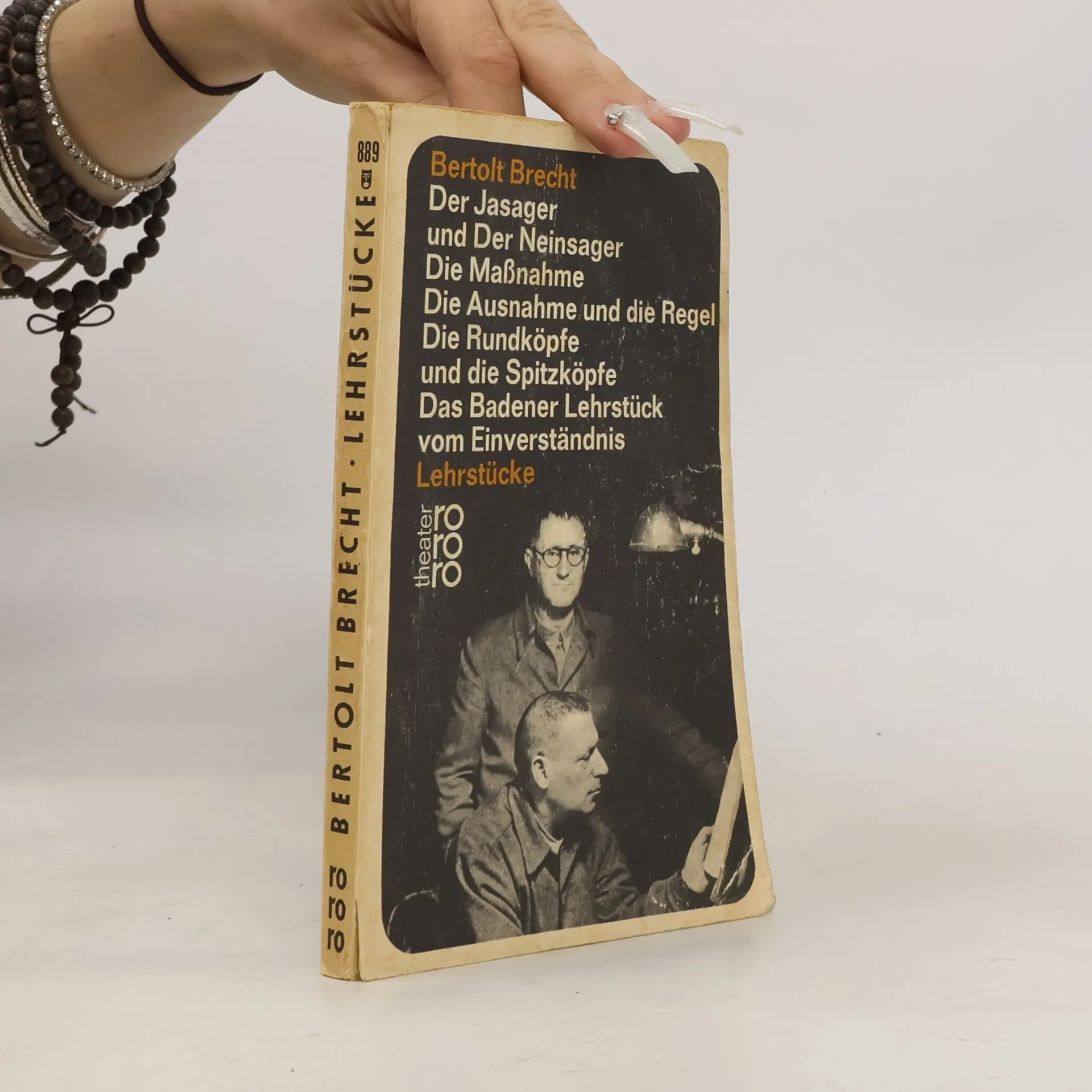
Includes five Bertolt Brecht plays: Der Jasager und Der Neinsager ~ Die Massnahme ~ Die Ausnahme und die Regel ~ Die Rundköpfe und die Spitzköpfe ~ Das Badener Lehrstück vom Einverständnis.
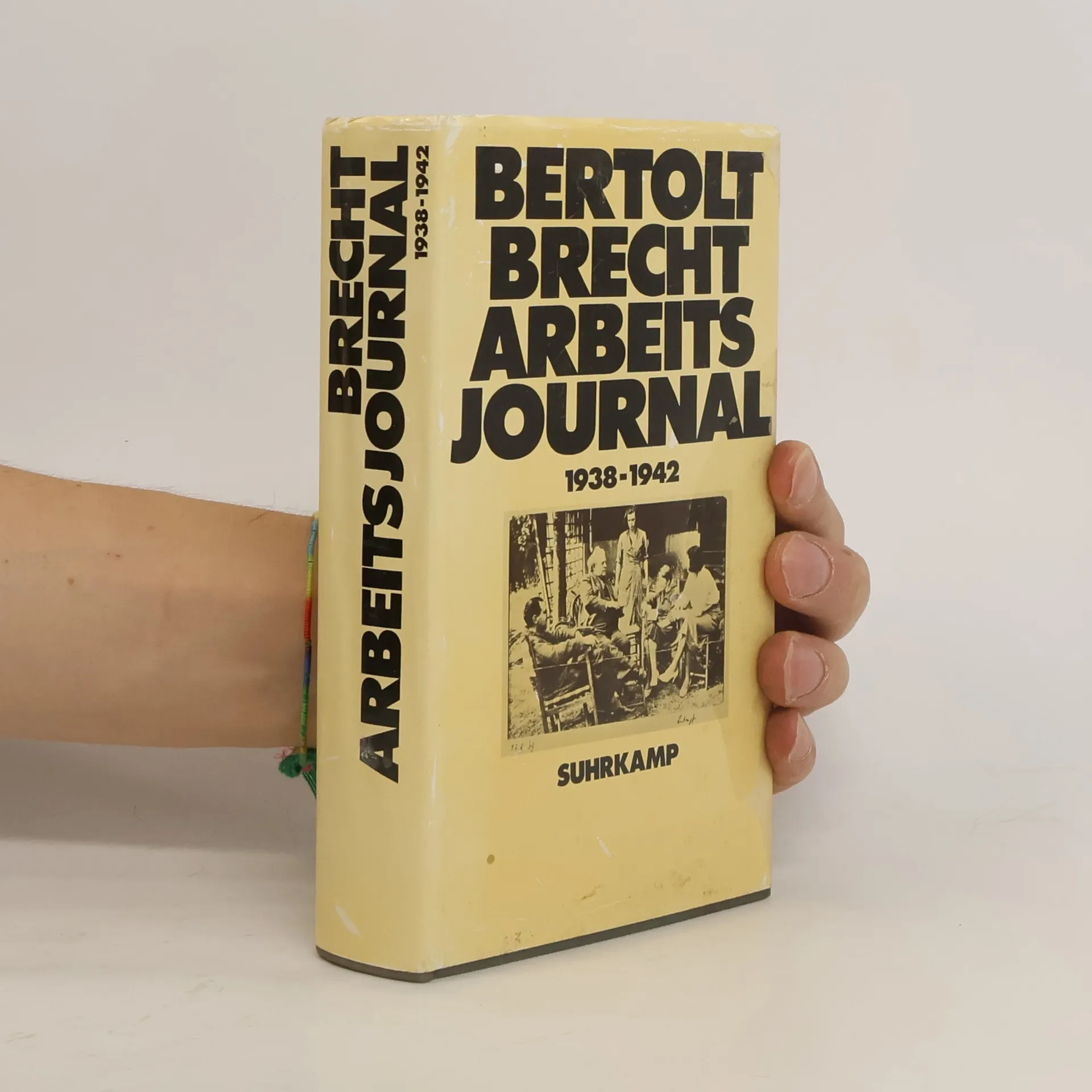
Arbeitsjournal, in 3 Bdn.. 1938-1942; 1942-1955; Anmerkungen
- 1222 páginas
- 43 horas de lectura
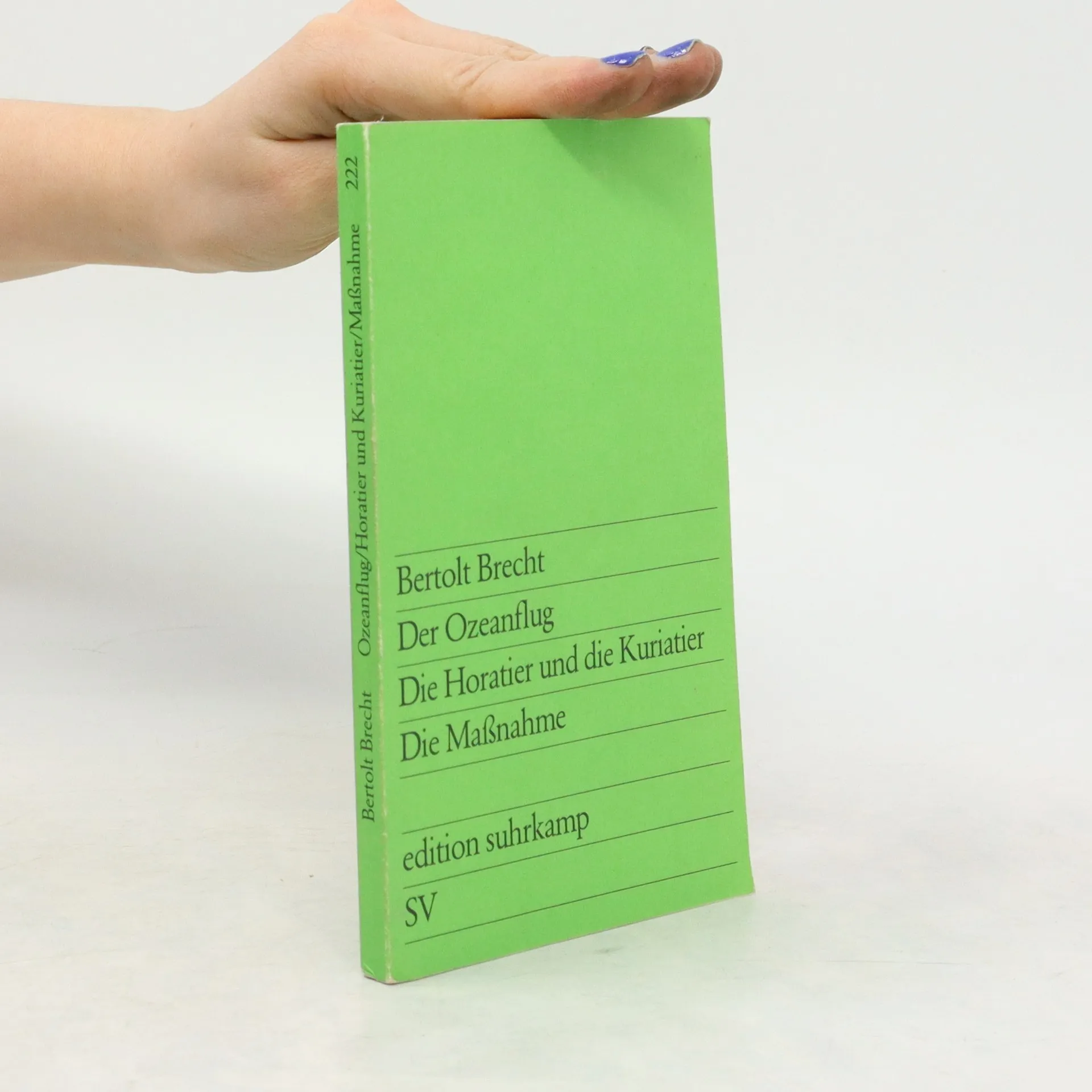
Der Ozeanflug – Die Horatier und die Kuriatier – Die Maßnahme
- 92 páginas
- 4 horas de lectura
Brecht begann Ende der zwanziger Jahre, Lehrstücke zu schreiben, um gesellschaftliche Missstände aufzuzeigen. Er kritisiert den Unterschied zwischen Tätigen und Betrachtenden und schlägt vor, junge Menschen durch Theaterspielen zu erziehen, um sie sowohl aktiv als auch reflektierend zu machen.
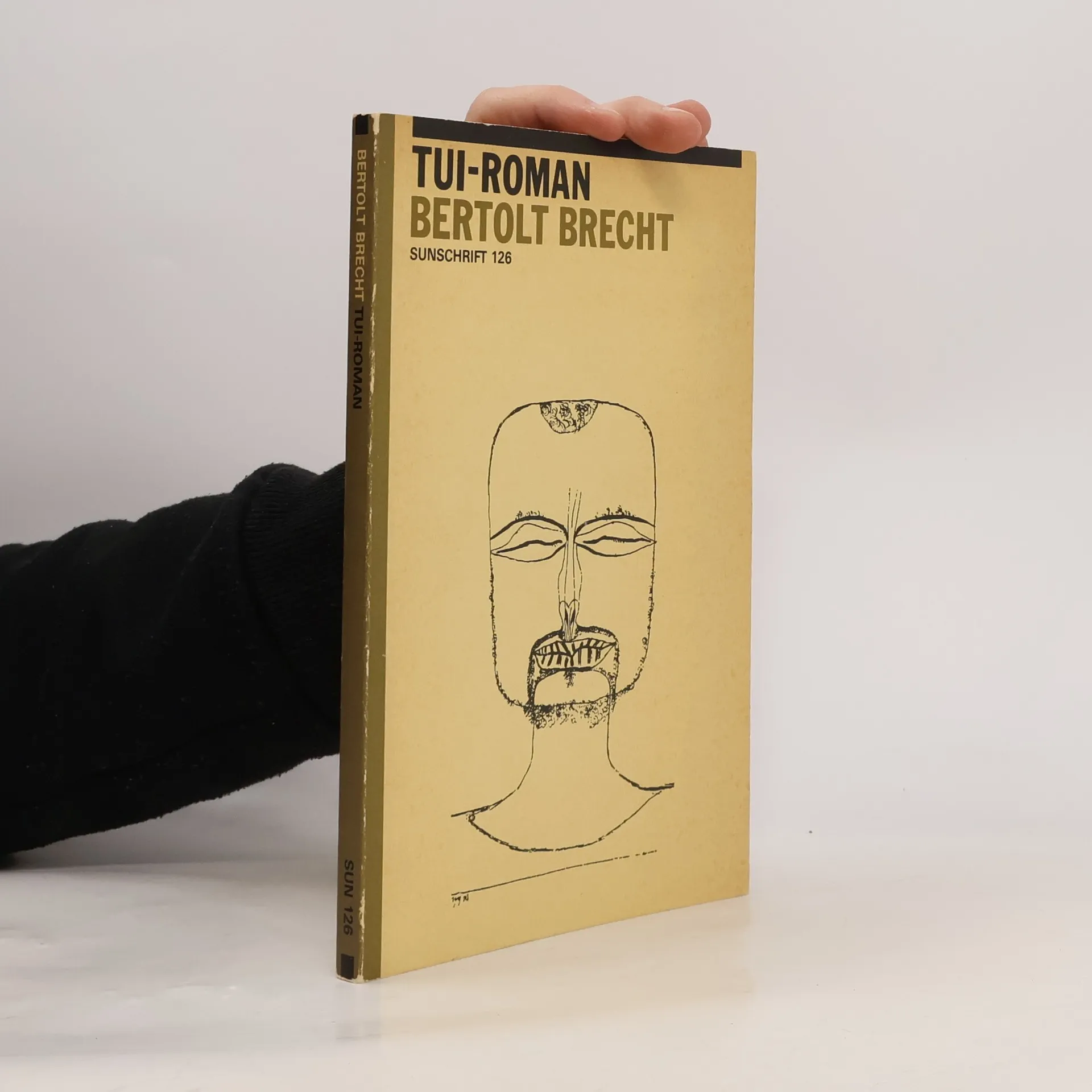
Tui-Roman
- 119 páginas
- 5 horas de lectura
È in una Cina immaginaria che Brecht decise di trasporre narrativamente, con divertito coraggio, i tempi oscuri e turbolenti in cui la Storia gli diede in sorte di vivere. Cominciato durante l’esilio e rimasto frammentario dopo oltre un decennio di lavoro, Il romanzo dei tui è una satira feroce degli intellettuali che affittano a cottimo al migliore offerente il proprio ingegno: i «tui». Dal mare dell’imbecillità umana emerge qui un arcipelago di aneddoti, storielle, parabole e corrosivi esercizi di umorismo che mettono alla berlina tutti i grandi ideologi dell’Occidente e forniscono anche una diagnosi inaspettata e spiazzante dell’ascesa di Hitler. Un geniale e comico breviario sul cattivo uso dell’intelletto che zigzaga tra apologhi memorabili, trattati stravaganti (compreso uno sull’arte del leccapiedi) e racconti arguti, consegnandoci una requisitoria serrata e farsesca contro ogni pensiero fumoso e servile. Un tesoro di caustica comicità proposto per la prima volta al pubblico italiano.
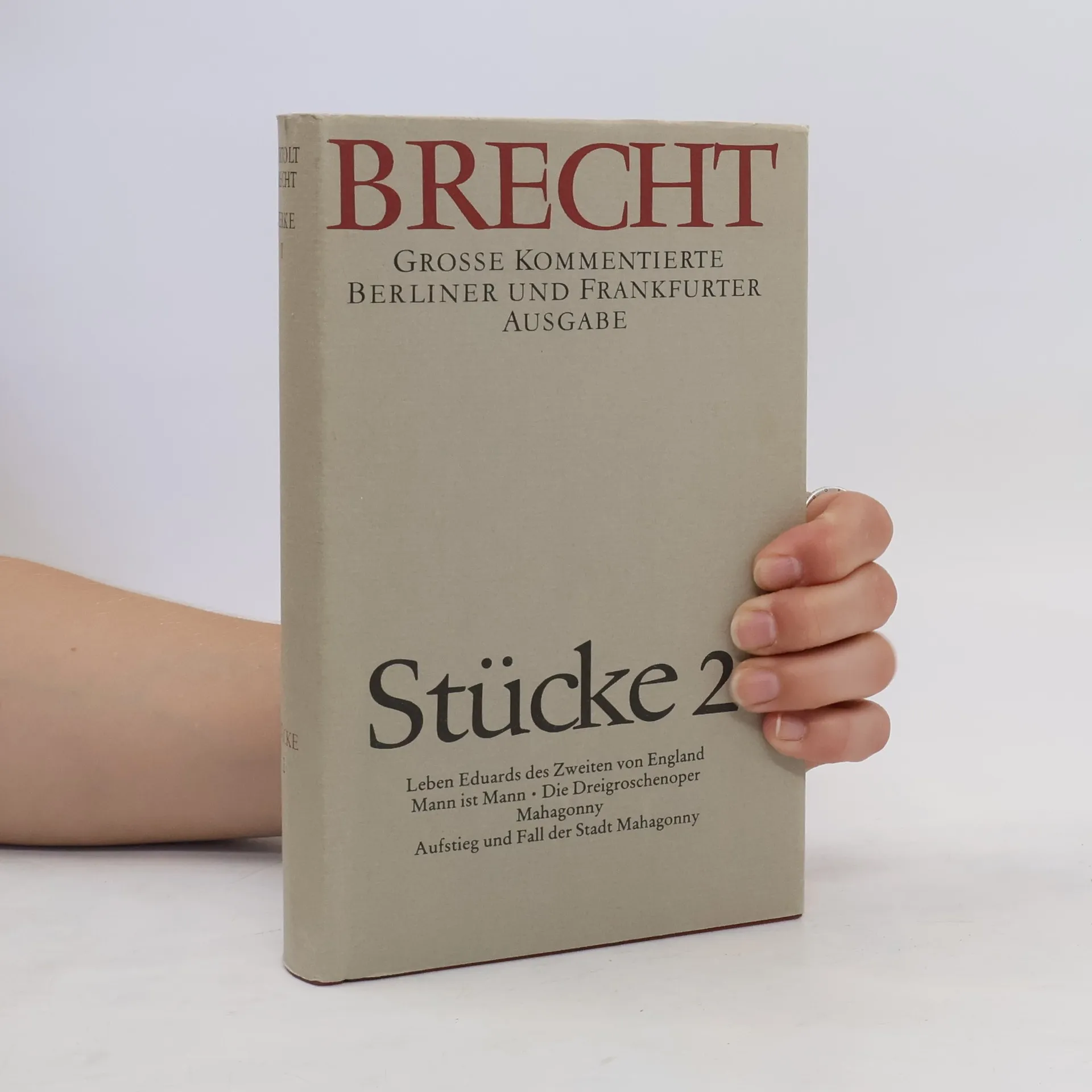
Stücke 2
- 474 páginas
- 17 horas de lectura
Enth.: Leben Eduards des Zweiten von England, Mann ist Mann (1926), Mann ist Mann (1938), Die Dreigroschenoper, Mahagonny, Aufstieg und Fall der Stadt Mahagonny
Buckower Elegien und andere Gedichte
Einmalige Sonderausgabe
Gedichte im Exil und Buckower Elegien , zwei von Bertolt Brecht selbst komponierte Sammlungen, vereinen Gedichte, die Brecht als »typisch« im doppelten Sinne empfand: typisch für ihn als Schreibenden und typisch für die Zeit, in der sie entstanden, auf die sie sich beziehen. Dieser Band ist eine unnummerierte Sonderausgabe der Insel-Bücherei und textidentisch mit IB810.
Das "Dreigroschenbuch" hat in erster Linie dokumentarischen Charakter. Es enthält alle Texte, die Brecht selbst in diesem Zusammenhang geschrieben hat, veröffentlichte und unveröffentlichte, also die Oper, den Film, den Prozeß, den Roman, Anmerkungen zur Oper, dann Arbeiten aus dem Nachlaß, Aufsätze zur Musik der Oper, zur Dreigroschenbühne, eine zweite, bisher unbekannte Erklärung zum Plagiatvorwurf, dann Neufassungen und Zusatzstrophen zu den Songs und schließlich die Aufzeichnung eines Gesprächs zwischen Brecht und Giorgio Strehler, dem Regisseur der berühmten Mailänder Aufführung, über Möglichkeiten moderner Neuinszenierungen der Oper. Einen Vergleich mit der Vorlage ermöglicht die deutsche Übersetzung der Beggar's Opera von Hans Magnus Enzensberger. Es folgt eine Auswahl der wichtigsten Arbeiten und Stimmen über die Dreigroschenoper. Das Dreigroschenbuch besteht aus zwei Bänden.
Poesie
- 341 páginas
- 12 horas de lectura
L'opera poetica di Bertolt Brecht si presenta all'interno della lirica tedesca del Novecento con caratteri di spiccata originalità. Brecht fu un testimone lucidissimo del secolo scorso, e di questo impegno di testimonianza, rafforzato dall'adesione a un marxismo vissuto criticamente e sempre rimesso in discussione, risentono anche le sue poesie. C'è tuttavia un Brecht più intimo e personale che fin dagli anni della gioventù si misura con i grandi temi della vita e, via via che il suo stile si arricchisce, riesce a trarne accenti di singolare secchezza e incisività, quasi volesse puntare a un'essenzialità propriamente classica.
Die Judith von Shimoda
Nach einem Stück von Yamamoto Yuzo
Anmerkung zu Die Judith von Shimoda - Die Judith von Shimoda. Spielfassung - Glen W. Shaw: Einleitung zur englischen Übersetzung von Yamamoto Yuzo Three Plays - Brechts Journal vom 25.9.1940 - Stückplan - Notizen und Entwürfe - Die Handlung erstreckt sich - Die Judtih von Shimoda (im Film) - Der unbekannte Soldat - Yamamoto: Ich bin nicht gekauft - Hans Peter Neureuter: Nachwort
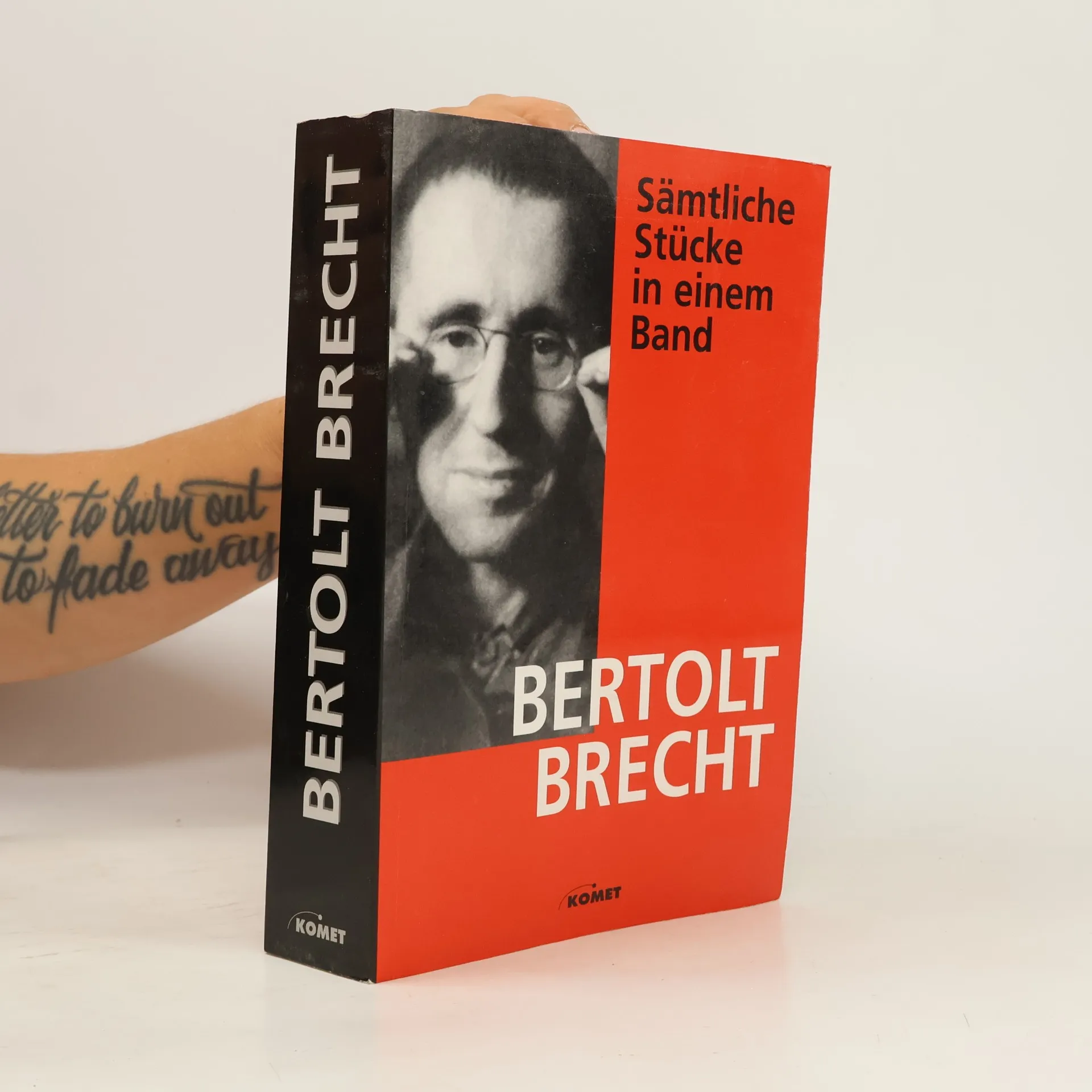
Die Stücke von Bertolt Brecht in einem Band
- 1003 páginas
- 36 horas de lectura
Contains the following pieces: Baal Trommeln in der Nacht Im Dickicht der Städte Leben Eduards des Zweiten von England Mann ist Mann Die Dreigroschenoper Aufstieg und Fall der Stadt Mahagonny Der Ozeanflug Das Badener Lehrstück vom Einverständnis Der Jasager und Der Neinsager Die Maßnahme Die hl. Johanna der Schlachthöfe Die Ausnahme und die Regel Die Mutter Die Rundköpfe und die Spitzköpfe Die Horatier und die Kuriatier Furcht und Elend des Dritten Reiches Die Gewehre der Frau Carrar Leben des Galilei Mutter Courage und ihre Kinder Das Verhör des Lukullus Der gute Mensch von Sezuan Herr Puntila und sein Knecht Matti Der aufhaltsame Aufstieg des Arturo Ui Die Gesichte der Simone Machard Schweyk im Zweiten Weltkrieg Das kaukasische Kreidekreis Die Tage des Commune Turandot oder der Kongreß der Weißwäscher Die Kleinbürgerhochzeit Der Bettler oder Der tote Hund Er treibt einen Teufel aus Lux in Tenebris Der Fischzug Dansen Was kostet das Eisen? Die sieben Todsünden der Kleinbürger Das epische Theater
"Die Feuer brannten. Auf dem Opernplatz in Berlin. Auf dem Königsplatz in München. Auf dem Schlossplatz in Dresden. Vor der Bismarcksäule in Dresden. Auf dem Römerberg in Frankfurt. Sie loderten in jeder deutschen Universitätsstadt", schrieb Erich Kästner über den 10. Mai 1933. Am späten Abend dieses Tages wurden Zehntausende Werke verfemter Autoren im Zuge groß inszenierter Bücherverbrennungen von den Nationalsozialisten den Flammen übergeben. Bis 1945 stellten die Nazis den Besitz und die Lektüre der Werke von über 4000 Autoren unter Strafe. Ihre Bücher wurden verboten!Die "Aktion wider den undeutschen Geist", die sich vor allem gegen jüdische, marxistische und pazifistische Schriftsteller richtete, war ein Fanal, welches das barbarische Wesen des Nationalsozialismus schon 1933 offenlegte. Denn wer Bücher verbrennt, verbrennt auch Menschen!BILD und "Vorsicht Buch!" präsentieren in der "Bibliotek der verbotenen Bücher" eine Auswahl der größten Literatur-Klassiker mit Werken von Heinrich Mann, Bertolt Brecht, Egon Erwin Kirsch, Erich Kästner, Gustav Meyrink, Erich Maria Remarque, Joseph Roth, Kurt Tucholsky, Lion Feuchtwanger und Stefan Zweig.
Brecht war während seiner Exiljahre, besonders in Amerika, von seinem Publikum abgeschnitten. Nach seiner Rückkehr 1947 begann er, seine Stücke selbst zu inszenieren und klassische Dramen zu bearbeiten. Diese originären Bühnenwerke, die er unter dem Titel »Bearbeitungen« veröffentlichen wollte, enthalten zusätzliche Texte zur Inszenierung.
Interpretation: Bertolt Brecht Leben des Galilei
- 88 páginas
- 4 horas de lectura
Interpretationen Deutsch – Bertolt Brecht: Leben des Galilei Dieses Buch erleichtert Ihnen die Lektüre des Dramas und vertieft Ihr Textverständnis . Eine optimale Vorbereitung für den Unterricht und für Klausuren! Der Band enthält: Hintergrundinformationen zu Brechts Leben und zur Entstehungsgeschichte des Stücks eine ausführliche Inhaltsangabe eine systematische Interpretation des Dramas unter folgenden Aspekten: Aufbau und Textstruktur , Personencharakteristik , Brechts Konzeption des epischen Theaters , Motive und zentrale Aspekte , Erzähltechnik und Sprache Interpretationen von Schlüsselstellen , die auch in Klausuren und in Abschlussprüfungen vorkommen könnten Mehr als nur ein Buch eBook , auch fürs Smartphone Online-Glossar zu literarischen Fachbegriffen
Die Antigone wurde über Jahrhunderte hinweg immer wieder neu erzählt, was به اعتبار همیشگی این تراژدی گواهی میدهد، زیرا مضنون اصلی آن تعارض فرمانهای قدرتمندان با قوانین آسمانی و طبیعت است؛ قوانینی بنیادین که انکارشان هر بار در مناسبتهای انسانی فاجعه از پی میآورد. در دفتر حاضر، سه روایت از این اثر باستانی گرد آمده است: برتولت برشت، در اقتباسی نوآورانه، آن را تمثیلی میکند بر فرجام شوم تجاوزطلبیهایی که آلمان هیتلری را آتشافروز جنگ جهانی دوم کردند؛ داستان درس ادبیات، با تکیه بر پسزمینهً تاریخی این تراژدی، به مفهوم مرگ در اسطوره میپردازد؛ در آنتیگونهً برلین، خواهری جان، در هنگامهً بمباران شبانهً شهر، با همهً تهدید دستگاه شکنجهً هیتلری، در راه دفن برادر خود، دفنی ممنوع، مانند آنتیگونهً اسطورهای مرگ را میپذیرد و تقدس مییابد.
Spectaculum 5
Moderne Theaterstücke
Spectaculum 8
Moderne Theaterstücke
Insel Clips, Nr. 21, Geschichten vom Herrn Keuner
- 103 páginas
- 4 horas de lectura
Von 1935 bis in die fünfziger Jahre hinein schrieb Bertolt Brecht die Geschichten vom Herrn Keuner. Sie zeigen den Autor als einen Meister der kurzen Prosa, als Meister klarer sachlicher Formen und einer aggressiven, sozialen Kritik.
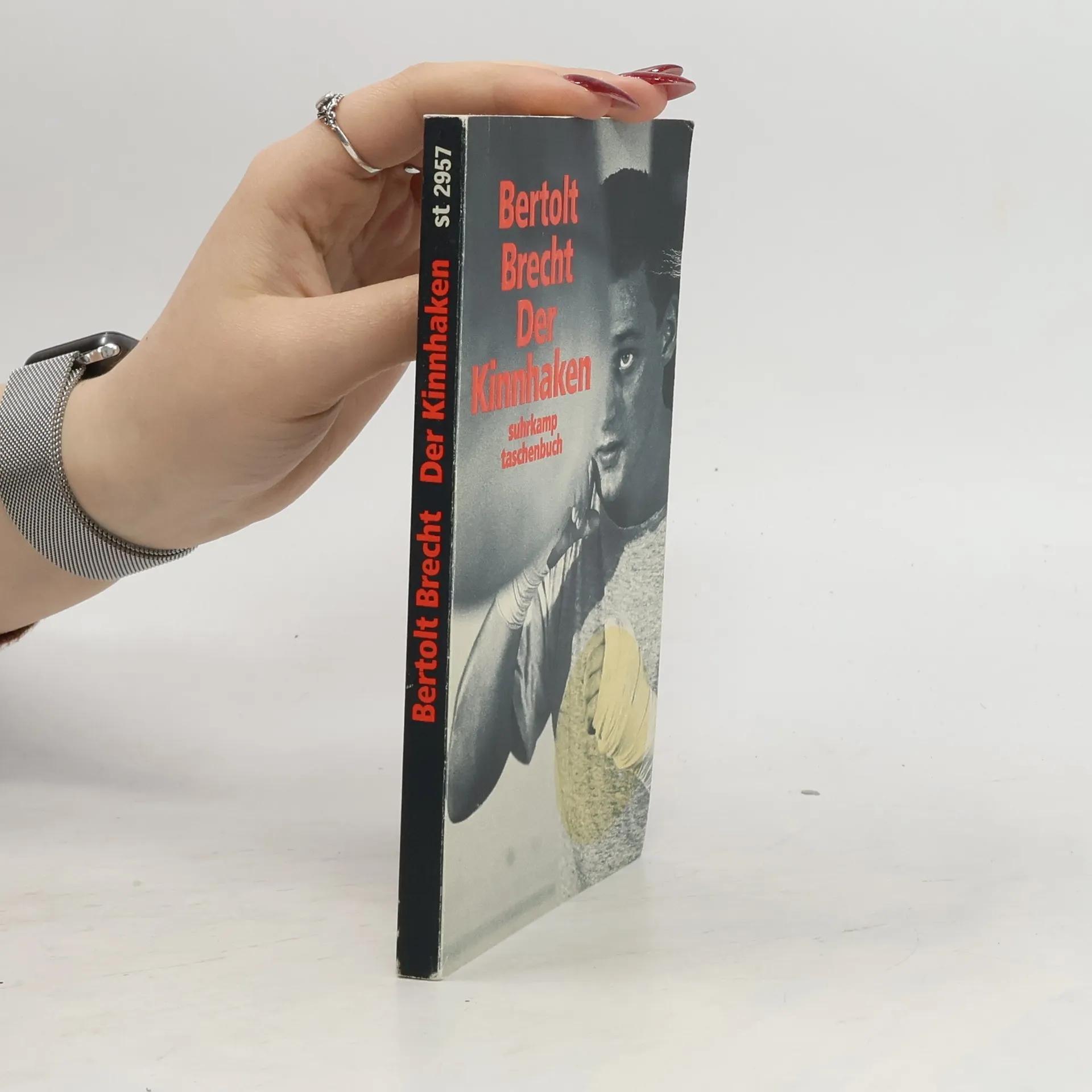
Der Kinnhaken und andere Box- und Sportgeschichten
- 164 páginas
- 6 horas de lectura
Bertolt Brecht wurde am 10. Februar 1898 in Augsburg geboren und starb am 14. August 1956 in Berlin. Von 1917 bis 1918 studierte er an der Ludwig-Maximilians-Universität München Naturwissenschaften, Medizin und Literatur. Sein Studium musste er allerdings bereits im Jahr 1918 unterbrechen, da er in einem Augsburger Lazarett als Sanitätssoldat eingesetzt wurde. Bereits während seines Studiums begann Brecht Theaterstücke zu schreiben. Ab 1922 arbeitete er als Dramaturg an den Münchener Kammerspielen. Von 1924 bis 1926 war er Regisseur an Max Reinhardts Deutschem Theater in Berlin. 1933 verließ Brecht mit seiner Familie und Freunden Berlin und flüchtete über Prag, Wien und Zürich nach Dänemark, später nach Schweden, Finnland und in die USA. Neben Dramen schrieb Brecht auch Beiträge für mehrere Emigrantenzeitschriften in Prag, Paris und Amsterdam. 1948 kehrte er aus dem Exil nach Berlin zurück, wo er bis zu seinem Tod als Autor und Regisseur tätig war.