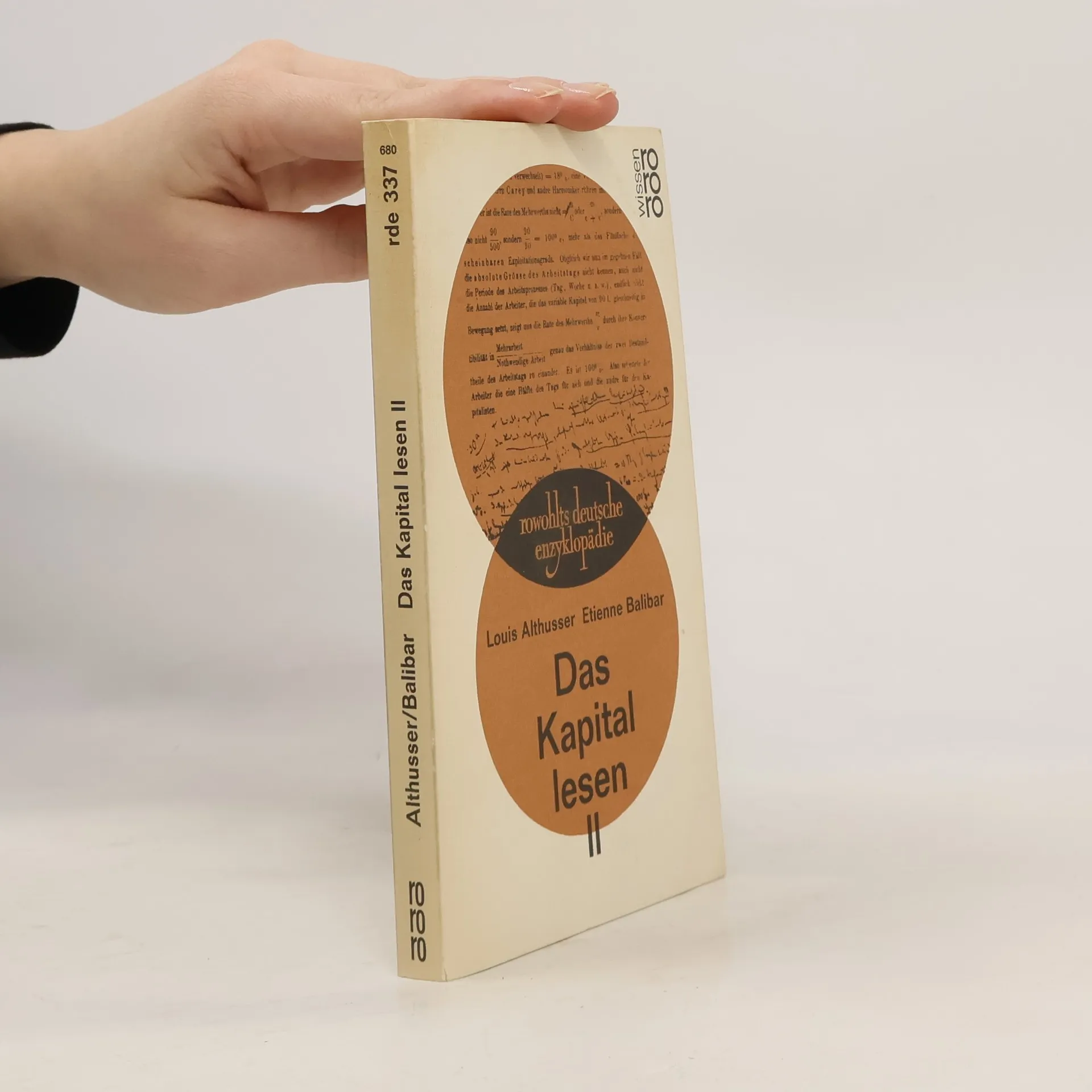
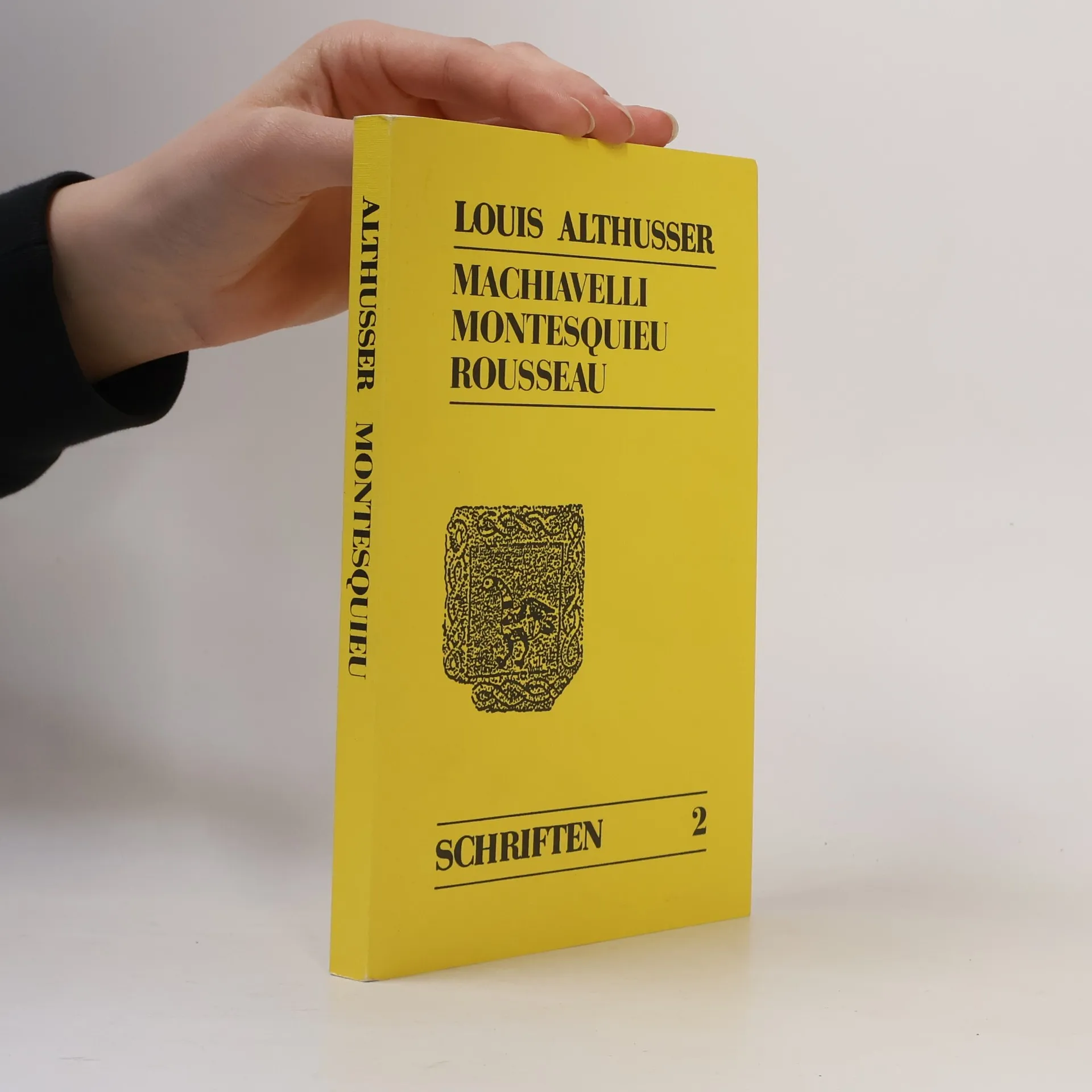
Louis Althusser Libros
Louis Althusser fue uno de los filósofos marxistas más influyentes del siglo XX. Sus posiciones teóricas, particularmente en la filosofía de la ideología, impactaron las ciencias sociales y las humanidades, proporcionando una base para gran parte de la filosofía "postmarxista". Aunque el trabajo de Althusser cayó en desgracia en la década de 1970, sus conceptos continúan informando los estudios literarios, la filosofía política, la historia, la economía y la sociología, y actualmente están siendo objeto de una reevaluación crítica.




What is to be Done?
- 120 páginas
- 5 horas de lectura
What is to be done? This was the question asked by Lenin in 1901 when he was having doubts about the revolutionary capabilities of the Russian working class. 77 years later, Louis Althusser asked the same question. Faced with the tidal wave of May ‘68 and the recurrent hostility of the Communist Party towards the protests, he wanted to offer readers a succinct guide for the revolution to come. Lively, brilliant and engaged, this short text is wholly oriented towards one objective: to organise the working class struggle. Althusser provides a sharp critique of Antonio Gramsci’s writings and of Eurocommunism, which seduced various Marxists at the time. But this book is above all the opportunity for Althusser to state what he had not succeeded in articulating elsewhere: what concrete conditions would need to be satisfied before the revolution could take place. Left unfinished, it is published here in English for the first time.
The Spectre Of Hegel: Early Writings
- 352 páginas
- 13 horas de lectura
Focusing on the early intellectual development of Louis Althusser, this collection showcases his writings before his break with Hegelian philosophy in 1953. It includes his influential essay "Ideology and Ideological State Apparatuses," providing a glimpse into his initial engagement with Hegel's ideas. The book highlights Althusser's complex relationship with humanist Marxism and the philosophical influences of Hegel and Catholicism that shaped his thought.
On Ideology
- 192 páginas
- 7 horas de lectura
The classic analysis of how particular political and cultural ideas come to dominate society
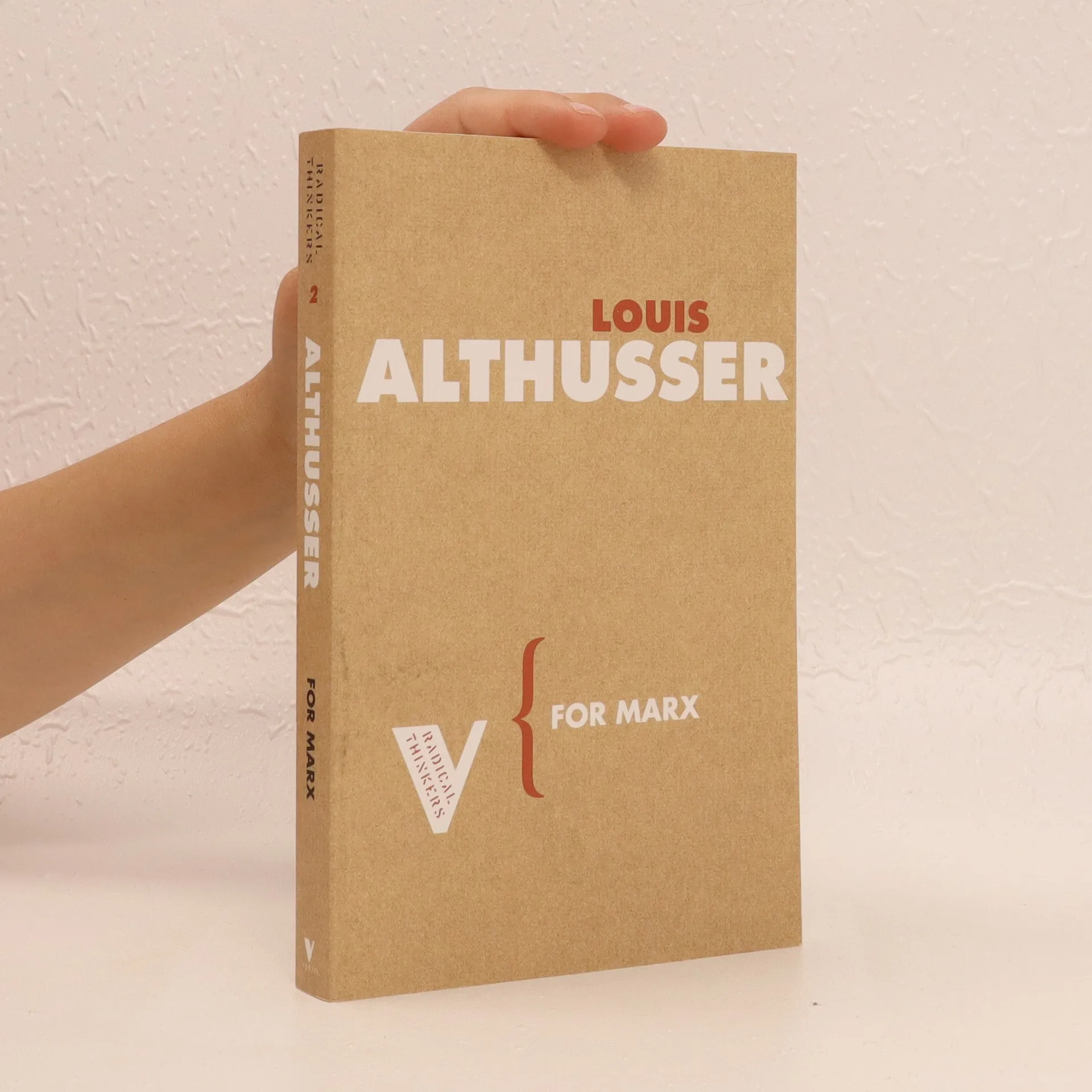
A milestone in the development of post-war Marxist thought.This is the work in which Louis Althusser formulated some of his most influential ideas. For Marx, first published in France in 1968, has come to be regarded as the founding text of the school of “structuralist Marxism” which was presided over by the fascinating and enigmatic figure of Louis Althusser. Structuralism constituted an intellectual revolution in the 1960s and 1970s and radically transformed the way philosophy, political and social theory, history, science, and aesthetics were discussed and thought about. For Marx was a key contribution to that process and it fundamentally recast the way in which many people understood Marx and Marxism.This book contains the classic statements of Althusser's analysis of the young Marx and the importance of Feuerbach during this formative period, of his thesis of the “epistomological break” between the early and the late Marx, and of his conception of dialectics, contradiction and “overdetermination.” Also included is a study of the materialist theater of Bertolazzi and Brecht and the critique of humanist readings of Marxism. Since his death in 1990, Althusser's legacy has come under renewed examination and it is increasingly recognized that the influence of his ideas has been wider and deeper than previously thought: reading For Marx, in its audacity, originality and rigor, will explain why this impact was so significant.
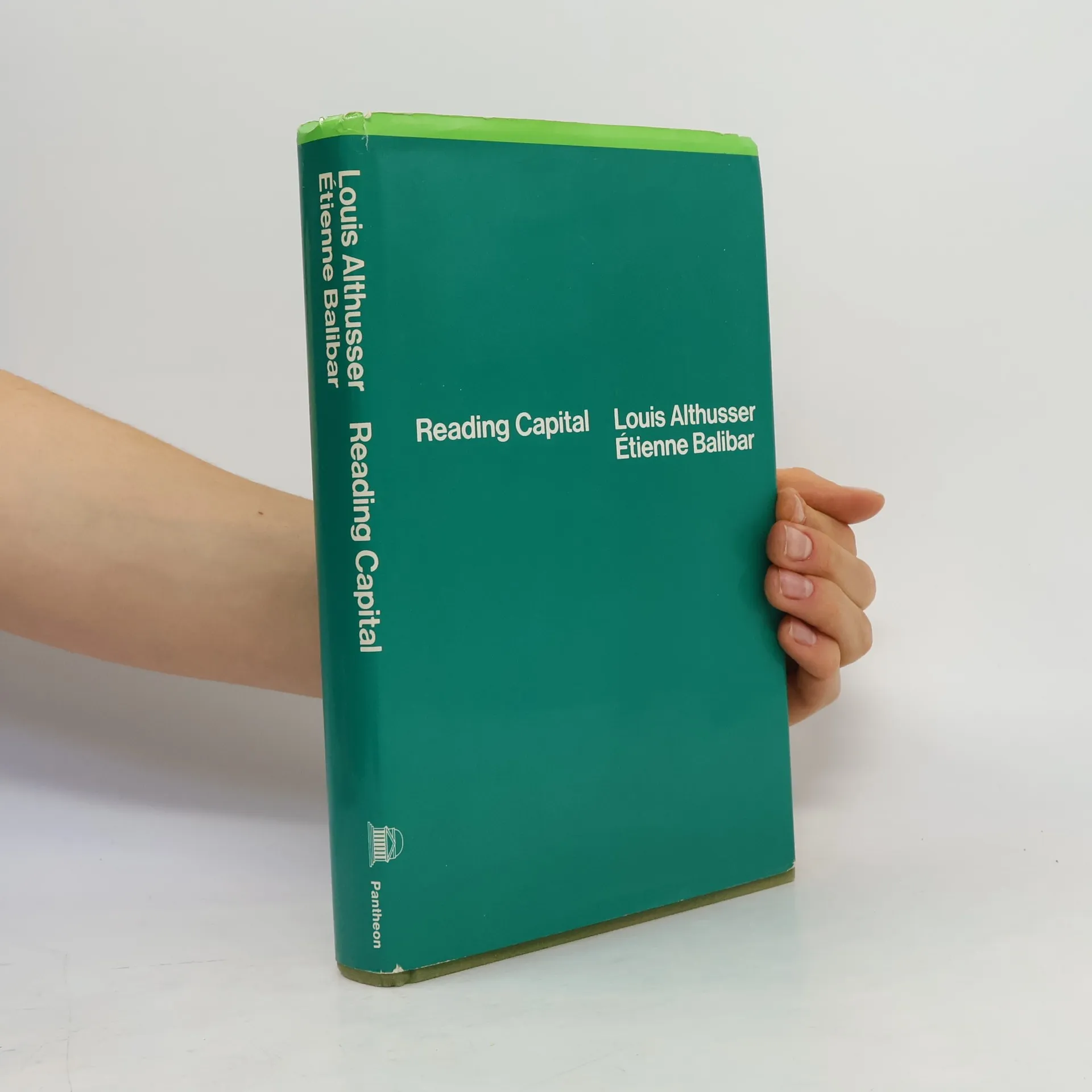
Reading Capital
- 340 páginas
- 12 horas de lectura
Together with Louis Althusser’s book For Marx , Reading Capital represents one of the foundational texts of the school of “structuralist Marxism” which transformed the face of modern philosophy and social theory. Presided over by the magnetic and intellectually coruscating figure of Althusser, the structuralist Marxists attempted no less than an intellectual revolution against dominant interpretations of Marx. Seeking to cleanse Marx of all Hegelian impurities and recast his thought on a rigorously scientific basis, in this work Althusser and one of his most brilliant students and colleagues, Etienne Balibar, subjected Marx’s method in Capital , his critique of classical political economy, and the fundamental terms of historical materialism, to searching textual analysis and challenging conceptual reconstruction. Inaugurating a new way of reading Marx that was to prove both intensely stimulating and capable of generating fierce controversy, Reading Capital is a work that cannot be bypassed by anyone interested in Marxism, and in theory more generally, in this century.
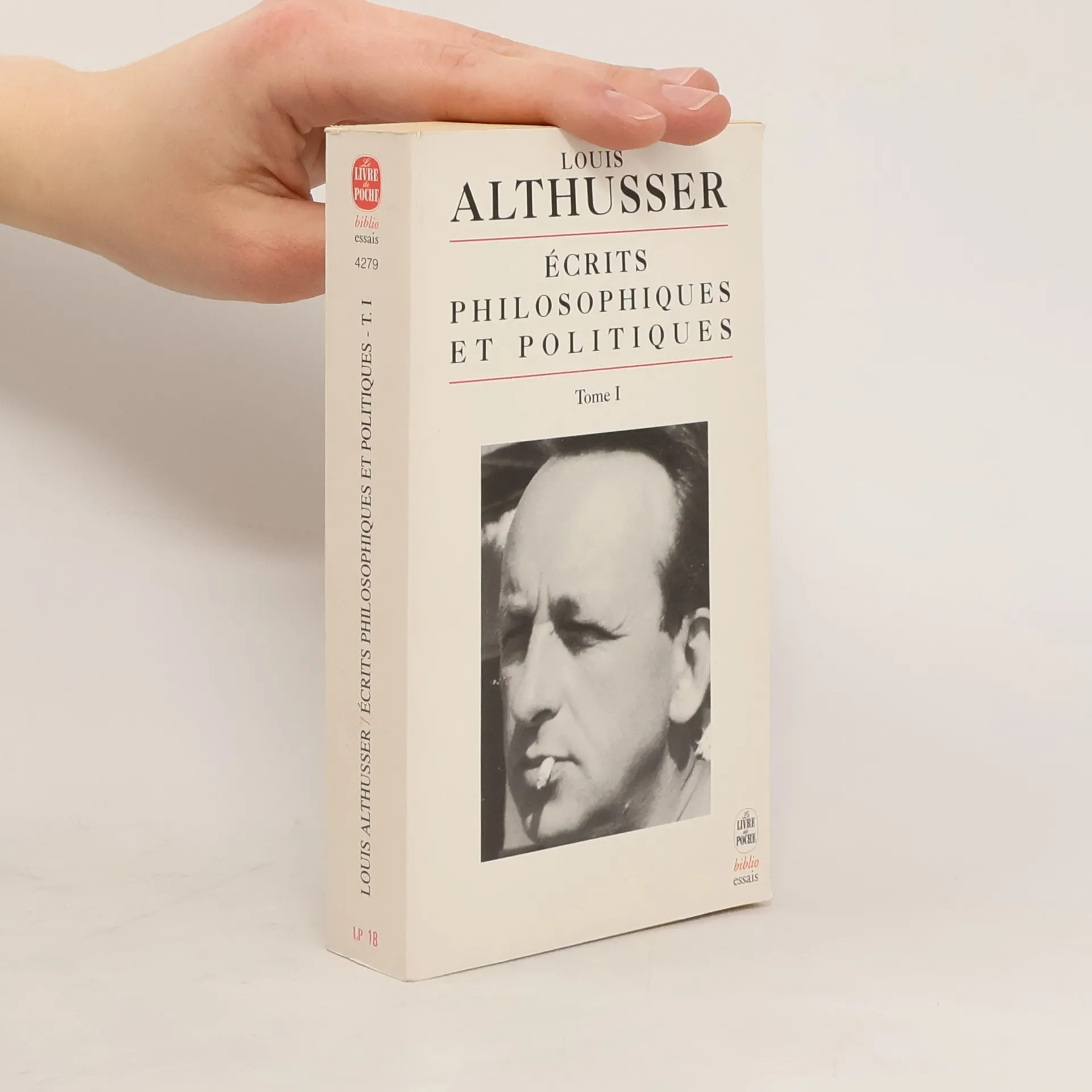
Louis Althusser est devenu célèbre en publiant en 1965 Pour Marx et Lire Le Capital. Mais l'éclat de cette pensée fondatrice d'école ne doit pas faire oublier qu'elle ne fut qu'un moment d'un itinéraire philosophique. Pratiquement inconnus jusqu'alors, les écrits de jeunesse de Louis Althusser sont marqués par un double passage de Hegel à Marx et du catholicisme au communisme. Publiés ici dans leur quasi-totalité, ils comprennent notamment des libellés aux titres évocateurs : L'internationale des bons sentiments et Sur l'obscénité conjugale, un mémoire universitaire passionnément hégélien et une longue lettre à Jean Lacroix qui éclairent bien des renversements ultérieurs. La seconde partie de ce volume met en évidence la complexité largement méconnue des textes écrits par Althusser au cours des années 1970, placés d'emblée sous le signe de la crise : crise personnelle, mais aussi crise de la théorie marxiste longuement analysée par le texte qui domine cette période : Marx dans ses limites. Dans ses derniers écrits, après 1980, Louis Althusser tente d'arracher à la nuit une réflexion sur ce qu'il appelle désormais " matérialisme de la rencontre ", puis " matérialisme aléatoire ". Il y est question de vide et de train qui ne mène nulle part.
Marx in seinen Grenzen
und andere Texte
Louis Althusser ist vor allem für seine epistemologische Marx-Lektüre bekannt, die zwischen einem idealistischen jungen und einem materialistischen reifen Marx unterscheidet. Wenig Beachtung fand jedoch, dass Althusser seine philosophischen Arbeiten als politische Interventionen innerhalb der Kommunistischen Partei verstand, der er lange angehörte. In den 1970er Jahren wurde sein Verhältnis zur Partei spannungsvoller, da sie keine Politik aus den neuen Massenbewegungen formulieren konnte. Die hier versammelten Texte führen die Krise des Marxismus auf dessen innere Grenzen zurück und eröffnen neue politische Wege. Althusser argumentiert, dass der Marxismus weder über eine Theorie des Staates noch der Politik verfügt, die wir in ihrer Eigenständigkeit denken müssen, um dem staatlichen Werden der Partei in der Sowjetunion entgegenzutreten. Er greift in die Diskussion ein, die um die „Diktatur des Proletariats“ unter westeuropäischen Kommunistischen Parteien entbrannte. Den Abschied von dieser Diktatur erkennt Althusser nicht als Demokratisierung, sondern als Fortsetzung des Stalinismus, da er den politischen Initiativen der Massen widerspricht. In seinem fragmentarischen Werk „Marx in seinen Grenzen“ liest er erneut Marx und andere Klassiker, um ein anderes Denken von Ideologie, Partei, Staat und Politik zu entwickeln und die Grenzen von Marx’ Denken zu hinterfragen. So kann eine historische Bilanz des Marxismus gezogen werden, d
Einleitung in die Philosophie für Nichtphilosophen
- 320 páginas
- 12 horas de lectura
Im Jahr 1975, inmitten der wohl politischsten Phase seines Lebens und seiner Arbeit, beschließt Louis Althusser, eine Art Lehrbuch zu verfassen, das die Philosophie auch für Laien zugänglich macht: „Einleitung in die Philosophie für Nichtphilosophen“ ist das bestechende Ergebnis. Der vorliegende Band ist keineswegs ein schlichtes populär-wissenschaftliches Einführungswerk – Louis Althusser liefert hier den Niederschlag seiner grundlegenden Thesen hinsichtlich der Themen Ideologie, Wissenschaft und Religion wie auch des Begriffs der Praxis, der für sein Denken zentral ist und hier wie nirgendwo anders Profil erhält. Dieses Buch stellt einen Augenblick der Synthese im Werk Althussers dar, eine funkelnde Momentaufnahme einer der einflussreichsten Philosophien des späten 20. Jahrhunderts, eine kristallklare Einführung in deren Hauptkategorien – und zugleich ein Manifest für das Denken der Zukunft. Ein Denken, von dessen brennender Relevanz der Erfolg derer zeugt, die als Althussers ‚Kinder‘ gelten dürfen. Von Jacques Rancière bis Alain Badiou, von Slavoj Žižek bis Étienne Balibar – seine Schüler verdanken ihm, noch dort, wo sie sich von ihm kritisch abgrenzen, wesentliche Impulse.
Die Krise des Marxismus
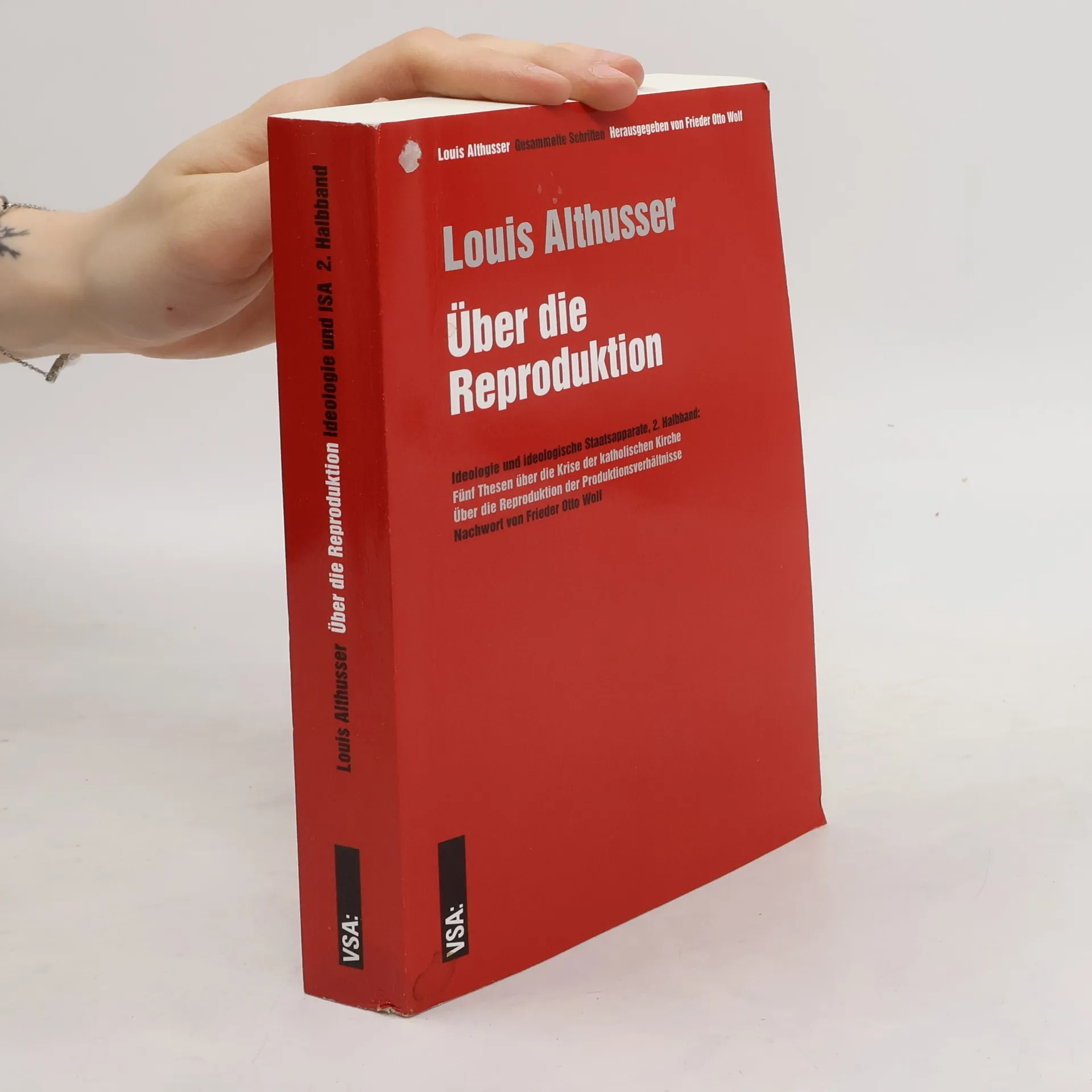
Ein hellrotes Bändchen aus den 1970er Jahren Mit einem Nachwort von Frieder Otto Wolf
Lenin und die Philosophie
- 89 páginas
- 4 horas de lectura
Mit der Frage, wie bestimmte Ideologien und ihre Apparate die Klassenstruktur kapitalistischer Gesellschaften aufrechterhalten, zielt Althusser auf ein Grundproblem marxistischer Interventionen.
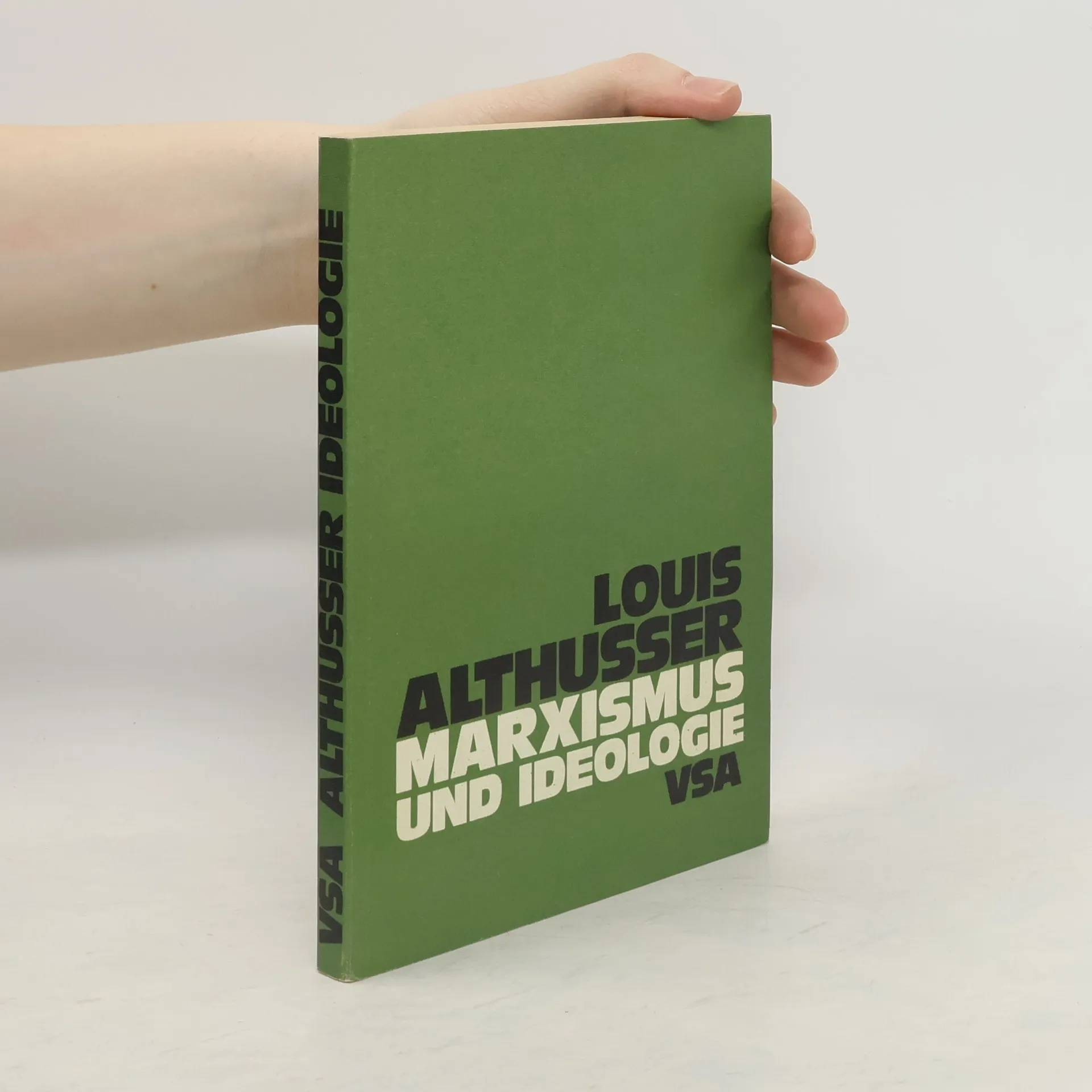
Marxismus und Ideologie
- 172 páginas
- 7 horas de lectura
Autobiografické texty přibližují nejniternější prožitky význačného francouzského filozofa, jehož psychická porucha vyústila ve vraždu manželky. Texty vznikly jako svého druhu výpověď toho, co se Althusserovi přihodilo, včetně popisu nemoci a léčby. Osobité texty tak tvoří neodmyslitelný protipól Foucaultových Dějin šílenství. Autobiografie francouzského filosofa a předního interpreta Marxova díla je zároveň i významným dokumentem o francouzském levicovém myšlení po druhé světové válce a o ideových střetech mezi existencialismem a strukturalismem. Kniha čtenáře upoutá svojí vysokou literární kvalitou.
Ecrits sur la psychanalyse
- 312 páginas
- 11 horas de lectura
Louis AlthusserEcrits sur la psychanalyseFreud et LacanMêlant souvent intimement destin personnel et réflexion philosophique, les rapports de Louis Althusser avec la psychanalyse ont été d'une grande complexité. Ses interventions dans le champ psychanalytique français, particulièrement en faveur de Jacques Lacan, sont d'une importance incontestable. A Lacan, alors banni des institutions officielles de la psychanalyse, Althusser offre, dès 1963, l'hospitalité de l'Ecole Normale Supérieure afin qu'il puisse y tenir son fameux Séminaire. "Nous voilà dans la même charrette !" lui écrira Lacan en 1966 en lui dédicaçant ses Ecrits .Outre son célèbre article "Freud et Lacan" et la correspondance échangée avec Lacan, cet ouvrage rassemble les textes essentiels qui ont marqué le "dialogue" exigeant de Louis Althusser avec la psychanalyse : une correspondance théorique avec son analyste ; ses deux contributions controversées au colloque de Tbilissi sur l'Inconscient ; des notes de recherche sur la théorie analytique ; un texte burlesque sur le "contre-transfert" ; enfin le récit de son ultime rencontre avec Lacan le 15 mars 1980, et du "scandale" qui s'ensuivit.Ces textes, pour l'essentiel inédits, extraits des archives de Louis Althusser déposées à l'Institut Mémoires de l'Edition contemporaine, ont été réunis et présentés par Olivier Corpet et François Matheron.
Elemente der Selbstkritik
- 111 páginas
- 4 horas de lectura
Materialismus der Begegnung
- 140 páginas
- 5 horas de lectura
Der Band versammelt späte und unvollendete Schriften Althussers, die zu den eigenwilligsten und verstörendsten Texten des späten 20. Jahrhunderts zählen. Sie markieren einen schmerzhaften Bruch im Leben des marxistischen Philosophen und sind Teil eines Krisendenkens, das eine radikale Philosophie der Praxis entwerfen möchte. Ein untergründiger Strom zieht sich durch die Geschichte der westlichen Philosophie, von den antiken Atomisten über Spinoza und Machiavelli bis zu zeitgenössischen Denkern wie Derrida und Deleuze. Dieses Denken der Leere, des Zufalls und der Abweichung stellt jede Wesensphilosophie in Frage und zielt darauf ab, den dialektischen Materialismus zu überwinden. Die erstmals auf Deutsch zugänglichen Schriften machen die Brüche und Anstrengungen deutlich, die in den Begriffen dieses neuen, zugleich ältesten Materialismus liegen. Althussers Unterscheidung zwischen „Materialismus der Begegnung“ und „aleatorischem Materialismus“ zeigt die produktive Kraft eines beharrlichen Gedankens, der das Denken herausfordert: „Weder wird je ein Würfelwurf den Zufall auslöschen – noch wird je der Zufall einen Würfelwurf vereiteln.“ Das „Porträt des materialistischen Philosophen“ bietet einen Einblick in das Abenteuer eines Denkens, das im „Wilden Westen“ nach Auf- und Umbruch strebt.
Schriften
- 218 páginas
- 8 horas de lectura
Herausgegeben und eingeführt von Oliver Corpet und Yann Moulier Boutang, übersetzt aus dem Französischen von Hans-Horst Henschen. Das Buch umfasst 412 Seiten.