
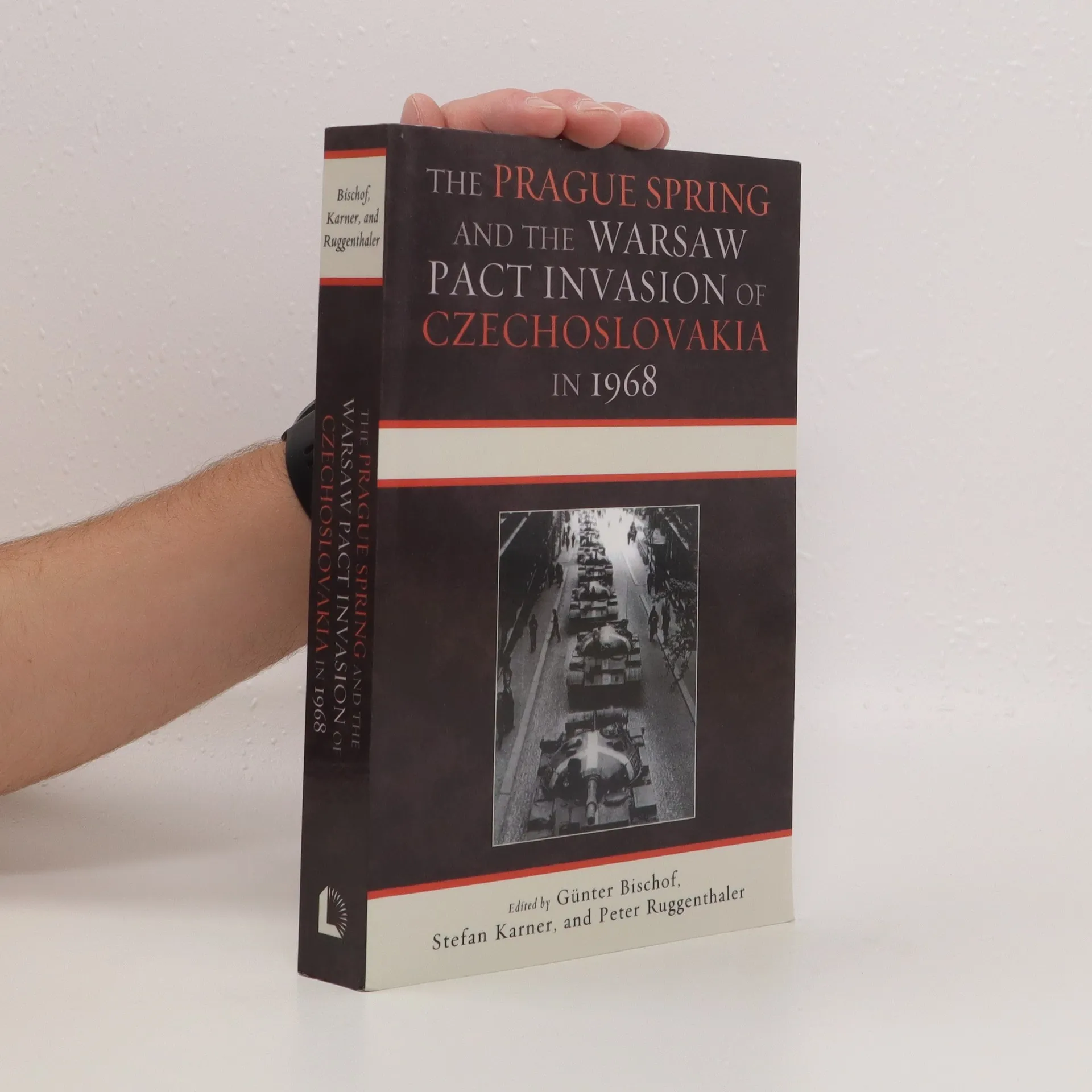
The Prague Spring and the Warsaw Pact invasion of Czechoslovakia in 1968
- 530 páginas
- 19 horas de lectura
On August 20, 1968, a massive deployment of Soviet and East European forces invaded Czechoslovakia to quash the 'Prague Spring' reforms and restore a strict Communist regime. Initially hesitant, Soviet leader Leonid Brezhnev ultimately decided that military intervention was necessary after months of deliberation. Within 24 hours of the invasion, troops from the Soviet Union, Poland, Hungary, and Bulgaria established complete control, effectively ending the hopes for 'socialism with a human face.' Although Alexander Dubcek and other reformers were briefly reinstated, their main task from late August 1968 to April 1969 was to reverse the reforms. By April 1969, Dubcek was ousted permanently, marking the definitive end of the Prague Spring. Soviet leaders defended the invasion by claiming it was their 'right' and 'sacred duty' to protect socialism in Czechoslovakia. While the invasion caused some rifts within the Communist bloc, it largely succeeded in achieving Soviet objectives. The United States and NATO allies protested but did not take direct military action, leading historians to analyze this critical moment in the Cold War using new archival evidence. They also explore the U.S. response and whether Washington inadvertently signaled approval to the Soviet Union before the invasion.