?] wybory z 1939 roku były ogromnie ważnym doświadczeniem historycznym, transformującym świadomość i samopoczucie ludności zamieszkującej Kresy. Na ich wyniki rząd radziecki powoływał się przyłączając olbrzymie obszary państwa polskiego do ZSRR. Po wojnie ten stan rzeczy został potwierdzony przez układy międzynarodowe (pomijając drobne korekty granic). I choć Związek Radziecki z czasem przestał istnieć, to ani Lwów ani Wilno ? ani przeszło 100 000 kilometrów kwadratowych bardzo malowniczych krajobrazów ? już nie wróciło do Polski. Wydarzenie to, osiemdziesiąt lat temu wywarło ogromne wrażenie, zasadniczo zmieniło życiorysy wielu milionów ludzi i stało się po zwycięstwie nad Niemcami hitlerowskimi przedmiotem negocjacji najpotężniejszych wówczas mężów stanu na kuli ziemskiej. Ale pamięć historyczna o latach wojny i okupacji usunęła te wydarzenia w cień. Pierwsze wydanie książki, którą Czytelnicy biorą do ręki ukazało się w 1998 roku w wydawnictwie Universitas pod tytułem Studium zniewolenia (Wybory 22 x 1939). Przedrukowuję tę książkę w serii Opowieści kresowe ? jako że opisane w niej wydarzenia są integralną częścią historii okupacji Kresów Wschodnich przez ZSRR w okresie 1939?1941 ? z niewielkimi zmianami redakcyjnymi i dodatkami. Jan Tomasz Gross
Jan Tomasz Gross Orden de los libros (cronológico)


War Through Children's Eyes: The Soviet Occupation of Poland and the Deportations, 1939-1941
- 296 páginas
- 11 horas de lectura
Set against the backdrop of WWII, the book presents a collection of 120 essays written by Polish children who experienced the Soviet occupation and subsequent deportations. These unique documents capture a child's perspective on significant historical events, revealing their innocent yet profound insights into the harsh realities of life in Soviet work camps and kolkhozes. Through simple language and unfiltered expression, the essays reflect the trauma of starvation, disease, and loss, while also highlighting a shared suffering among various nationalities under Soviet rule.
Collected essays on war, Holocaust and the crisis of communism
- 170 páginas
- 6 horas de lectura
The author undertakes an intellectual journey into the hidden past of the Polish history after 1939. He deals with Holocaust, collaboration, totalitarian rule, crisis of communism in Eastern Europe as well as Polish-Jewish relations during the war. The author is a founding father of a new approach in Holocaust research in Poland in which he has taken it from out of its intellectual ghetto as a strictly Jewish subject and repositioned it at the center of Poland’s wartime history. Among other topics, the collection of essays deals with Jewish community in the Soviet annexed territories on the eve of the Holocaust, opportunistic killings and plunder of Jews by their neighbors and Poland’s development from a civil society to a political nation.
The Holocaust in occupied Poland
- 237 páginas
- 9 horas de lectura
New archival materials have provided the basis for rethinking the dynamic of the Holocaust in Poland. These historical sources consist primarily of court papers from postwar trials of Polish citizens. Using such files, historians are now better able to document and write the dramatic story of antagonism between Jews evading the Nazi dragnet, and a hostile rural populace which sometimes collaborated in persecution. Although important works on the Holocaust appeared earlier in Poland, only during the last several years has a scholarly milieu emerged in the country for taking the Holocaust out of its intellectual ghetto as a strictly «Jewish» subject, and repositioning it at the center of Poland’s wartime history.
Golden Harvest
- 160 páginas
- 6 horas de lectura
The starting point of Jan Gross's A Golden Harvest is a haunting photograph that depicts a group of "diggers" atop a mountain of ashes at Treblinka, where some 800,000 Jews were gassed and cremated. The diggers are hoping to find gold and precious stones that Nazi executioners may have overlooked. The story captured in this grainy black-and-white photograph symbolizes the vast, continent-wide plunder of Jewish wealth. Beginning with one photograph, this moving book evokes the depth and range, as well as the intimacy, of the final solution.
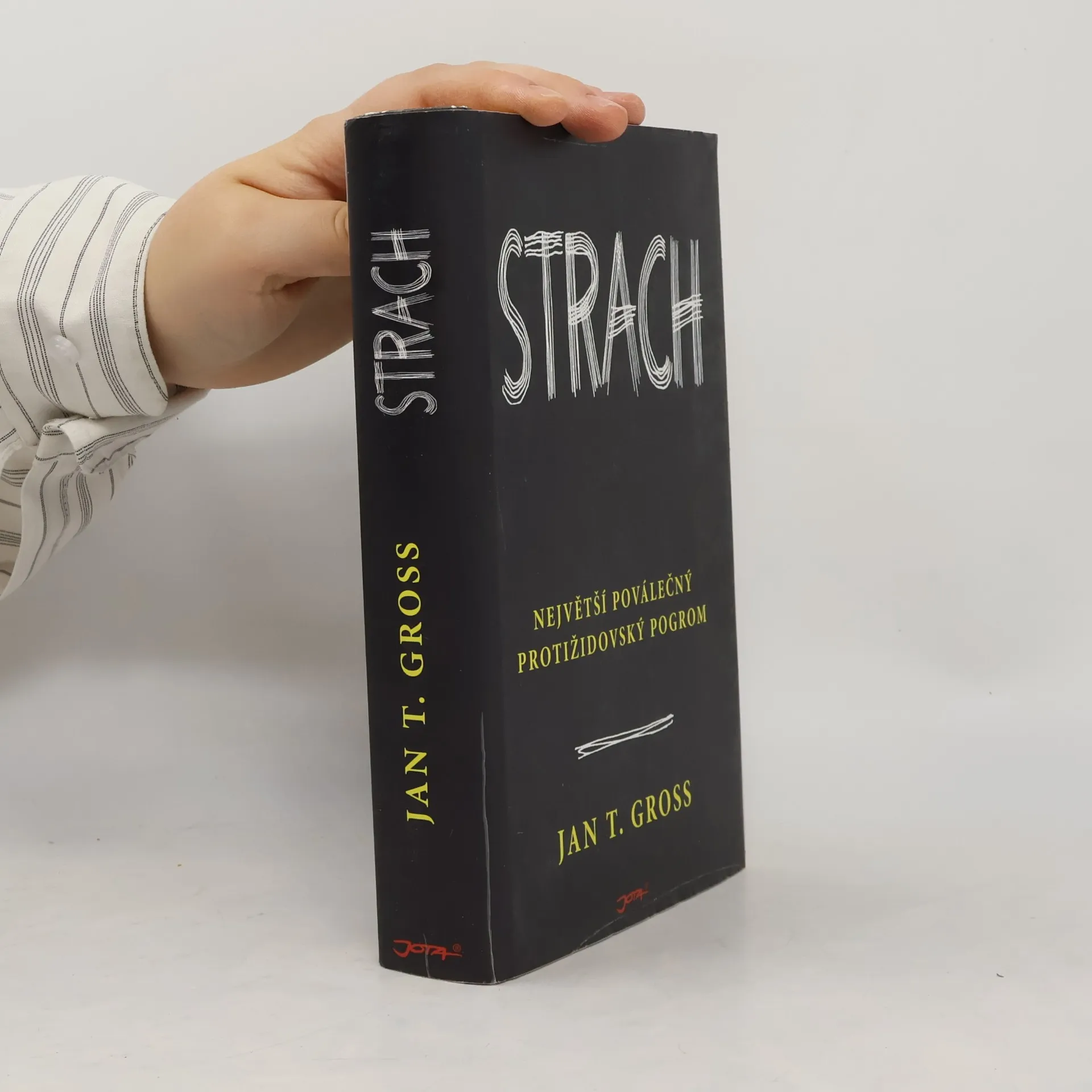
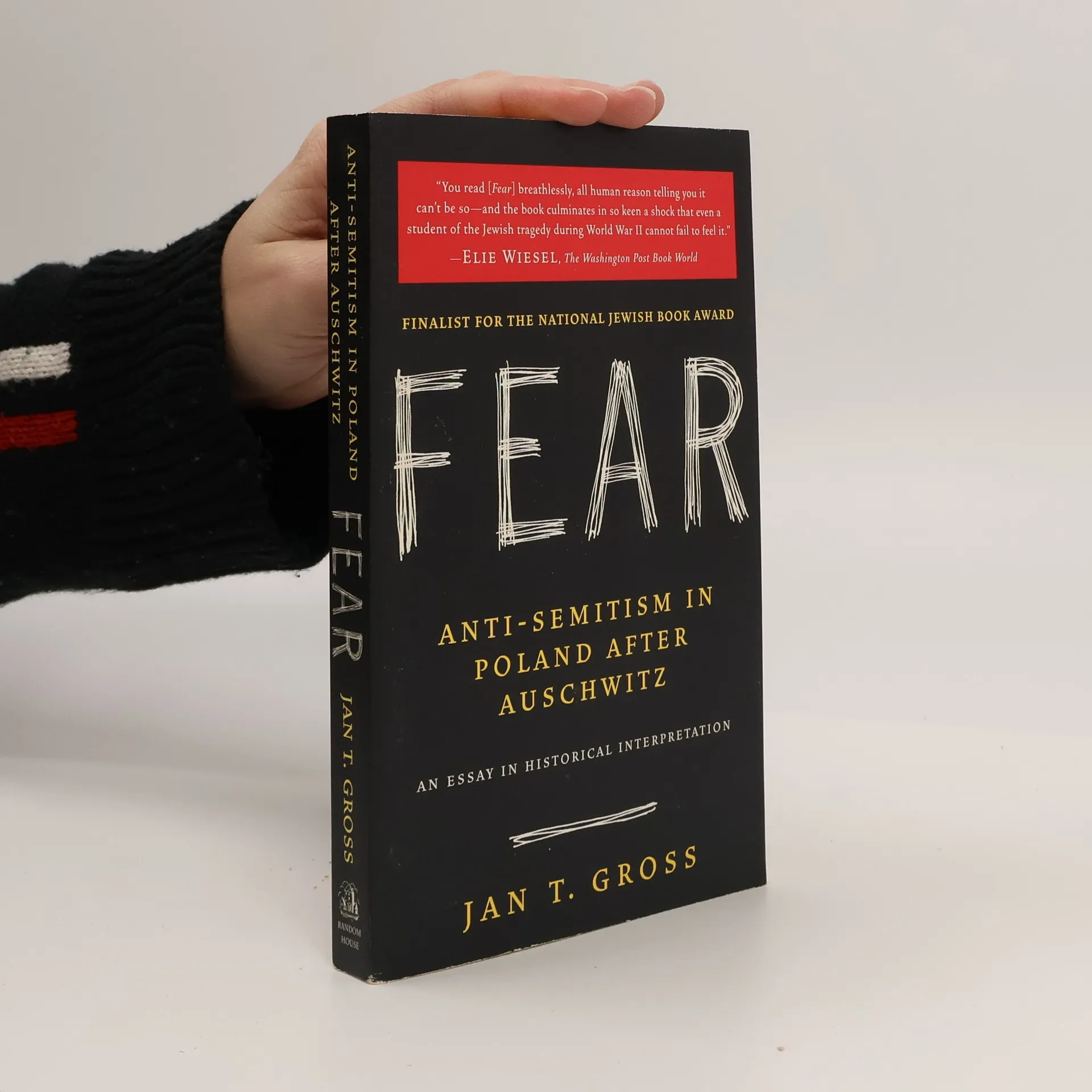
Strach
- 356 páginas
- 13 horas de lectura
Největší poválečný protižidovský pogrom: esej v historickém výkladu Rekonstrukce největšího poválečného protižidovského pogromu v Evropě - pogromu v polském městě Kielce v létě 1946 jako základ obecnějších úvah o kořenech a příčinách antisemitismu v polské společnosti. Autor se vrací k osudům polských Židů za 2. světové války. Na řadě případů dokazuje spolupodíl polské společnosti na jejich postupné společenské izolaci i na konečné fyzické likvidaci. Tvrdí, že Poláci se v drtivé většině ztotožňovali s nacistickou vyhlazovací politikou. Poválečný antisemitismus byl výrazem strachu, snahou zbavit se obětí a svědků těchto zločinů.
Poland endured a brutal Nazi occupation during World War II, resulting in the deaths of nearly five million citizens, including over three million Polish Jews—more than 90 percent of whom perished in the Holocaust. After the war, Jewish survivors returning to their hometowns faced hostility and violence, culminating in the Kielce pogrom on July 4, 1946, the bloodiest peacetime pogrom in twentieth-century Europe. Jan Gross’s investigation seeks to understand the persistence of anti-Semitism in post-war Poland, focusing on the Kielce pogrom and its societal reactions. He explores how the Polish Catholic Church, Communist party workers, and intellectuals responded to the murder of Jews by their fellow citizens in a country recently liberated from Nazi occupation. Gross argues that the anti-Semitism of this period cannot be seen merely as a continuation of prewar attitudes; it was shaped by the Holocaust and the Communist takeover, creating a shared animosity between the regime and a society complicit in Nazi atrocities. Contrary to popular belief, Jews did not bring communism to Poland; instead, they were expelled under the Communist regime for political expediency. Gross’s work confronts the guilt and shame surrounding the treatment of Jewish survivors, shedding light on a dark chapter of Polish history.
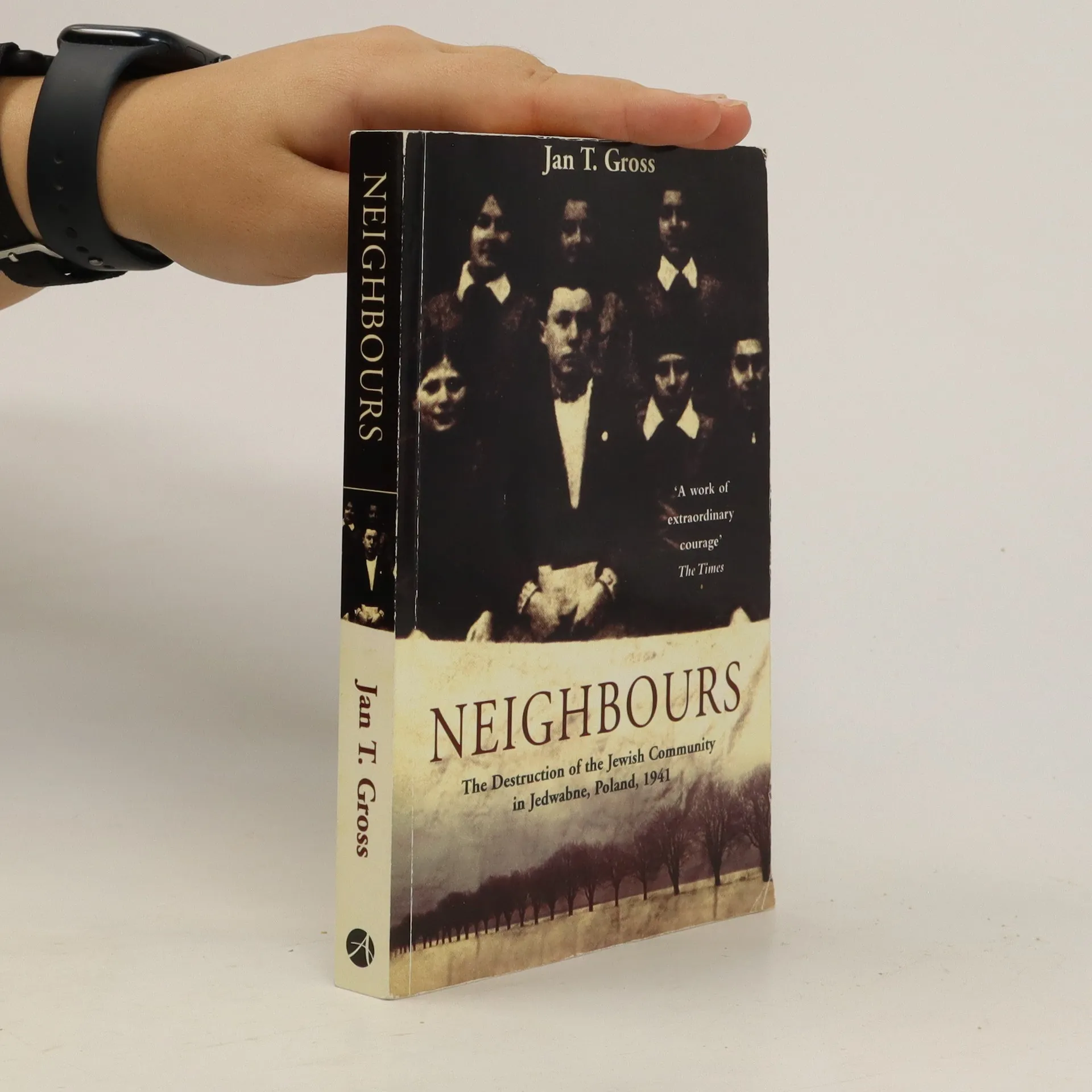
Neighbours
- 272 páginas
- 10 horas de lectura
One summer day in 1941, half of the Polish town of Jedwabne murdered the other half - 1,600 men, women, and children - all but seven of the town's Jews. Neighbours tells their story. Jan Gross pieces together eyewitness accounts and other evidence into an engulfing reconstruction of the horrific July day remembered well by locals but forgotten by history. The unfolding of his investigation yields wider truths about the Holocaust, and human responses to occupation and totalitarianism. The newly occupying German army did not compel the massacre, and Jedwabne's Jews and Christians had previously enjoyed cordial relations. After the war, the nearby family who saved Jedwabne's surviving Jews was derided and driven from the area. The single Jew offered mercy by the town declined it. Most arresting is the sinking realization that Jedwabne's Jews were clubbed, drowned, gutted and burned not by faceless Nazis, but by people whose features and names they knew well: their former schoolmates and those who sold them food, bought their milk, and chatted with them in the street. As much as such a question can ever be answered, Neighbours tells us why.