Mutiny on the Spanish Main
- 320 páginas
- 12 horas de lectura
From renowned author and naval historian Angus Konstam, this is a gripping account of one of the Royal Navy's bloodiest and most dramatic mutinies.


From renowned author and naval historian Angus Konstam, this is a gripping account of one of the Royal Navy's bloodiest and most dramatic mutinies.
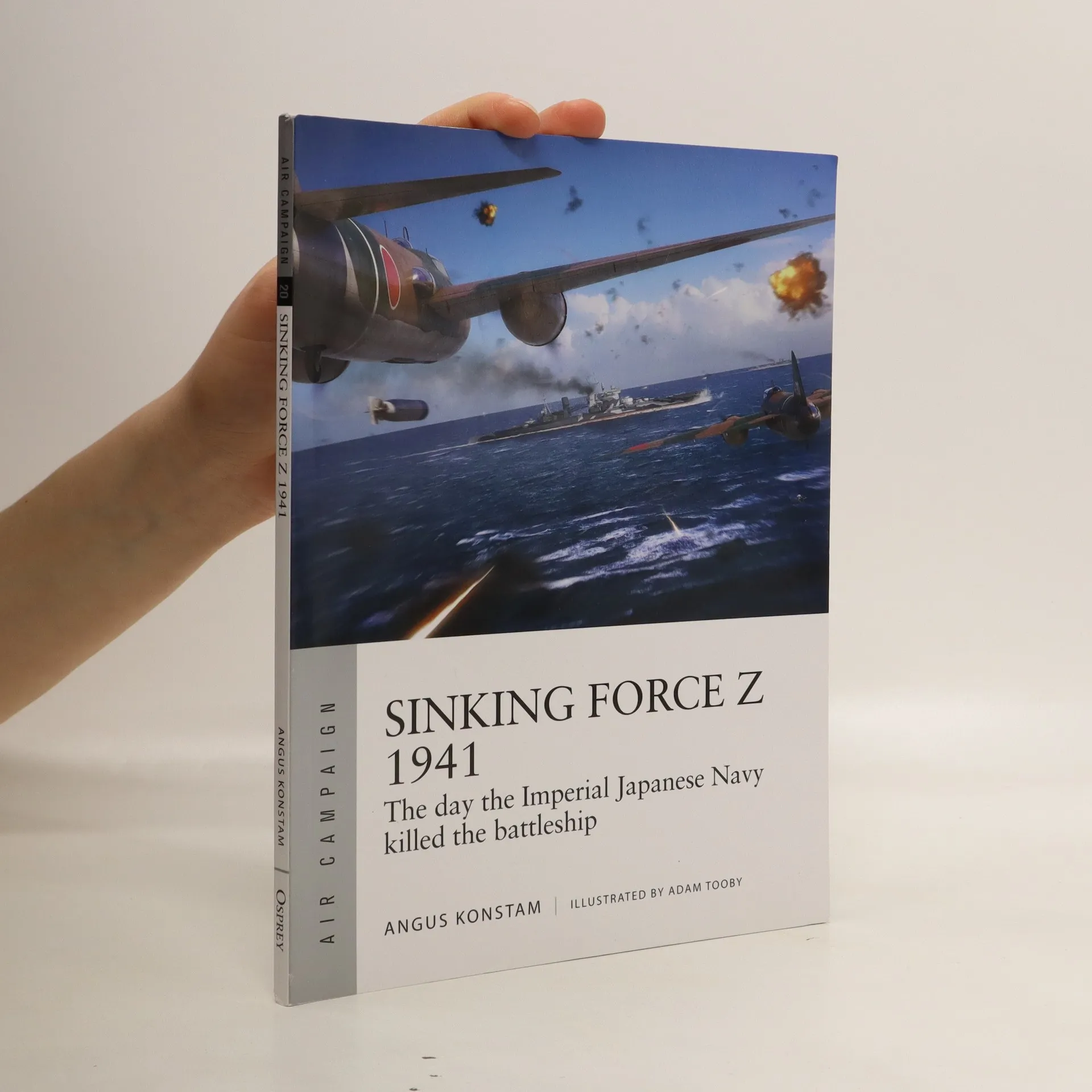
A history and analysis of one of the most dramatic moments in both air power and naval history. With the sinking of HMS Prince of Wales and Repulse, no battleship was safe on the open ocean, and the aircraft took its crown as the most powerful maritime weapon. In late 1941, war was looming with Japan, and Britain's empire in southeast Asia was at risk. The British government decided to send Force Z, which included the state-of-the-art battleship Prince of Wales and the battlecruiser Repulse, to bolster the naval defenses of Singapore, and provide a mighty naval deterrent to Japanese aggression. These two powerful ships arrived in Singapore on 2 December--five days before the Japanese attack on Pearl Harbor. But crucially, they lacked air cover. On 9 December Japanese scout planes detected Force Z's approach in the Gulf of Thailand. Unlike at Pearl Harbor, battleships at sea could maneuver, and their anti-aircraft defenses were ready. But it did no good. The Japanese dive-bombers and torpedo-bombers were the most advanced in the world, and the battle was one-sided. Strategically, the loss of Force Z was a colossal disaster for the British, and one that effectively marked the end of its empire in the East. But even more importantly, the sinking marked the last time that battleships were considered to be the masters of the ocean. From that day on, air power rather than big guns would be the deciding factor in naval warfare.
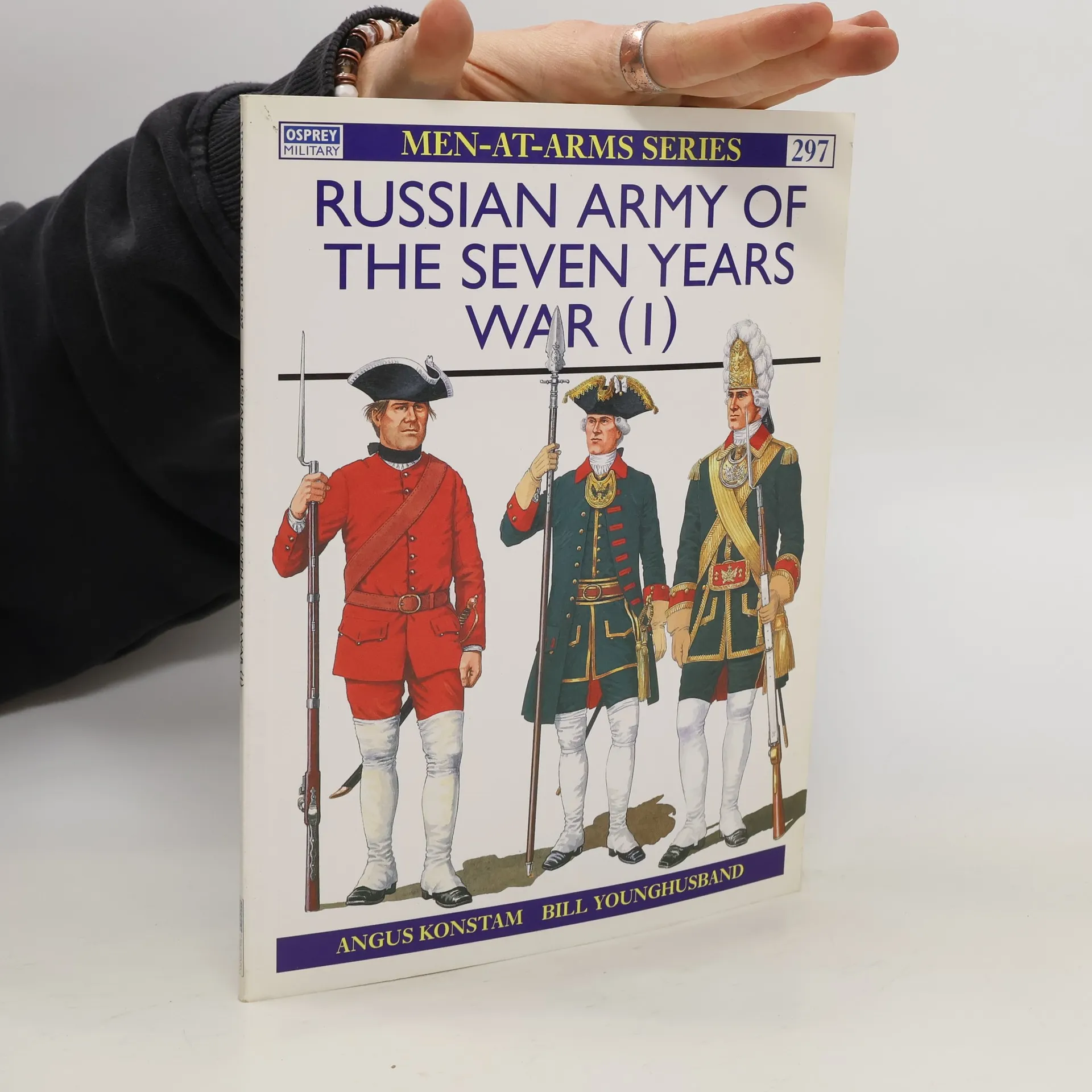
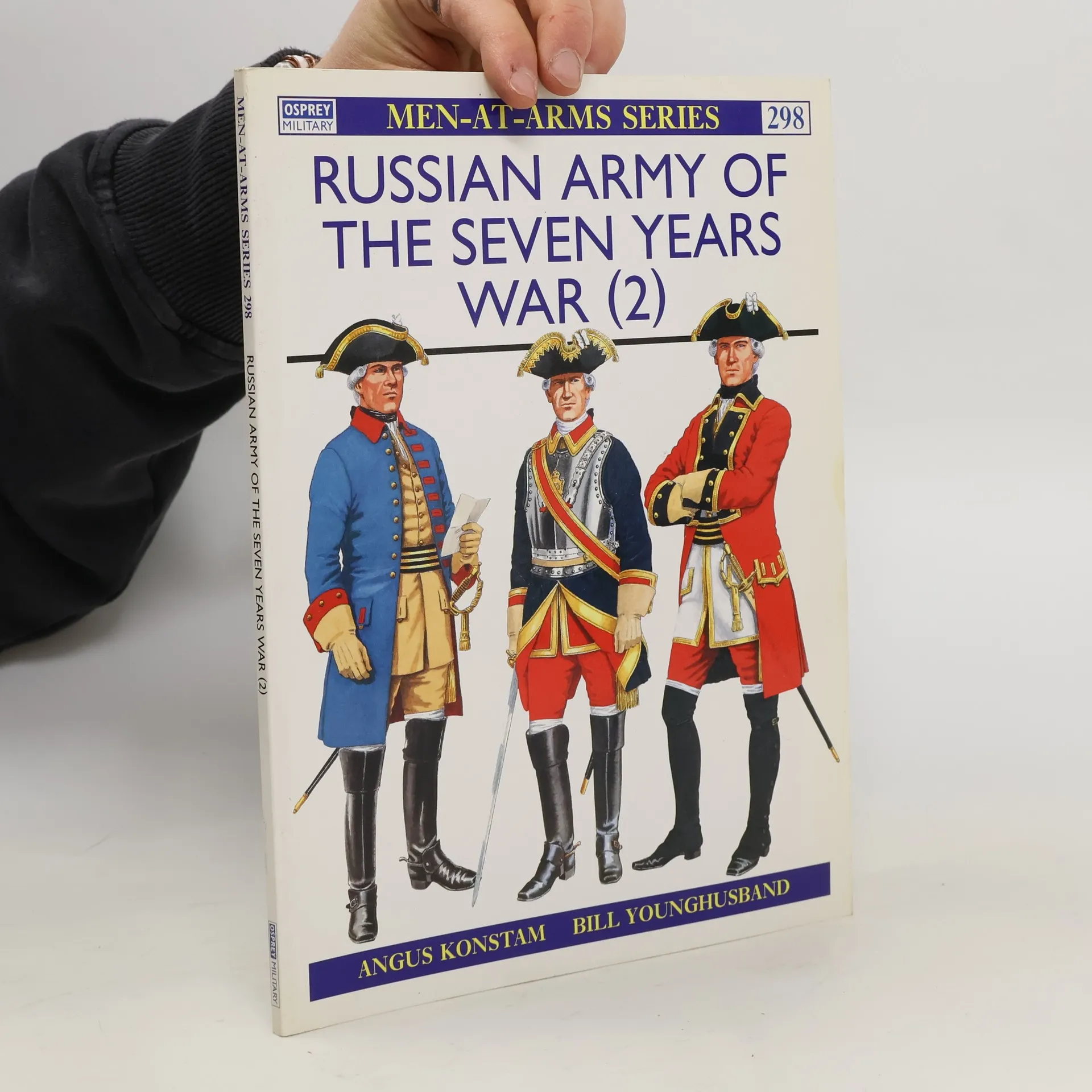
This second volume (see MAA 297) by Angus Konstam on the Russian Army of the Seven Years' War (1756-1763) concentrates on the cavalry, both the regular troops and irregular forces, considering their composition, nature and effectiveness. It also outlines the state of the Russian train of artillery, which was seen as the premier branch of the army and dominated Russian military doctrine throughout the 18th century. As a result of reforms, the Russians entered the war with Prussia somewhat wrong footed. The ability of the army to recover from this in the crucible of war is a major part of this story.
"A fascinating look at the British naval intervention in the Baltic in 1918-20, and at the British, Soviet and Baltic nationalist fleets that fought. Following the Russian Revolution of October 1917, the Baltic states became a battleground between Russian Reds and Whites, German troops and emerging Baltic independence forces. In November 1918, the British government decided to intervene, to protect British interests and to support the emerging Baltic states. This initial small force of cruisers and destroyers was eventually augmented by other British warships, including aircraft carriers, a monitor, as well as a handful of submarines and torpedo boats. Opposing them was the far more powerful Russian Baltic Fleet, now controlled by the Bolsheviks. The campaign that followed involved naval clashes between the two sides, the most spectacular of which was an attack on the Soviet naval base of Kronstadt in June 1919 by a force of small British torpedo boats. They torpedoed and sunk the Russian cruiser Oleg, an action which effectively bottled the Baltic fleet up in port for the remainder of the campaign. Finally, in early 1920, the British squadron was withdrawn, following Soviet recognition of Estonia, Latvia and Lithuania. This New Vanguard title explores the naval side of this little-known but strategically crucial campaign fought by the war-weary navies of Britain and Russia and by warships of the emerging Baltic states. Describing the political background to the conflict, and the key points of the naval campaign as well as the warships involved, this is a concise and fascinating account of an overlooked naval campaign that helped reshape the map of Europe."--Amazon.ca
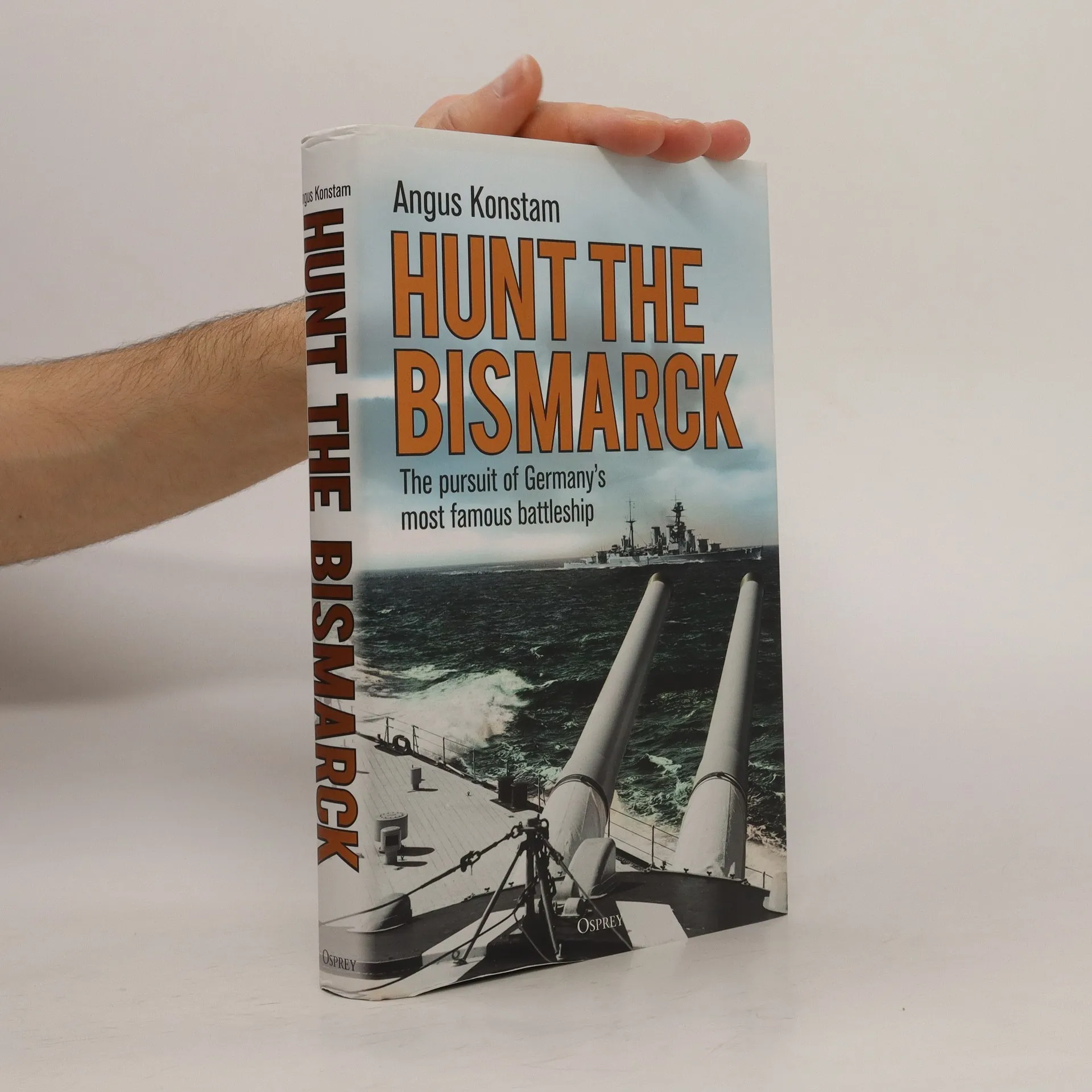
A ground-breaking narrative account of one of World War II's most exciting chase stories, the pursuit of the legendary German battleship Bismarck. Hunt the Bismarck tells the story of Operation Rheinübung, the Atlantic sortie of Nazi Germany's largest battleship, Bismarck, in May 1941 and her subsequent pursuit by the Royal Navy. Bismarck entered naval service in the summer of 1940. She was well-armed, with eight 15in guns as well as a powerful array of lighter weapons, while her armoured protection earned her the reputation of being unsinkable. This claim was put to the test in May 1941 when she sortied into the Atlantic and fought the legendary battle of the Denmark Strait, destroying HMS Hood, the pride of the Royal Navy. Bismarck was now loose in the North Atlantic. However, damage sustained in the battle limited her ability to roam at will, and the Royal Navy deployed the Home Fleet to avenge the sinking of the Hood. The stage was set for the greatest chase story in the history of naval warfare. Drawing on a wealth of first-hand accounts and intertwining extensive research into a fast-paced narrative, this is the most readable and accurate account of Bismarck's epic pursuit ever produced.
In recent years the phrase 'gunboat diplomacy' has been used to describe the crude use of naval power to bully or coerce a weaker nation. During the reign of Queen Victoria, 'gunboat diplomacy' was viewed very differently. It was the use of a very limited naval force to encourage global stability and to protect British overseas trade. This very subtle use of naval power was a vital cornerstone of the Pax Britannica. Between the Crimean War (1854-56) and 1904, when the gunboat era came to an abrupt end, the Royal Navy's ocean-going gunboats underpinned Britain's position as a global power and fulfilled the country's role as a 'global policeman'. This exciting New Vanguard title describes the rise and fall of the gunboat, the appearance and capability of these vital warships, and what life was like on board. It also examines key actions they were involved in.
This illustrated history explores the cruiser forces of the Italian and British Royal navies, the jack-of-all trades warships of the Mediterranean Naval War. In 1940, when Italy entered World War II, the Royal Navy was badly overstretched, and its Mediterranean Fleet had to face both the Italian Navy and the German and Italian Air Forces in a battle for supremacy. Although the British and Italian battle fleets squared off against each other, they were both often held in reserve, in case the enemy fleet put to sea. So, it was left to the cruisers to wage their own naval war in the Mediterranean. This involved a range of missions, from escorting convoys and hunting enemy ones, to fighting for control of the sea around key locations such as the waters off Malta and Crete. This superbly illustrated study, written by renowned naval expert Angus Konstam, compares and contrasts the design, weapon technologies and combat performance of the opposing cruiser forces. It also documents several major clashes between British, Commonwealth and Italian cruisers, including spirited actions fought off Cape Spada in 1940, a string of actions in the Gulf of Sirte throughout 1941, battles against Axis convoys in 1941–42, and the Battle of Pantelleria in 1942. Among the subjects of the specially commissioned colour artworks are HMAS Sydney, HMS Naiad, RM Trento and RM Raimondo Montecuccoli.
A study of the age of exploration includes short biographies of explorers and their accomplishments, and profiles of cultures such as the Japanese and Inca, and their response to foreign invaders.
During the long and costly conflict known as the Great Northern War (1700-1721), Peter the Great and his newly formed Russian army, which was modelled on western European lines, defeated their Swedish counterparts, who were generally regarded as being the finest troops in Europe. Angus Konstam examines the development, equipment and organisation of the Russian army following the death of Peter the Great, and describes its emergence from three decades of experimentation and political involvement as a major military power during the Seven Years' War (1756-1763). This first of two volumes covers the Russian infantry, with its companion, Men-at-Arms 298, focusing on the cavalry.