
Bookbot

John Thackara

    In The Bubble
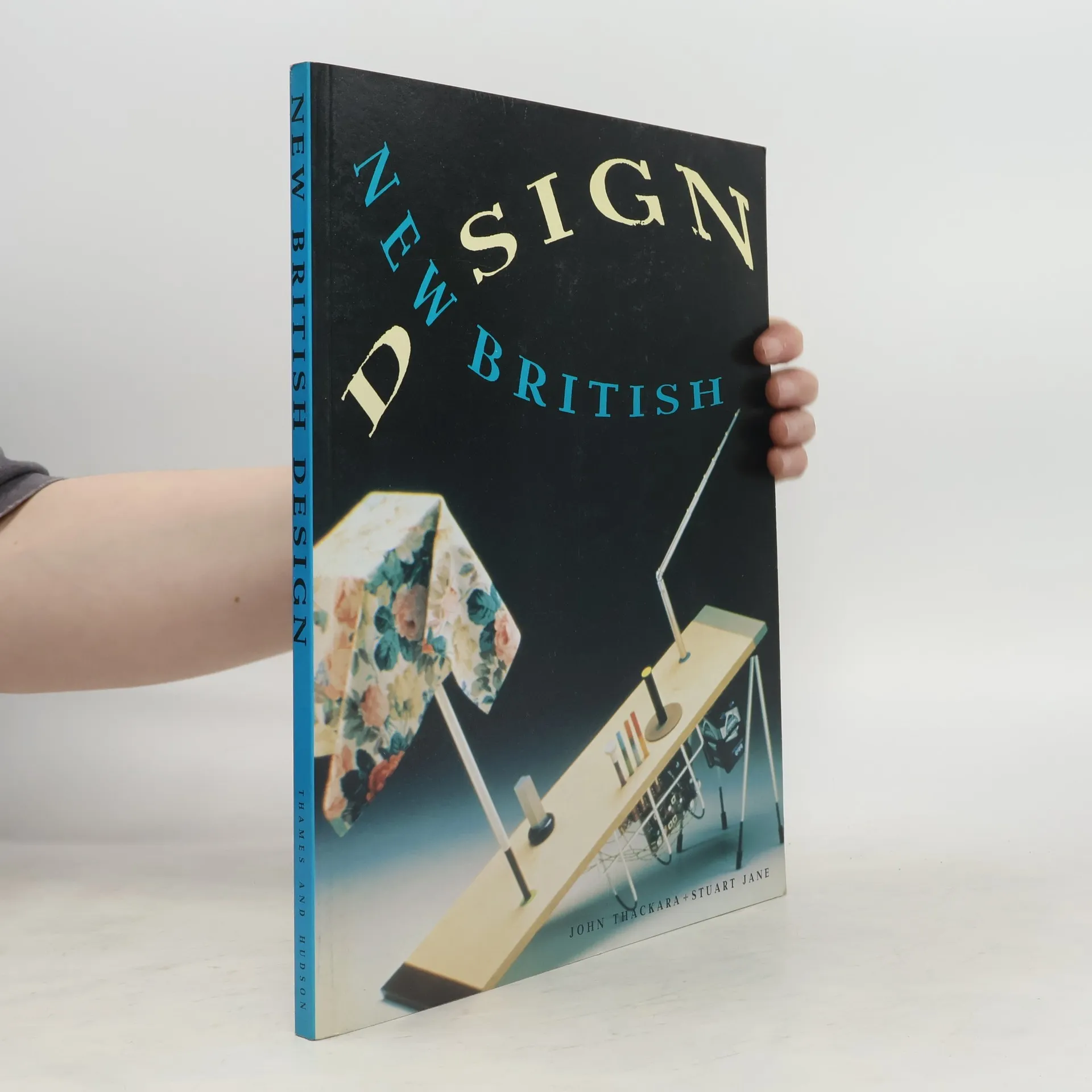
    New British design
    How to thrive in the next economy: designing tomorrow's world today
    In the Bubble
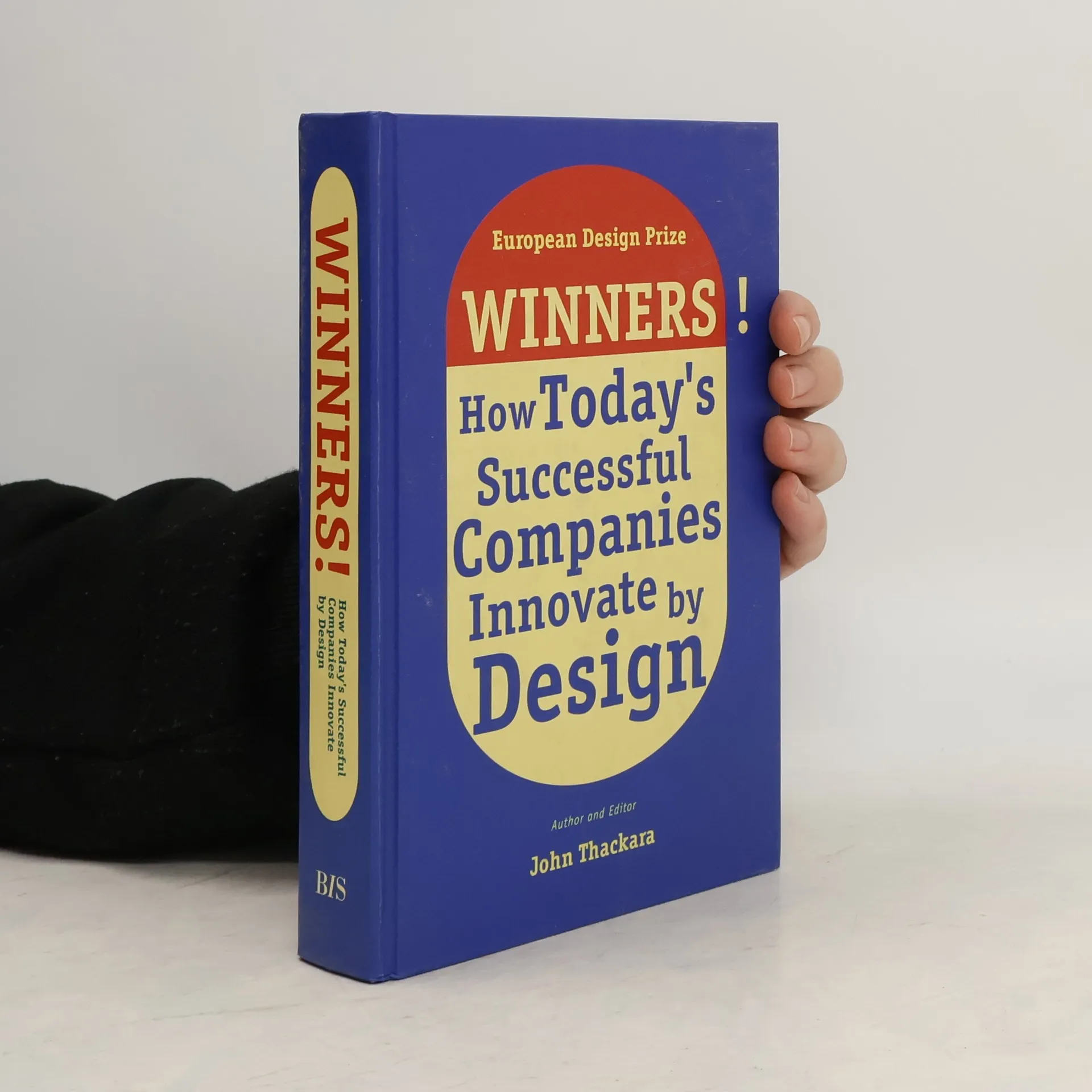
    Winners! How Today's Successful Companies Innovate By Design
    Laus 01
    • A visionary yet practical guide to building a more sustainable future, by one of the most important voices in environmentally aware design Are there practical solutions to the many global challenges—climate change, poverty, insufficient healthcare—that threaten our way of life? Author John Thackara has spent a lifetime roving the globe in search of design that serves human needs. In this clear-eyed but ultimately optimistic book, he argues that, in our eagerness to find big technological solutions, we have all too often ignored the astonishing creativity generated when people work together and in harmony with the world around them. Drawing on an inspiring range of examples, from a temple-led water management system in Bali that dates back hundreds of years to an innovative e-bike collective in Vienna, Thackara shows that below the radar of the mainstream media there are global communities creating a replacement economy—one that nurtures the earth and its inhabitants rather than jeopardizing its future—from the ground up. Each chapter is devoted to a concern all humans share—land and water management, housing, what we eat, what we wear, our health, how and why we travel—and demonstrates that it is possible to live a rich and fulfilling life based on stewardship rather than exploitation of the natural environment.

      How to thrive in the next economy: designing tomorrow's world today2017
      3,8
    • In the Bubble

      • 331 páginas
      • 12 horas de lectura

      How to design a world in which we rely less on stuff, and more on people.

      In the Bubble2006
      4,0
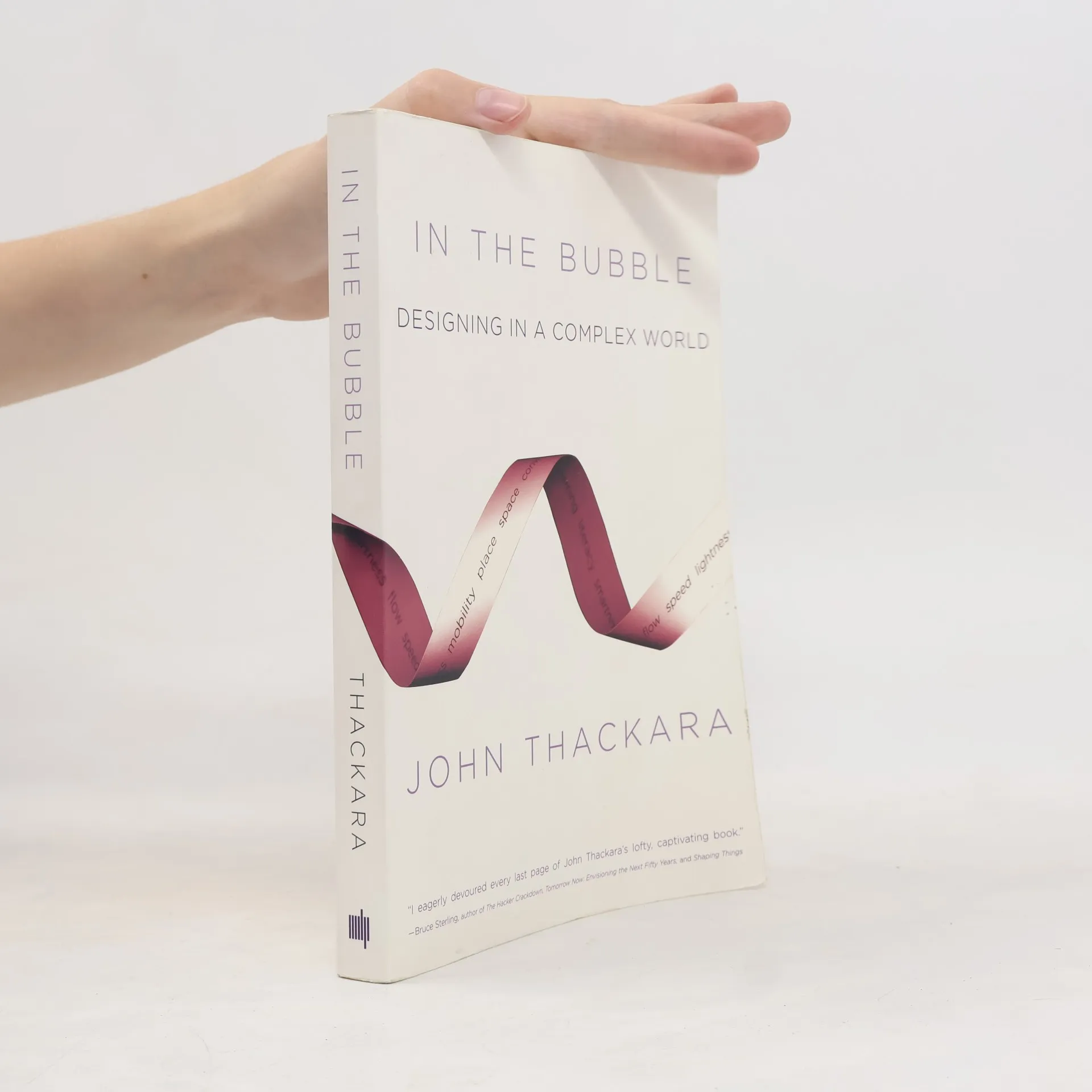
    • In The Bubble

      Designing In A Complex World

      • 321 páginas
      • 12 horas de lectura

      We're filling up the world with technology and devices, but we've lost sight of an important question: What is this stuff for? What value does it add to our lives? So asks author John Thackara in his new book, "In the Bubble: Designing for a Complex World." These are tough questions for the pushers of technology to answer. Our economic system is centered on technology, so it would be no small matter if "tech" ceased to be an end-in-itself in our daily lives. Technology is not going to go away, but the time to discuss the end it will serve is before we deploy it, not after. We need to ask what purpose will be served by the broadband communications, smart materials, wearable computing, and connected appliances that we're unleashing upon the world. We need to ask what impact all this stuff will have on our daily lives. Who will look after it, and how? "In the Bubble" is about a world based less on stuff and more on people. Thackara describes a transformation that is taking place now -- not in a remote science fiction future; it's not about, as he puts it, "the schlock of the new" but about radical innovation already emerging in daily life. We are regaining respect for what people can do that technology can't. "In the Bubble" describes services designed to help people carry out daily activities in new ways. Many of these services involve technology -- ranging from body implants to wide-bodied jets. But objects and systems play a supporting role in a people-centered world. The design focus is on services, not things. And new principles -- above all, lightness -- inform the way these services are designed and used. At the heart of "In the Bubble" is a belief, informed by a wealth of real-world examples, that ethics and responsibility can inform design decisions without impeding social and technical innovation.

      In The Bubble2005
    • Laus 01

      31st Laus Awards. Best of Design and Advertising in 2001

      • 304 páginas
      • 11 horas de lectura

      Laus 01 is the latest installment of the best in Spanish graphic design, covering the fields of traditional graphics--publishing, illustration, and typography--in addition to advertising and new media, including web sites and CD-ROMs. Published in conjunction with the prestigious Laus Prizes, this volume documents the 31st convocation of the award. During recent years, Spain has been increasingly recognized for its active presence in the global field of design, and Laus 01 provides visually stunning evidence of that presence--in sumptuous full-color reproductions, in the book's beautiful and arresting design, and in the accompanying CD-ROM of the most dynamic and exciting of advertisements and web pages. Featuring a stunning range of work responding to the needs of an ever-changing world, this new volume serves as a document of the present and future of graphic design--for Spain and the rest of the world--at the start of a new century. Essay by John Thackara. with CD-ROM

      Laus 012001
    • Testo di John Thackara. Postfazione di Peter Dormer. Più di 120 illustrazioni in bianco e nero e 80 a colori (opere di Remo Avella, Judy Blame, Ron Arad, Tom Mitchell, Jane Dillon, David Cole et al.) . 4to (cm 30x21,5) pp. 112 Brossura (wrappers) Design di Jane Stuart Molto buono (Very Good) British Design in the 1980s has commanded increasing worldwide attention. But what happens next? Here, in what is set to be one of the most innovative and influencial design publications of recent years, is the exciting work of a new generation. The avant.garde in design has become notable for its rejection of traditional it is crossing and re-crossing the boundaries between architecture, interiors, product design, craft and fashion, and talking art forms out of the gallery to provide new inspiration and energy. Il design britannico negli anni '80 ha suscitato una crescente attenzione in tutto il mondo. Ma cosa succede dopo? Qui, in quella che si prospetta come una delle pubblicazioni di design più innovative e influenti degli ultimi anni, c'è il lavoro entusiasmante di una nuova generazione. L'avanguardia del design si è fatta notare per il suo rifiuto delle categorie sta attraversando e riattraversando i confini tra architettura, architettura d'interni, design di prodotto, artigianato e moda, e parla di forme d'arte fuori dalla galleria per fornire nuova ispirazione ed energia.

      New British design1986