

Exploring the intersection of Christian doctrine and contemporary culture, the book addresses key issues such as globalization, language crises, and the world's suffering. Nicholas Lash delves into how the concepts of God as Spirit, Word, and Father resonate with modern predicaments. Through chapters that tackle these themes, he invites readers to reflect on the relevance of faith in today's chaotic landscape, emphasizing the importance of holiness, meaningful dialogue, and the necessity of silence in understanding our spiritual and existential challenges.
Nicholas Lash Orden de los libros (cronológico)
Nicholas Lash fue un teólogo católico romano inglés y autor de numerosos libros teológicos, conocido por su enfoque brillante e imaginativo de la teología. Su obra defendió el debate abierto sobre temas clave dentro de su tradición, incluida la ordenación de mujeres, criticando audazmente las prácticas autoritarias. Sus ideas aparecieron con frecuencia en las páginas de The Tablet, donde fue un colaborador habitual. Lash fue un católico devoto que también abogó firmemente por la libertad intelectual y el diálogo abierto.


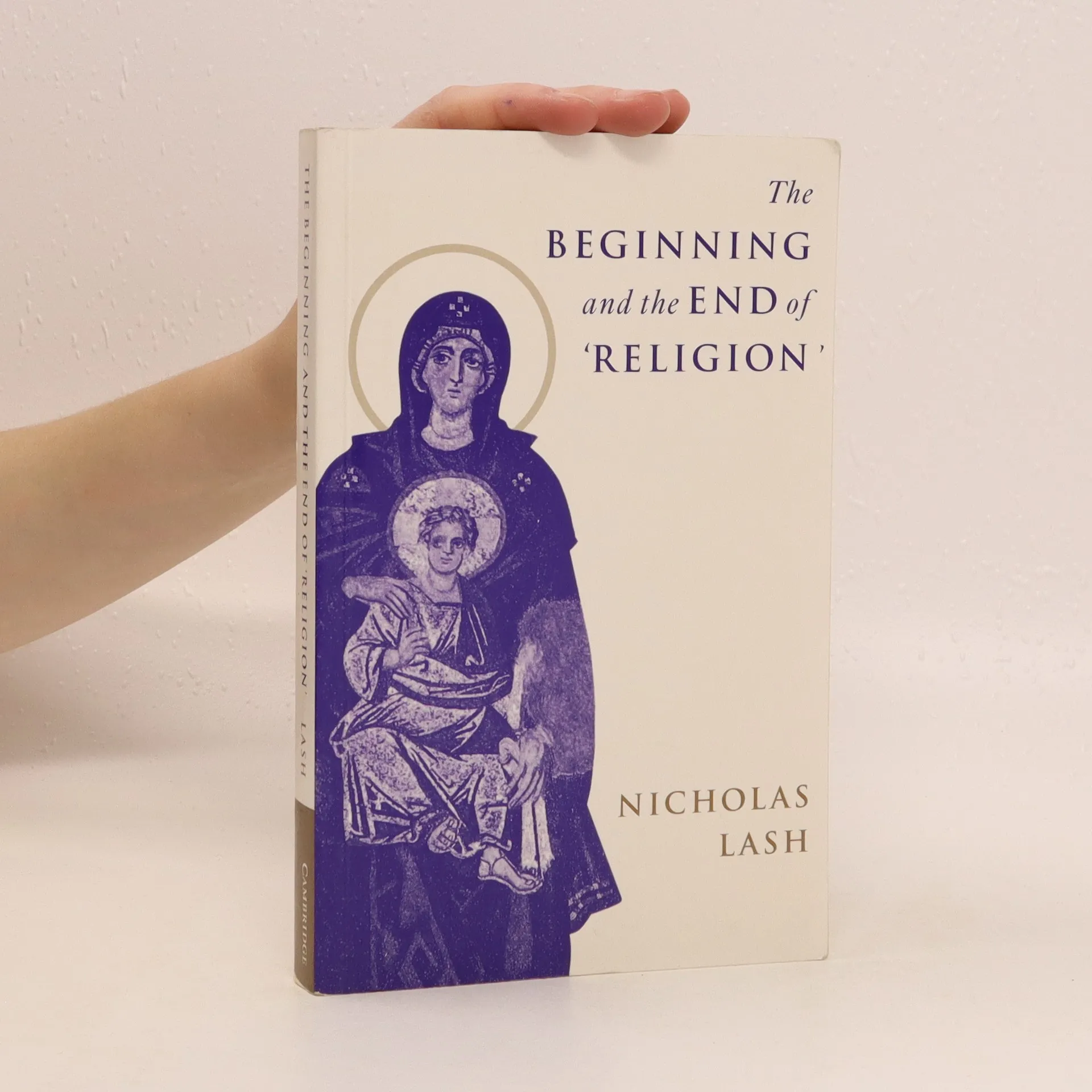
The common view that 'religion' is something quite separate from politics, art, science, law and economics is one that is peculiar to modern Western culture. In this book Professor Lash argues that we should begin to question seriously that viewpoint: the modern world is ending and we are now in a position to discover new forms of ancient wisdom, which have been obscured from view. These essays explore this idea in a number of directions, examining the dialogue between theology and science, the secularity of Western culture and questions of Christian hope. Part One examines the dialogue between Christianity and Hinduism, while Part Two considers the relations between theology and science, the secularity of Western culture, and questions of Christian hope, or eschatology.
Believing Three Ways in One God
- 144 páginas
- 6 horas de lectura
Nicholas Lash has crafted a reflection on the trinitarian dynamic of reality for those who seek a deeper understanding of the creed.
Easter in Ordinary
Reflections on Human Experience and the Knowledge of God
- 326 páginas
- 12 horas de lectura
The title of Lash's book, inspired by a combination of George Herbert and Gerard Manley Hopkins, symbolizes his answer to the problem with which he is concerned, that of religious experience. 'I propose,' he says, 'to argue, on the one hand, that it is not the case that all experience of God is necessarily religious in form or content and, on the other hand, that not everything which it would be appropriate to characterize as "religious" experience would thereby necessarily constitute experience of God.' To sustain his argument he begins by building up an account of the relationship between the principal elements of human experience which contrasts quite fundamentally with that proposed and presupposed in William James's classic, The Varieties of Religious Experience , drawing on writers as different as Schleiermacher and Buber, Rahner and Newman. 'However,' he goes on, 'this is not a book about James or Newman, Rahner or Schleiermacher. It is the issues, or the argument, which interest me.' 'I want to try to understand the senses in which, and the circumstances in which, our common human experience may be said, from the standpoint of a Christian account of such experience, to furnish us with experience and knowledge of the mystery of God, and to indicate the doctrine of God that is implied in this attempt.'