

In 1872, the author began investigating animal movements through photography in Sacramento, California, starting with a famous horse, Occident, owned by Senator Stanford. Initial experiments captured various phases of the horse's trotting at full speed, but it wasn't until 1877 that results were published. During this time, he developed an automatic electro-photographic apparatus for making consecutive exposures at set intervals. The findings from this apparatus, showcasing the actions of horses while walking, trotting, and galloping, were published in 1878 under the title "The Horse in Motion." Copies of these photographs were deposited in the Library of Congress and gained international attention, being discussed in journals across Berlin, London, Paris, and Vienna. In 1882, during a lecture on "The Science of Animal Locomotion in its relation to Design in Art" at the Royal Institution, he showcased results from his experiments conducted in the preceding years at Palo Alto, California. Using a zoopraxiscope and an oxy-hydrogen lantern, he projected a synthesis of the actions he had analyzed onto the wall, further advancing the understanding of animal locomotion.
Eadweard Muybridge Orden de los libros (cronológico)
Eadweard James Muybridge fue un fotógrafo pionero cuyo trabajo alteró fundamentalmente nuestra percepción del movimiento y el arte visual. Su uso innovador de múltiples cámaras para capturar el movimiento en secuencias de stop-motion sentó las bases para el amanecer del cine. Los estudios de Muybridge sobre la locomoción animal y humana, que revelaban detalles imperceptibles para el ojo humano, han inspirado a generaciones de artistas y científicos. Sus inventos e investigaciones visuales continúan dando forma a nuestra comprensión del mundo, y su legado resuena en diversos medios artísticos, desde la pintura hasta el cine.

Animals in Motion: an Electro-photographic Investigation of Consecutive Phases of Animal Progressive Movements
- 294 páginas
- 11 horas de lectura
"The dry plate's most spectacular early use was by Eadweard Muybridge." — Life"A really marvelous series of plates." — Nature (London)"These photographs have resolved many complicated questions." — Art JournalHere is the largest, most comprehensive selection of Muybridge's famous animal photos — more than 4,000 high-speed shots of 34 different animals and birds, in 123 different types of actions. Animals are shown walking, running, leaping, flying — in typical actions. The horse alone is shown in more than 40 different galloping with nude rider, trotting, pacing with sulky, cantering, jumping hurdles, carrying, rolling on barrels, and 36 other actions. All photos taken against ruled backgrounds; most actions taken from 3 angles at 90 degrees, 60 degrees, rear. Foreshortened views are included.These are true action photos, stopped in series, taken at speeds up to 1/2000th of a second. Actions are illustrated in series, with as many as 50 shots per action. Muybridge worked with the University of Pennsylvania for three years, made more than 100,000 exposures, and spent more than $50,000. His work has never been superseded as a lifetime reference for animators, illustrators, artists, and art directors.
The Attitudes of Animals in Motion, Illustrated with the Zoopraxiscope
- 22 páginas
- 1 hora de lectura
Focusing on the study of animal movement, this work is significant in the history of motion analysis. It features illustrations created with the zoopraxiscope, an early device for projecting moving images. The book has been meticulously reformatted and retyped, ensuring clarity and readability for contemporary audiences. Its preservation aims to keep the insights and artistic contributions of this classic accessible for both present and future generations.
Culturally significant, this work is recognized by scholars for its contribution to the foundation of civilization's knowledge. It offers insights that are essential for understanding historical and cultural contexts, making it an important addition to academic and literary collections.
Descriptive Zoopraxography
- 56 páginas
- 2 horas de lectura
Eadweard Muybridge's work presents a groundbreaking exploration of motion through photography, capturing the essence of animal locomotion. The book features a series of innovative images that illustrate various movements, showcasing Muybridge's pioneering techniques in sequential photography. His meticulous observations and experiments not only advance the understanding of motion but also lay the groundwork for future developments in animation and film. This reproduction of the original text highlights the significance of Muybridge's contributions to both art and science.
Descriptive Zoopraxography
The science of animal locomotion made popular
- 112 páginas
- 4 horas de lectura
Focusing on the science of animal locomotion, this book presents a detailed examination of how various animals move. It highlights the groundbreaking work from 1893, offering insights into the mechanics of movement that were revolutionary for its time. The unchanged, high-quality reprint preserves the original content, making it a valuable resource for those interested in the historical context and evolution of zoological studies.
Eadweard Muybridge : the human and animal locomotion photographs
- 702 páginas
- 25 horas de lectura
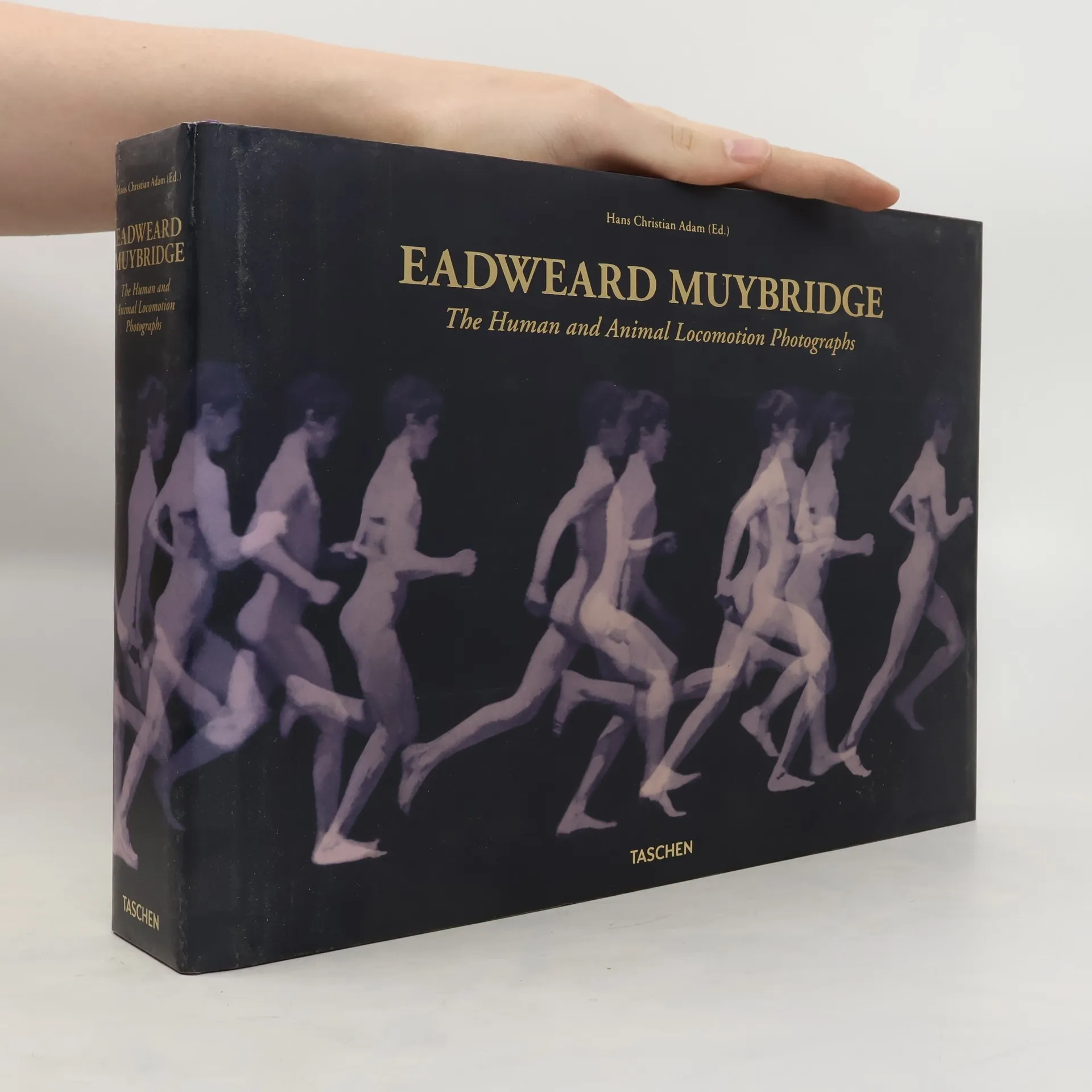
"English photographer Eadweard Muybridge (1830-1904) is a pioneer in visual studies of human and animal locomotion. This book traces the life and work of Muybridge, from his early thinking about anatomy and movement to his latest photographic experiments"--From dust jacket flap.
The human and animal locomotion photographs
- 804 páginas
- 29 horas de lectura
Le photographe anglais Eadweard Muybridge (1830-1904) fut un pionnier de l'étude visuelle des déplacements humains et animaux. En 1872, il aida à résoudre l'objet d'un pari pour le gouverneur de Californie Leland Stanford en donnant la preuve photographique que toutes les pattes du cheval quittent en même temps le sol durant le galop. Muybrige réussit ce tour de force en inventant un système complexe d'ouverture d'obturateurs simultanés qui lui permit de saisir des clichés du cheval au galop. Ensuite, Muybridge poursuivit son étude des mouvements humains et animaux dont il fixa de nombreux aspects sur pellicule, prenant des centaines de clichés de nus ou de modèles drapés s'adonnant à des activités aussi diverses que la marche, la course, la boxe, l'escrime et la descente d'escalier. Ce livre retrace sa vie et son oeuvre, depuis ses premières réflexions sur l'anatomie et le mouvement jusqu à ses ultimes expériences photographiques, et est richement illustré de ses planches complètes de clichés sur le mouvement, ainsi que d' images et de textes biographiques.
Eadweard Muybridge
- 125 páginas
- 5 horas de lectura
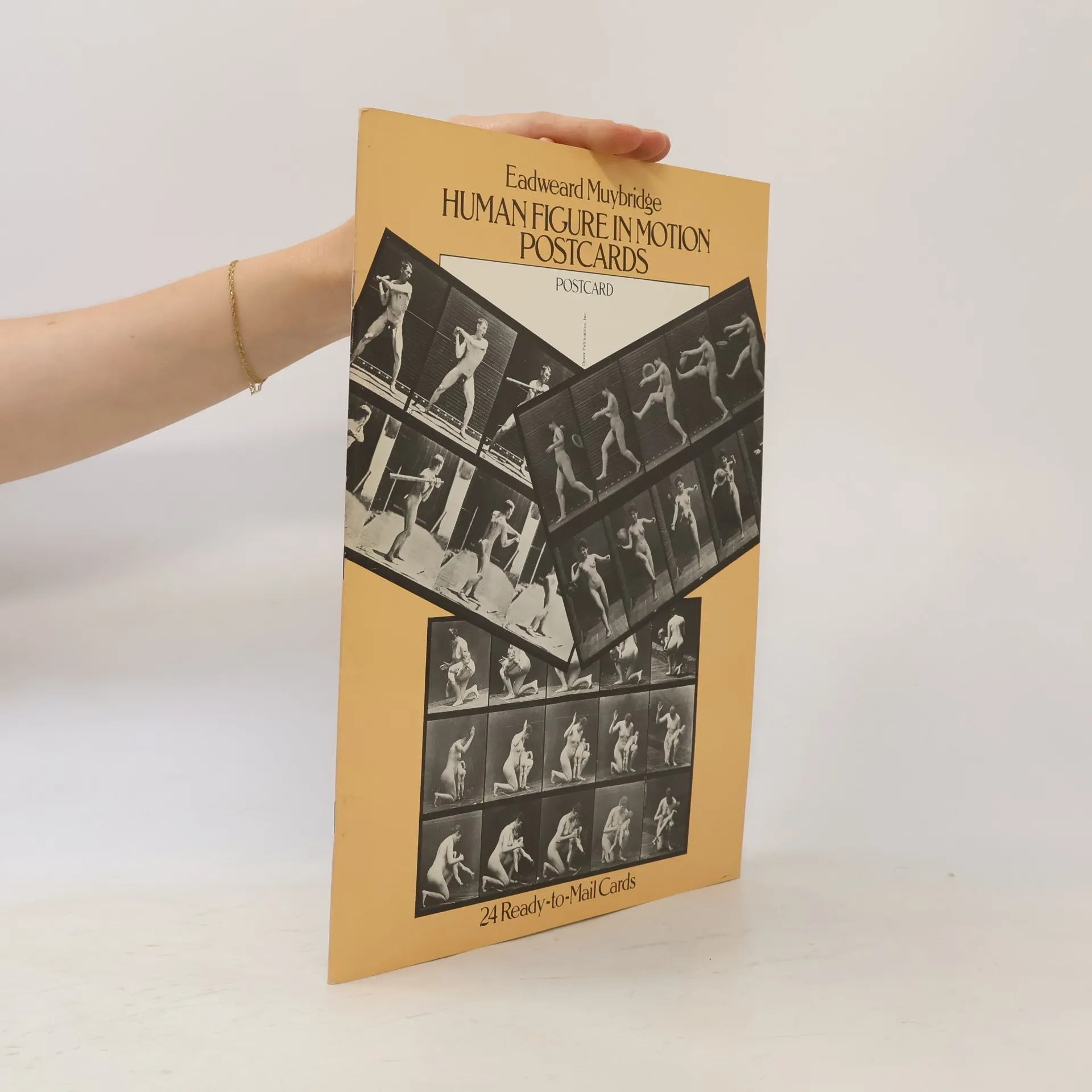
24 classic high-speed photographic sequences reproduced from rare 1887 plates capture nude and seminude male and female subjects running, dancing, wrestling, and more. Publisher's Note. Captions.
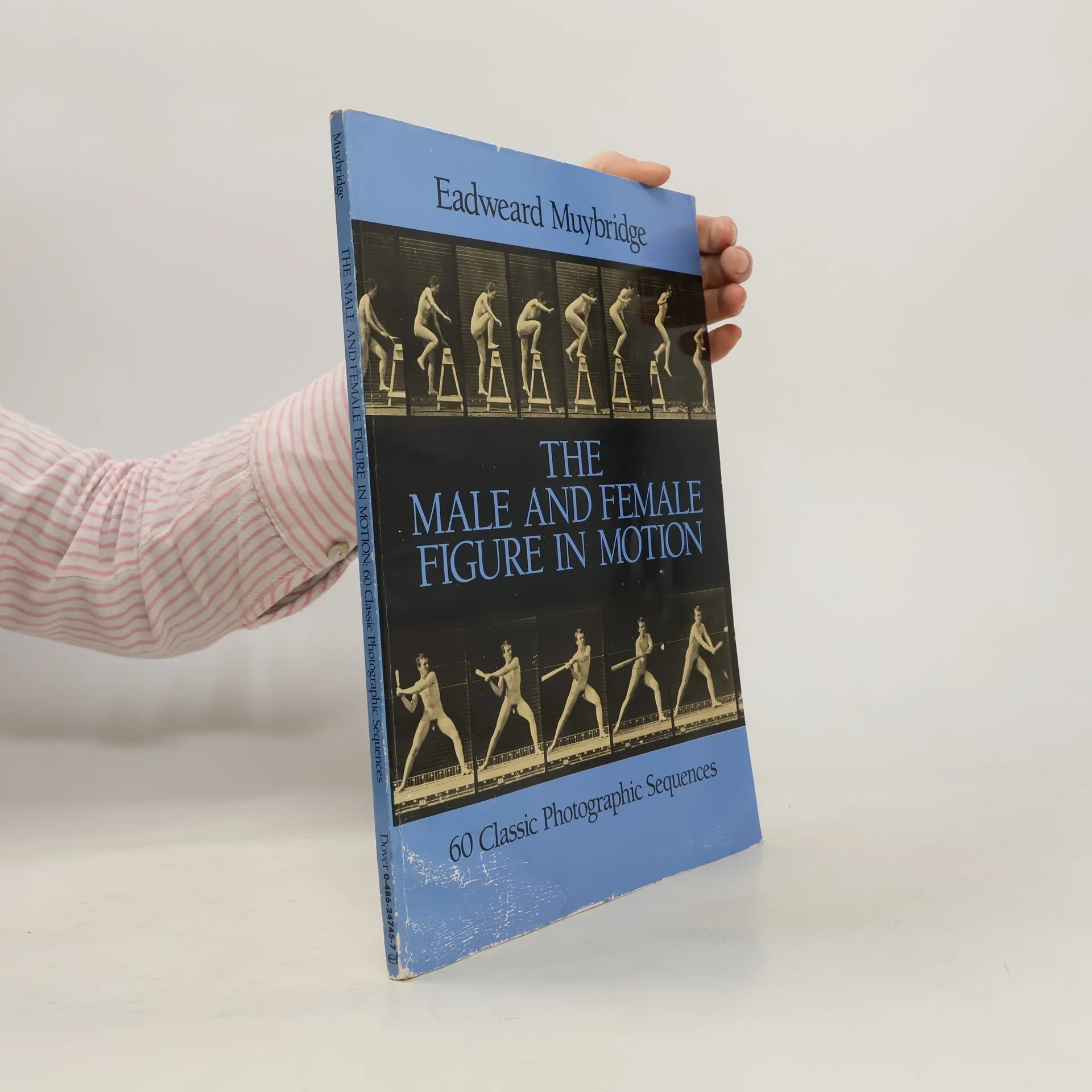
Sixty of the best, most representative sequences from original 5,000 prints. Taken at speeds up to 1/6000th of a second, incredibly precise images show undraped male and female subjects against a ruled background, running, walking, leaping, twisting, throwing, many other activities. Views from front, rear and three-quarter angle.
Muybridge's Human Figure in Motion
- 48 páginas
- 2 horas de lectura
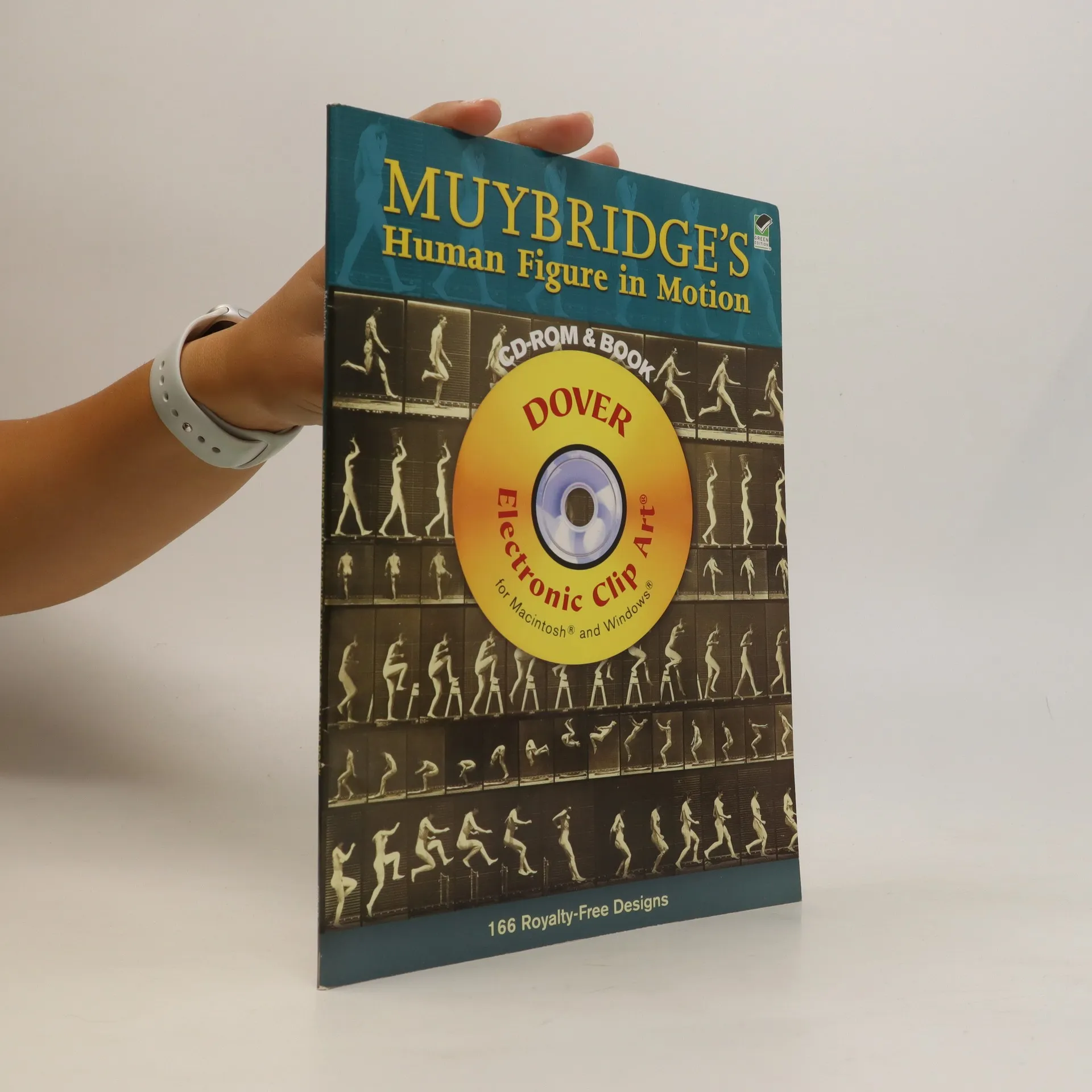
A pioneer in the art and science of photography, Eadweard Muybridge developed the use of multiple cameras to capture motion too quick for the eye to detect. This remarkable collection of his famous stopped-action photographs features 166 photographic sequences, in which men and women, mostly nude, perform a variety of motions—running, jumping, lifting, and other activities. Essential for artists, illustrators, and flash animators, these strips can be put to imaginative use in art and craft projects as well. Special Bonus: includes 10 Flash animations plus 15 photographic sequences that are ready to be animated.

![Der Mann, der die Bilder laufen liess oder Eadweard Muybridge und die 25000$-Wette [Fünfundzwanzigtausend-Dollar-Wette]](https://rezised-images.knhbt.cz/1920x1920/84411650.webp)