

Compra 10 libros por 10 € aquí!
Bookbot

Brian Massumi

    8 de mayo de 1956

    El trabajo de Brian Massumi profundiza en la intrincada relación entre la filosofía, la teoría del arte y el tejido de nuestra experiencia sensorial. Explora conceptos de movimiento, afecto y sensación, examinando cómo estos elementos fundamentales dan forma a nuestra percepción del mundo. Massumi investiga las profundas maneras en que nuestras experiencias corporizadas influyen en las estructuras políticas y sociales, ofreciendo una lente única para comprender el pensamiento contemporáneo.

    Parables for the Virtual
    Architectures of the Unforeseen
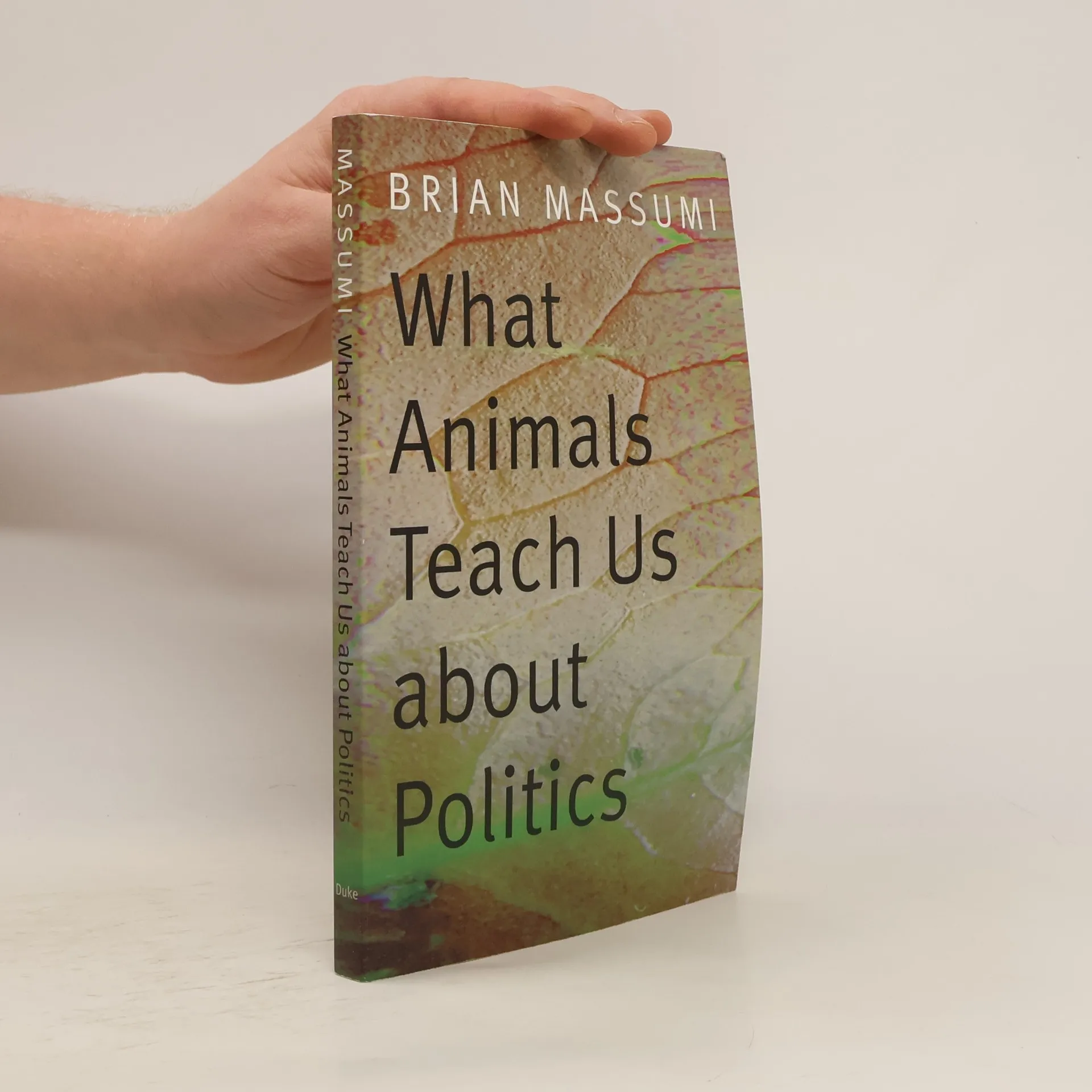
    What Animals Teach Us about Politics
    The Power at the End of the Economy
    Couplets
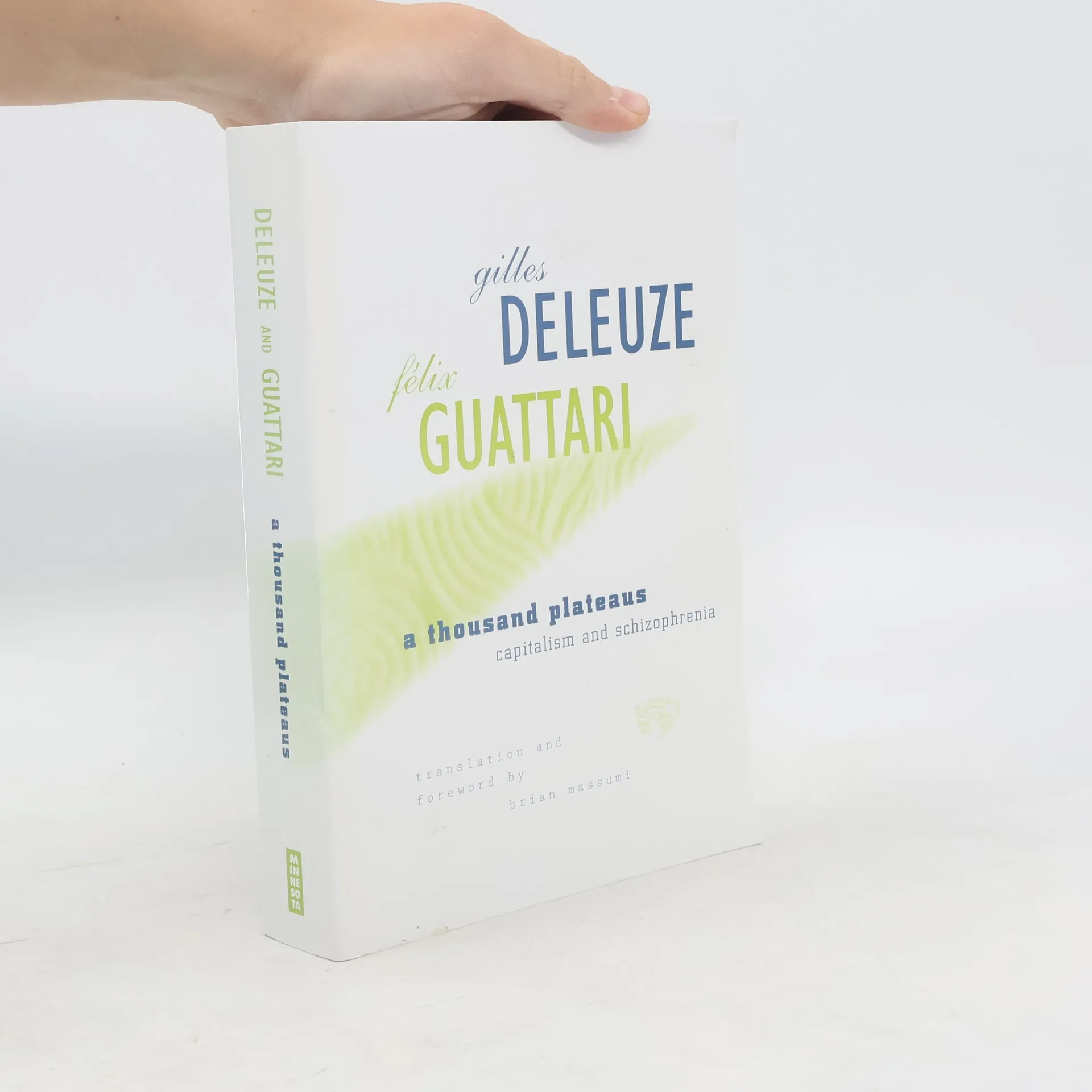
    A Thousand Plateaus
    • 2021

      This collection of twenty-four essential essays written by Brian Massumi over the past thirty years is both a primer for those new to his work and a supplemental resource for those already engaged with his thought.

      Couplets
    • 2019

      Architectures of the Unforeseen

      • 240 páginas
      • 9 horas de lectura

      Bringing the creative processes of three contemporary artists into conversation, this work stages an encounter between philosophy, art, and design. Its exquisite prose invites readers to engage with Brian Massumi as he embodies the artists’ work, navigating the boundary between theory and art, and offering nourishment for both practicing artists and philosophers. Drawing from Massumi's long-standing relationships with digital architect Greg Lynn, interactive media artist Rafael Lozano-Hemmer, and mixed-media installation creator Simryn Gill, the book explores their artistic processes. It focuses on what motivates each artist’s practice—the generative knots that inspire creativity—and how their works produce unique effects. Rather than merely profiling the artists, Massumi’s essays are creative endeavors that develop new philosophical concepts and provide rigorous reflections on art and creativity. By posing fundamental questions about nature, culture, and the emergence of the new, this work constitutes significant original research on pioneering artists. It holds value for both everyday readers and scholars, positioning itself as an essential resource not only for the fields of digital architecture, interactive media, and installation art but also for a broader understanding of art and creativity.
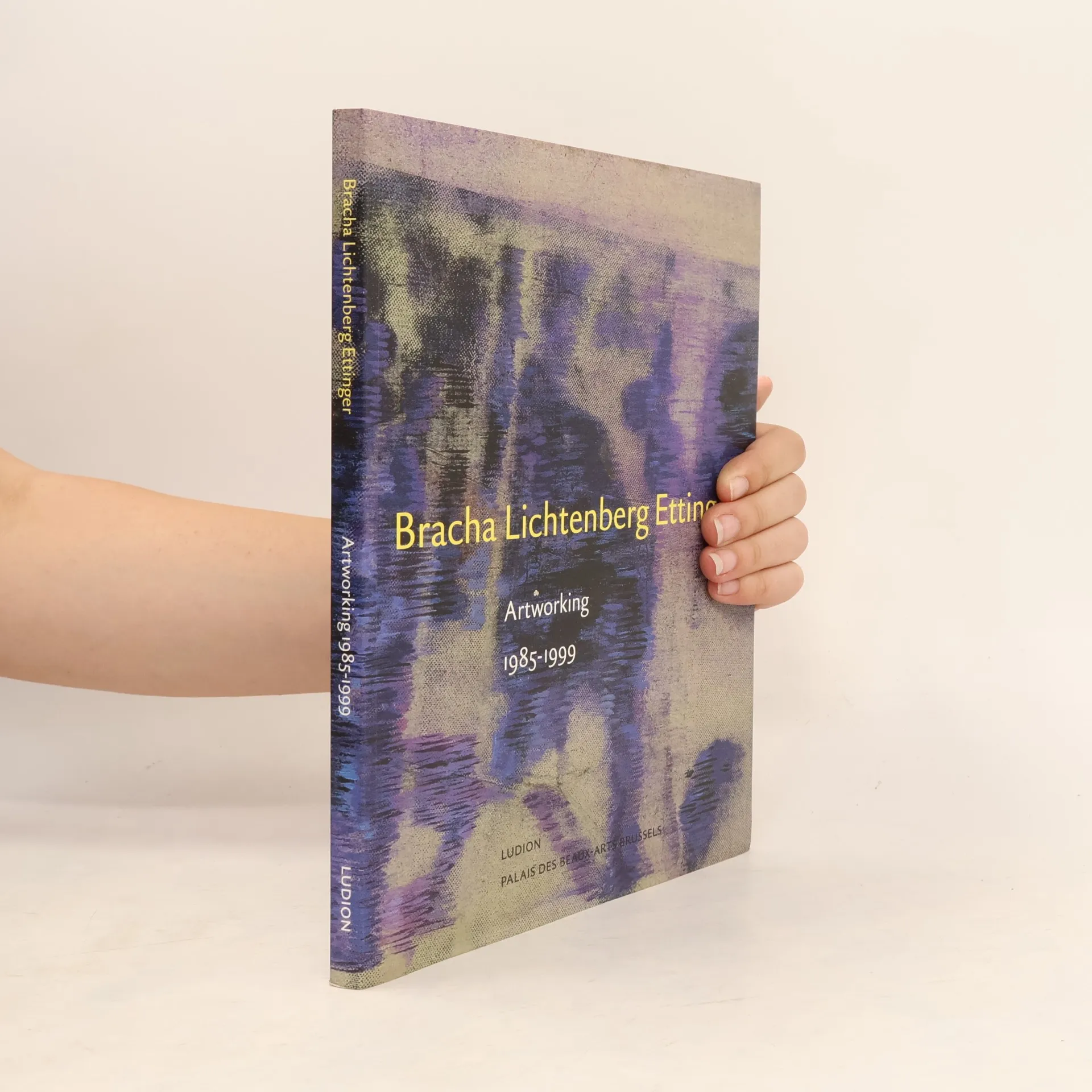
      Architectures of the Unforeseen
    • 2018

      99 Theses on the Revaluation of Value

      • 152 páginas
      • 6 horas de lectura

      This work explores the necessity of redefining value to envision a postcapitalist economy. It argues that to transition to new social forms, we must first reclaim value from the constraints of capitalist markets and the neoliberal reduction of life to mere human capital. The author emphasizes the importance of occupying surplus-value to pave the way for a postcapitalist future. The text serves as both a theoretical and practical manifesto, reexamining concepts of money, exchange, and finance, particularly how qualitative experiences are economically quantified. New conceptual tools are proposed to understand value in qualitative terms, suggesting that this revaluation could underpin an alternative economy. The author highlights the potential of emerging blockchain technologies, advocating for their redesign to prioritize collective creativity over individual choice and collaborative speculation over self-interest. Recognizing the specificities of our contemporary neoliberal condition is crucial to resisting its destructive power and reclaiming the future. This work aims to inspire a radical redefinition of value, essential for creating a livable postcapitalist future.

      99 Theses on the Revaluation of Value
    • 2017

      The Principle of Unrest

      Activist Philosophy in the Expanded Field

      • 148 páginas
      • 6 horas de lectura

      The exploration of an "activist" philosophy emphasizes movement as a fundamental aspect of existence, focusing on qualitative transformation rather than static definitions. Central to the discussion is the relationship between neoliberal capitalism and movement, particularly how it mobilizes emergent potentials. The concept of "ontopower" is introduced, highlighting the need to understand capitalist power to effectively resist it. Collective counter-powers and the transindividual nature of thought are examined, urging a reconsideration of political practices that embrace creativity and unrest at both individual and collective levels.

      The Principle of Unrest
    • 2017

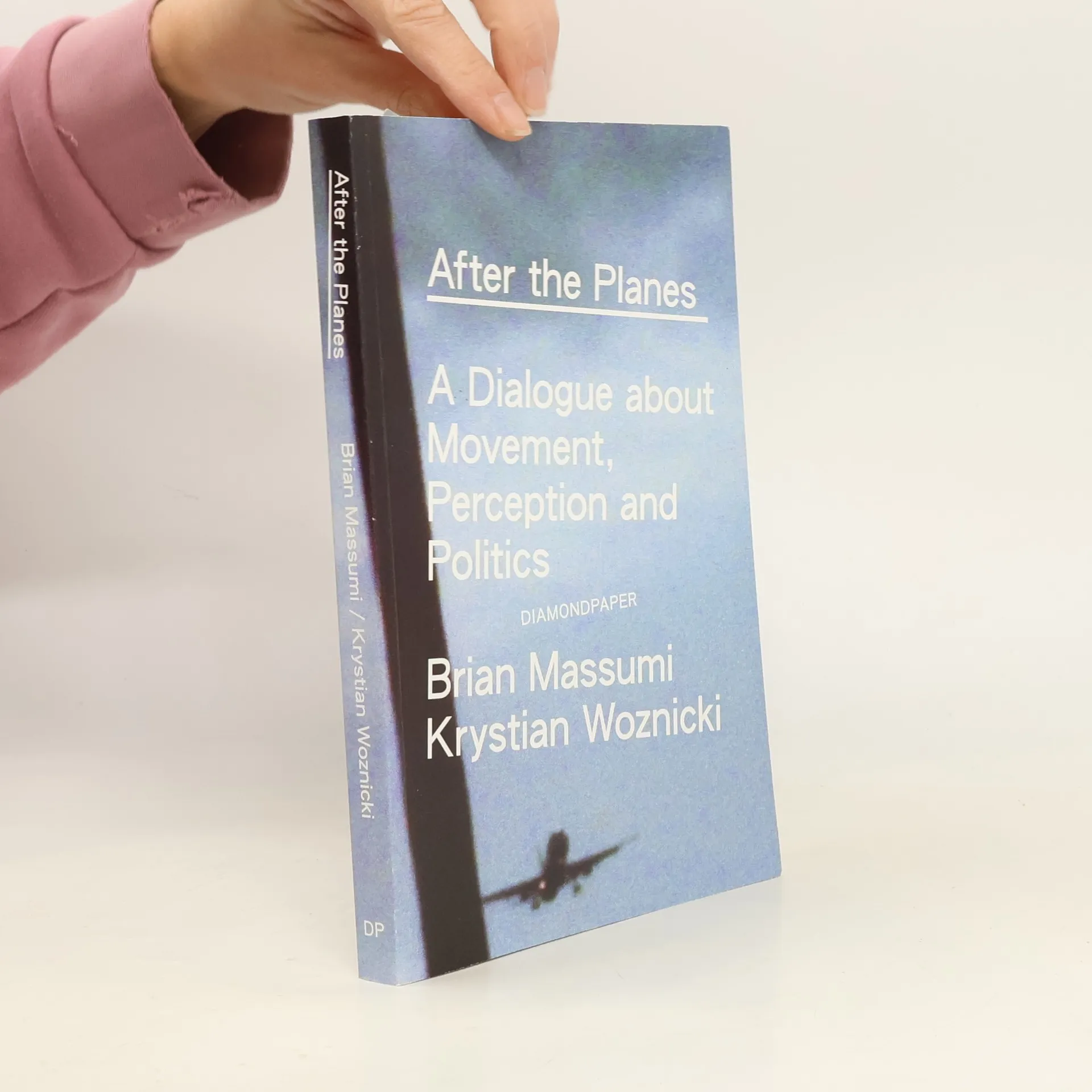
      Humans, data, goods, money—everything is in motion. It is not always clear what enables these processes in the first place and why they run sometimes more smoothly and sometimes less. The forces that set the world in motion seem to operate invisibly. Against this backdrop this book, which has borrowed its title from Don DeLillo’s 9/11 novel “Falling Man,” asks seminal questions: How do new forms of power and counter-power condition the movements of humans, data, goods, money? How do movement-based powers struggle to make our high-voltage environment livable? “After the Planes” has been conceived in the context of TACIT FUTURES, a project by Berliner Gazette e. V. encompassing research, interviews and public events. This is a book that, like an x-ray, makes visible today’s hidden infrastructure of movement. The images and the writing presented here have been calibrated to capture, to freeze in the frame, the light emitted by power in motion that usually exists outside the spectrum of our perception. Max Haiven The human has always been on the move throughout its history. Or is it more accurate to say that a movement of relational transformation has moved through the human? Brian Massumi Seeing with the omnipresent eyes of the observation society also enables seeing through the eyes of another subject. Here, in these openings, is where one's movements become political. Krystian Woznicki

      After the planes
    • 2015

      The Politics of Affect

      • 232 páginas
      • 9 horas de lectura

      'The capacity to affect and to be affected'. This simple definition opens a world of questions - by indicating an openness to the world. To affect and to be affected is to be in encounter, and to be in encounter is to have already ventured forth.

      The Politics of Affect
    • 2015

      In this original theory of power, Brian Massumi explains how the logic of preemption governs U.S. military policy in the War on Terror and how that logic spills over from the war front to the home front. Threats are now felt into reality and power refocuses on what may emerge. The mode of power embodying the logic of preemption is ontopower.

      Ontopower
    • 2014

      In this concise book, the noted theorist Brian Massumi takes up the question of the animal. Treating the human as animal, he develops a concept of an animal politics, which he uses as the basis of an expanded notion of the political.

      What Animals Teach Us about Politics
    • 2014

      The Power at the End of the Economy

      • 144 páginas
      • 6 horas de lectura

      In his latest book, the influential critic Brian Massumi offers a new theory of political economy that demonstrates how emotional, affective and nonconscious decisions work together with rational self-interest in the shaping of neoliberalism. Massumi's analysis shows the potential for a new anti-capitalist politics.

      The Power at the End of the Economy
    • 2013

      Semblance and Event

      • 232 páginas
      • 9 horas de lectura

      An investigation of the “occurrent arts” through the concepts of the “semblance” and “lived abstraction.” Events are always passing; to experience an event is to experience the passing. But how do we perceive an experience that encompasses the just-was and the is-about-to-be as much as what is actually present? In Semblance and Event, Brian Massumi, drawing on the work of William James, Alfred North Whitehead, Gilles Deleuze, and others, develops the concept of “semblance” as a way to approach this question. It is, he argues, a question of abstraction, not as the opposite of the concrete but as a dimension of it: “lived abstraction.” A semblance is a lived abstraction. Massumi uses the category of the semblance to investigate practices of art that are relational and event-oriented—variously known as interactive art, ephemeral art, performance art, art intervention—which he refers to collectively as the “occurrent arts.” Each art practice invents its own kinds of relational events of lived abstraction, to produce a signature species of semblance. The artwork's relational engagement, Massumi continues, gives it a political valence just as necessary and immediate as the aesthetic dimension.

      Semblance and Event