


Allen Edward Buchanan es un filósofo distinguido cuyo trabajo profundiza en las complejidades de la ética aplicada, la justicia social y el derecho internacional. Su enfoque de la filosofía está marcado por un profundo análisis de los principios morales y políticos que dan forma a nuestra comprensión de la justicia en un contexto global. Buchanan investiga los fundamentos del derecho internacional y los desafíos éticos inherentes a las relaciones internacionales y las estructuras sociales. Sus contribuciones intelectuales residen en la conexión de conceptos filosóficos teóricos con sus implicaciones prácticas para la práctica ética y legal.
This important book, written by four internationally renowned bioethicists, is the first systematic treatment of the fundamental ethical issues underlying the application of genetic technologies to human beings.
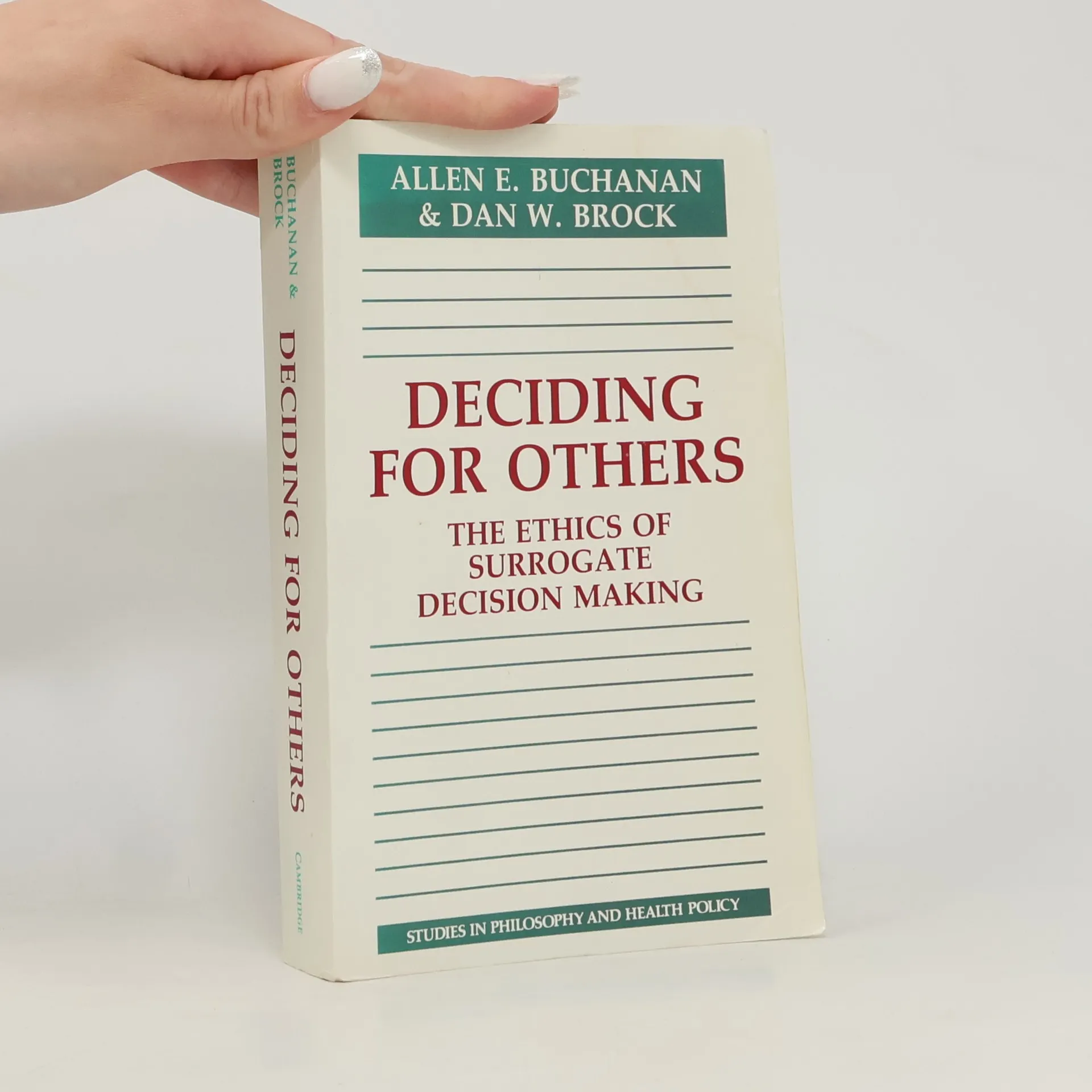
This book is the most comprehensive treatment available of one of the most urgent--and yet in some respects most neglected--problems in bioethics: decisionmaking for incompetents. Part I develops a general theory for making treatment and care decisions for patients who are not competent to decide for themselves. It provides an in-depth analysis of competence, articulates and defends a coherent set of principles to specify suitable surrogate decisionmakers and to guide their choices, examines the value of advance directives, and investigates the role that considerations of cost ought to play in decisions concerning incompetents. Part II applies this theoretical framework to the distinctive problems of three important classes of individuals, many of whom are incompetent: minors, the elderly, and psychiatric patients. The authors' approach combines a probing analysis of fundamental issues in ethical theory with a sensitive awareness of the concrete realities of health care institutions and the highly personal and individual character of difficult practical problems. Its broad scope will appeal to health professionals, moral philosophers and lawyers alike.
Je morálně oprávněné, aby medicína nejen léčila nemoci, ale i vylepšovala člověka? Věda by mohla v dohledné době zvýšit lidskou inteligenci, zlepšit paměť, prodloužit život a zpomalit stárnutí, a dokonce i zdokonalit náš charakter. V současné diskusi naneštěstí převládají extrémní pozice -- na jedné straně konzervatismus, varující před nástupem zdokonalených nadlidí, kteří si podmaní zbytek lidstva, na straně druhé nekritický optimismus, věřící v technologické řešení všech lidských problémů. Americký bioetik Allen Buchanan ve své čtivé knize odmítá jak konzervatismus, neboť lidský genom se stále vyvíjí a zásah do něj není přestupkem ani proti bohu, ani proti přírodě, tak přehnaný optimismus, který podceňuje nezamýšlené důsledky vylepšování.