




Compra 10 libros por 10 € aquí!
Bookbot

Frank Furedi

    3 de mayo de 1947
    Culture of Fear
    How Fear Works
    Why Borders Matter
    Democracy Under Siege
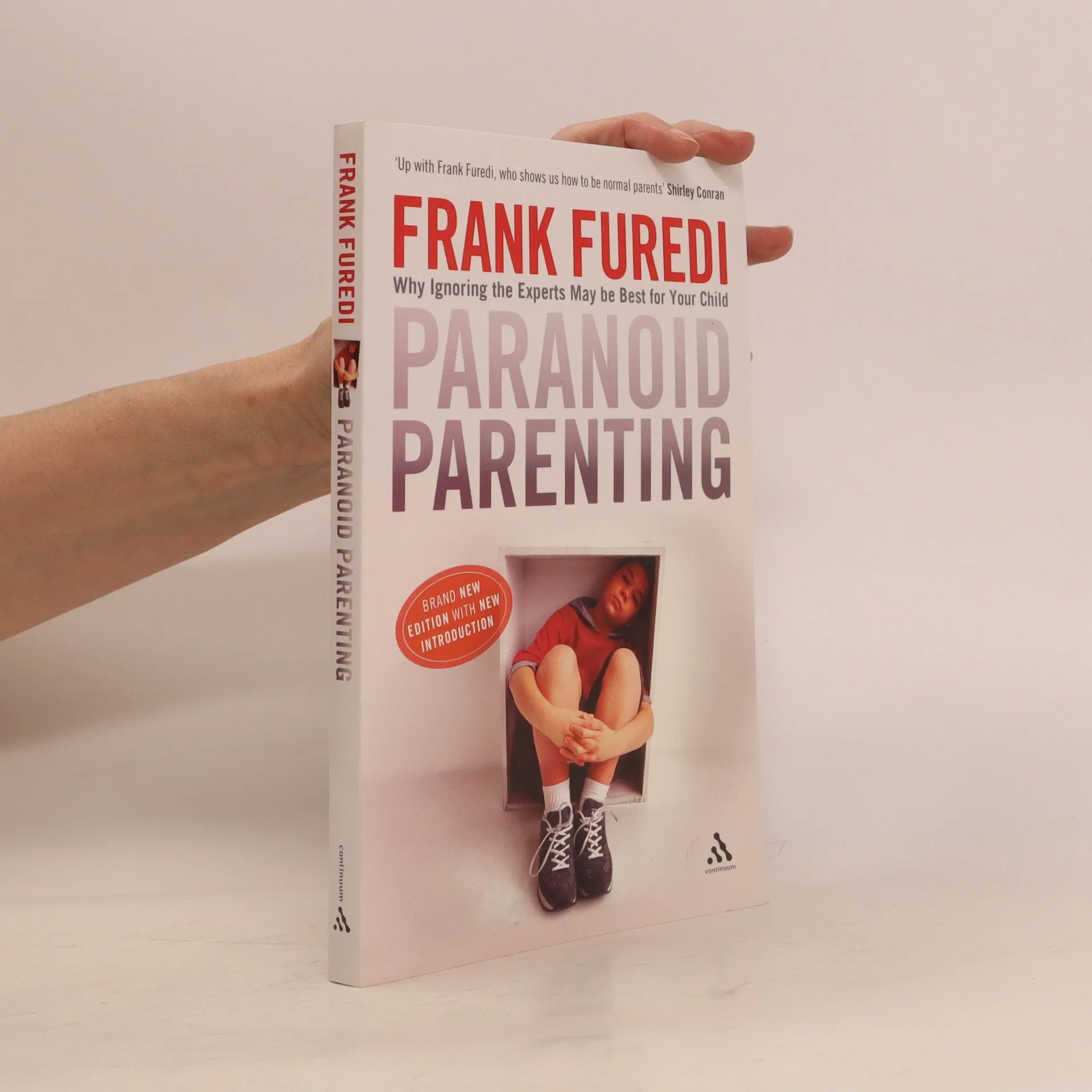
    Paranoid parenting : why ignoring the experts may be best for your child
    100 Years of Identity Crisis
    • 100 Years of Identity Crisis

      Culture War Over Socialisation

      The concept of Identity Crisis came into usage in the 1940s and it has continued to dominate the cultural zeitgeist ever since. In his exploration of the historical origins of this development, Frank Furedi argues that the principal driver of the 'crisis of identity' was and continues to be the conflict surrounding the socialisation of young people. In turn, the politicisation of this conflict provides a terrain on which the Culture Wars and the politicisation of identity can flourish. Through exploring the interaction between the problems of socialisation and identity, this study offers a unique account of the origins and rise of the Culture Wars.


      100 Years of Identity Crisis
    • Paranoid Parenting is an important book that shows how parental fears have been stoked and families harmed as a consequence. It ought to be read by every sensible individual interested in regaining a sane viewpoint that advances children's well-being. It seems that every day there is a warning about your children: everything from cots, babysitters, schools, supermarkets and public parks pose a danger. We are told that children's health, safety and welfare and constantly at risk. Based on sociological research as well as dozens of interviews, this book will bolster your confidence in your own judgements and enable you to bring up self-assured, imaginative, capable children. If you want to understand why adults act like children and children act like adults -- in short, if you want to understand why raising children today is harder than ever before -- read this book.

      Paranoid parenting : why ignoring the experts may be best for your child
    • Why Borders Matter

      • 200 páginas
      • 7 horas de lectura

      "Western society has become estranged from the borders and social boundaries that have for centuries given meaning to human experience. This book argues that the controversy surrounding mass migration and physical borders runs in parallel and is closely connected to the debates surrounding the symbolic boundaries people need to guide on the issues of everyday life. Numerous commentators claim that borders have become irrelevant in the age of mass migration and globalisation. Some go so far as to argue for 'No Borders'. And it is not merely the boundaries that divide nations that are under attack! The traditional boundaries that separate adults from children, or men from women, or humans from animals, or citizens and non-citizens, or the private from the public sphere are often condemned as arbitrary, unnatural, and even unjust. Paradoxically, the attempt to alter or abolish conventional boundaries coexists with the imperative of constructing new ones. No-Border campaigners call for safe spaces. Opponents of cultural appropriation demand the policing of language and advocates of identity politics are busy building boundaries to keep out would-be encroachers on their identity. Furedi argues that the key driver of the confusion surrounding borders and boundaries is the difficulty that society has in endowing experience with meaning. The most striking symptom of this trend is the cultural devaluation of the act of judgment, which has led to a loss of clarity about the moral boundaries in everyday life. The infantilisation of adults that runs in tandem with the adultification of children offers a striking example of the consequence of non-judgmentalism. Written in a clear and direct style, this book will appeal to students and scholars in cultural sociology, sociology of knowledge, philosophy, political theory, and cultural studies"--Page 4 of cover

      Why Borders Matter
    • How Fear Works

      • 320 páginas
      • 12 horas de lectura

      Frank Furedi returns to the theme of Fear in our society and culture

      How Fear Works
    • Culture of Fear

      Risk-Taking and the Morality of Low Expectation - Revised Edition

      • 205 páginas
      • 8 horas de lectura

      Fear has become an ever-expanding part of life in the West in the 21st century. We live in terror of disease, abuse, stranger danger, environmental devastation and terrorist onslaught. We are bombard with reports of new concerns for our safety and that of our children, and urged to take greater precautions and seek more protection. But compared to the past, or to the developing world, people in contemporary societies have much less familiarity with pain, suffering, debilitating disease and death. We actually enjoy an unprecedented level of personal safety. When confronted with events like the destruction of the World Trade Centre, fear for the future is inevitable. But what happened on September 11th 2001 was in many ways an old fashioned act of terror, representing the destructive side of the human passions. Frank Furedi argues that the greater danger in our culture is the tendency to fear achievements representing a more constructive side of humanity. We panic about GM food, about genetic research, about the health dangers of mobile phones. The facts often fail to support the scare stories about new or growing risks to our health and safety. Our obsession with theoretical risks is in danger of distracting society from dealing with the old-fashioned dangers that have always threatened our lives.

      Culture of Fear
    • The Road to Ukraine

      How the West Lost its Way

      Russia's invasion of Ukraine is the latest chapter in a series of events that have their origins in World War One. The difficult existential questions that emerged before and during this conflict still remain unresolved. Contrary to the claim that wars are not supposed to happen in Europe or that we live in the era of the End of History, the experience of Ukraine highlights the salience of the spell of the past. The failure of the West to take its past seriously has left it confused and unprepared to deal with the current crisis. Unexpectedly fashionable claims about the irrelevance of borders and of nation states have been exposed as shallow myths. The author argues that the West's self-inflicted condition of historical amnesia has encouraged it to disregard the salience of geo-political realities. Suddenly the once fashionable claims that made up the virtues of globalisation appear threadbare. This problem, which was already evident during the global Covid pandemic has reached a crisis point in the battlefield of Ukraine. History has had its revenge on a culture that believes that what happened in the past no longer matters. The Road To How the West Lost Its Way argues that overcoming the state of historical amnesia is the precondition for the restoration of global solidarity.

      The Road to Ukraine
    • Frank Furedi se vrací k tématu, které už zpracovával v knize Culture of Fear (Kultura strachu), neboť mnohé z toho, co předvídal, se skutečně stalo. Kniha chce vysvětlit dvě vzájemně propojená témata: proč v dnešní společnosti získal strach morálně dominantní postavení a jak se náš dnešní strach liší od obav, které jsme prožívali v minulosti. Jaké jsou hnací síly strachu, jaká je role médií v jeho prosazování a kdo má vlastně prospěch z kultury strachu? To jsou některé otázky, kterých si Furedi všímá, aby vysvětlil současnou složitou situaci. Je přesvědčen, že když lépe porozumíme tomu, jak strach funguje, můžeme prosadit postoje, které nám pomohou žít v budoucnosti, kde se nebudeme tolik bát.

      Jak funguje strach: kultura strachu v 21. století
    • Die Elternparanoia

      • 264 páginas
      • 10 horas de lectura

      Ich bin mir nicht sicher, ob ich dieses Buch mehr als Soziologe oder als Vater eines fünfjährigen Sohnes geschrieben habe. Meine akademische Ausbildung hat mich nicht auf die Welt der elterlichen Ängste vorbereitet, die viele Väter und Mütter plagt. Schon bei der Geburt meines Sohnes Jacob wurde mir bewusst, dass das Leben gefährlich ist und von Anfang an erhebliche Risiken birgt. Im Krankenhaus wurden wir über Maßnahmen zur Verhinderung von Kindesentführungen informiert, und besorgte Freunde fragten, ob wir die neuesten Ratschläge zur Verhütung des plötzlichen Kindstods kannten. Verwandte diskutierten die Risiken verschiedener Betreuungsformen und wogen die Gefahren von Kindermädchen gegen die von Kindertagesstätten ab. Besonders deutlich wurde uns das Ausmaß der Eltern-Paranoia, als meine Mutter erklärte, sie könne sich keine Fernsehsendungen über Babys mehr ansehen, da sie in Angst versetzt wurde. Eltern wird vermittelt, dass jeder feste Ansichten über die Herausforderungen der Kindererziehung hat. Politiker und Experten bombardieren uns mit Ratschlägen und Handbüchern, die angeblich notwendiges Wissen vermitteln. Paradoxerweise scheinen gerade die Eltern die einzigen zu sein, die nicht wissen, was das Beste für ihr Kind ist. Dies führt zu einem Mangel an Selbstbewusstsein und einem hohen Maß an Ängstlichkeit im Umgang mit Kindern.

      Die Elternparanoia
    • Eine klarsichtige Analyse von Elternschaft heute, die mit verbreiteten Selbstzweifeln garantiert aufräumt. Seit der britische Soziologe Frank Furedi selbst Vater geworden ist, hat er die unter Müttern und Vätern grassierende Orientierungslosigkeit, ihre Selbstzweifel und Schuldgefühle hautnah erlebt – und sich nicht anstecken lassen. In seinem frischen und klarsichtigen Buch entwirft er ein Panorama von Elternschaft heute: Eltern sind relativ allein gelassen, da das »ganze Dorf« als Miterzieher längst nicht mehr existiert. Stattdessen wartet eine Vielzahl von Experten in allen Medien mit einer Fülle von Informationen, Ratschlägen und Rezepten auf, unüberschaubar, verwirrend und oft widersprüchlich. Gerne wird dabei auch der Mythos vom »verwundbaren Kind« bemüht und das Aufwachsen als eine gefahrvolle und komplizierte Angelegenheit betrachtet. Dies alles erzeugt ein allgemeines Klima der Verunsicherung und vermehrt bei Eltern den Glauben an die eigene Inkompetenz. Ein Irrglaube, wie Frank Furedi meint. Er kennt und verrät auch einige wirksame Gegenmittel: gesunder Menschenverstand, Urteilsfähigkeit, Selbstvertrauen und Mut zur eigenen Autorität.

      Warum Kinder mutige Eltern brauchen