

A distinguished discussion of Weil's views on social philosophy, science, ethics, and religion.The work of Simone Weil has not garnered the attention it deserves in the Anglo-American tradition. In this book, Rhees, the noted thinker trained by Wittgenstein, provides the most sustained critique to date of Weil's views on science and religion. In this decidedly Wittgensteinian spin on the philosophy of religion, Rhees' observations on the major themes in Weil's work--social philosophy, science, ethics, and religion--are presented. The book shows how Rhees wrestled with difficulties he found in the work of Weil, someone he held in the highest regard."In the field of Weil studies this book is a 'gold mine.'" -- Richard H. Bell, author of Simone The Way of Justice as Compassion"Weil was a highly original thinker and Discussions of Simone Weil helps bring out that originality. Rhees also makes a contribution to the philosophy of religion, for here we get to see how a genuine Wittgensteinian approach might work in tackling religious questions." -- Eric O. Springsted, coauthor of Spirit, Nature, and Issues in the Thought of Simone Weil
Rush Rhees Libros
Rush Rhees fue un filósofo estadounidense, reconocido principalmente como estudiante, amigo y albacea literario de Ludwig Wittgenstein. Su obra profundiza en los aspectos centrales de la existencia humana y la naturaleza de la conciencia, profundamente moldeada por las indagaciones filosóficas de Wittgenstein. La contribución de Rhees reside en su meticuloso y perspicaz examen del lenguaje y el pensamiento, ofreciendo a los lectores nuevas perspectivas sobre las complejidades de la experiencia humana. Su escritura se caracteriza por su rigor intelectual y profundidad.
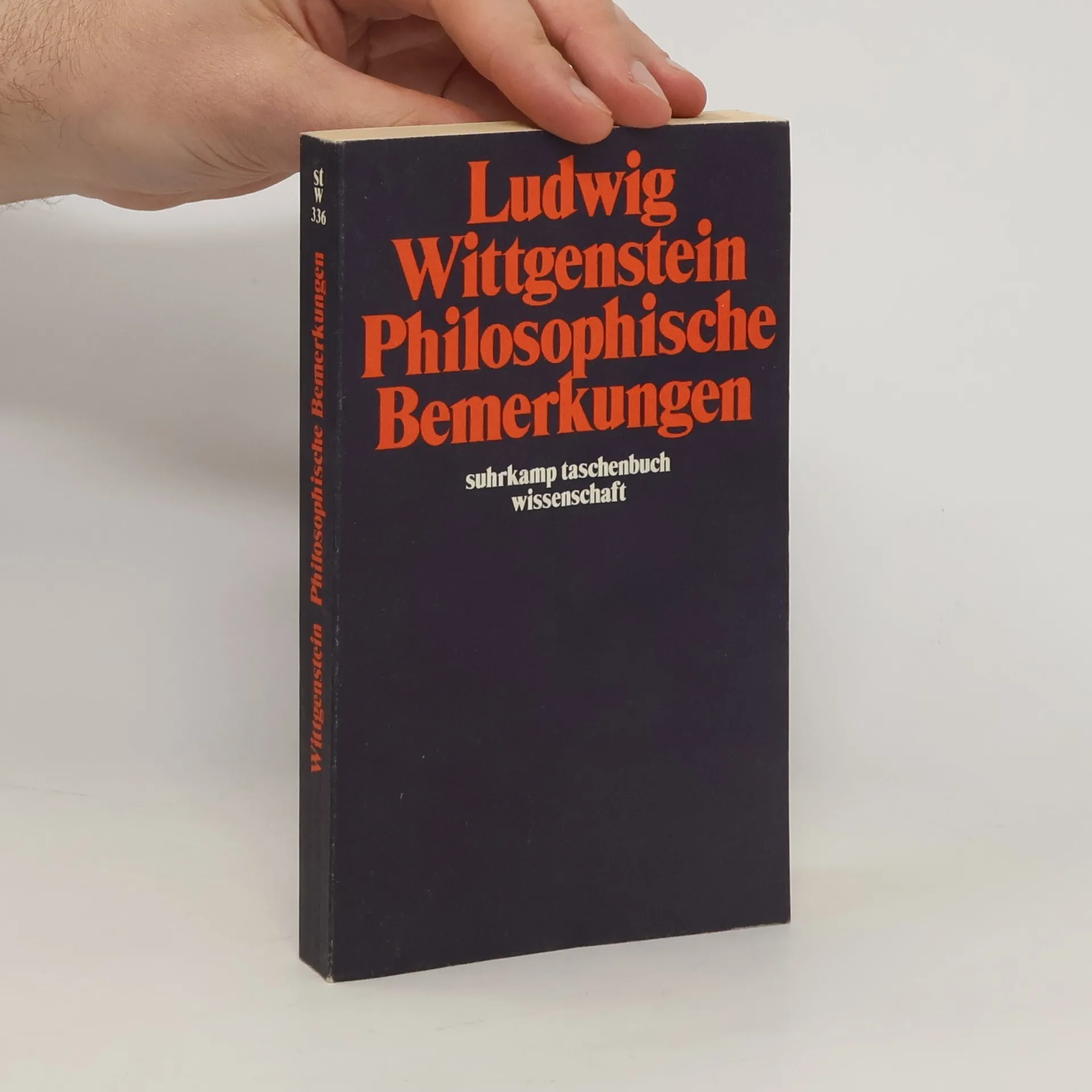

Philosophische Bemerkungen
- 351 páginas
- 13 horas de lectura
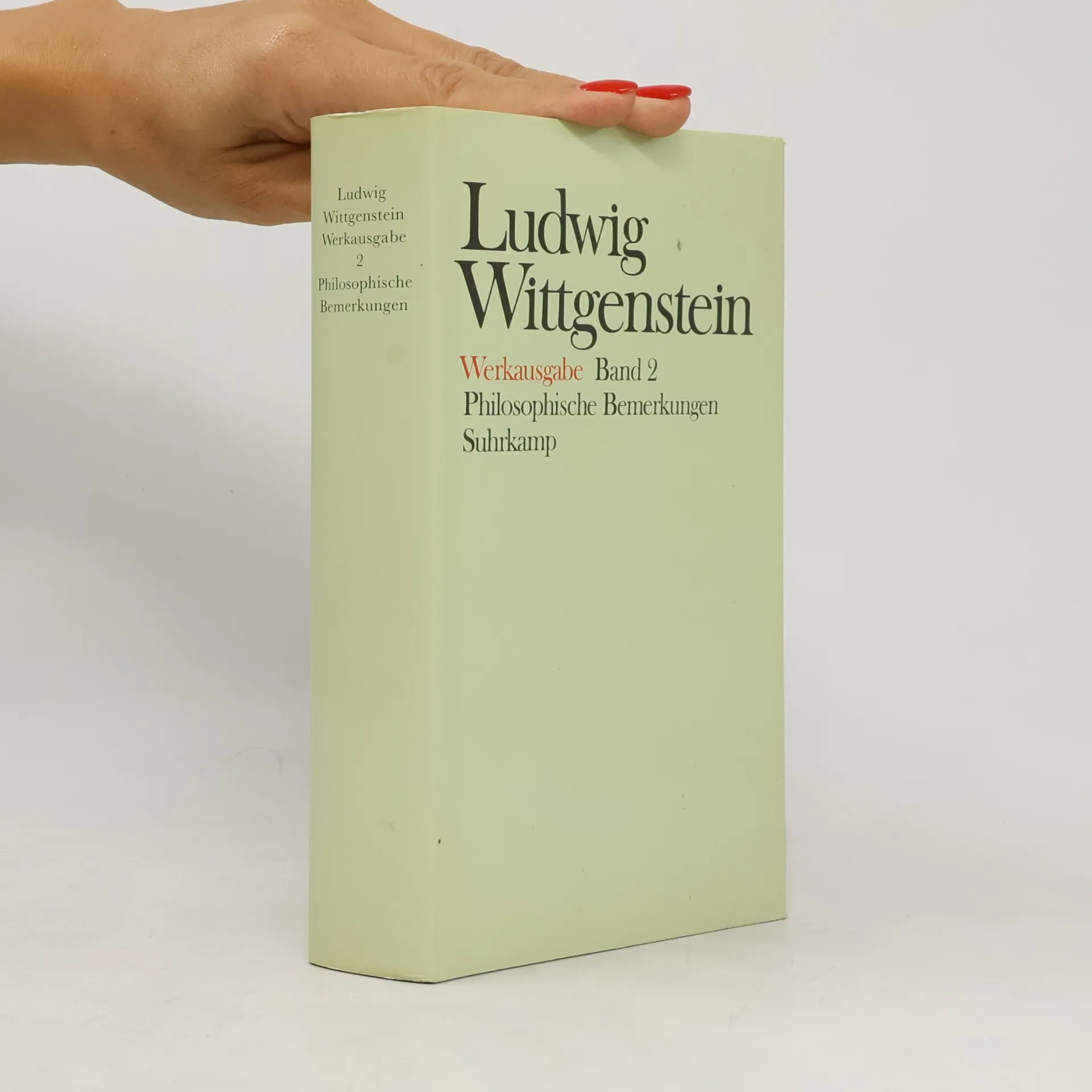
Werkausgabe - 2: Philosophische Bemerkungen
- 319 páginas
- 12 horas de lectura
In May 1930, the Council of Trinity College, Cambridge, sought Bertrand Russell's assessment to decide on renewing Wittgenstein's research grant. Russell noted the originality and importance of Wittgenstein's new work, suggesting it might lead to a new philosophy, despite his uncertainty about its truth. The text contains foundational elements of Wittgenstein's later thoughts on mind and mathematics. It critiques Russell's "The Analysis of Mind" and revises the picture theory of meaning from the "Tractatus," emphasizing that the link between propositions and reality is not inherent in the picture itself. Wittgenstein explores generality in mathematics, the concepts of proof and experiment, and presents a pain/private-language argument while addressing behaviorism and the verifiability principle. Though challenging, this work is crucial for any philosophy collection. It serves as a key transitional text between Wittgenstein's major works, making it essential for those aiming for a comprehensive understanding of his philosophy.
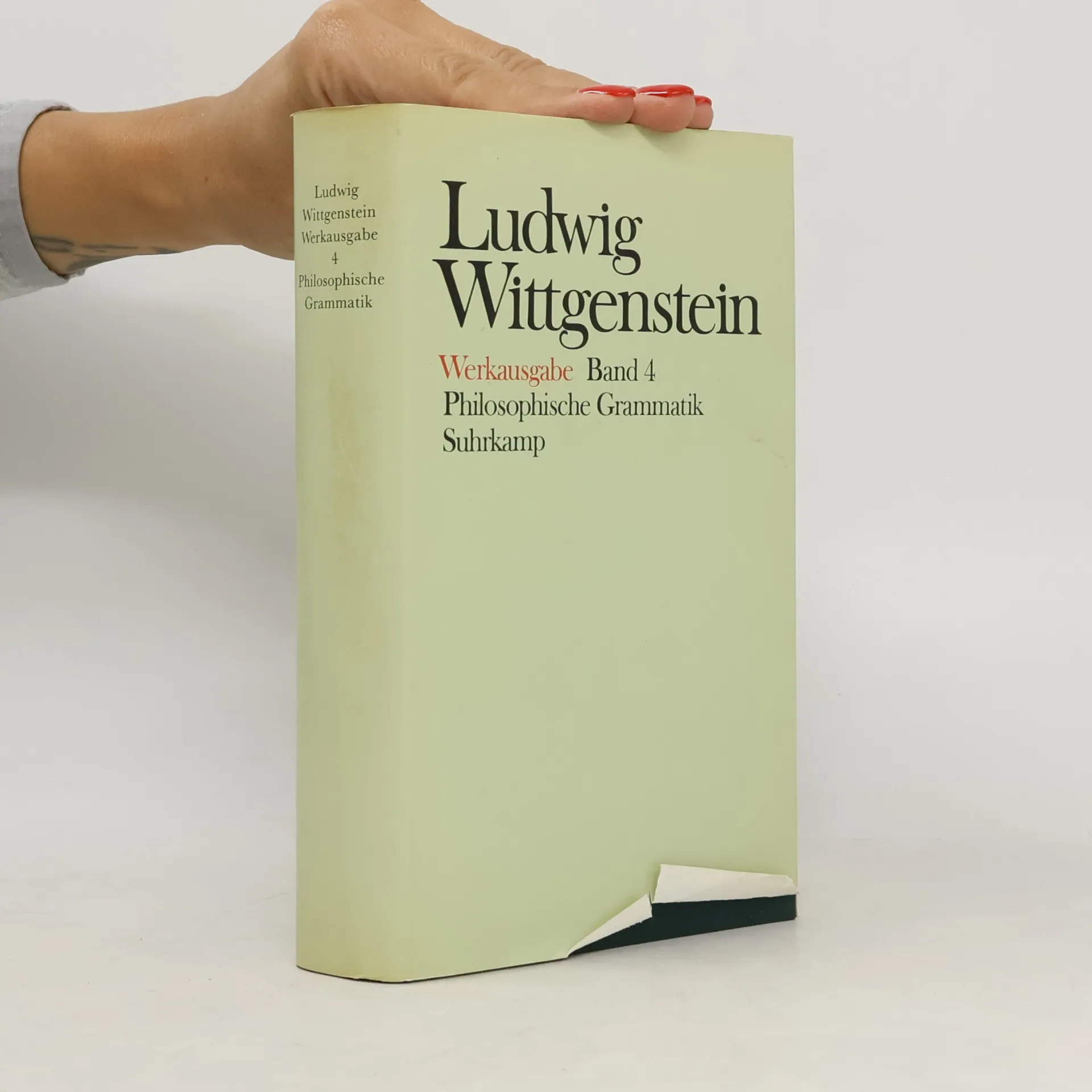
Werkausgabe - 4: Philosophische Grammatik
- 490 páginas
- 18 horas de lectura