Bookbot

Furio Jesi

    19 de mayo de 1941 – 17 de junio de 1980
    Germania segreta
    La religione romana arcaica. Miti, leggende, realtà della vita religiosa romana. Con un'appendice sulla religione degli Etruschi
    Die letzte Nacht
    Spartakus
    Secret Germany - Myth in Twentieth-Century German Culture
    Secret Germany
    • Spartakus

      • 180 páginas
      • 7 horas de lectura

      A crucial text at the intersection of history and philosophy in twentieth-century Italy. On December 29, 1918, the Spartakus League, a Marxist revolutionary movement, rose up in Germany calling for an end to class rule by the bourgeoisie. Massive demonstrations followed and more than 500,000 Berliners took to the streets in January--only to be crushed by police and anticommunist paramilitary troops. Several leaders of the Spartakus League were killed and the revolt was quashed. Through a detailed reconstruction of the events of that bloody winter, historian and critic Furio Jesi recasts our understanding of a foundational political difference--revolt or revolution? Drawing on a deep reserve of literary sources like Brecht, Eliade, Dostoyevsky, and Mann, Jesi outlines a uniquely incisive phenomenology of revolt that distinguishes between the purposeful historical temporality of revolution and the suspension of time that marks a revolt. This edition also includes an essay on the politics of time and revolution by Rosa Luxemburg, a founding leader of the Spartakus League.

      Spartakus2024
    • An analysis of how a political myth is taken and treated as a metaphor that reflects how a country like Germany built its own destiny. In the decades before the rise of the Third Reich, "Secret Germany" was a phrase used by the circle of writers around the poet Stefan George to describe a collective political and poetic project: the introduction of the highest values of art into everyday life, the secularization of myth and the mythologization of history. In this book, Furio Jesi takes up the term in order to trace the contours of that political, artistic, and aesthetic thread as it runs through German literary and artistic culture in the period--which, in the 1930s, became absorbed by Nazism as part of its prophecy of a triumphant future. Drawing on thinkers like Carl Jung and writers such as Thomas Mann and Rainer Maria Rilke, Jesi reveals a literary genre that was transformed, tragically, into a potent political myth.

      Secret Germany - Myth in Twentieth-Century German Culture2023
    • Secret Germany

      • 296 páginas
      • 11 horas de lectura

      An analysis of how a political myth is taken and treated as a metaphor that reflects how a country like Germany built its own destiny. In the decades before the rise of the Third Reich, "Secret Germany" was a phrase used by the circle of writers around the poet Stefan George to describe a collective political and poetic project: the introduction of the highest values of art into everyday life, the secularization of myth and the mythologization of history. In this book, Furio Jesi takes up the term in order to trace the contours of that political, artistic, and aesthetic thread as it runs through German literary and artistic culture in the period--which, in the 1930s, became absorbed by Nazism as part of its prophecy of a triumphant future. Drawing on thinkers like Carl Jung and writers such as Thomas Mann and Rainer Maria Rilke, Jesi reveals a literary genre that was transformed, tragically, into a potent political myth.

      Secret Germany2021
    • Die letzte Nacht

      Bibliothek der Nacht Band 2

      Vor vielen Jahrhunderten beherrschten die Vampire die Welt, nun leben sie im Verborgenen, in geheimen Kammern und unterirdischen Gängen. Bis sie eines Nachts das Zeichen ihres Herrn am Himmel erkennen, ein loderndes Flammenschwert, das ein neues Zeitalter ankündigt. In rasender Geschwindigkeit erobern die Vampire die Erde zurück, die Menschen müssen zusehen, wie ihre Städte verfallen und ihre Errungenschaften zerstört werden. Die Apokalypse steht bevor. Kann sich die Menschheit noch retten?

      Die letzte Nacht2015
      5,0
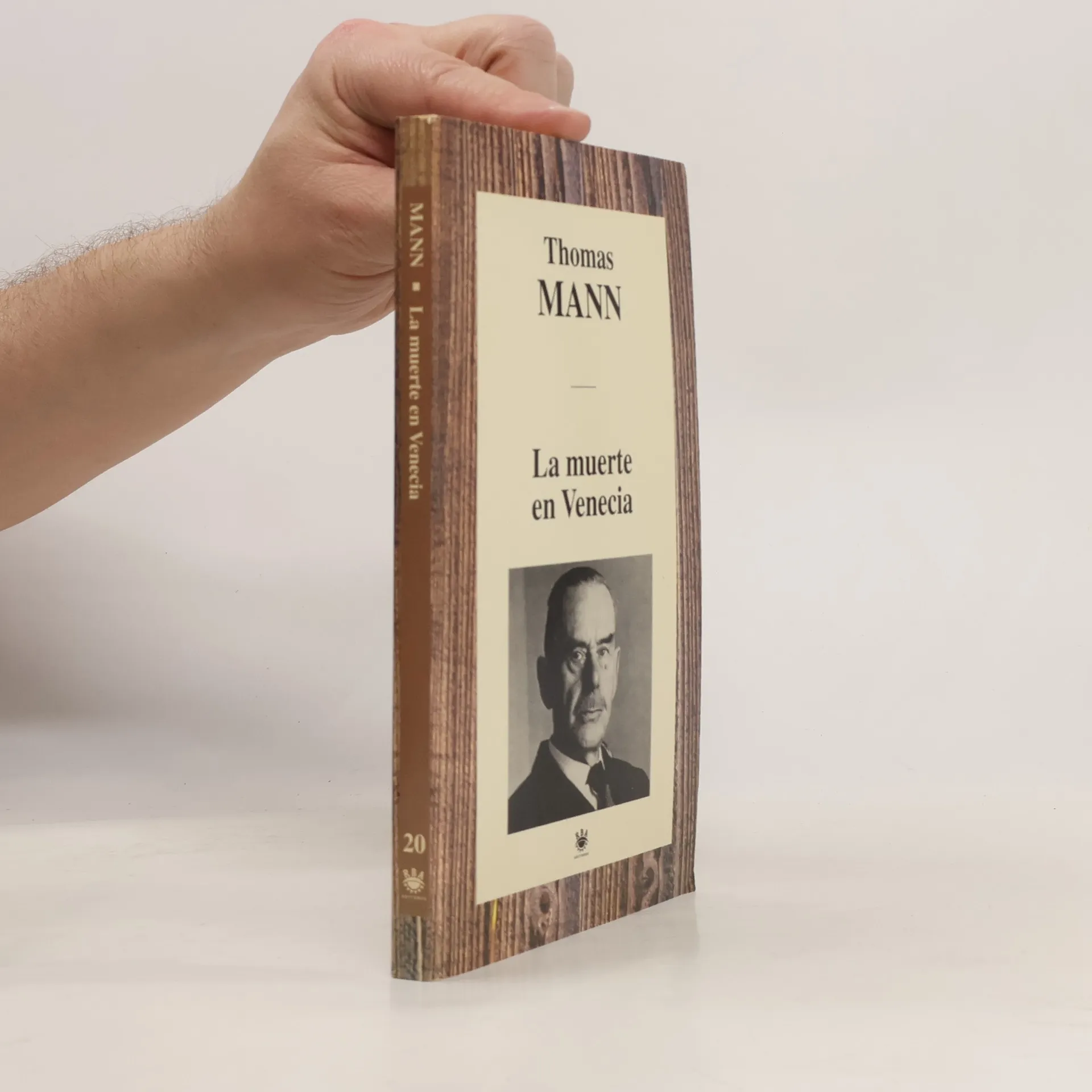
    • La muerte en Venecia

      • 157 páginas
      • 6 horas de lectura

      Cuando se publica La muerte en Venecia en el otoño de 1912, Thomas Mann tiene treinta y siete años, está casado y es padre de cuatro hijos. Ya ha escrito I Buddenbrook y los dos capolavoros Tristano y Tonio Kröger, y es un escritor reconocido, considerado por algunos críticos en el apogeo de su potencia narrativa. En el relato sobre la muerte de Gustav von Aschenbach, la crisis que sacude Europa permanece en el fondo. En primer plano, se presenta el retrato implacable, a veces caricaturesco, del gran autor arrastrado por la aventura artística y la pulsión erótica hacia la muerte. Se explora la pasión del protagonista maduro, la descomposición moral y la pérdida del autocontrol. Mann narra de manera a menudo paradójica y enfática la patología de la vocación estética, la disciplina y el culto a la perfección formal, así como las estrategias de defensa contra el desorden. Representa la cultura y la belleza como una disminución del impulso vital, como una corrupción de la vida y los valores burgueses. Venezia se presenta como el fondo ambiguo y hermoso de estos eventos, un homenaje a la gran literatura de fin de siglo y al decadentismo europeo.

      La muerte en Venecia2009
      3,8
    • Nei decenni precedenti l'ascesa del Terzo Reich, "Germania segreta" era un'espressione usata dal gruppo di scrittori attorno al poeta Stefan George per descrivere un progetto politico e poetico collettivo: l'introduzione dei valori più alti dell'arte nella vita quotidiana, la secolarizzazione del mito e la mitologizzazione della storia. In questo libro, Furio Jesi riprende il termine per delineare i contorni di quel filo politico, artistico e estetico che attraversa la cultura letteraria e artistica tedesca nel periodo, che negli anni '30 venne assorbito dal nazismo come parte della sua profezia di un futuro trionfante. Attingendo a pensatori come Carl Jung e scrittori come Thomas Mann e Rainer Maria Rilke, Jesi rivela un genere letterario che è stato tragicamente trasformato in un potente mito politico.

      Germania segreta1995
      4,4
    • Las lecciones de brujeria y la obra en que se narran llevan aqui sus postulados a la conclusion natural: los misterios del conocimiento secreto se disipan como la bruma en el acto mismo de cobrar concrecion definitiva; una acumulacion de poder personal resulta en la despersonalizacion del poder y todos los prodigios se funden en el unico prodigio de la vida terrena.

      Relatos de poder1989
      4,1