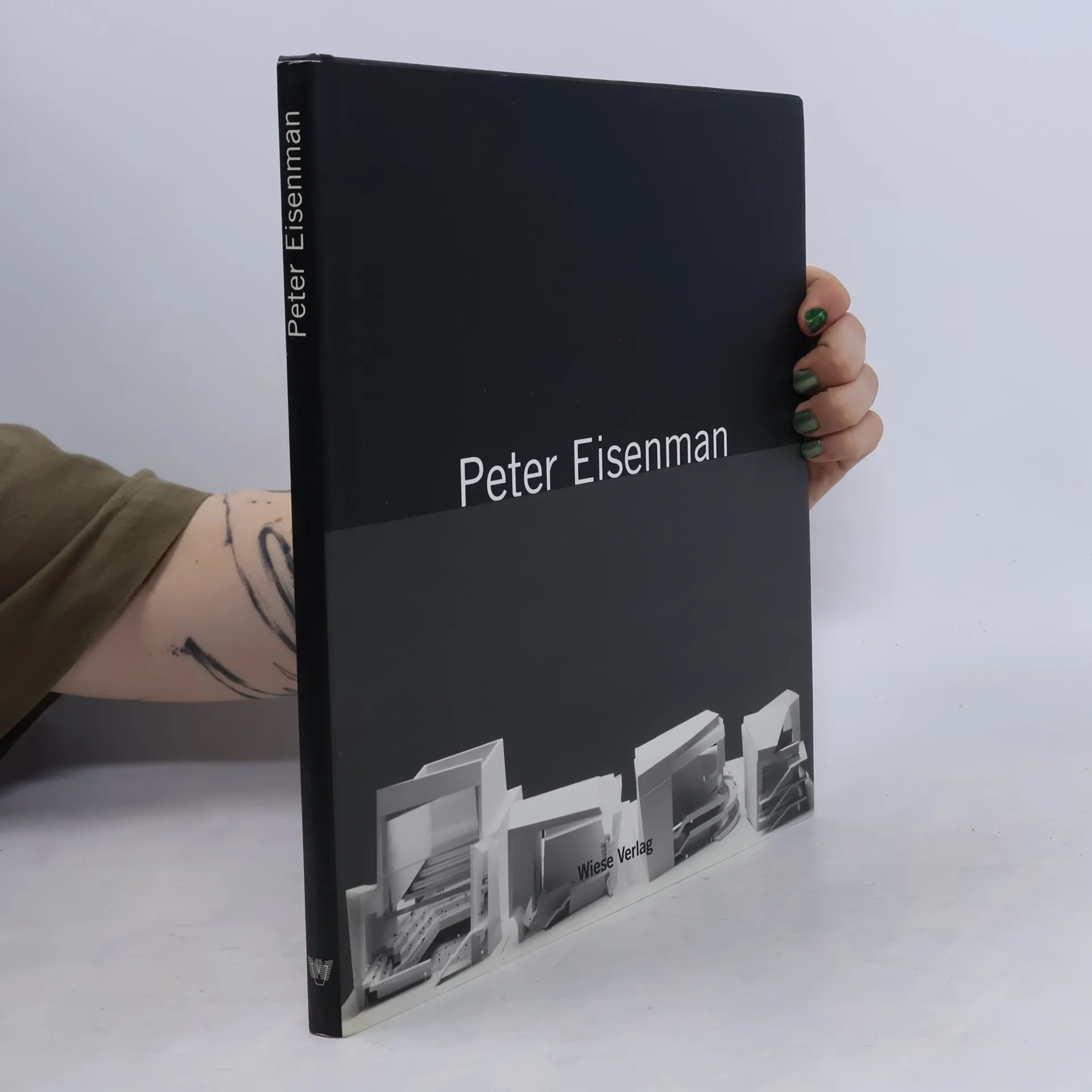
„Die wirkliche Architektur existiert nur in den Zeichnungen. Das wirkliche Gebäude existiert außerhalb der Zeichnungen. Der Unterschied ist hier, dass Architektur und Gebäude nicht dasselbe sind.“ Die Architektur ist ein immanenter, dynamisch-kreativer Prozess. Immer gibt es ein Kräftemessen zwischen dem Außen und dem Innen, der vertrauten Vorstellung und Umgebung und dem Wagnis des Neuen, bis zum Widerstreit, und manchmal gibt es die Gelegenheit der Verwirklichung. In den drei Gesprächen zeigt sich der Werdegang von Peter Eisenman als Erfahrung, als Gratwanderung und als Pädagogik für sich selber und für andere. Das Neue ist Erlebnis und Sehen.
Peter Eisenman Orden de los libros (cronológico)
11 de agosto de 1932
Peter Eisenman es un arquitecto estadounidense cuya obra a menudo se describe como formalista, deconstructivista o tardomodernista. Sus proyectos, marcados por una fragmentación de formas, lo posicionan como una figura clave del deconstructivismo, un movimiento expuesto en una muestra del Museo de Arte Moderno. La producción arquitectónica de Eisenman está profundamente entrelazada con el filósofo Jacques Derrida, con quien compartió una notable colaboración.


Lateness
- 120 páginas
- 5 horas de lectura
A provocative case for historical ambiguity in architecture by one of the field's leading theorists Conceptions of modernity in architecture are often expressed in the idea of the zeitgeist, or "spirit of the age," an attitude toward architectural form that is embedded in a belief in progressive time. Lateness explores how architecture can work against these linear currents in startling and compelling ways. In this incisive book, internationally renowned architect Peter Eisenman, with Elisa Iturbe, proposes a different perspective on form and time in architecture, one that circumvents the temporal constraints on style that require it to be "of the times"—lateness. He focuses on three twentieth-century architects who exhibited the qualities of lateness in their designs: Adolf Loos, Aldo Rossi, and John Hejduk. Drawing on the critical theory of Theodor Adorno and his study of Beethoven's final works, Eisenman shows how the architecture of these canonical figures was temporally out of sync with conventions and expectations, and how lateness can serve as a form of release from the restraints of the moment. Bringing together architecture, music, and philosophy, and drawing on illuminating examples from the Renaissance and Baroque periods, Lateness demonstrates how today's architecture can use the concept of lateness to break free of stylistic limitations, expand architecture's critical capacity, and provide a new mode of analysis.
The Formal Basis of Modern Architecture
- 384 páginas
- 14 horas de lectura
Mir war klar, was ich schreiben wollte, sagt Eisenman über seine Dissertation. Eine analytische Arbeit, die in Beziehung zu dem stand, was ich zu sehen gelernt hatte, von Palladio zu Terragni, von Raffael zu Guido Reni hin zu einem irgendwie theoretischen Konstrukt, das mit moderner Architektur in Zusammenhang stehen würde, aber aus dem Blickwinkel einer bestimmten Autonomie der Form. In The Formal Basis of Modern Architecture konfrontiert der international geschätzte - und für sein Holocaust-Mahnmal in Berlin (2005) weltberühmte - US-amerikanische Architekt Peter Eisenman den Historizismus mit einer Theorie und Analyse der Form, deren charakteristische Eigenschaften er für das Fundament architektonischer Komposition hält. Eisenman illustriert seine Beobachtungen mit zahlreichen sehr präzisen Handzeichnungen. Seine Dissertation The Formal Basis of Modern Architecture verfasste Eisenman 1963 an der University of Cambridge. Die Arbeit wurde 2006 als Faksimilesausgabe von Lars Müller Publishers veröffentlicht. Nun ist der Originalinhalt der Publikation wieder in einem kleineren Format erhältlich.
Conversations with Peter Eisenman
- 152 páginas
- 6 horas de lectura
This book highlights three separate conversations the author had with the architect, Peter Eisenman, at his New York City studio in October 2003, June 2009, and February 2016.
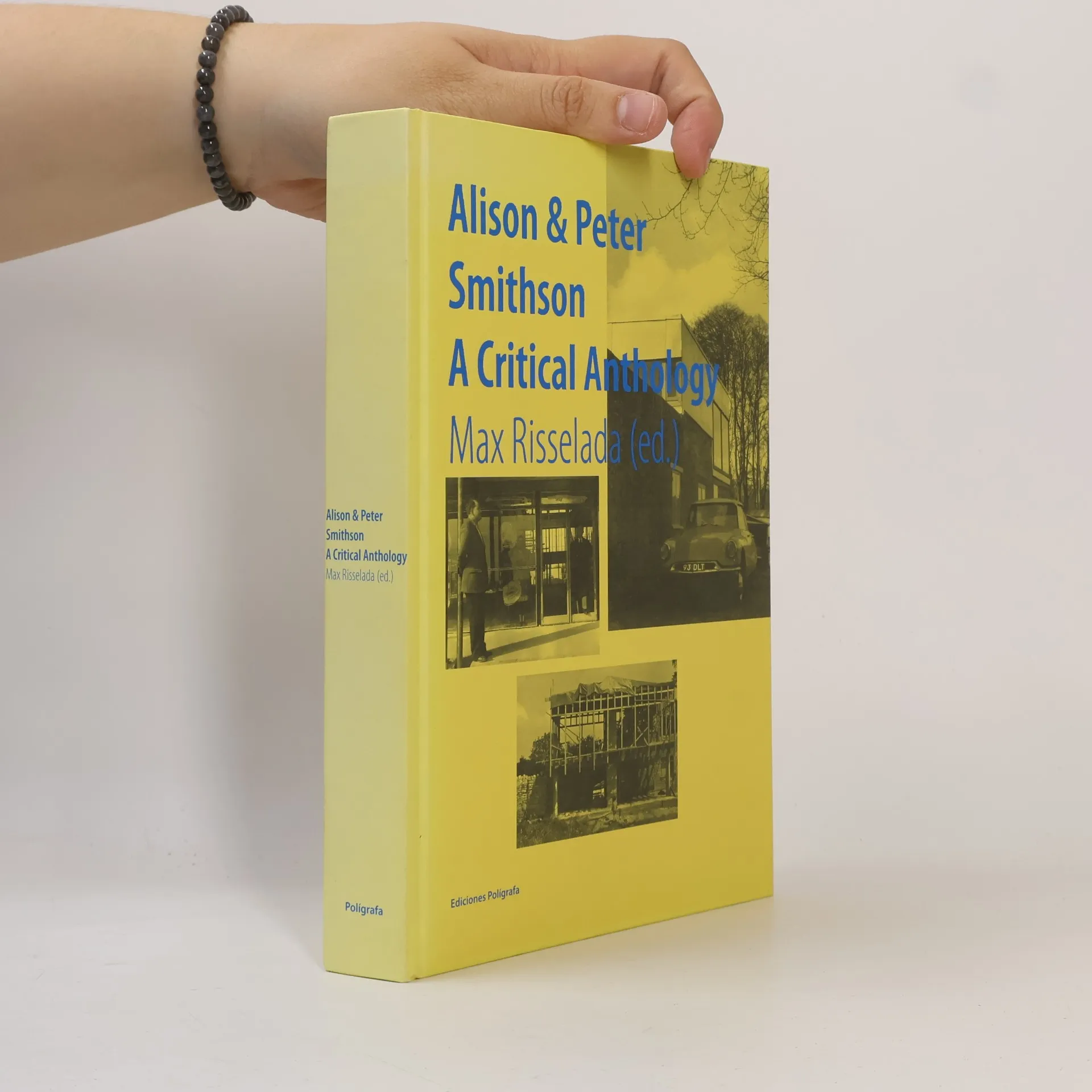
Adapting modernist ideals to postwar reconstruction in Britain, Alison and Peter Smithson emerged as influential and controversial architects in the latter half of the twentieth century. As younger members of CIAM and founding members of Team 10, they were central to the debate on modern architecture's future. Their Hunstanton Secondary Modern School (1949-1954) exemplified their approach, stripping down Mies van der Rohe's language to a rough simplicity and marking their emergence as leading figures of New Brutalism, a term they coined. Involved with the Independent Group alongside notable artists, they participated in the landmark 1956 exhibition This Is Tomorrow, connecting with the Pop art movement in Britain. This beautifully produced volume compiles significant essays on their work, featuring contributions from Reyner Banham, Peter Cook, Kenneth Frampton, Philip Johnson, and more recent texts by Peter Eisenmann, Christine Boyer, Beatriz Colomina, and Louisa Hutton. As the first publication in Poligrafa's Critical Anthology series, it offers essential critical context for understanding New Brutalism's reception in England. The Smithsons, who met at Durham University and married in 1949, introduced a new construction style emphasizing concrete and angular geometries, with later works reflecting a socialist dimension through the exposure of interior functions.
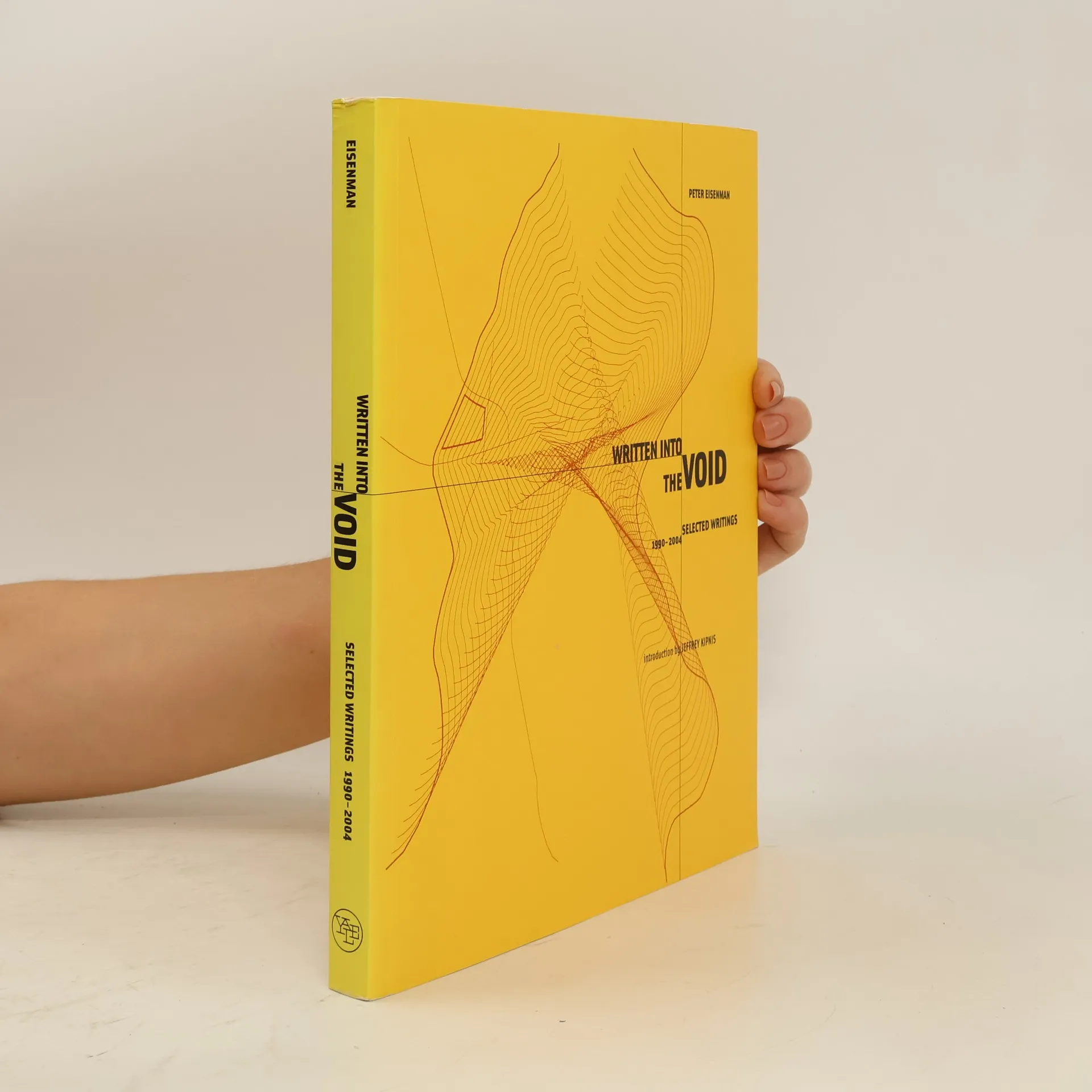
Written Into the Void
Selected Writings, 1990-2004
A prominent practitioner, an influential theorist, and an esteemed educator, the architect Peter Eisenman today stands at the center of architectural discourse and debate. This book, a companion volume to Eisenman Inside Out: Selected Writings, 1963–1988, gathers a generous selection of his later writings. In these texts Eisenman undertakes theoretical analyses, close readings of his own works, and innovative assessments of the designs and writings of other architects and critics. In a major introduction to the volume, Jeffrey Kipnis looks closely at Eisenman’s approach toward language and writing, a practice in which architecture itself becomes a form of written theory, as well as at his context within a critical canon that includes Jacques Derrida and Rosalind Krauss. Presenting the range of Eisenman’s important contributions to architectural theory, this collection of nineteen essays provides insight into the architect’s own understandings and methodologies and offers provocative challenges for his readers.
The works of Peter Eisenman are deeply infused with “culture” and reflect extensive study on the essence of design. He views architecture as a multifaceted discipline—intersecting History, Philosophy, Art, Mathematics, and Literature—aiming to define its operational boundaries while navigating destabilizing visual and technological systems. Eisenman's architecture exists within and outside of historical and traditional contexts, avoiding sterility while fostering innovation. His approach does not seek to provide comfort through vague aesthetics or fleeting techniques but instead anchors design in individuation and clarity of purpose. He emphasizes the value of the sign as a vital conceptual expression rather than mere formal distortion. This robust theoretical framework aims to reinvigorate architectural language, evidenced by significant projects like the Memorial of Berlin and the Cultural Centre of Galizia. These recent undertakings illustrate the ongoing vitality of a design system that continually evolves, affirming the relevance and dynamism of Eisenman's architectural philosophy.
Blurred Zones: Investigations of the Interstitial: Eisenman Architects 1988-1998
- 336 páginas
- 12 horas de lectura
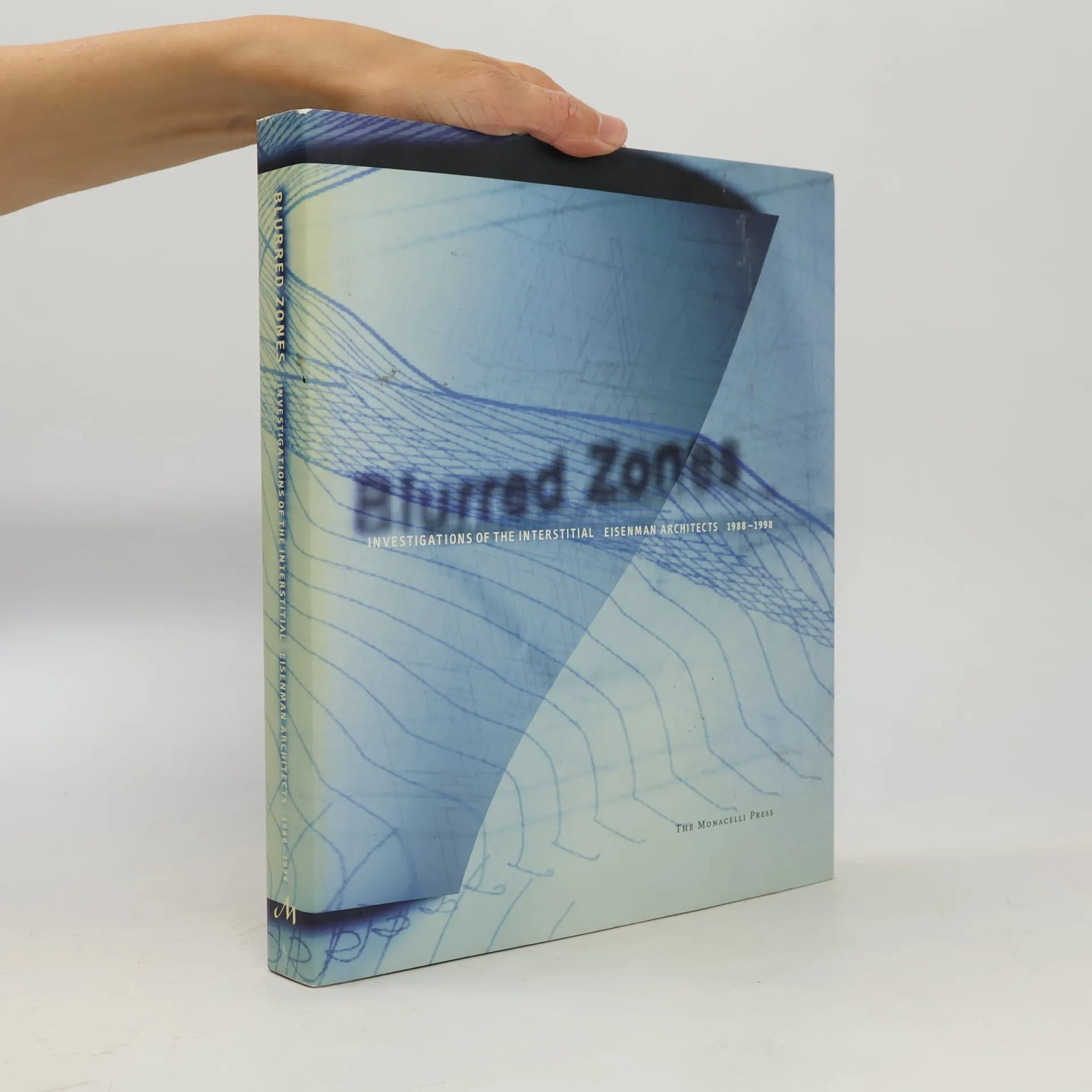
Focusing on the concept of blurring, this collection features seventeen design projects, both realized and theoretical, alongside twelve insightful essays. It explores the interplay between different architectural elements and contexts, encouraging a deeper understanding of interstitial spaces. The work challenges conventional boundaries in design, showcasing innovative ideas that provoke thought and inspire creativity in the field of architecture.
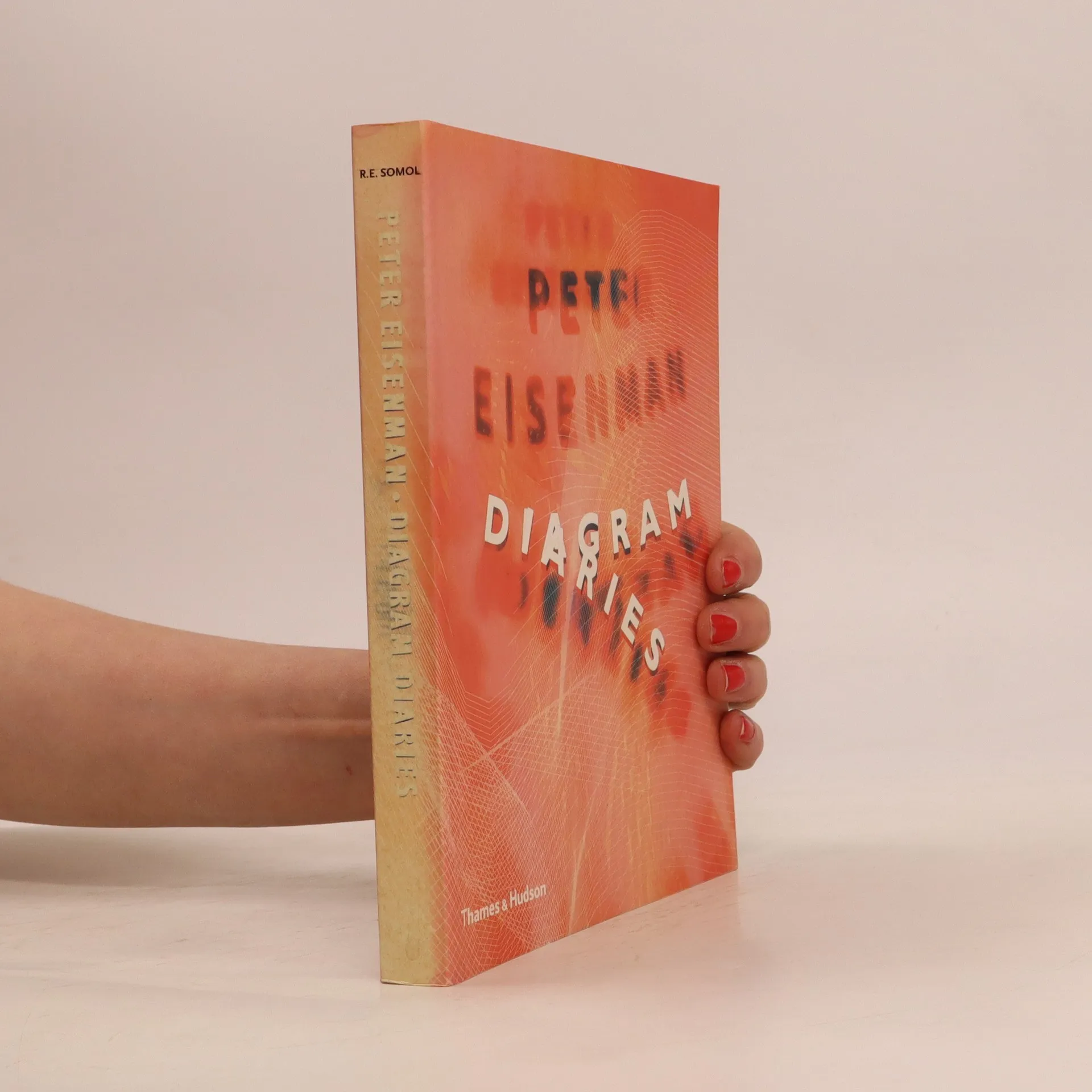
Diagram Diaries
- 240 páginas
- 9 horas de lectura
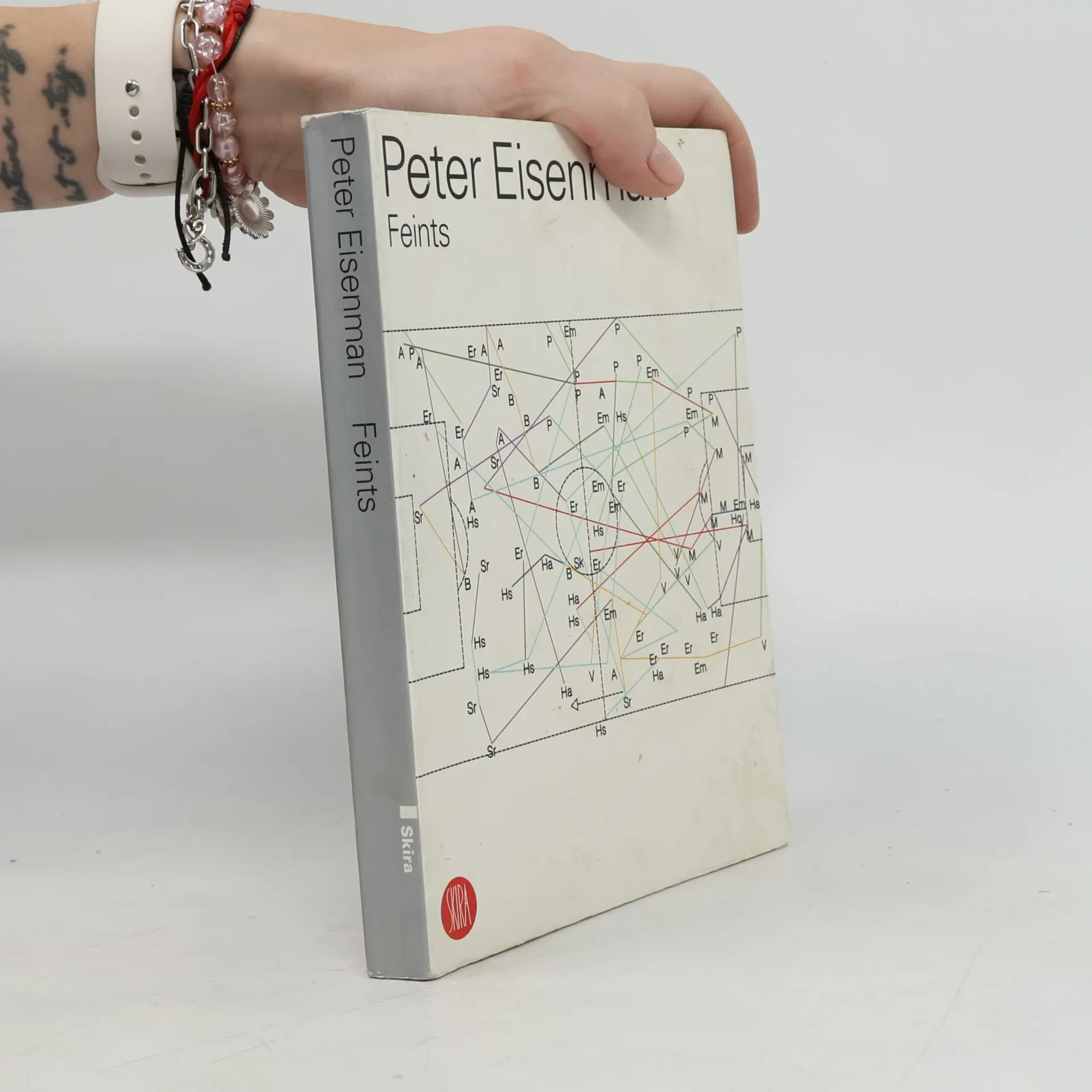
It has been said that Peter Eisenman considers architecture a form of shock therapy: whatever his intent, he has created one of the most controversial bodies of work of any contemporary American architect.
By Camiel van Winkel. Edited by Matthjis Bouw, Michelle Provoost. Text by Pauline Terreehorst, Marieke van Rooy.
Peter Eisenman - mystisches Nichts
- 95 páginas
- 4 horas de lectura
Includes the NY firm's restoration/addition to the Guggenheim Museum, and other large-scale projects and corporate work.
A presentation of writings by and about Peter Eisenman, arguably the most significant architect working today. The book analyzes the whole spectrum of subjects covered in the architect/philosopher's oeuvre. Seminal texts are included that show how his theories have developed over time
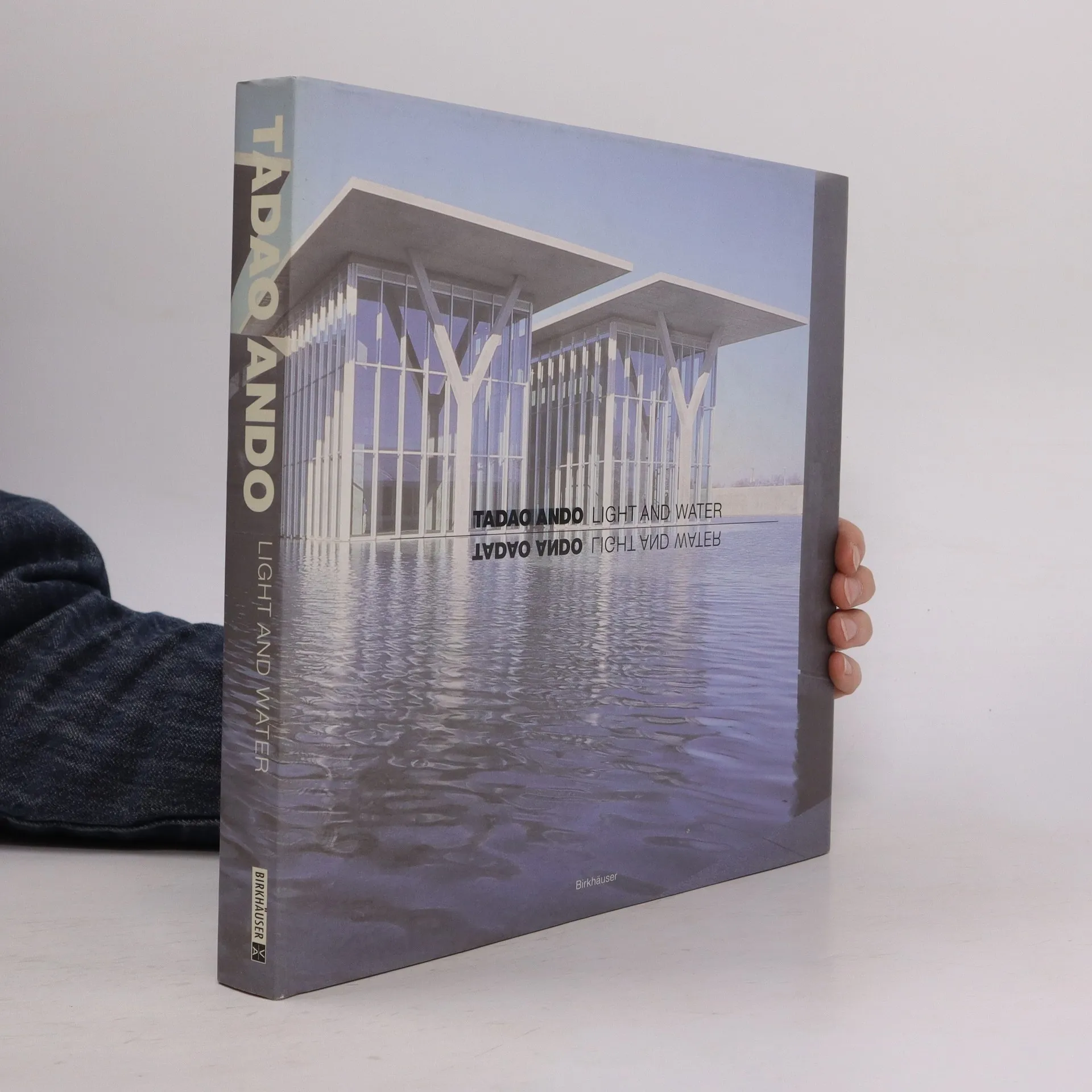
Light and water
- 276 páginas
- 10 horas de lectura
"Ando selected for inclusion the thirty-five projects that best embody his belief that the interplay with nature defines architecture and the passage of time molds architecture. All are shown in spectacular, specially commissioned color photography. Among the major recent works are the Modern Art Museum of Fort Worth in Texas; the Komyo-ji Temple in Saijo, Japan; the meditation space for UNESCO in Paris; the Pulitzer Foundation for the Arts in St. Louis; and the Armani/Teatro in Milan. Also included are some of Ando's most important and well-known earlier works, including the Church of the Water in Hokkaido, the Church of the Light in Ibaraki, and a series of houses throughout Japan."--BOOK JACKET.
Oppositions Books: The Architecture of the City
- 202 páginas
- 8 horas de lectura
Aldo Rossi was a practicing architect and leader of the Italian architectural movement La Tendenza and one of the most influential theorists of the twentieth century. The Architecture of the City is his major work of architectural and urban theory. In part a protest against functionalism and the Modern Movement, in part an attempt to restore the craft of architecture to its position as the only valid object of architectural study, and in part an analysis of the rules and forms of the city's construction, the book has become immensely popular among architects and design students.