

The Theory of Industrial Organization is the first primary text to treat the new industrial organization at the advanced-undergraduate and graduate level
Jean Tirole Libros
9 de agosto de 1953

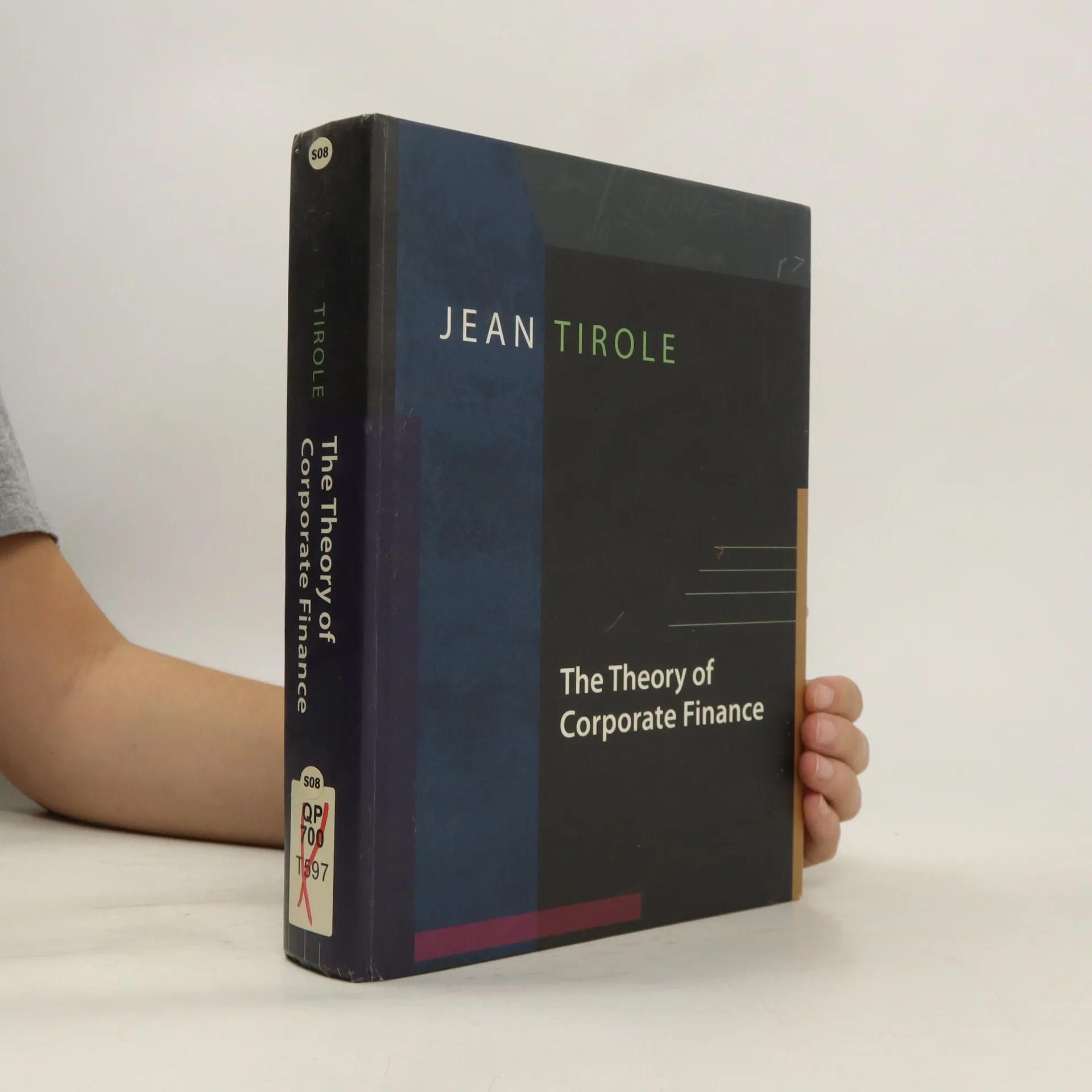

The past two decades have brought significant advancements in corporate finance, expanding its focus from merely financing corporations—equity, debt, and valuation—to encompass governance, liquidity, risk management, and the macroeconomic effects of corporations. However, this evolution has resulted in a confusing array of concepts and models that challenge students' understanding. A leading economist presents a clear, unified introduction to modern corporate finance theory, centered around a single model utilizing incentive or contract theory. This work fills a critical gap, serving as an essential resource for graduate and advanced undergraduate students, as well as researchers in corporate finance, industrial organization, political economy, development, and macroeconomics. The author outlines the fundamental principles that guide the analysis of contemporary management and public policy issues, including corporate governance reform, the roles of private equity and financial markets, and the effective management of leverage, dividends, liquidity, and risk. Empirical studies are integrated into the theoretical framework, and the corporation is examined within its broader microeconomic and macroeconomic contexts, highlighting the interaction between corporate environments and institutions. This text sets a new standard in the field and is poised to be a definitive resource for years to come.
Game theory
- 603 páginas
- 22 horas de lectura
This advanced text introduces the principles of noncooperative game theory in a direct and uncomplicated style that will acquaint students with the broad spectrum of the field while highlighting and explaining what they need to know at any given point. This advanced text introduces the principles of noncooperative game theory—including strategic form games, Nash equilibria, subgame perfection, repeated games, and games of incomplete information—in a direct and uncomplicated style that will acquaint students with the broad spectrum of the field while highlighting and explaining what they need to know at any given point. The analytic material is accompanied by many applications, examples, and exercises. The theory of noncooperative games studies the behavior of agents in any situation where each agent's optimal choice may depend on a forecast of the opponents' choices. "Noncooperative" refers to choices that are based on the participant's perceived selfinterest. Although game theory has been applied to many fields, Fudenberg and Tirole focus on the kinds of game theory that have been most useful in the study of economic problems. They also include some applications to political science. The fourteen chapters are grouped in parts that cover static games of complete information, dynamic games of complete information, static games of incomplete information, dynamic games of incomplete information, and advanced topics.
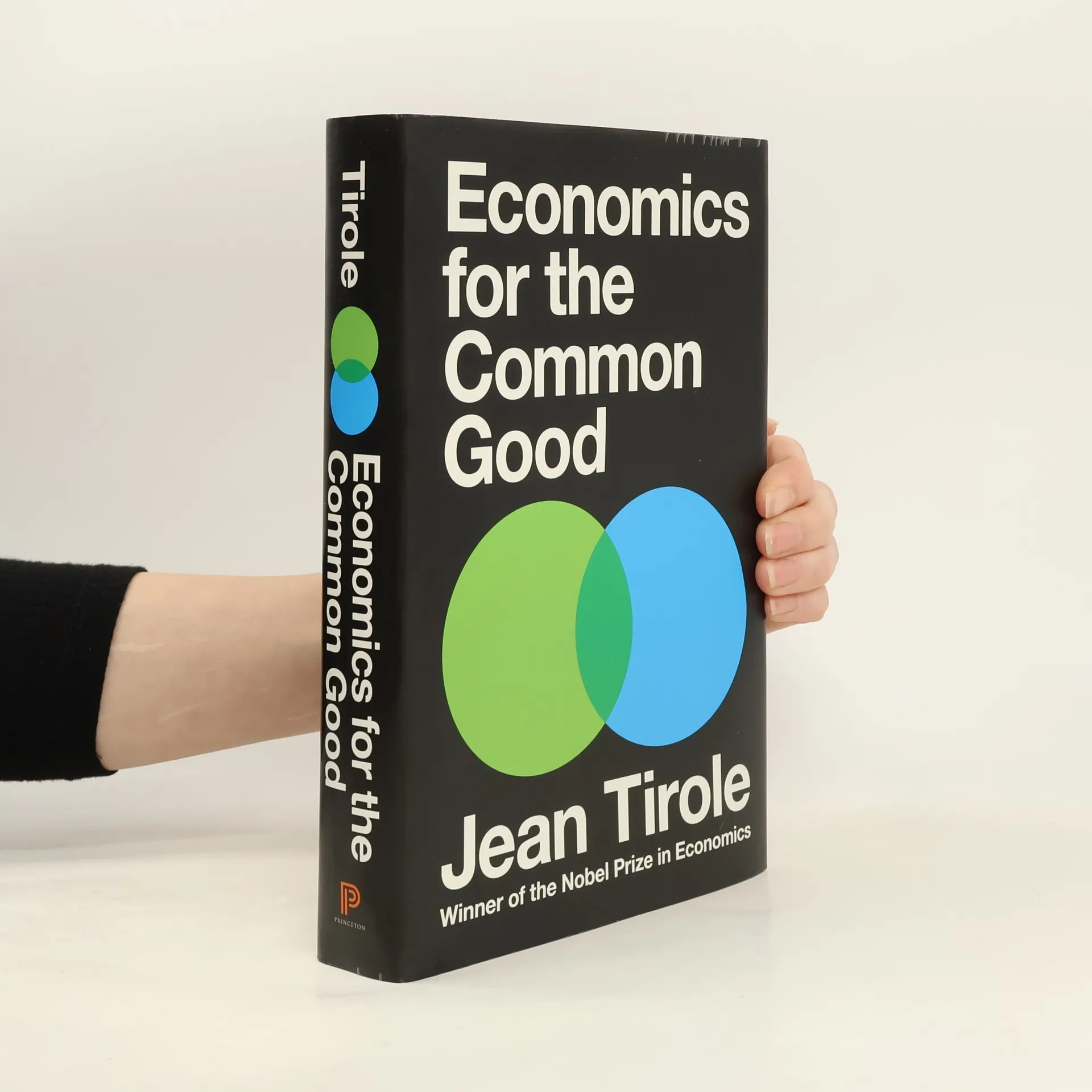
Economics for the Common Good
- 576 páginas
- 21 horas de lectura
When Jean Tirole won the 2014 Nobel Prize in Economics, he suddenly found himself being stopped in the street by complete strangers and asked to comment on issues of the day, no matter how distant from his own areas of research. His transformation from academic economist to public intellectual prompted him to reflect further on the role economists and their discipline play in society. The result is Economics for the Common Good , a passionate manifesto for a world in which economics, far from being a "dismal science," is a positive force for the common good. Economists are rewarded for writing technical papers in scholarly journals, not joining in public debates. But Tirole says we urgently need economists to engage with the many challenges facing society, helping to identify our key objectives and the tools needed to meet them. To show how economics can help us realize the common good, Tirole shares his insights on a broad array of questions affecting our everyday lives and the future of our society, including global warming, unemployment, the post-2008 global financial order, the Euro crisis, the digital revolution, innovation, and the proper balance between the free market and regulation. Providing a rich account of how economics can benefit everyone, Economics for the Common Good sets a new agenda for the role of economics in society.
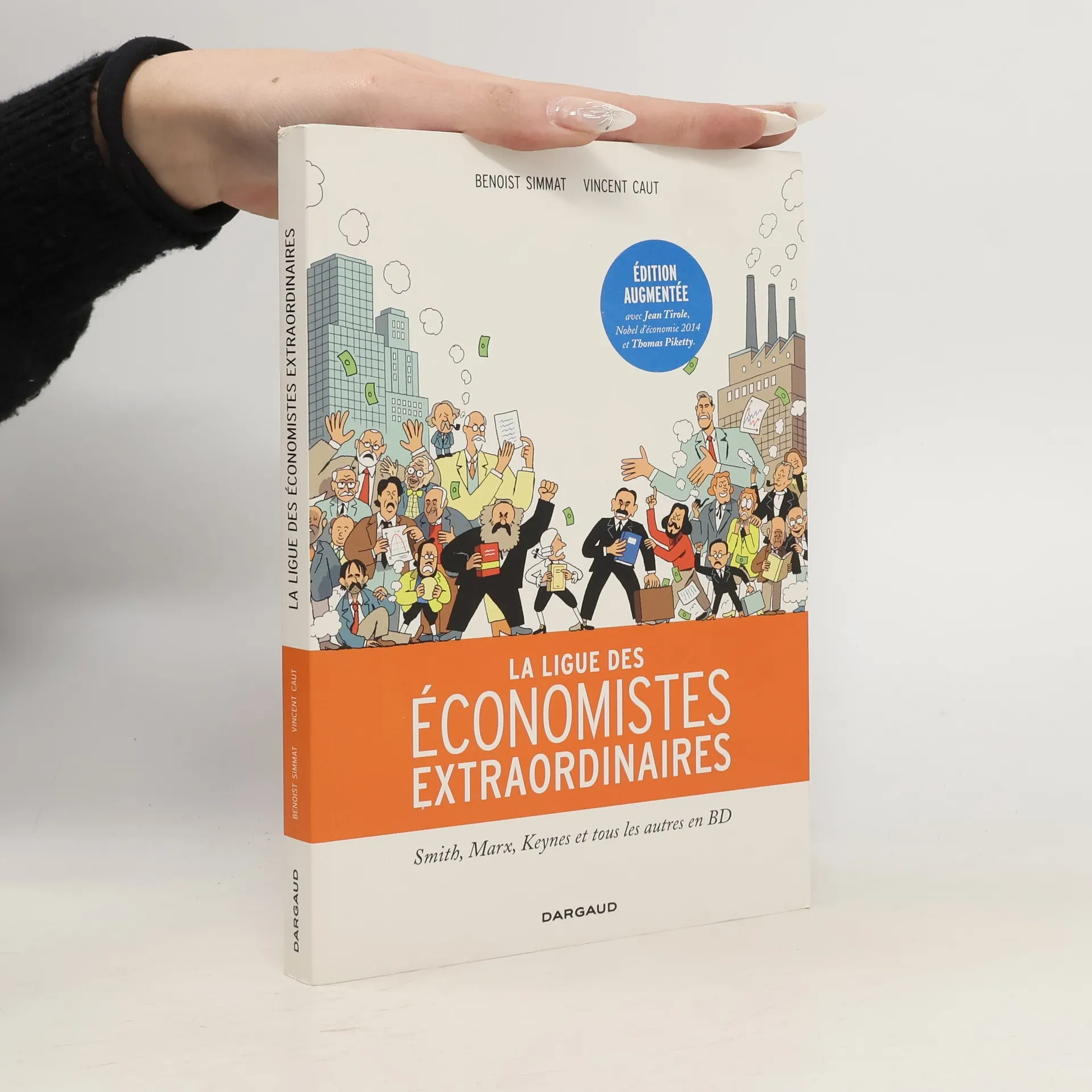
La ligue des économistes extraordinaires
Smith, Marx, Keynes et les autres - Édition augmentée avec Jean Tirole, Nobel d'économie 2014 et Thomas Piketty
- 182 páginas
- 7 horas de lectura
Cette tribu intellectuelle est la plus singulière qui soit: d'Adam Smith à John Maynard Keynes, de Karl Marx à Milton Friedman, les grands économistes tentent depuis deux cents ans de consolider l'édifice branlant qu'est la "science économique".Leurs trouvailles nous fascinent; les détails de leurs vies nous font rire; il était plus que temps de présenter ces énergumènes en bande dessinée.La ligue des économistes extraordinaires raconte les théories, les errements, les éclairs de génie et les comportements farfelus de ces véritables super-héros de la pensée qui sont parvenus collectivement à faire passer pour scientifique un très aléatoire art de prédiction, avec un intervalle de confiance situé quelque part entre ceux de la cartomancie et de la météorologie...