

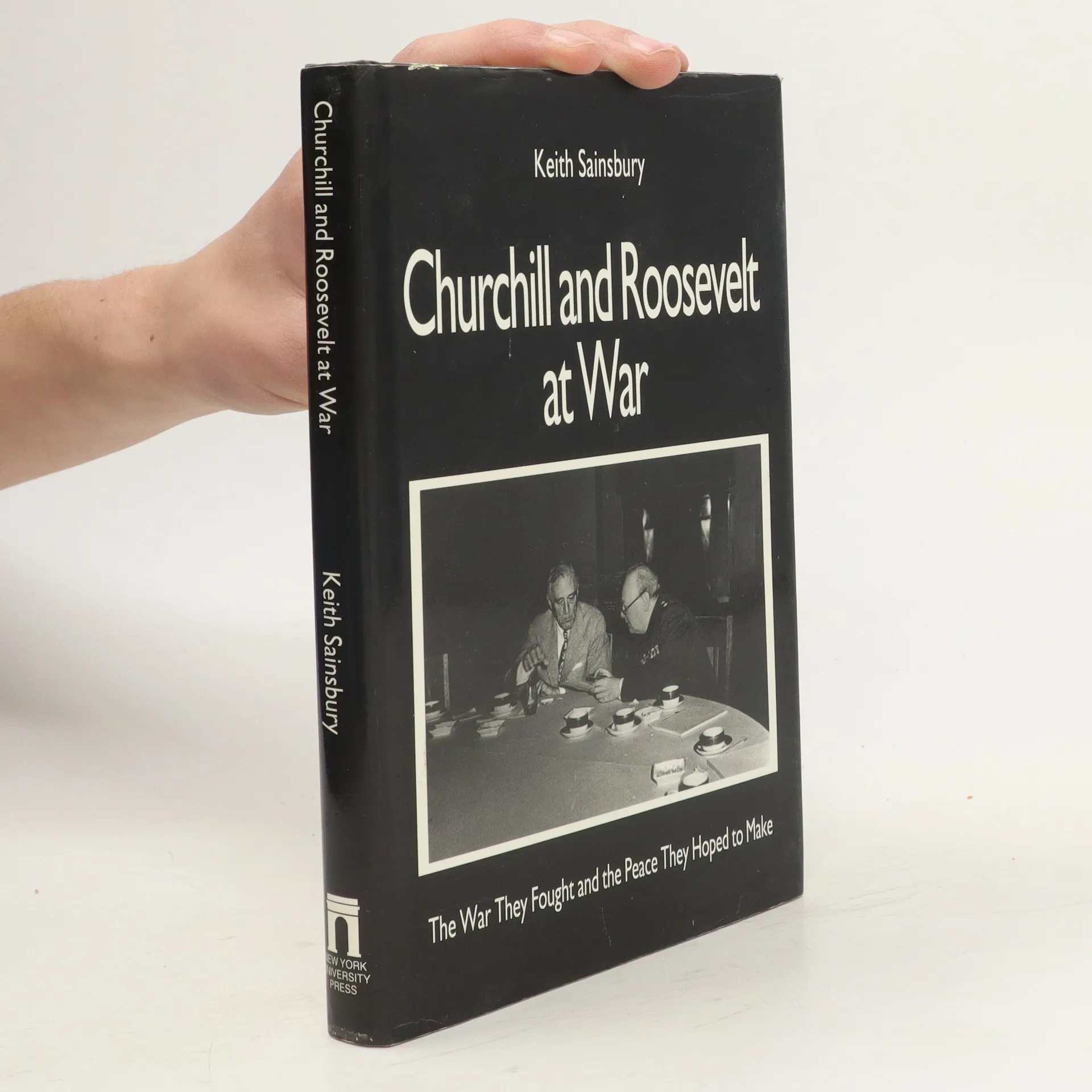
Churchill and Roosevelt at war
- 223 páginas
- 8 horas de lectura
Winston Churchill and Franklin Delano Roosevelt, two of the 20th century's most charismatic leaders with vastly different temperaments, shaped Allied strategy during World War II. Their initially cordial friendship deteriorated into a contentious relationship marked by significant disagreements. While much has been documented about their correspondence, Keith Sainsbury's account provides fresh insights into the complex dynamics of their wartime partnership. Over the six years of conflict, Allied strategy evolved from a British-led Master Plan to an American-driven Strategic Plan. Fundamental policy disagreements between the two leaders influenced key events in European history during and after the war. Sainsbury highlights their starkly opposing visions for post-war Europe: Churchill believed in restoring both France and Germany to maintain a stable balance of power, while FDR aimed to dismantle Germany and viewed France as a minor player. This divergence was evident in their approaches to Mediterranean operations, where Churchill's commitment led to Britain shouldering a disproportionate burden, contrary to Roosevelt's reluctance to deploy U.S. ground troops. This work is the first to focus comprehensively on the Churchill-Roosevelt relationship, inviting both historians and general readers to reassess this iconic partnership through Sainsbury's rigorous reexamination of established sources.