Uncommon Wrath
- 352 páginas
- 13 horas de lectura
A dual biography of Julius Caesar and Cato the Younger that offers a dire warning: republics collapse when personal pride overrides the common good.


Josiah Osgood es Profesor de Estudios Clásicos en la Universidad de Georgetown, cuya docencia e investigación abarcan numerosos aspectos de la historia romana y la literatura latina, con un énfasis particular en la caída de la República Romana. Su obra profundiza en las intrincadas fuerzas políticas y sociales que precipitaron la desaparición de la antigua república. A través de su labor académica, Osgood ofrece perspectivas perspicaces sobre la época turbulenta que moldeó profundamente la civilización occidental.

A dual biography of Julius Caesar and Cato the Younger that offers a dire warning: republics collapse when personal pride overrides the common good.
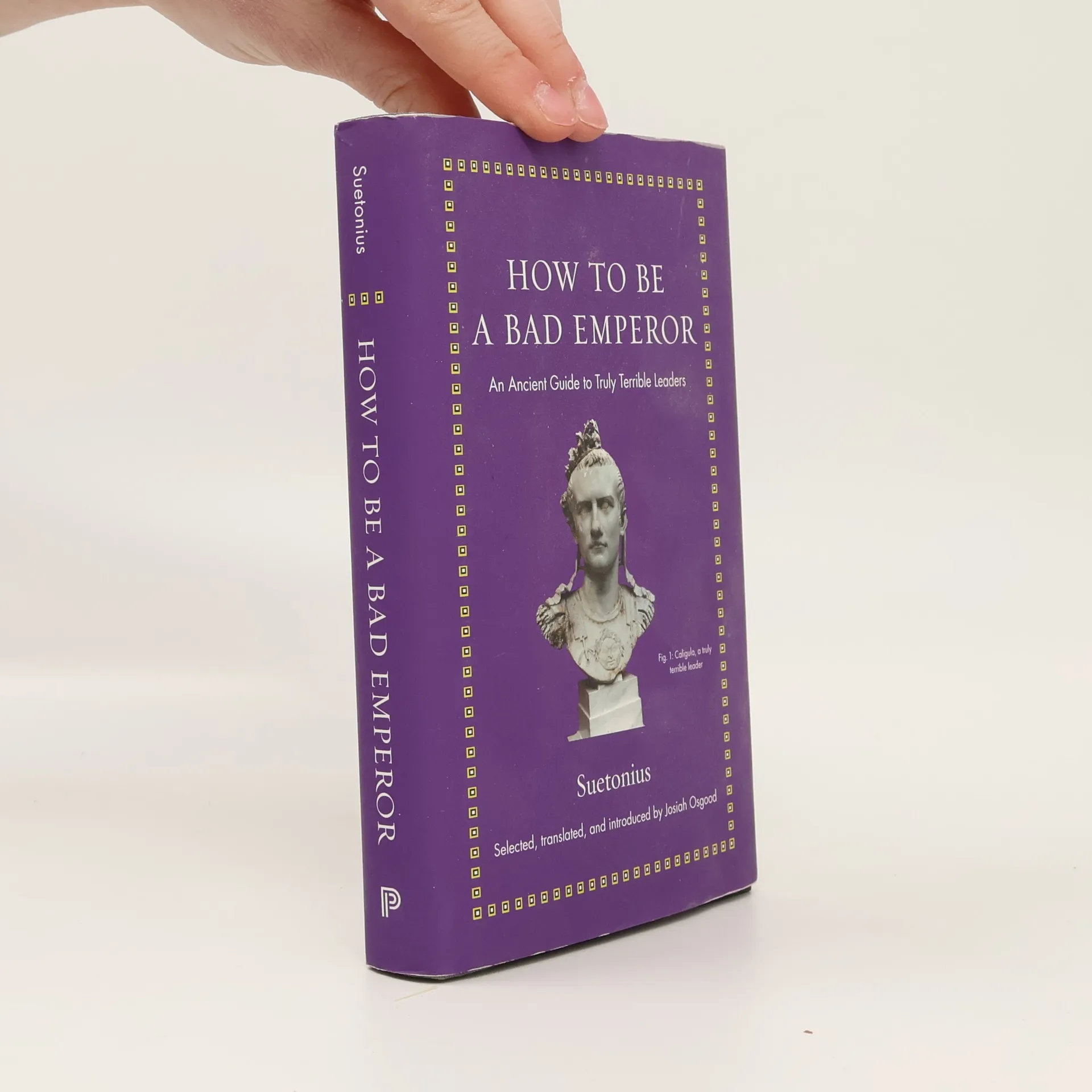
But other emperors, such as Tiberius, Caligula, and Nero, infamously used their power to indulge vice and harm others. Ever since their publication, Suetonius' imperial biographies have appealed to readers, both because of their sensational stories and the larger questions of power they raise. They spawned many sequels in antiquity (as well as more recent works like Robert Graves's famed, I, Claudius). While a number of good English translations are in print, reading Lives of the Caesar from cover to cover can be daunting, so many details are included. Also general readers, including students, are really interested in the stories of the bad emperors. This book, then, in a reversal of the usual self-help formula that Suetonius would appreciate, offers selections from the lives of four bad emperors (Julius Caesar, Tiberius, Caligula, and Nero) to create a guide on how to be a bad leader. own worst qualities and become more dangerous to us than any enemy. .
This book boldly reinterprets the central period of Roman history by taking the focus off the emperor Augustus. Its chapters highlight the contributions of other individuals and continuities with republican culture. Together they show that Augustus has been more dominant in later memory than he was in his own lifetime.