

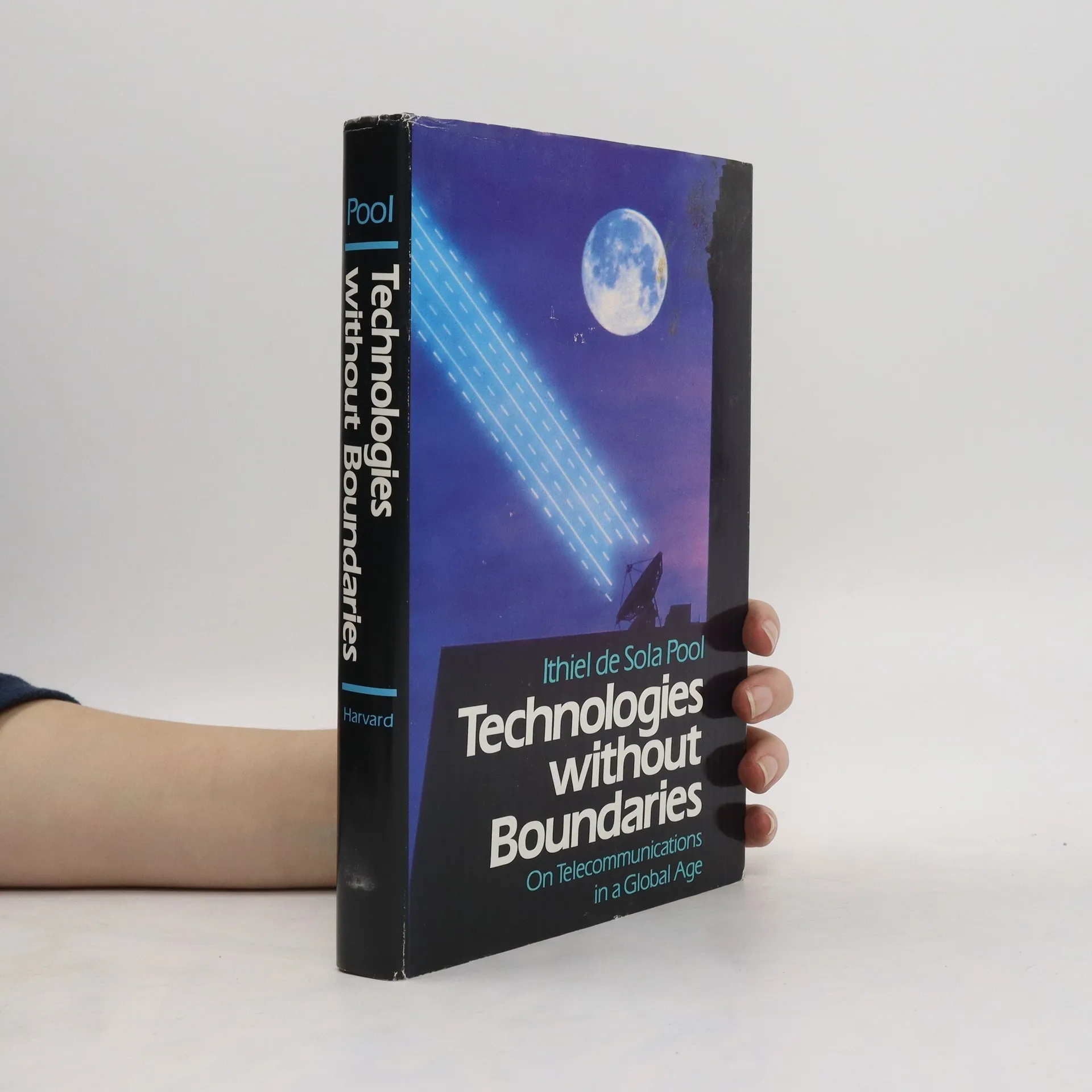
In this posthumous work, Pool envisions how the technological revolution in communications may affect the mass media, developing countries, metropolitan centers, and individual users. He argues that the greatest benefits will come through allowing the free flow of technology and information. Less developed countries are likely to be most successful in creating their own communication industries welcoming competition. Computers, satellities, and facsimile machines will jump the boundaries of nations, states, and cities, frustrating those who would control information but bringing together and providing great benefits to those with common interests. The author sees a need to rewrite laws and regulations relating to copyright, the broadcast spectrum, and other barriers that restrict communication flow. ISBN 0-674-87263-0: $29.95
Eli M. Noam Libros

This comprehensive book examines the current state of telecommunications in the Pacific Basin. The focus is on the economic, regulatory, and social change caused by the technological evolution, marketplace developments and institutional reorganization. The overall analysis of the volume evolves around a multi-stage evolutionary model of public telecommunications networks. The first part consists of analytic articles on the evolution of telecommunication networks in the region, a comparison of deregulation policies in the different countries, and an analysis of public and private cooperation in international informatics. The second part reviews telecommunications systems in individual countries, including Australia, Canada, China, Hong Kong, Indonesia, Japan, Malaysia, New Zealand, Singapore, South Korea, Taiwan, Thailand, the Philippines, and the United States.