
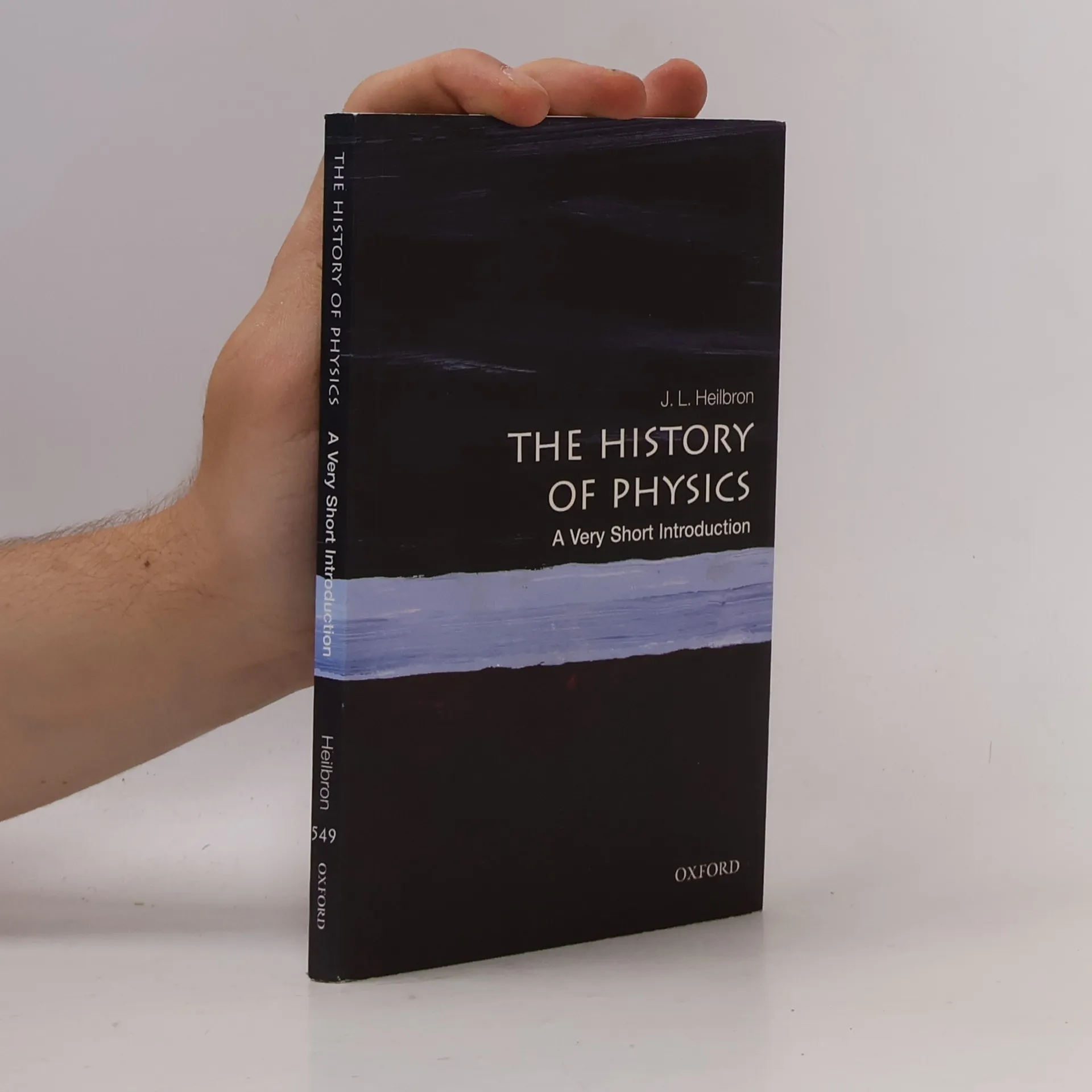
J. L. Heilbron introduces Francesco Bianchini, reputed to be the greatest Italian of his time, whose life embodied the extraordinary meeting of science, culture, history, and politics in early modern Europe. From the Jacobite cause to Newton's theories to the zodiac, Heilbron paints a glorious portrait of a world of excitement and discovery.
John L. Heilbron Libros


The Ghost of Galileo
- 368 páginas
- 13 horas de lectura
Its appearance in a portrait of the young heir of Corfe Castle and his tutor forms the starting point for this lively, stylish rendering by historian John Heilbron of the intellectual life of early Stuart England. Deftly, he brings together connections between England and Italy in the time of James I and Charles I, religious and political machinations and conflicts, arguments about cosmological systems, art, and culture. Kings, courtiers, clerics, astronomers, and physicians; Van Dyck, Ben Jonson, Inigo Jones; a now almost forgotten artist; a young man's fashionable melancholy and travels-all figure in the backdrop to the painting. Together, they capture the intellectual and cultural landscape of the time, while explaining the presence of a ghost of Galileo in rural Dorset. Book jacket.
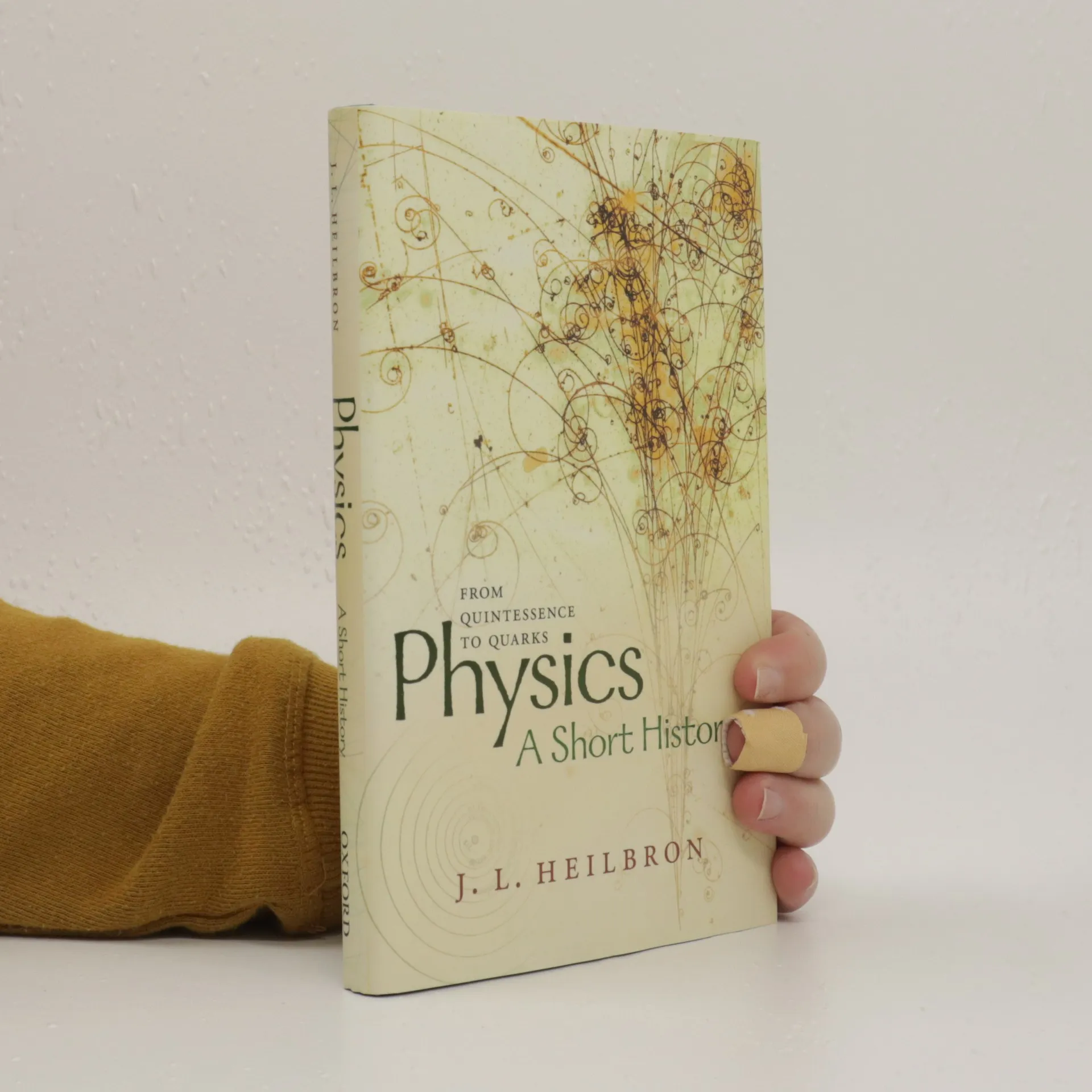
Physics : a short history from quintessence to quarks
- 228 páginas
- 8 horas de lectura
How does the physics we know today - a highly professionalised enterprise, inextricably linked to government and industry - link back to its origins as a liberal art in Ancient Greece? Heilbron's crisp and witty book tells the 2500-year story and highlights the implications for humankind's self-understanding.
Niels Bohr: A Very Short Introduction
- 144 páginas
- 6 horas de lectura
This book introduces the life and work of one of the most creative physicists of the 20th century. Niels Bohr, the pioneer of quantum theory, ranking with Einstein in importance for the development of modern physics, also had deep interests in philosophy, literature, and humanism. John Heilbron explores how these influenced his groundbreaking work.