Jonathan I. Israel Libros
Jonathan Israel es un escritor británico centrado en la historia neerlandesa, la Era de la Ilustración y los judíos europeos. En los últimos años, su atención se ha centrado en una historia de la Ilustración en varios volúmenes, en la que contrasta marcadamente la "Ilustración radical", basada en el materialismo racionalista de Spinoza, con la "Ilustración moderada", que según él se vio debilitada por su creencia en Dios. A través de su interpretación, muy controvertida, Israel postula que la Ilustración radical es la principal fuente del concepto moderno de libertad. Sostiene que figuras de la Ilustración moderada, como Locke, Voltaire, Montesquieu y Rousseau, no realizaron ninguna contribución significativa a la campaña contra la superstición y la ignorancia.


Enlightenment Contested
Philosophy, Modernity, and the Emancipation of Man 1670-1752
- 1024 páginas
- 36 horas de lectura
The book presents a comprehensive analysis of the Enlightenment, emphasizing the divide between conservative and radical philosophical currents rather than the significance of national movements. Jonathan Israel delves into primary texts to provide a fresh interpretation of Enlightenment thought, highlighting the underlying tensions that shaped its development. This reinterpretation challenges conventional views and sheds light on the complexities of philosophical discourse during this pivotal era.
Democratic Enlightenment
- 1088 páginas
- 39 horas de lectura
Jonathan Israel's radical new account of the late Enlightenment highlights forgotten currents and figures. Running counter to mainstream thinking, he demonstrates how a group of philosophe-revolutionnaires provided the intellectual powerhouse of the French Revolution, and how their ideas connect with modern Western democracy.
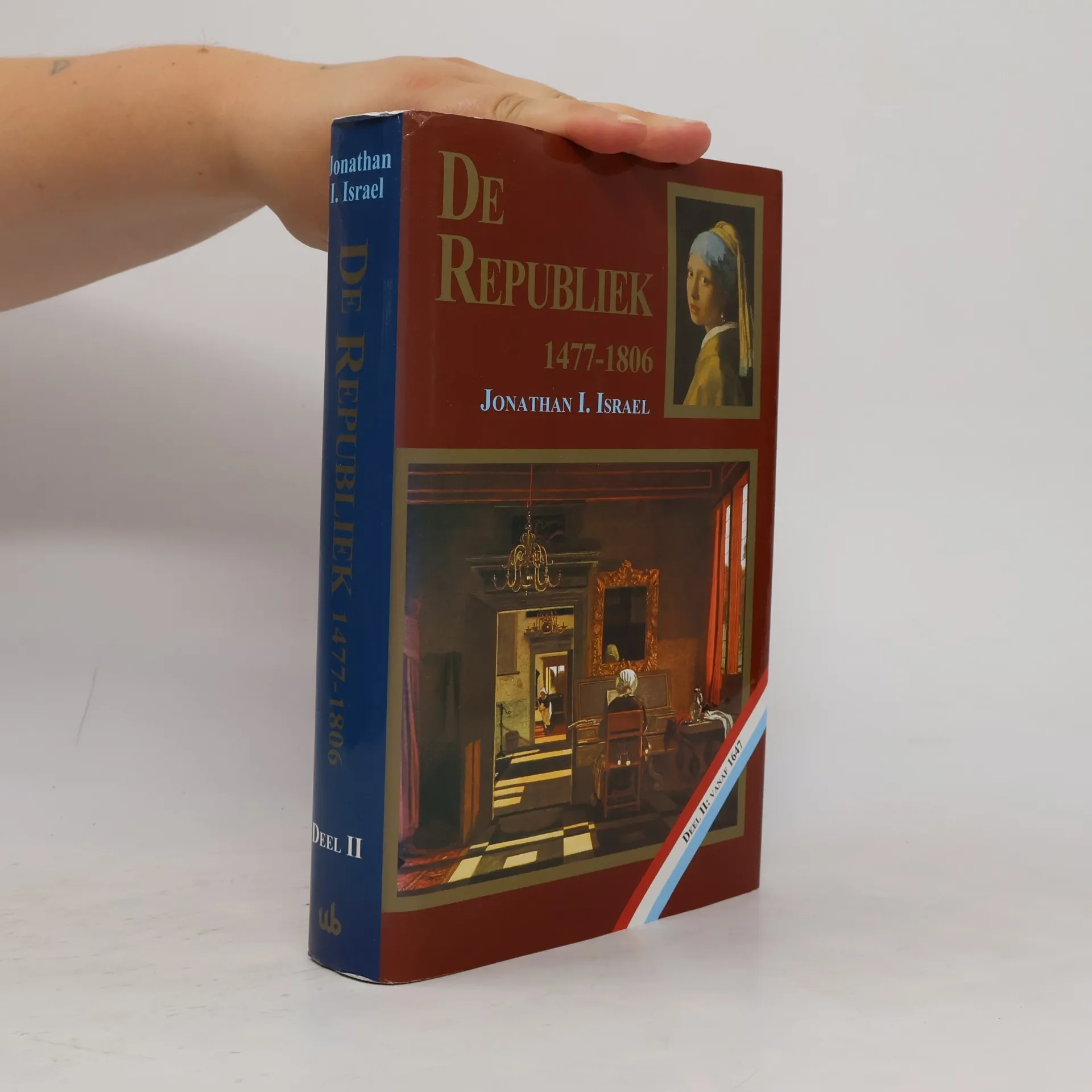
The Dutch Republic. Its Rise, Greatness, and Fall 1477-1806
- 1280 páginas
- 45 horas de lectura
The Dutch Golden Age, known for its renowned artists and writers, was also remarkable for its immense impact on the spheres of commerce, finance, shipping, and technology. Israel gives the definitive account of the emergence of the United Provinces as a great power, its subsequent decline in the 18th century, and the changing relationship between the northern Netherlands and the south, which was to develop into modern Belgium. 32 color plates.
Exploring the impact of Spinoza's philosophy, this study reveals how his ideas contributed to the emergence of radical Enlightenment principles such as equality, democracy, and secularism. Jonathan I. Israel, a prominent cultural historian, argues that these revolutionary concepts laid the groundwork for the intellectual and political upheavals of the late eighteenth century. The book offers a fresh perspective on the connections between Enlightenment thought and modern societal structures.
Enlightenment Contested
- 983 páginas
- 35 horas de lectura
Jonathan Israel's "Enlightenment Contested" offers a major reassessment of the Western Enlightenment, focusing on the first half of the 18th century. He explores the roots of modern principles like reason, democracy, and equality, highlighting the struggle between anti-democratic mainstream and repressed radical ideas. The book emphasizes the interconnectedness of various Enlightenments across Europe.
The Enlightenment that Failed
Ideas, Revolution, and Democratic Defeat, 1748-1830
- 1120 páginas
- 40 horas de lectura
The book explores the divergence between radical and conservative Enlightenment ideologies, highlighting the tension between the pursuit of a just society and the influence of religion and secularization. It examines how societal interests were nearly overshadowed by concepts that favored the privileged, illustrating the struggle between egalitarian ideals and entrenched power structures during this transformative period.
A Revolution of the Mind
Radical Enlightenment and the Intellectual Origins of Modern Democracy
- 296 páginas
- 11 horas de lectura
Focusing on the Radical Enlightenment, this work articulates Jonathan Israel's pivotal ideas regarding its influence on modern democratic values. It serves as a comprehensive statement for both seasoned readers and newcomers, offering clear and concise arguments alongside significant expansions of his scholarship. This book stands as a masterful introduction to the contributions of one of the foremost scholars in Enlightenment studies, making it an essential read for understanding the era's impact on contemporary thought.
The biography delves into the life and work of Spinoza, one of the most provocative early modern philosophers. It explores his relationships, career, and writings, challenging conventional perceptions of his influence on philosophy, religion, ethics, and political theory both during his lifetime and posthumously. This examination prompts a reevaluation of Spinoza's legacy and the complexities of his thought in shaping modern intellectual discourse.
Historical Dictionary of the Enlightenment
- 398 páginas
- 14 horas de lectura
With over 300 cross-referenced entries, this comprehensive dictionary serves as an essential resource for understanding the Enlightenment. It includes a detailed chronology and an introduction that contextualizes the period, alongside an extensive bibliography for further research. Ideal for students and scholars alike, it provides valuable insights into key figures, ideas, and events that shaped this transformative era in history.