

Aún puedes pedir antes de Navidad 2 días y 16 horas
Bookbot

Heike Munder

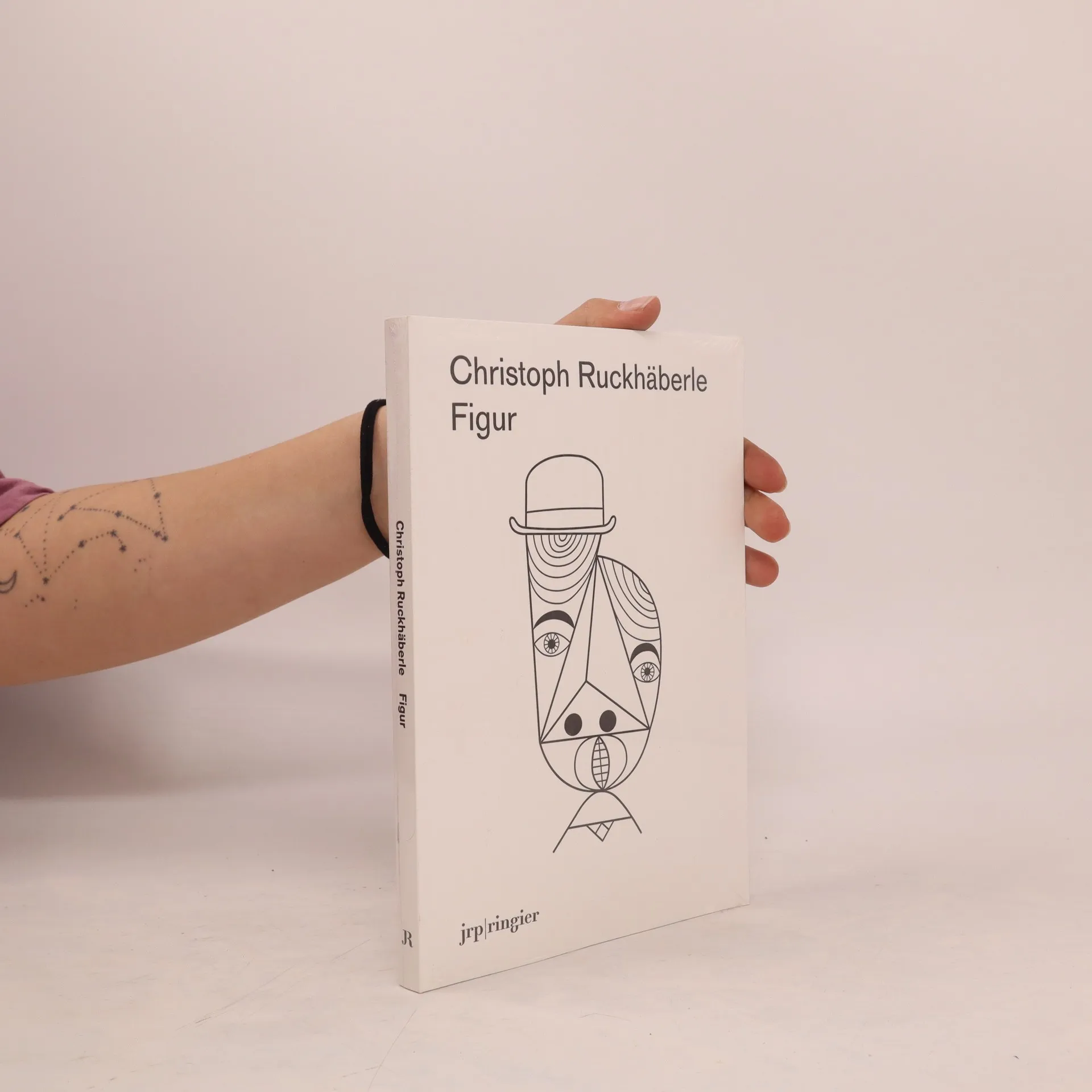
    Christoph Ruckhäberle, Figur
    Tatiana Trouvé
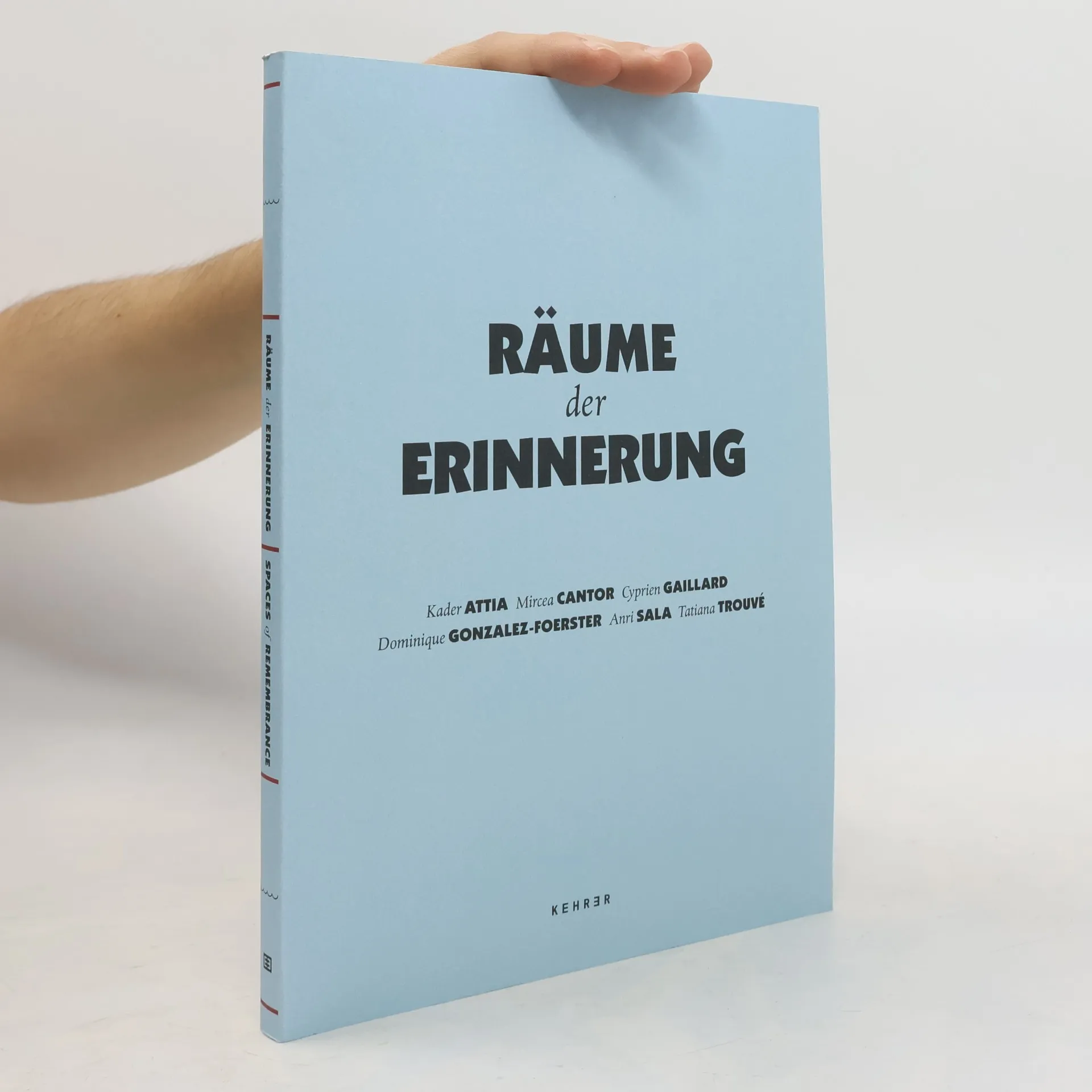
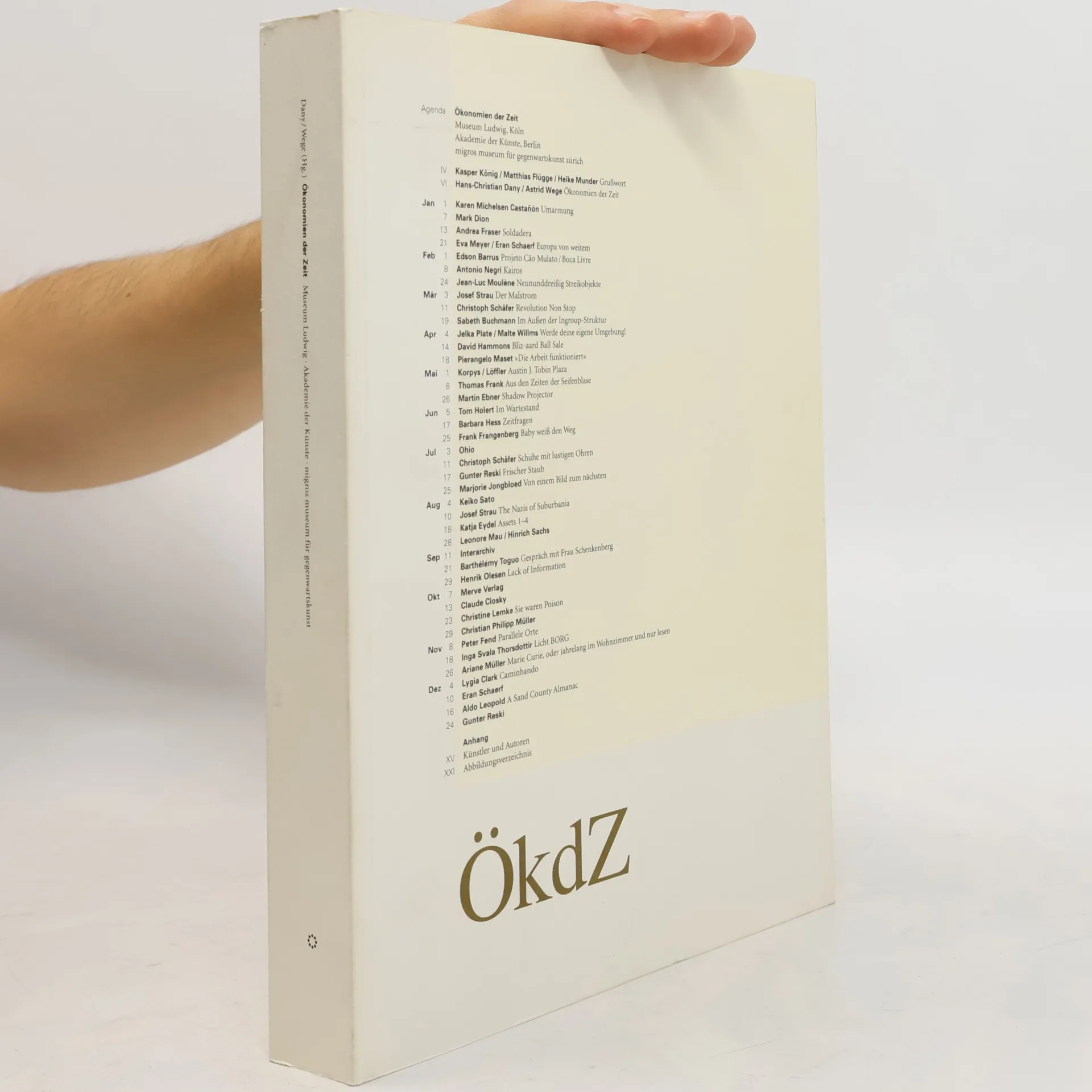
    Sammlung / Migros-Museum für Gegenwartskunst Zürich
    • The origins of the collection of the Migros Museum für Gegenwartskunst date from the late 1950s, it initiated by the migros founder Gottlieb Duttweiler; and, in the late 1970s, began concentrating on collecting international contemporary art. This publication offers a wide overview focusing on the core pieces of the collection, which consists of around 400 artworks by international and Swiss contemporary artists such as Art & Language, Maurizio Cattelan, Christopher Wool, Katharina Sieverding, Rachel Harrison, Marc Camille Chaimowicz, Christoph Büchel, Paul Thek, and Douglas Gordon. * * The large-scale illustrations are accompanied with texts by writers such as Tom Holert, Tirdad Zolghadr, and Jan Verwoert, reflecting different museums and collection strategies, and referring in particular to the history of the museum which was founded in 1996. Further texts by Philip Ursprung, Heike Munder, and others, outline the main thematic focuses of the collection as political art, participation strategies of the 1990s, glamour and Pop, and the psychological meaning of space and architecture in contemporary art. Short texts by Raphael Gygax, Judith Welter, and Bettina Steinbrügge highlight a selection of specific works and artists in the collection. * * Published with the Migros Museum für Gegenwartskunst, Zurich.

      Sammlung / Migros-Museum für Gegenwartskunst Zürich
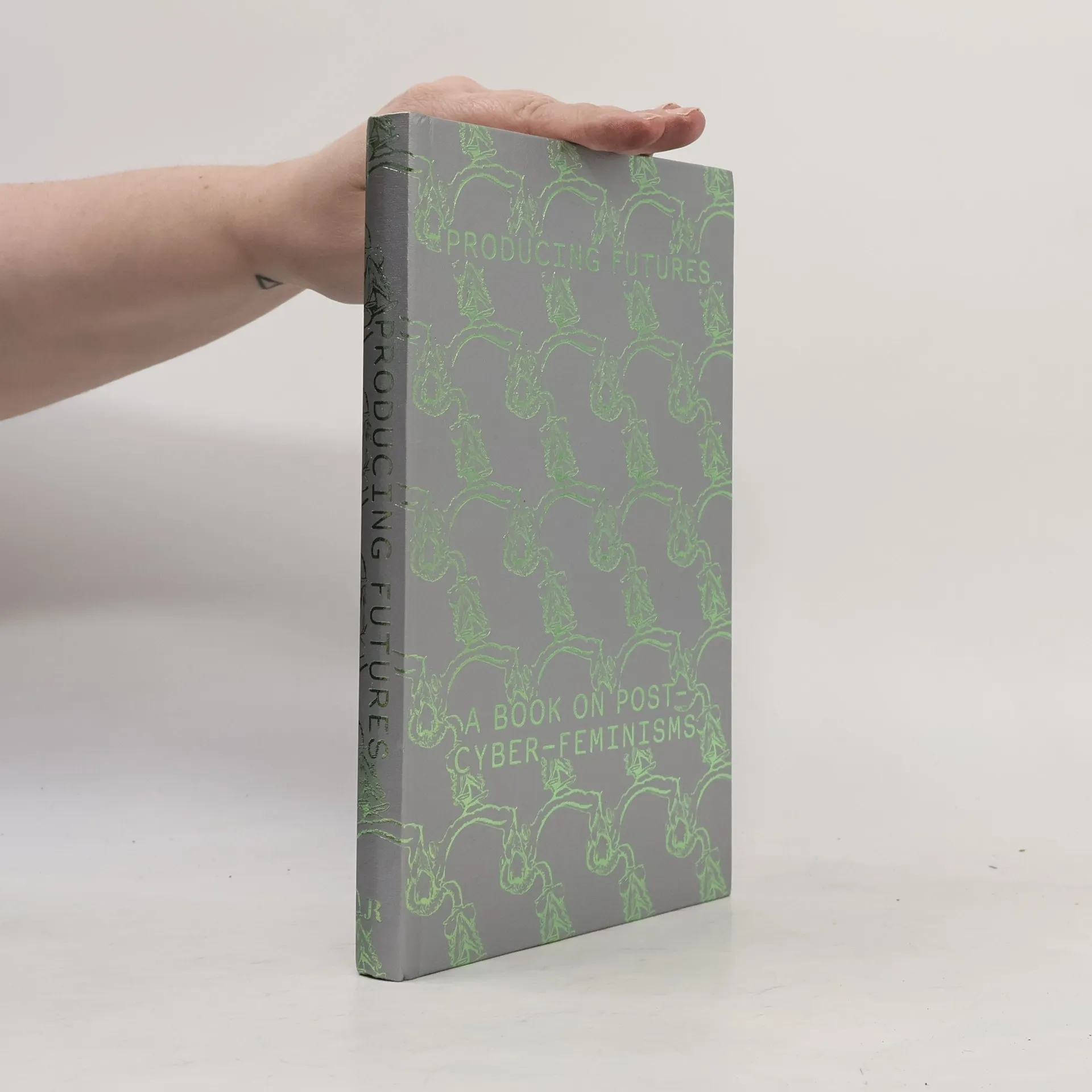
    • The artist Tatiana Trouvé works with staged rooms, architectonic interventions and snake-like metal sculptural objects, which seem to be in motion but at the same time strangely frozen. Her staged rooms often use the parameters of interior and exterior, working with the principle of inversion. Psychic spaces are externalised, becoming concrete, sinister “interior” rooms. Trouvé’s pieces become visualisations of “unconscious” conditions that are continuously affected by uncertainty—while her module-like “mental landscapes” circle around issues such as living space, memory, architecture and the construction of reality. This publication is the first devoted exclusively to Trouvé’s drawn work, which can also been seen in this context: at first they look like classical architectural sketches, yet, on closer inspection, they breakdown time and again in the definition of vanishing lines and their interior architecture often remains ambiguous.

      Tatiana Trouvé
    • Christoph Ruckhäberle, Figur

      • 256 páginas
      • 9 horas de lectura

      The publication presents new works by painter Christoph Ruckhäberle (*1972 in Pfaffenhofen, lives and works in Leipzig). The visual world of Ruckhäberle, who studied animated film at the California Institute of the Arts before attending the Academy of Visual Arts in Leipzig, is peopled by odd, hard-edged figures standing in front of colored rhythmic backgrounds. Colorful drawings of faces recall carved masks, and are composed from a rich and playful vocabulary of forms. These forms, and the wealth of colors in Ruckhäberle's works, are broken not only by skewed visual angles or perspectival inconsistencies, but also through the use of Cubist borrowings. * * The book assembles linocuts and offset pages held together by a Japanese binding. Beautifully produced, this artist's book is published in a limited print run. * * Published with the Migros Museum für Gegenwartskunst, Zurich. *
      Christoph Ruckhäberle, Figur