




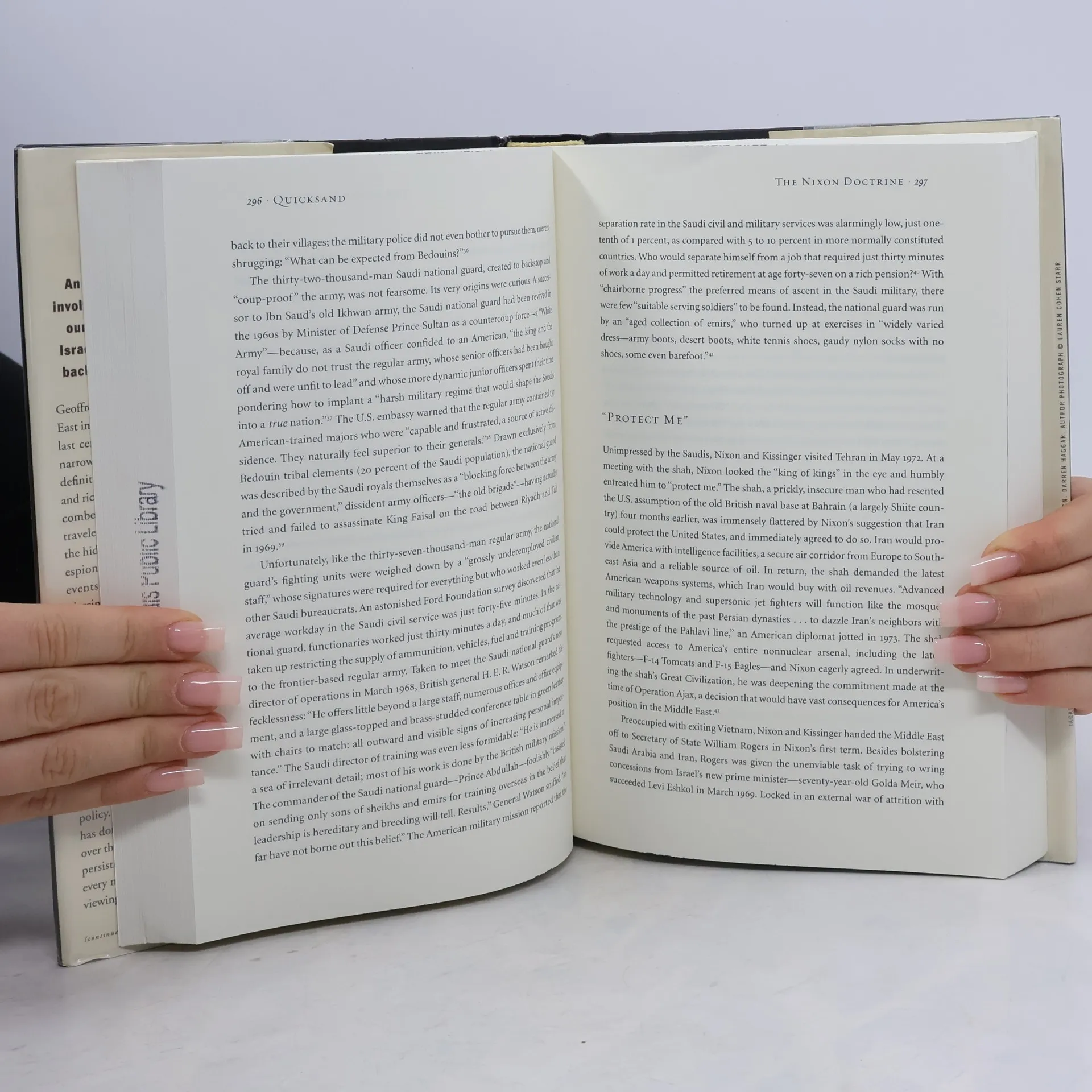
Más información sobre el libro
Geoffrey Wawro reexamines America's involvement in the Middle East by exploring the region's history over the last century, rather than focusing on specific countries or time periods. This comprehensive approach reveals a dramatic and ironic narrative, enriched by Wawro's extensive research in U.S. and European archives and his travels throughout the Middle East. He uncovers hidden motivations and espionage that influenced key events, from the establishment of Israel to the assassination of Sadat, the Suez and energy crises, the Six-Day War, Desert One, Iran-contra, and the wars in Iraq and Afghanistan, including the rise of al-Qaeda. Wawro draws parallels between past mistakes and current challenges, illustrating that the U.S. continues to grapple with its historical errors. Over nearly a century, America's conflicting commitments and priorities in the region have alternated between idealism and pragmatism. Wawro's work untangles these complexities, demonstrating how U.S. strategies have consistently misinterpreted the intentions of regional players by viewing them through an American lens. Each administration has crafted its own doctrine for the Middle East, yet these have often failed to align with reality on the ground. Wawro's engaging narrative is essential for understanding both America's missteps and the Middle East on its own terms.


Compra de libros
Quicksand, Geoffrey Wawro
- Idioma

- Publicado en
- 2010
- Encuadernación
- (Tapa dura),
- Estado del libro
- Dañado
- Precio
- 4,38 €
Métodos de pago
Nos falta tu reseña aquí
- Título
- Quicksand
- Subtítulo
- America's Pursuit of Power in the Middle East
- Idioma
- Inglés
- Autores
- Geoffrey Wawro
- Editorial
- Penguin Press
- Publicado en
- 2010
- Formato
- Tapa dura
- Páginas
- 702
- ISBN10
- 1594202419
- ISBN13
- 9781594202414
- Serie
- Etiquetas
- No ficción, Ciencias sociales, Tema histórico, Historia, Ciencias políticas & Política, Política, Relaciones Internacionales
- Calificación
- 3,75 de 5
- Descripción
- Geoffrey Wawro reexamines America's involvement in the Middle East by exploring the region's history over the last century, rather than focusing on specific countries or time periods. This comprehensive approach reveals a dramatic and ironic narrative, enriched by Wawro's extensive research in U.S. and European archives and his travels throughout the Middle East. He uncovers hidden motivations and espionage that influenced key events, from the establishment of Israel to the assassination of Sadat, the Suez and energy crises, the Six-Day War, Desert One, Iran-contra, and the wars in Iraq and Afghanistan, including the rise of al-Qaeda. Wawro draws parallels between past mistakes and current challenges, illustrating that the U.S. continues to grapple with its historical errors. Over nearly a century, America's conflicting commitments and priorities in the region have alternated between idealism and pragmatism. Wawro's work untangles these complexities, demonstrating how U.S. strategies have consistently misinterpreted the intentions of regional players by viewing them through an American lens. Each administration has crafted its own doctrine for the Middle East, yet these have often failed to align with reality on the ground. Wawro's engaging narrative is essential for understanding both America's missteps and the Middle East on its own terms.