

Valoración del libro
Parámetros
- 192 páginas
- 7 horas de lectura
Más información sobre el libro
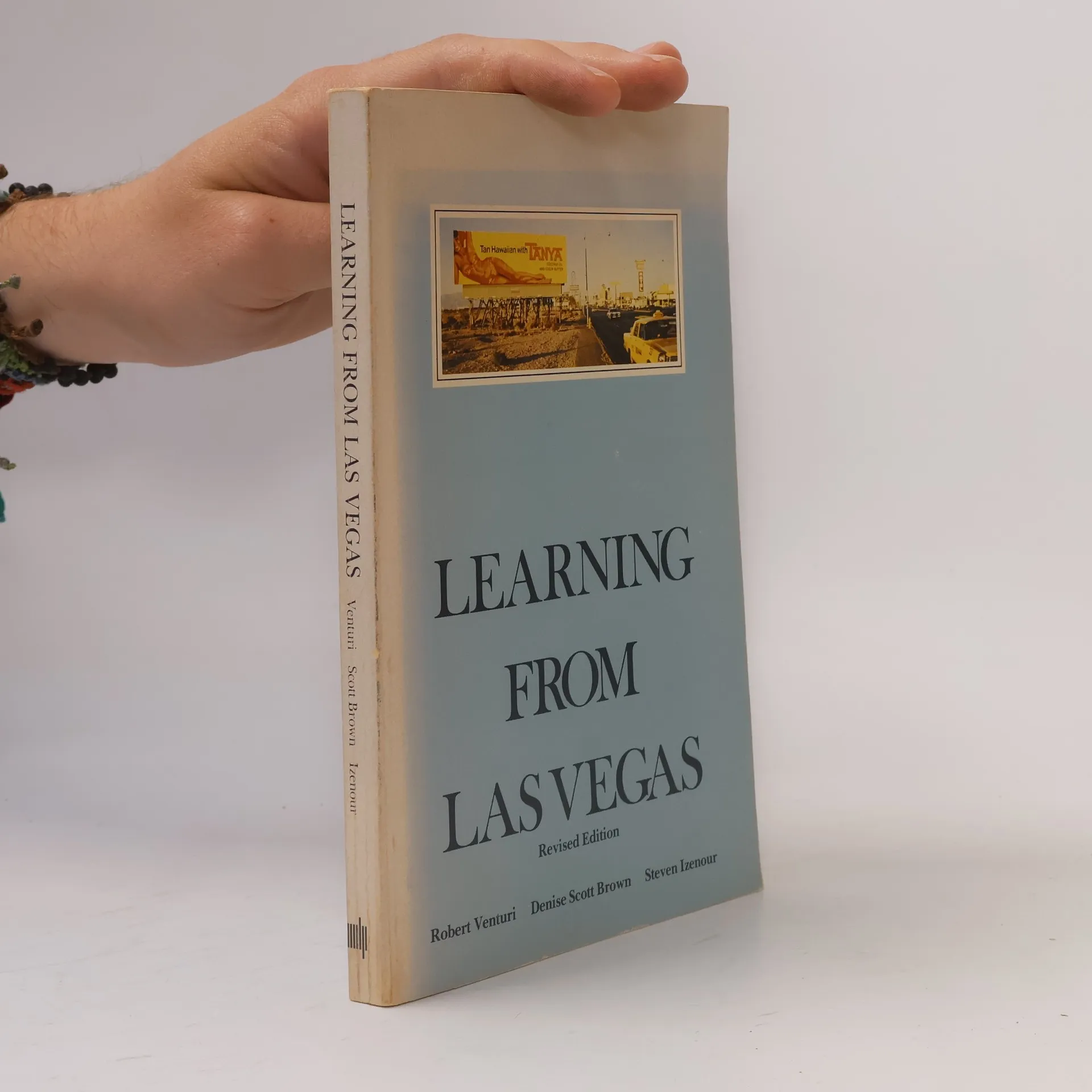
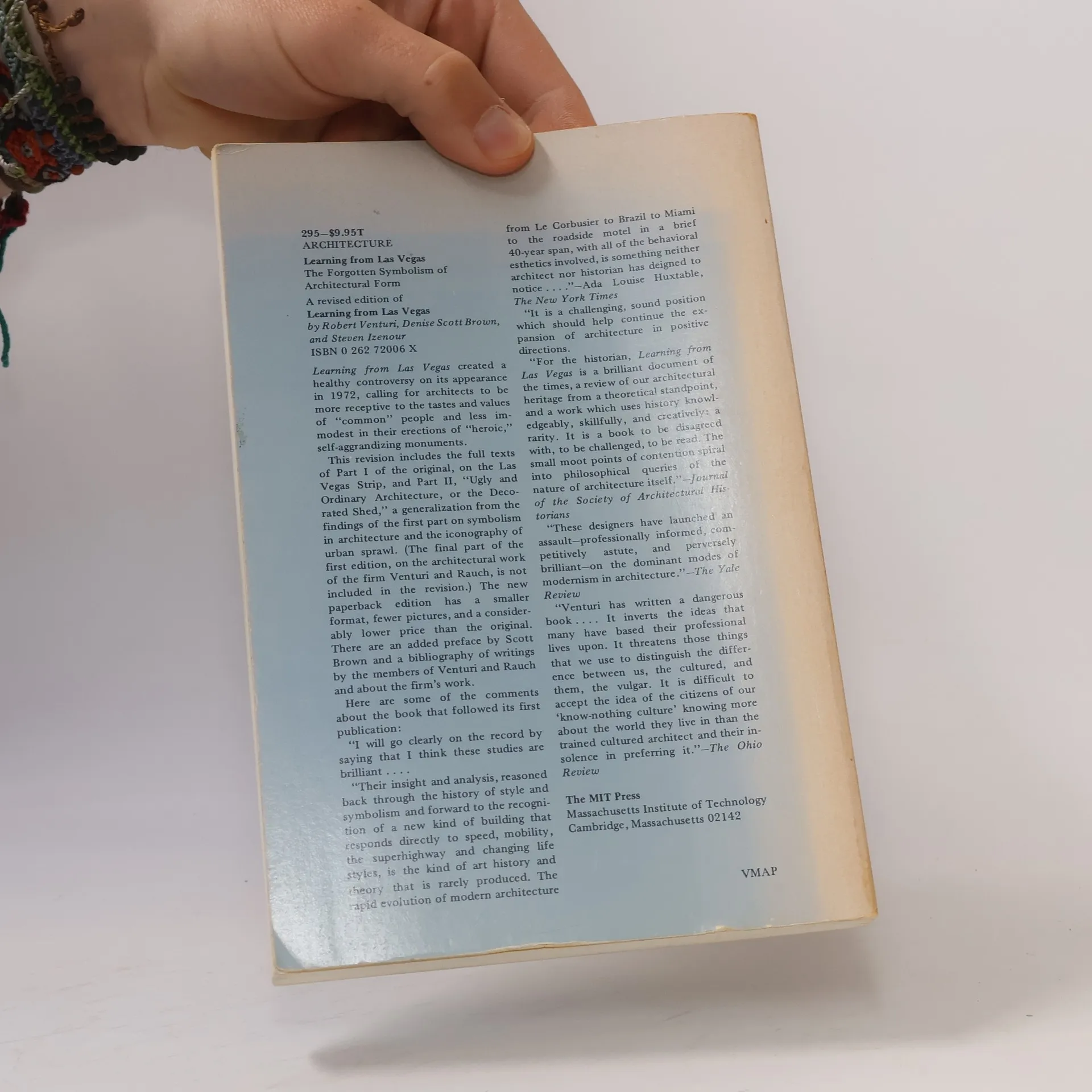
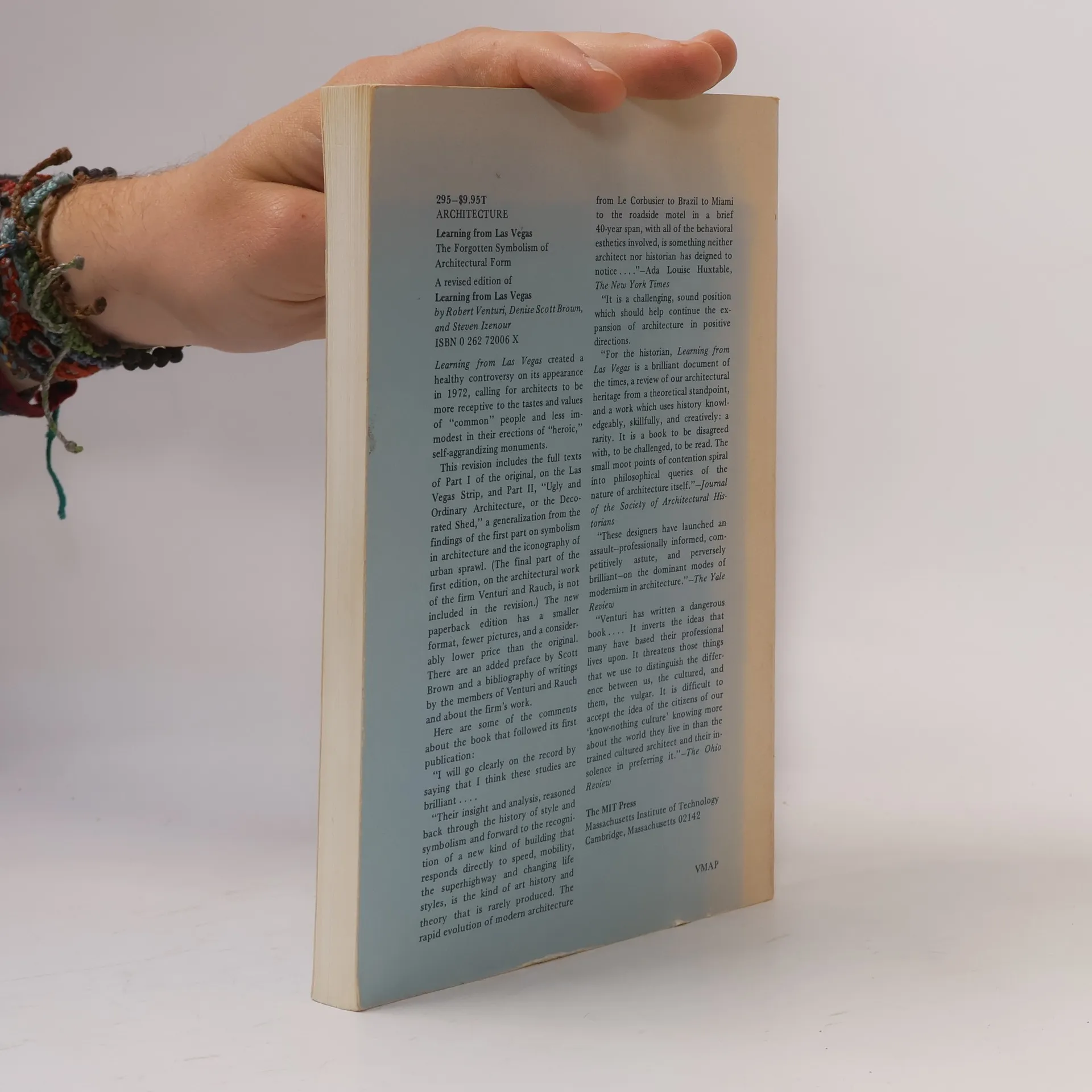
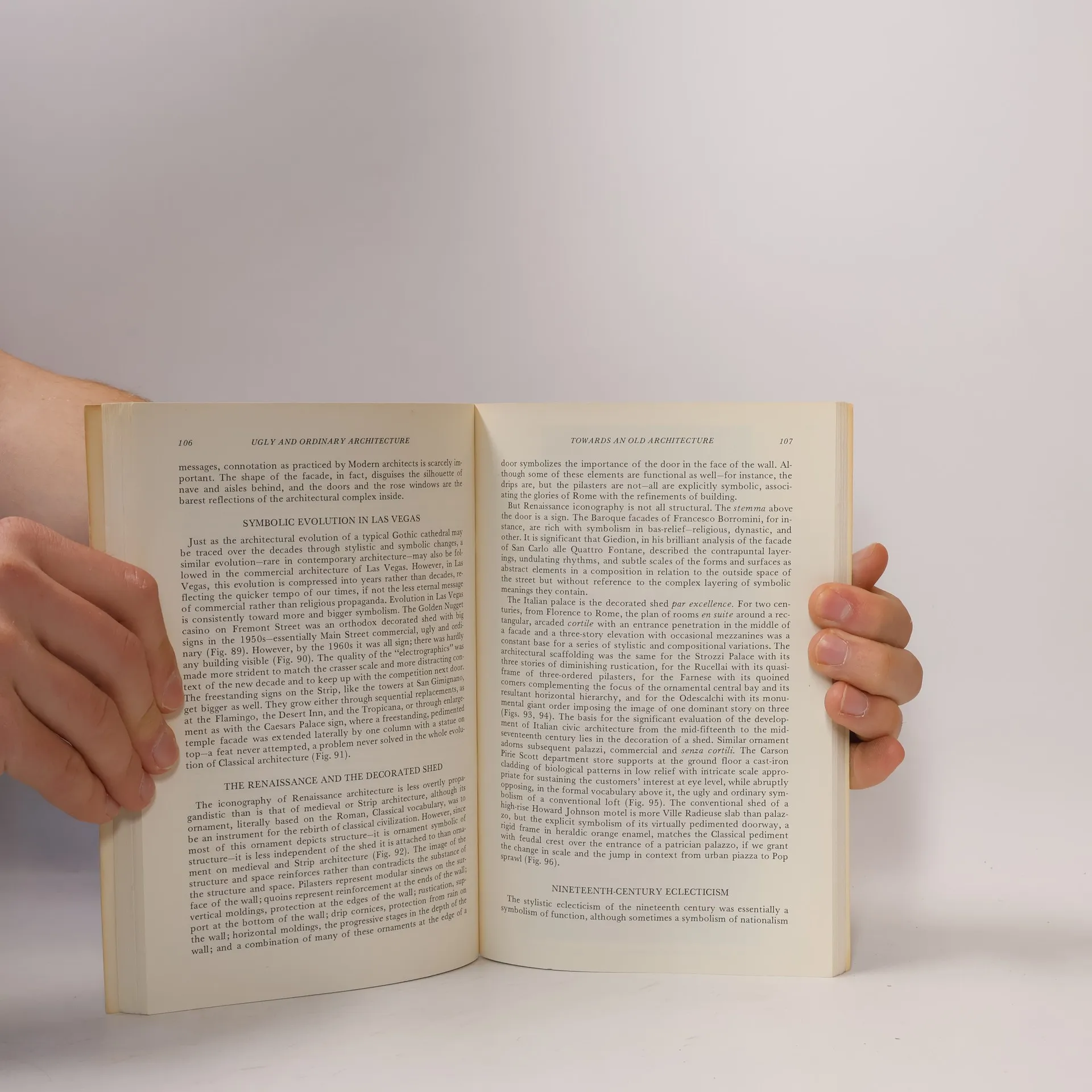
This revision, first published in 1972, sparked significant debate by urging architects to align more closely with the tastes and values of everyday people, moving away from grandiose, self-serving structures. It retains the full texts of Part I, focusing on the Las Vegas strip, and Part II, which discusses "Ugly and Ordinary Architecture, or the Decorated Shed," drawing conclusions about symbolism in architecture and urban sprawl from the first part. Notably, the final section on the architectural contributions of Venturi and Rauch is omitted in this edition. The new paperback format is smaller, features fewer images, and is priced more affordably than the original. Additionally, it includes a new preface by Scott Brown and a bibliography of writings related to Venturi and Rauch and their work. The book continues to challenge conventional architectural norms and encourages a more inclusive approach to design.




Compra de libros
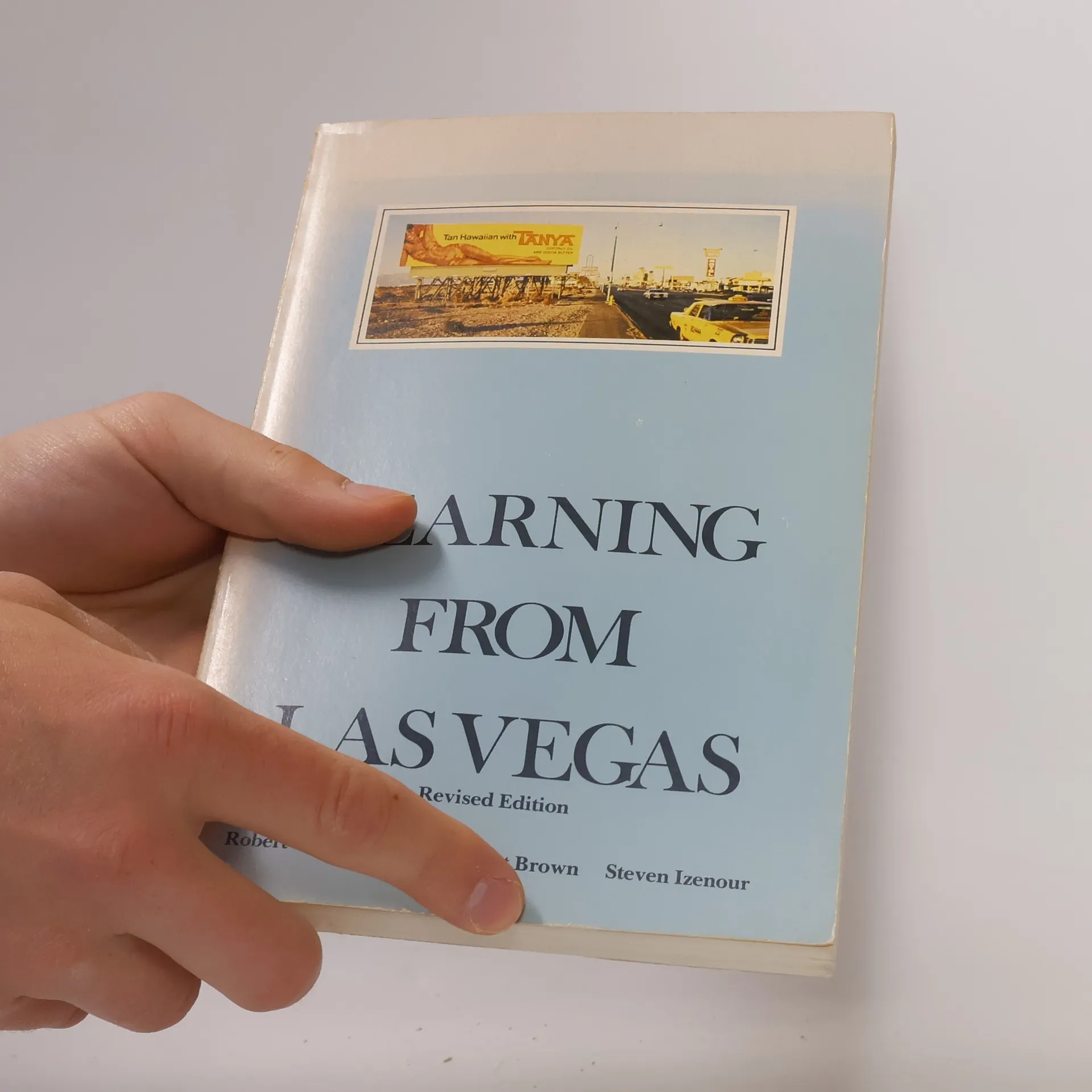
Learning From Las Vegas, Robert Venturi, Denise Scott Brown, Steven Izenour
- Idioma

- Publicado en
- 1977
- product-detail.submit-box.info.binding
- (Tapa dura),
- Estado del libro
- Dañado
- Precio
- 22,72 €
Métodos de pago
Nos falta tu reseña aquí
- Título
- Learning From Las Vegas
- Subtítulo
- The Forgotten Symbolism of Architectural Form - Revised Edition
- Idioma
- Inglés
- Editorial
- MIT Press
- Publicado en
- 1977
- Formato
- Tapa dura
- Páginas
- 192
- ISBN10
- 0262220202
- ISBN13
- 9780262220200
- Serie
- Etiquetas
- No ficción, Arte / Cultura, Arte, Arquitectura, Arquitectura y urbanismo, Ciudades, Urbanismo
- Título original
- Learning from LasVegas
- Calificación
- 4 de 5
- Descripción
- This revision, first published in 1972, sparked significant debate by urging architects to align more closely with the tastes and values of everyday people, moving away from grandiose, self-serving structures. It retains the full texts of Part I, focusing on the Las Vegas strip, and Part II, which discusses "Ugly and Ordinary Architecture, or the Decorated Shed," drawing conclusions about symbolism in architecture and urban sprawl from the first part. Notably, the final section on the architectural contributions of Venturi and Rauch is omitted in this edition. The new paperback format is smaller, features fewer images, and is priced more affordably than the original. Additionally, it includes a new preface by Scott Brown and a bibliography of writings related to Venturi and Rauch and their work. The book continues to challenge conventional architectural norms and encourages a more inclusive approach to design.