

Más información sobre el libro
Distributed in the East European Countries, China, Northern Korea, Cuba, Vietnam and Mongolia by SNTL, Prague, Czechoslovakia Preservation treatments of food with a poor keeping ability are expected to give protection against changes and transformations which normally affect the quality in a negative sense. This volume describes in a concise and integrated manner how physical, biochemical, microbiological and other factors play a role in food preservation. It provides detailed discussions of conditions that cause, accelerate, control or inhibit undesirable changes in food. The effects of such factors as light, temperature, moisture, oxygen, radiation, and microbes on the keeping quality of food are systematically reviewed. The book deals with the processing of fruit, vegetables, meat and eggs. Numerous techniques for preservation as well as machinery and equipment employed in food preservation are discussed. This work should be of interest to a broad audience of people working in food industry, food science departments in academia, governmental quality control agencies and the like.
Compra de libros
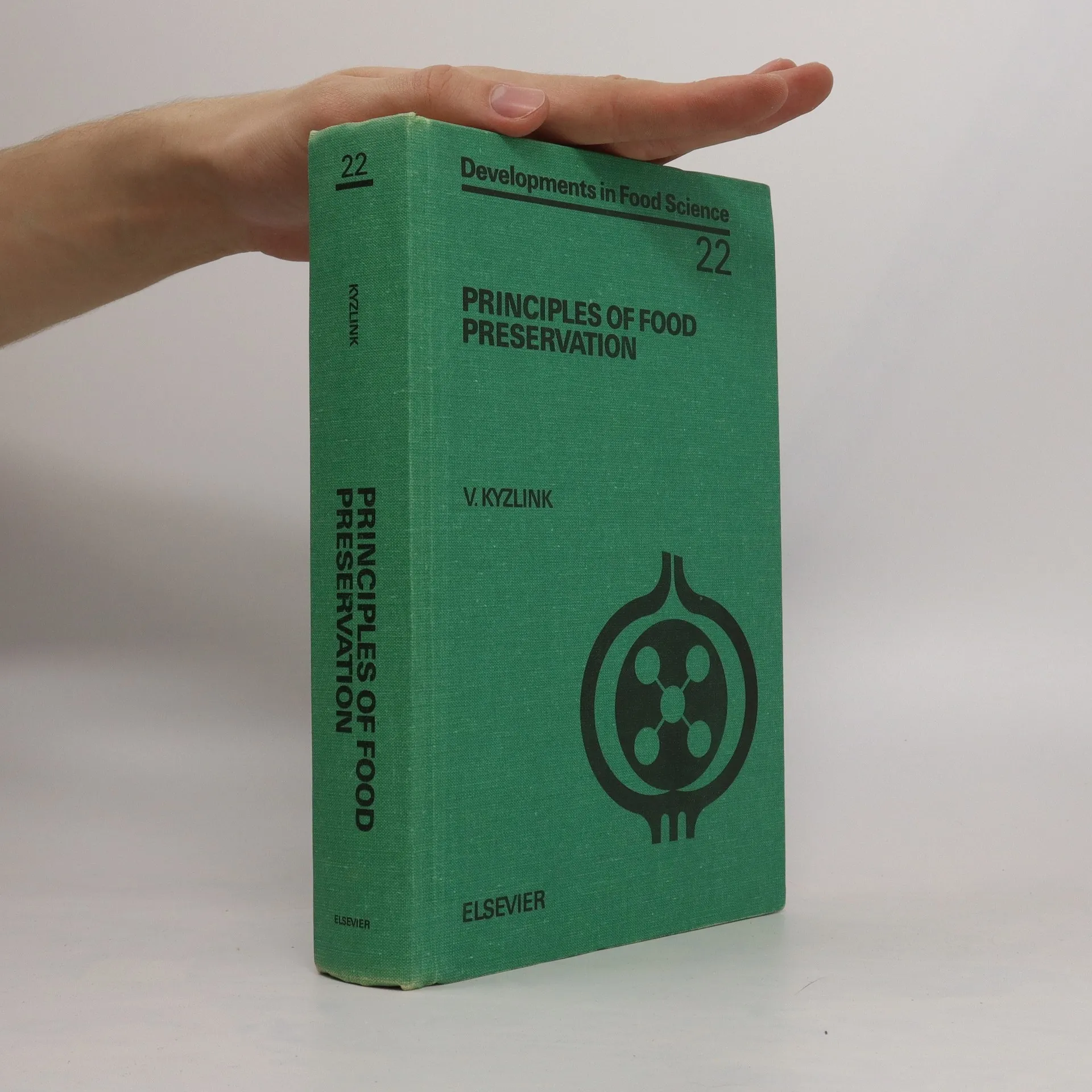
Principles of Food Preservation, Vladimír Kyzlink
- Idioma

- Publicado en
- 1989
- Encuadernación
- (Tapa dura)
Métodos de pago
Nadie lo ha calificado todavía.
- Título
- Principles of Food Preservation
- Idioma
- Inglés
- Autores
- Vladimír Kyzlink
- Editorial
- Elsevier
- Publicado en
- 1989
- Formato
- Tapa dura
- Páginas
- 598
- ISBN10
- 0444988440
- ISBN13
- 9780444988447
- Serie
- Categorías
- Etiquetas
- Ciencias naturales
- Descripción
- Distributed in the East European Countries, China, Northern Korea, Cuba, Vietnam and Mongolia by SNTL, Prague, Czechoslovakia Preservation treatments of food with a poor keeping ability are expected to give protection against changes and transformations which normally affect the quality in a negative sense. This volume describes in a concise and integrated manner how physical, biochemical, microbiological and other factors play a role in food preservation. It provides detailed discussions of conditions that cause, accelerate, control or inhibit undesirable changes in food. The effects of such factors as light, temperature, moisture, oxygen, radiation, and microbes on the keeping quality of food are systematically reviewed. The book deals with the processing of fruit, vegetables, meat and eggs. Numerous techniques for preservation as well as machinery and equipment employed in food preservation are discussed. This work should be of interest to a broad audience of people working in food industry, food science departments in academia, governmental quality control agencies and the like.