

Parámetros
- 304 páginas
- 11 horas de lectura
Más información sobre el libro
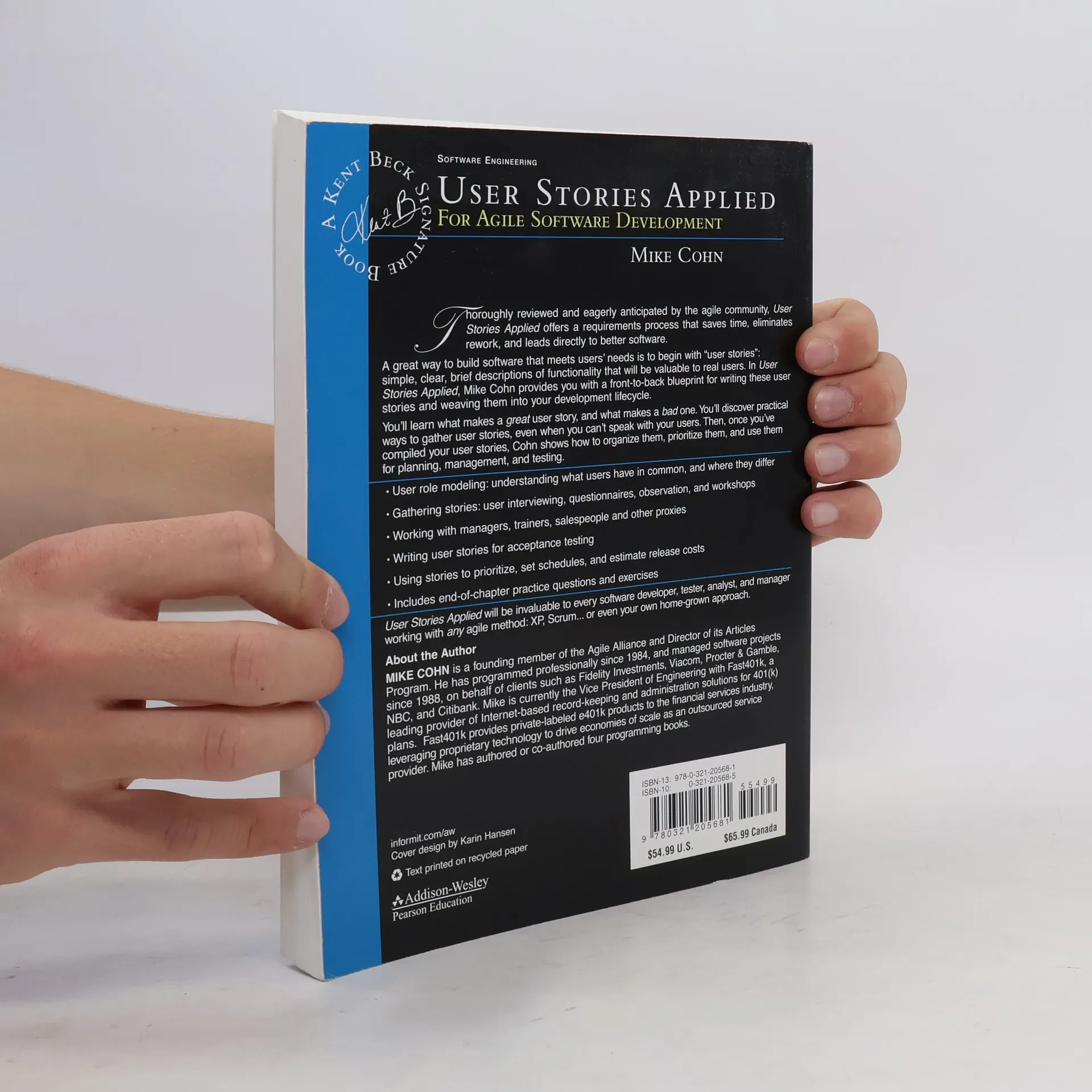
"Offers a requirements process that saves time, eliminates rework, and leads directly to better software. A great way to build software that meets users' needs is to begin with 'user stories': simple, clear, brief descriptions of functionality that will be valuable to real users. ... [the author] provides you with a front-to-back blueprint for writing these user stories and weaving them into your development lifecycle. You'll learn what makes a great user story, and what makes a bad one. You'll discover practical ways to gather user stories, even when you can't speak with your users. Then, once you've compiled your user stories, [the author] shows how to organize them, prioritize them, and use them for planning, management, and testing"--Back cover.

Compra de libros
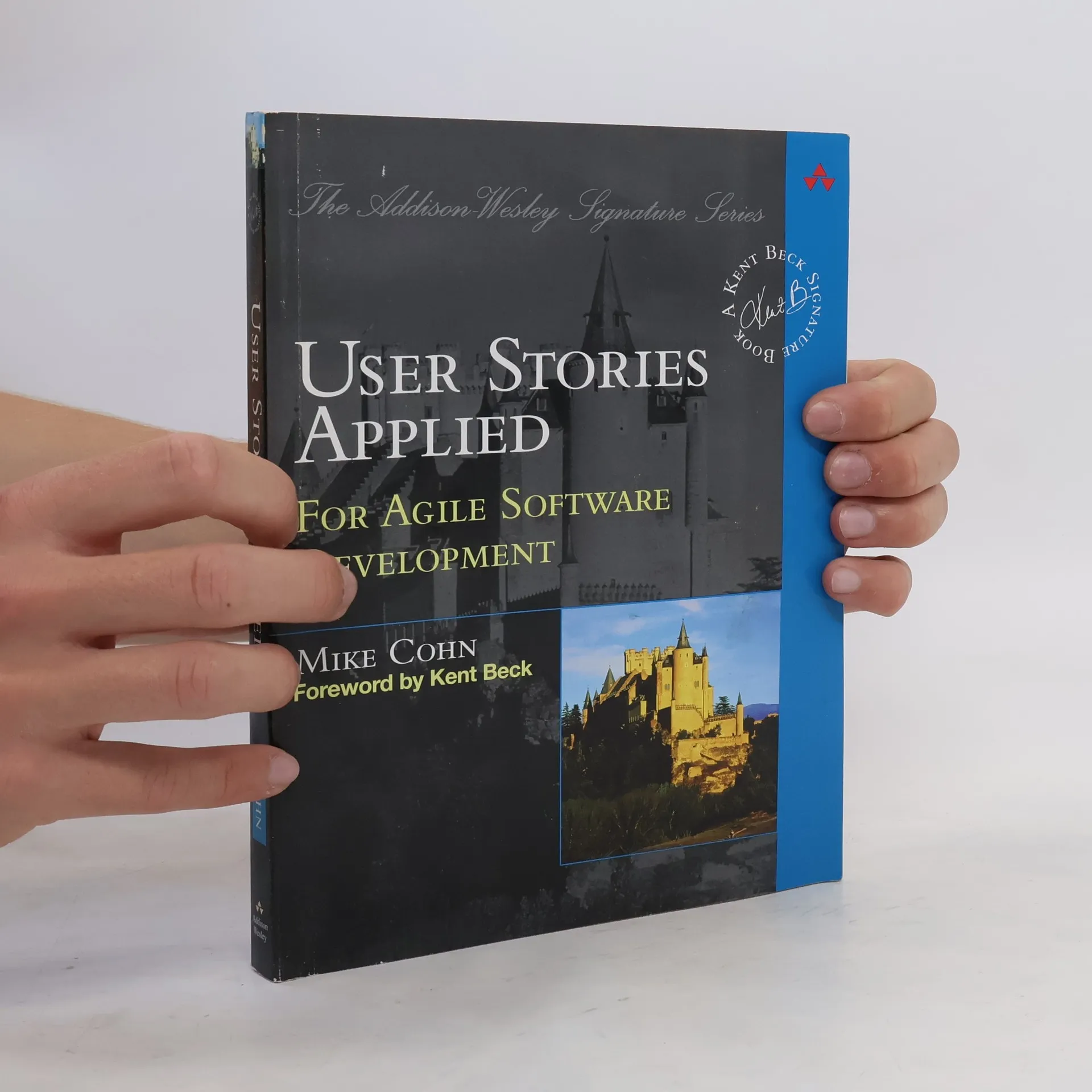
User Stories Applied: For Agile Software Development, Mike Cohn
- Idioma

- Publicado en
- 2004
- Encuadernación
- (Tapa blanda)
Métodos de pago
Nos falta tu reseña aquí
- Título
- User Stories Applied: For Agile Software Development
- Idioma
- Inglés
- Autores
- Mike Cohn
- Editorial
- Pearson International
- Publicado en
- 2004
- Formato
- Tapa blanda
- Páginas
- 304
- ISBN10
- 0321205685
- ISBN13
- 9780321205681
- Categorías
- Etiquetas
- Comercio, Tecnología, Software
- Título original
- User stories applied for agile software development
- Calificación
- 3,9 de 5
- Descripción
- "Offers a requirements process that saves time, eliminates rework, and leads directly to better software. A great way to build software that meets users' needs is to begin with 'user stories': simple, clear, brief descriptions of functionality that will be valuable to real users. ... [the author] provides you with a front-to-back blueprint for writing these user stories and weaving them into your development lifecycle. You'll learn what makes a great user story, and what makes a bad one. You'll discover practical ways to gather user stories, even when you can't speak with your users. Then, once you've compiled your user stories, [the author] shows how to organize them, prioritize them, and use them for planning, management, and testing"--Back cover.