

Parámetros
Más información sobre el libro
During the past decade, scanning electrochemical microscopy (SECM) has significantly advanced, with a notable increase in publications shifting from proof-of-concept to real-world applications. This technique has become essential for studying heterogeneous and homogeneous reactions, high-resolution imaging of various substrates, including biological cells, and microfabrication. As SECM is now widely utilized by research groups globally, a new edition of this monograph is timely, offering comprehensive reviews of its various aspects. The updated chapters provide essential experimental and theoretical background for those in the field. Chapters 1 through 5 cover the principles of SECM measurements, instrumentation, preparation of SECM probes, imaging methodologies, and theoretical foundations. Subsequent chapters focus on specific applications and are designed to be self-contained. While some familiarity with electrochemistry and physical chemistry is beneficial, the discussions are accessible for beginning graduate students. The book highlights SECM's utility across a range of interdisciplinary research, with applications spanning from biological systems to sensors and probing reactions at liquid-liquid interfaces.
Compra de libros
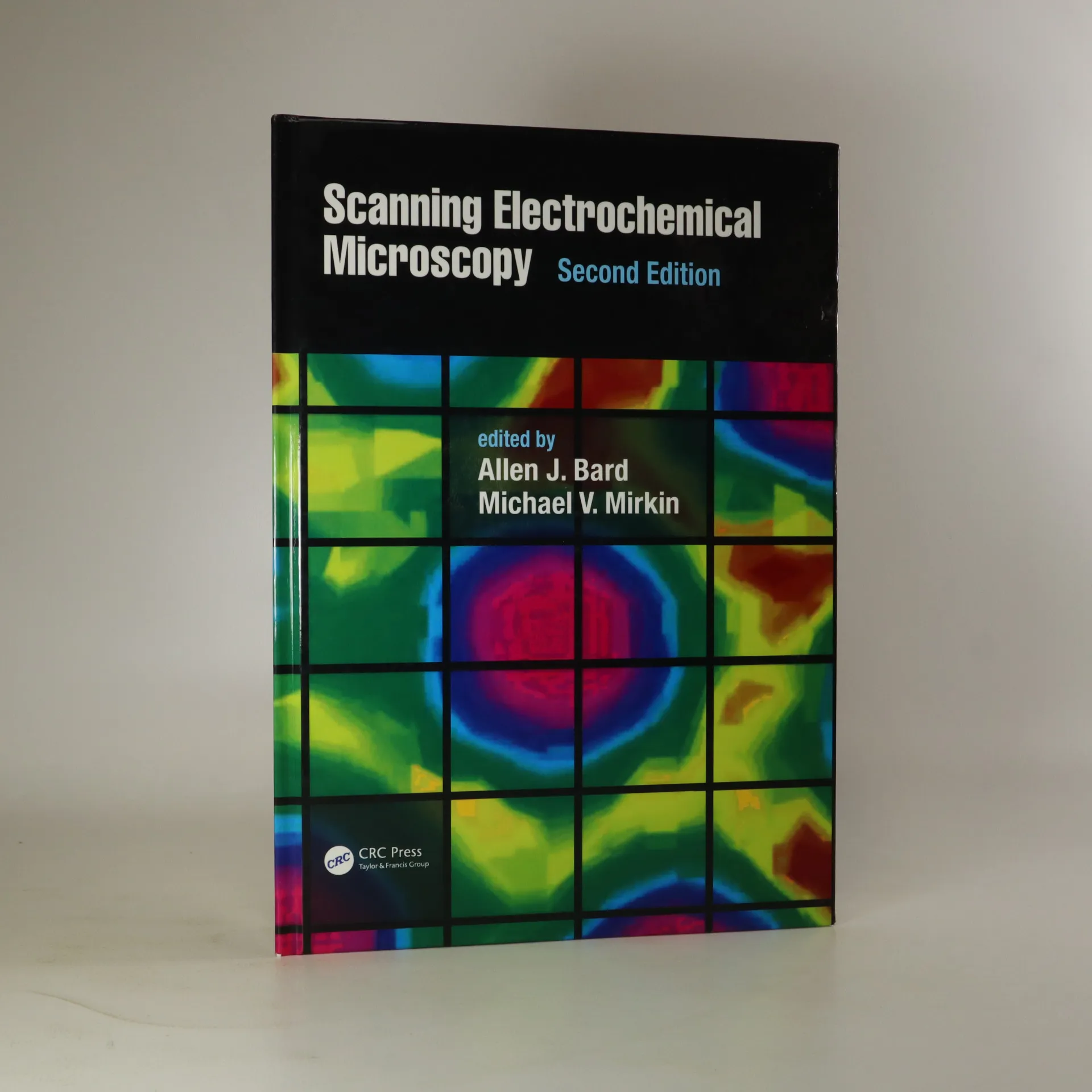
Scanning Electrochemical Microscopy, Second Edition, Allen J. Bard, Michael V. Mirkin
- Idioma

- Publicado en
- 2012
- Encuadernación
- (Tapa dura)
Métodos de pago
Nos falta tu reseña aquí
- Título
- Scanning Electrochemical Microscopy, Second Edition
- Idioma
- Inglés
- Autores
- Allen J. Bard, Michael V. Mirkin
- Editorial
- CRC Press
- Publicado en
- 2012
- Formato
- Tapa dura
- ISBN10
- 1439831122
- ISBN13
- 9781439831120
- Serie
- Etiquetas
- Microbiología
- Calificación
- 4 de 5
- Descripción
- During the past decade, scanning electrochemical microscopy (SECM) has significantly advanced, with a notable increase in publications shifting from proof-of-concept to real-world applications. This technique has become essential for studying heterogeneous and homogeneous reactions, high-resolution imaging of various substrates, including biological cells, and microfabrication. As SECM is now widely utilized by research groups globally, a new edition of this monograph is timely, offering comprehensive reviews of its various aspects. The updated chapters provide essential experimental and theoretical background for those in the field. Chapters 1 through 5 cover the principles of SECM measurements, instrumentation, preparation of SECM probes, imaging methodologies, and theoretical foundations. Subsequent chapters focus on specific applications and are designed to be self-contained. While some familiarity with electrochemistry and physical chemistry is beneficial, the discussions are accessible for beginning graduate students. The book highlights SECM's utility across a range of interdisciplinary research, with applications spanning from biological systems to sensors and probing reactions at liquid-liquid interfaces.