



Parámetros
Más información sobre el libro
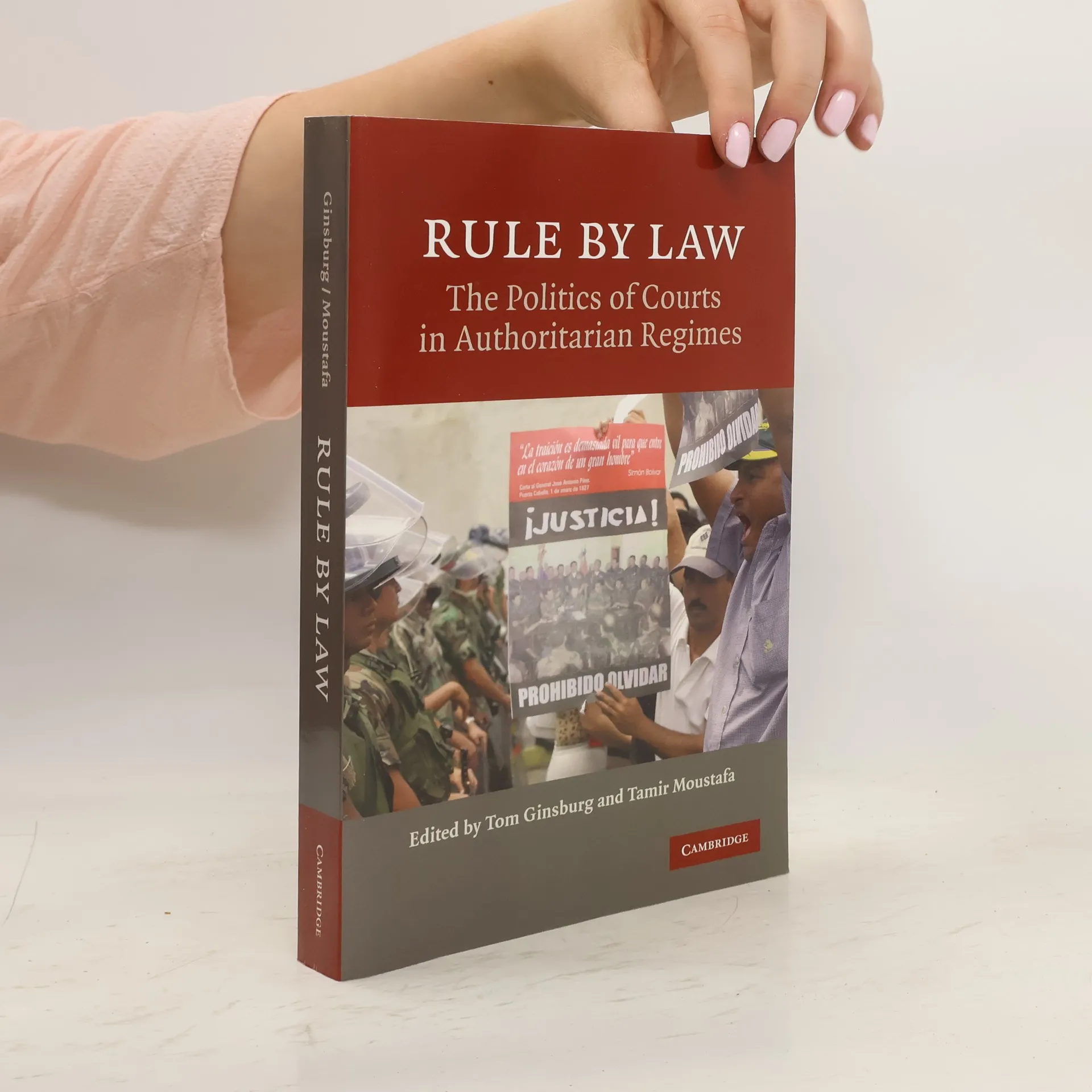
Scholars have generally assumed that courts in authoritarian states are pawns of their regimes, upholding the interests of governing elites and frustrating the efforts of their opponents. As a result, nearly all studies in comparative judicial politics have focused on democratic and democratizing countries. This volume brings together leading scholars in comparative judicial politics to consider the causes and consequences of judicial empowerment in authoritarian states. It demonstrates the wide range of governance tasks that courts perform, as well as the way in which courts can serve as critical sites of contention both among the ruling elite and between regimes and their citizens. Drawing on empirical and theoretical insights from every major region of the world, this volume advances our understanding of judicial politics in authoritarian regimes.
Compra de libros
Rule By Law. The Politics of Courts in Authoritarian Regimes, Tom Ginsburg, Tamir Moustafa
- Idioma

- Publicado en
- 2008
- Encuadernación
- (Tapa blanda)
Métodos de pago
Nos falta tu reseña aquí
- Título
- Rule By Law. The Politics of Courts in Authoritarian Regimes
- Idioma
- Inglés
- Autores
- Tom Ginsburg, Tamir Moustafa
- Editorial
- Cambridge University Press
- Publicado en
- 2008
- Formato
- Tapa blanda
- ISBN10
- 0521720419
- ISBN13
- 9780521720410
- Serie
- Etiquetas
- Temática jurídica, Política
- Calificación
- 4,2 de 5
- Descripción
- Scholars have generally assumed that courts in authoritarian states are pawns of their regimes, upholding the interests of governing elites and frustrating the efforts of their opponents. As a result, nearly all studies in comparative judicial politics have focused on democratic and democratizing countries. This volume brings together leading scholars in comparative judicial politics to consider the causes and consequences of judicial empowerment in authoritarian states. It demonstrates the wide range of governance tasks that courts perform, as well as the way in which courts can serve as critical sites of contention both among the ruling elite and between regimes and their citizens. Drawing on empirical and theoretical insights from every major region of the world, this volume advances our understanding of judicial politics in authoritarian regimes.