


Más información sobre el libro
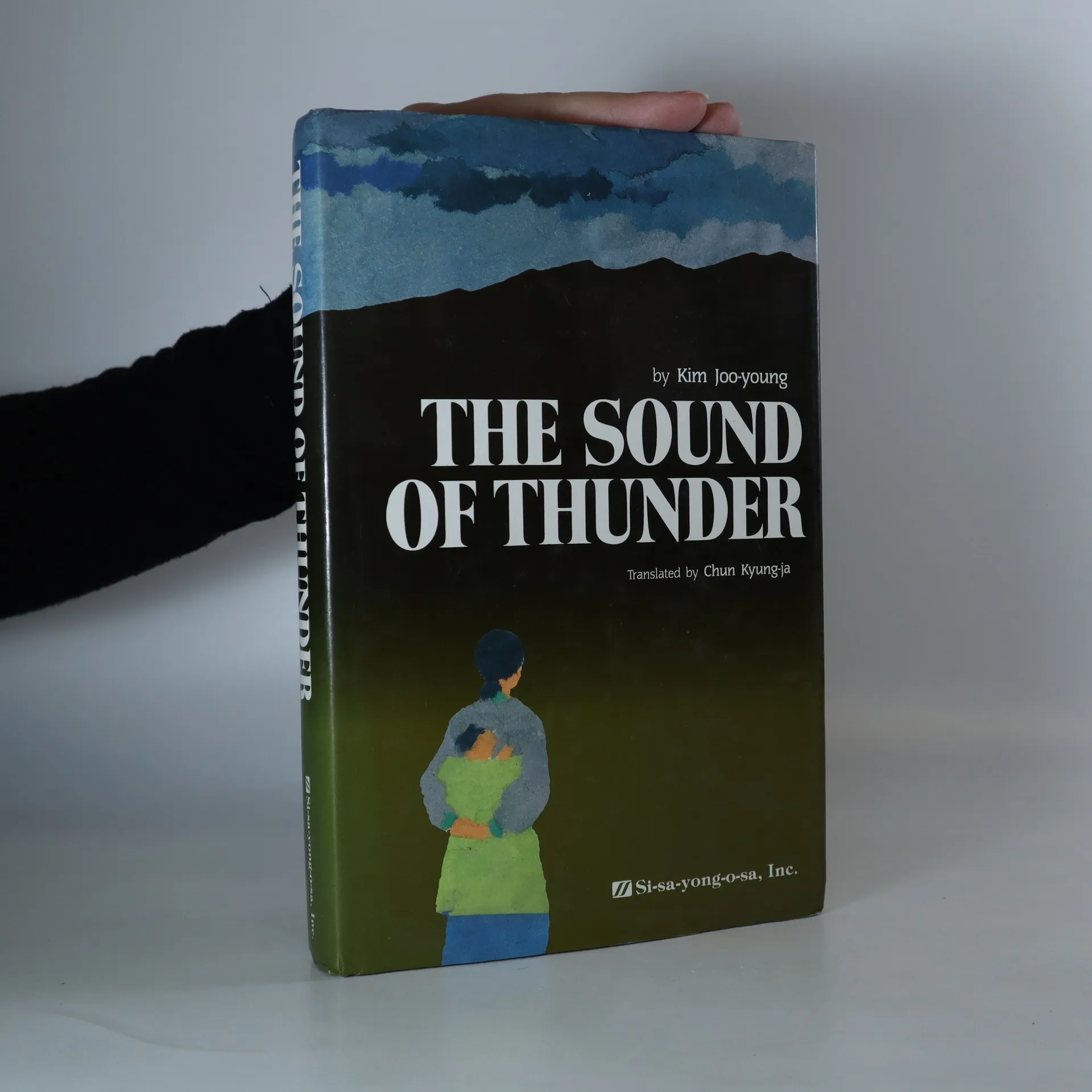
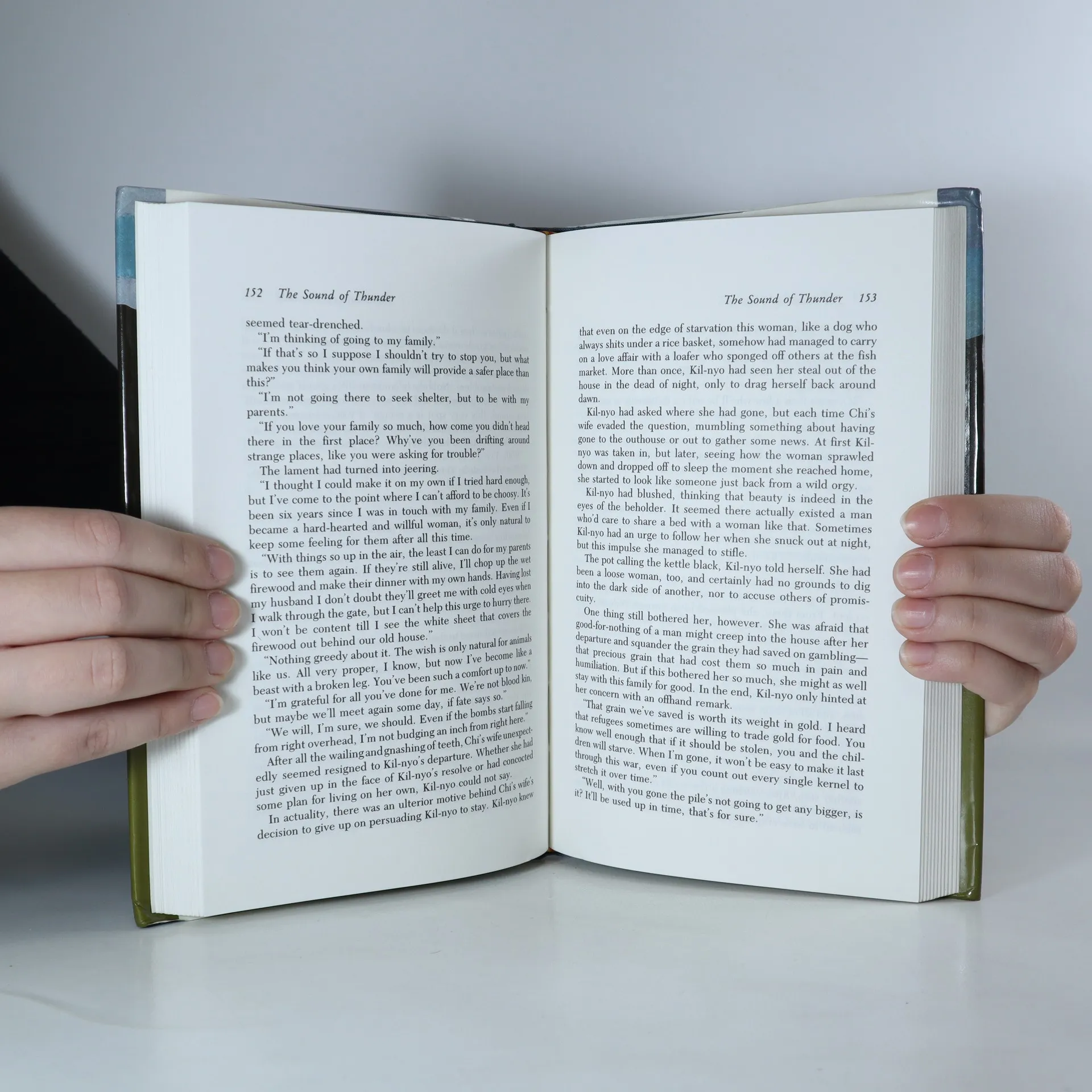
Set against the backdrop of the end of the Japanese occupation and the Korean War, the author Kim Joo Jong portrays not only the chaotic state between the conflicting ideologies of the North and South and the tragic division into two countries but also the heavy burden of moral norms, deeply rooted in (neo)Confucian ideology of that time, on the fate of a woman who is condemned to take care of herself and her child. Kil Nyo, the protagonist of the novel, is torn between the strict (neo)Confucian norms in which she was raised and a life in which she is forced to struggle with all the adversities that befall her, from rape, unwanted motherhood, forced labor in taverns, to day laboring and returning to her parents' home. A woman as the protagonist is precisely what distinguishes this work from others, as it illuminates a world that has often remained in the shadows of Korean history – the world of women.
Compra de libros
The sound of thunder, Soo-young Kim
- Idioma

- Publicado en
- 1990
- Encuadernación
- (Tapa dura)
Métodos de pago
Nos falta tu reseña aquí
- Título
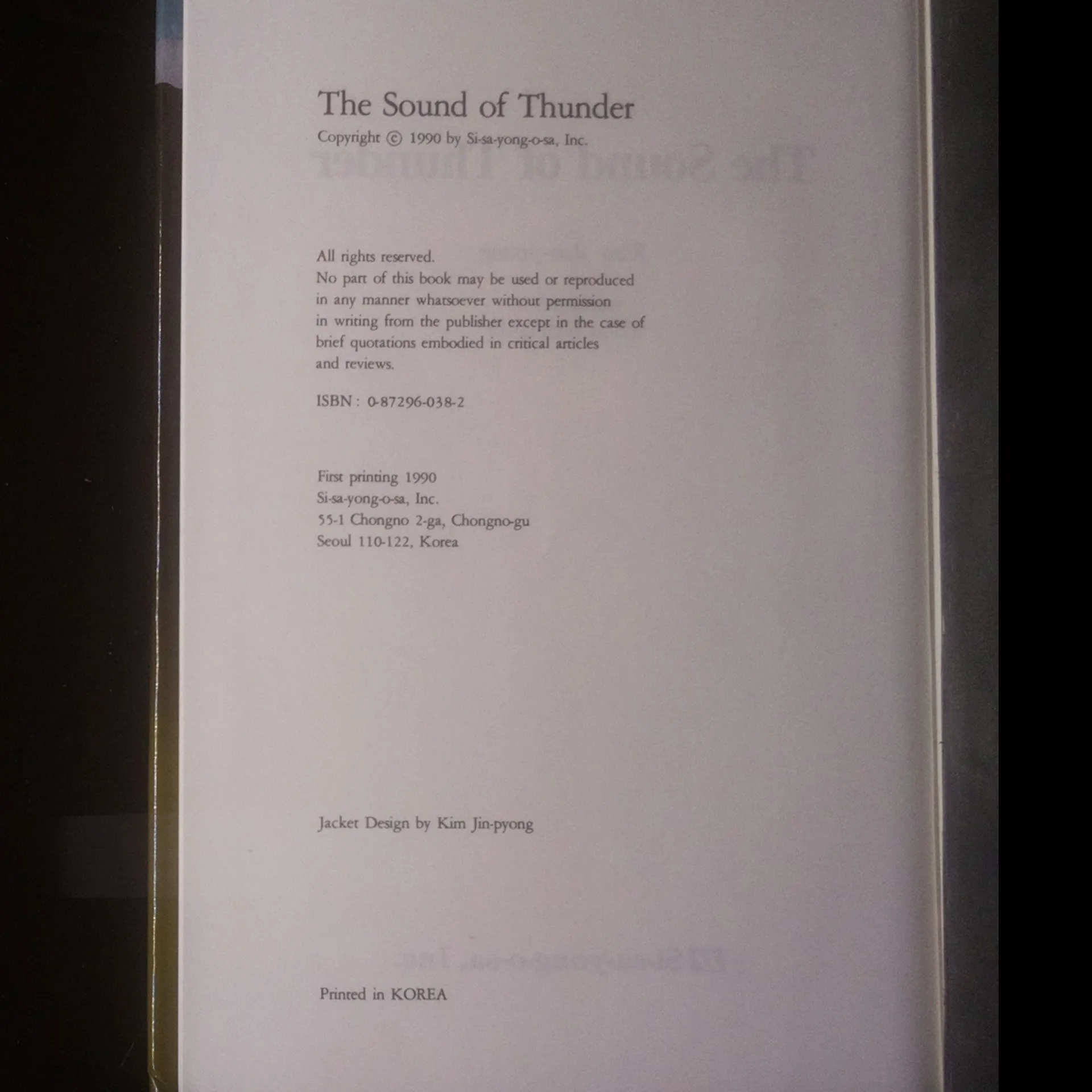
- The sound of thunder
- Idioma
- Inglés
- Autores
- Soo-young Kim
- Editorial
- Si-sa-yong-o-sa
- Publicado en
- 1990
- Formato
- Tapa dura
- Páginas
- 326
- ISBN10
- 0872960382
- ISBN13
- 9780872960381
- Serie
- Categorías
- Etiquetas
- Tema histórico, Temas psicológicos, Familia, Mujeres, Problemas sociales
- Calificación
- 3,75 de 5
- Descripción
- Set against the backdrop of the end of the Japanese occupation and the Korean War, the author Kim Joo Jong portrays not only the chaotic state between the conflicting ideologies of the North and South and the tragic division into two countries but also the heavy burden of moral norms, deeply rooted in (neo)Confucian ideology of that time, on the fate of a woman who is condemned to take care of herself and her child. Kil Nyo, the protagonist of the novel, is torn between the strict (neo)Confucian norms in which she was raised and a life in which she is forced to struggle with all the adversities that befall her, from rape, unwanted motherhood, forced labor in taverns, to day laboring and returning to her parents' home. A woman as the protagonist is precisely what distinguishes this work from others, as it illuminates a world that has often remained in the shadows of Korean history – the world of women.