

Más información sobre el libro
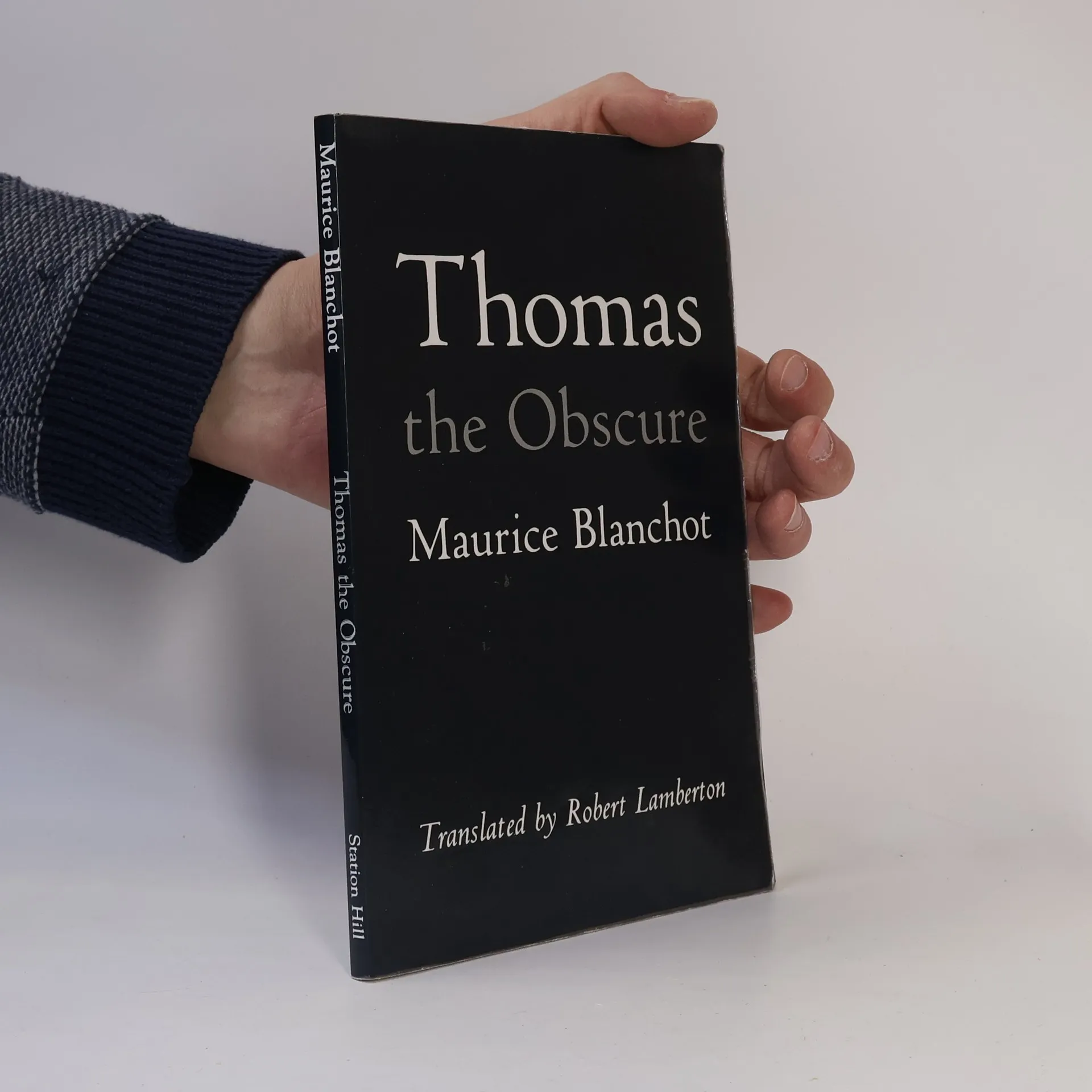
Before Sartre, before Beckett, before Robbe-Grillet, Maurice Blanchot created the new novel, the ultimate post-modern fiction. Written between 1932 and 1940, Blanchot's first novel, here brilliantly translated by Robert Lamberton, contains all the remarkable aspects of his famous and perplexing invention, the ontological narrative--a tale whose subject is the nature of being itself. This paradoxical work discovers being in the absence of being, mystery in the absence of mystery, both to be searched for limitlessly. As Blanchot launches this endless search in his own masterful way, he transforms the possibilities of the novel. First issued in English in 1973 in a limited edition, this re-issue includes an illuminating essay on translation by Lamberton.


Compra de libros
Thomas the Obscure, Maurice Blanchot
- Idioma

- Publicado en
- 2000
- Encuadernación
- (Tapa blanda)
Métodos de pago
Nos falta tu reseña aquí
- Título
- Thomas the Obscure
- Idioma
- Inglés
- Autores
- Maurice Blanchot
- Editorial
- Station Hill Press
- Publicado en
- 2000
- Formato
- Tapa blanda
- Páginas
- 124
- ISBN10
- 0882680765
- ISBN13
- 9780882680767
- Serie
- Etiquetas
- Temática filosófica, Francia, Literatura francesa
- Primera publicación
- 1941
- Título original
- Thomas l'obscur
- Calificación
- 4,1 de 5
- Descripción
- Before Sartre, before Beckett, before Robbe-Grillet, Maurice Blanchot created the new novel, the ultimate post-modern fiction. Written between 1932 and 1940, Blanchot's first novel, here brilliantly translated by Robert Lamberton, contains all the remarkable aspects of his famous and perplexing invention, the ontological narrative--a tale whose subject is the nature of being itself. This paradoxical work discovers being in the absence of being, mystery in the absence of mystery, both to be searched for limitlessly. As Blanchot launches this endless search in his own masterful way, he transforms the possibilities of the novel. First issued in English in 1973 in a limited edition, this re-issue includes an illuminating essay on translation by Lamberton.