


Parámetros
- 256 páginas
- 9 horas de lectura
Más información sobre el libro
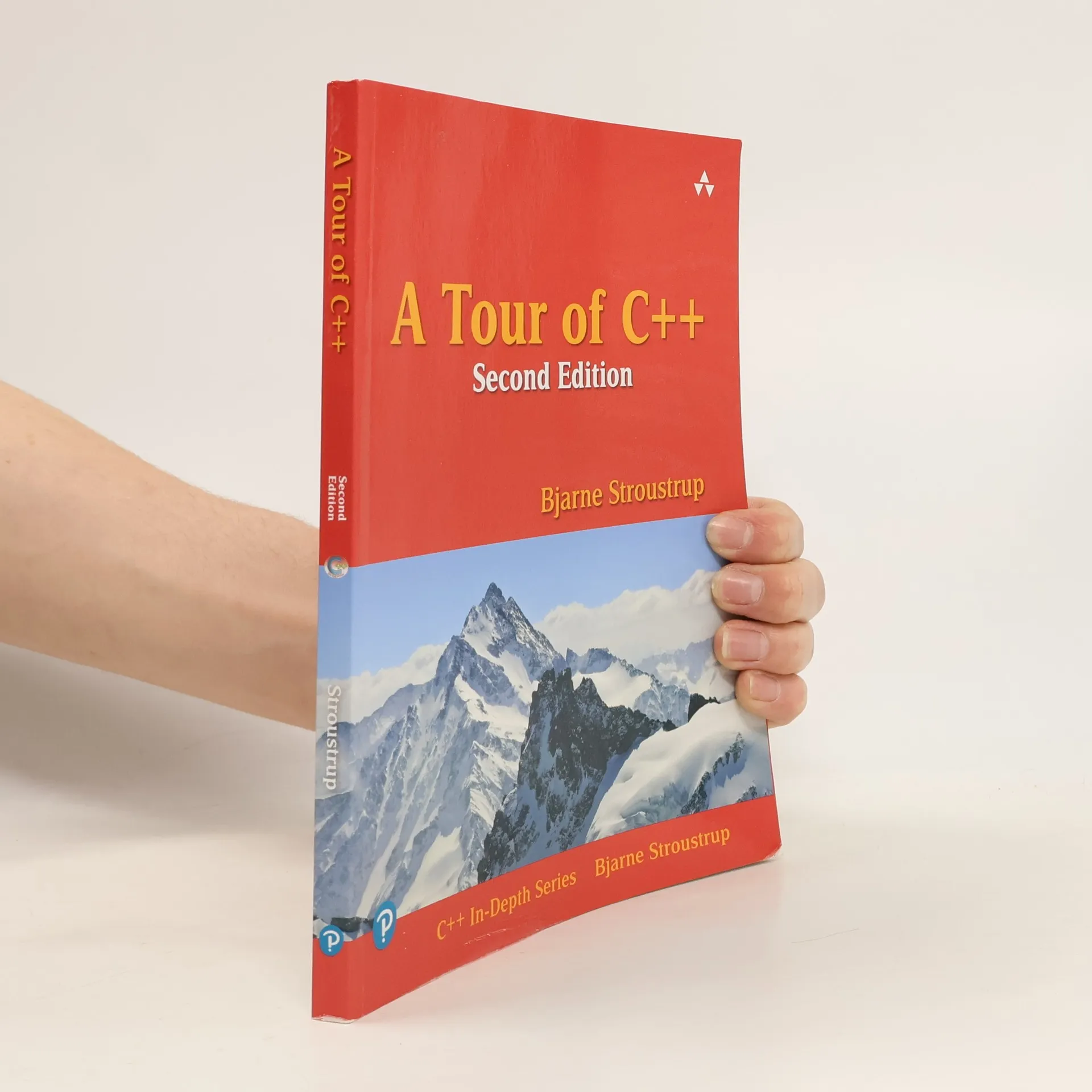
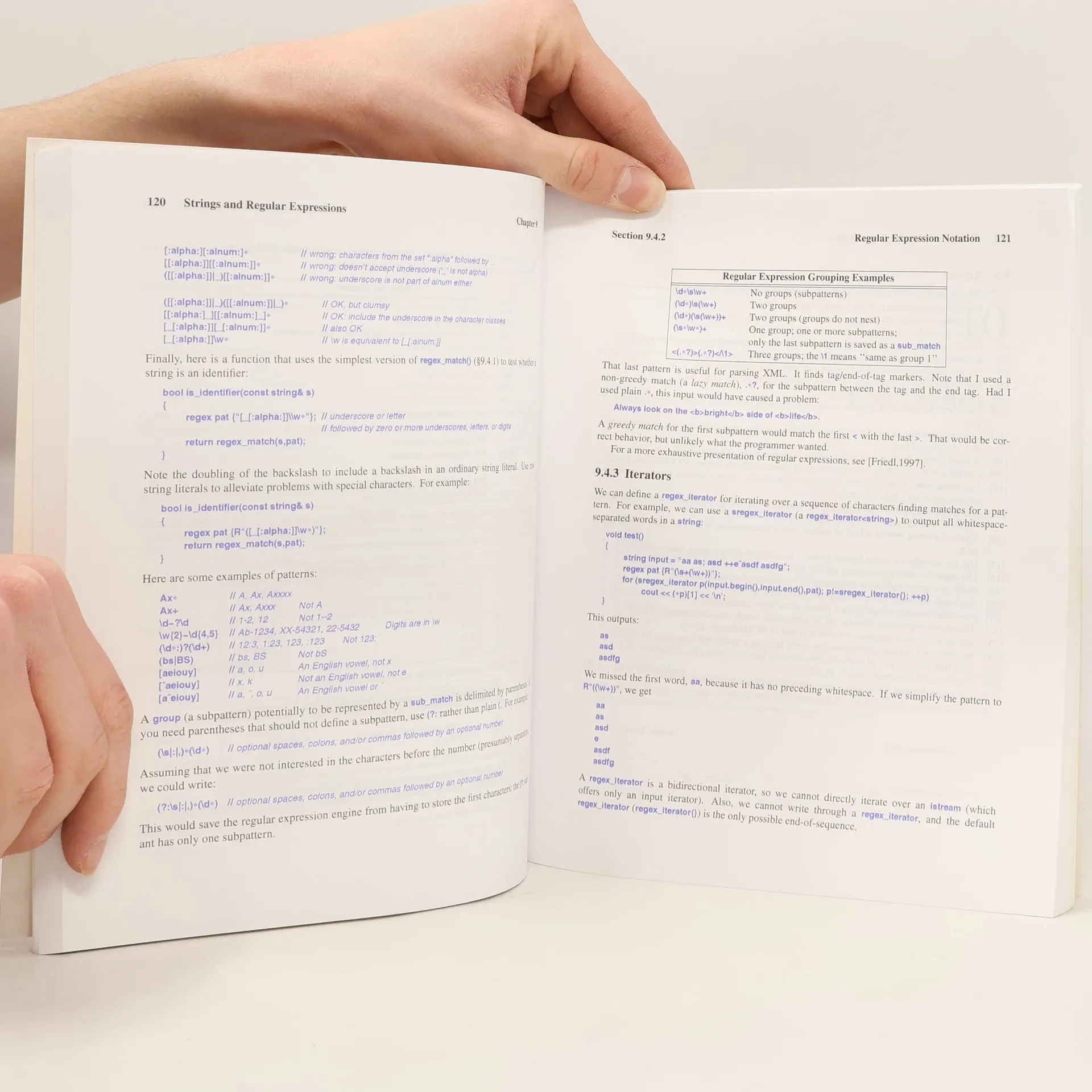
In this concise guide, Bjarne Stroustrup, the creator of C++, outlines the essentials of modern C++. It covers major language features and standard-library components, providing programmers with a meaningful overview, key examples, and practical assistance for getting started. Stroustrup presents C++ features within the context of various programming styles, including object-oriented and generic programming. The coverage begins with the basics and extends to advanced topics, including new features from C++17 like move semantics, uniform initialization, lambda expressions, improved containers, random numbers, and concurrency. Additionally, it touches on upcoming C++20 extensions such as concepts and modules, concluding with insights into the design and evolution of C++. This guide is not intended to teach programming; for that, Stroustrup's other works are recommended. While it won't be the sole resource for mastering C++, it serves as an excellent introduction for C or C++ programmers seeking to deepen their understanding of the current language, as well as for those familiar with other programming languages wanting to grasp the nature and advantages of modern C++.


Compra de libros
A tour of C++, Bjarne Stroustrup
- Idioma

- Publicado en
- 2018
- product-detail.submit-box.info.binding
- (Tapa blanda)
Métodos de pago
Nos falta tu reseña aquí
- Título
- A tour of C++
- Idioma
- Inglés
- Autores
- Bjarne Stroustrup
- Editorial
- Addison-Wesley
- Publicado en
- 2018
- Formato
- Tapa blanda
- Páginas
- 256
- ISBN10
- 0134997832
- ISBN13
- 9780134997834
- Serie
- Calificación
- 4,3 de 5
- Descripción
- In this concise guide, Bjarne Stroustrup, the creator of C++, outlines the essentials of modern C++. It covers major language features and standard-library components, providing programmers with a meaningful overview, key examples, and practical assistance for getting started. Stroustrup presents C++ features within the context of various programming styles, including object-oriented and generic programming. The coverage begins with the basics and extends to advanced topics, including new features from C++17 like move semantics, uniform initialization, lambda expressions, improved containers, random numbers, and concurrency. Additionally, it touches on upcoming C++20 extensions such as concepts and modules, concluding with insights into the design and evolution of C++. This guide is not intended to teach programming; for that, Stroustrup's other works are recommended. While it won't be the sole resource for mastering C++, it serves as an excellent introduction for C or C++ programmers seeking to deepen their understanding of the current language, as well as for those familiar with other programming languages wanting to grasp the nature and advantages of modern C++.