





Más información sobre el libro
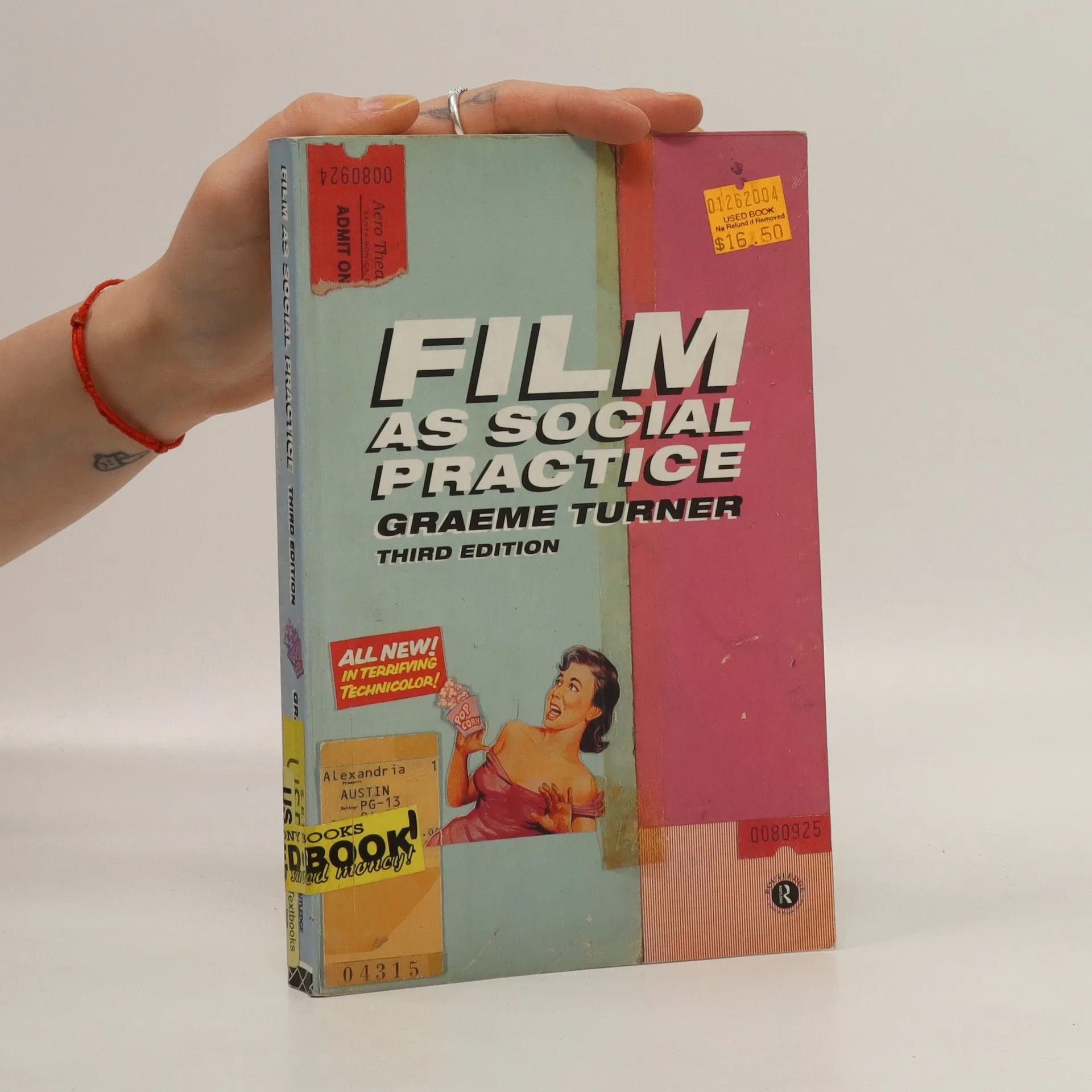
This textbook explores the feature film as entertainment, as narrative and as cultural event. Graeme Turner provides an introduction to major theoretical issues in the history of film production and film studies, examining the function of film as a national cultural industry, and its place in our popular culture. This third edition includes: analysis of classic and popular contemporary films, now including "Scream 2", "The Wedding Singer" and "Lethal Weapon 4", with a selection of film stills; updated and expanded discussion of debates surrounding film narrative, feminist film theory, the film industry, including the New Hollywood, and audiences and spectatorship, including the rise of the multiplex. Arguments have been revised throughout to take into account late-1990s developments in film and cultural theory and changing cinematic trends.


Compra de libros
Film as Social Practice, Graeme Turner
- Idioma

- Publicado en
- 2001
- product-detail.submit-box.info.binding
- (Tapa blanda)
Métodos de pago
Nos falta tu reseña aquí
- Título
- Film as Social Practice
- Idioma
- Inglés
- Autores
- Graeme Turner
- Editorial
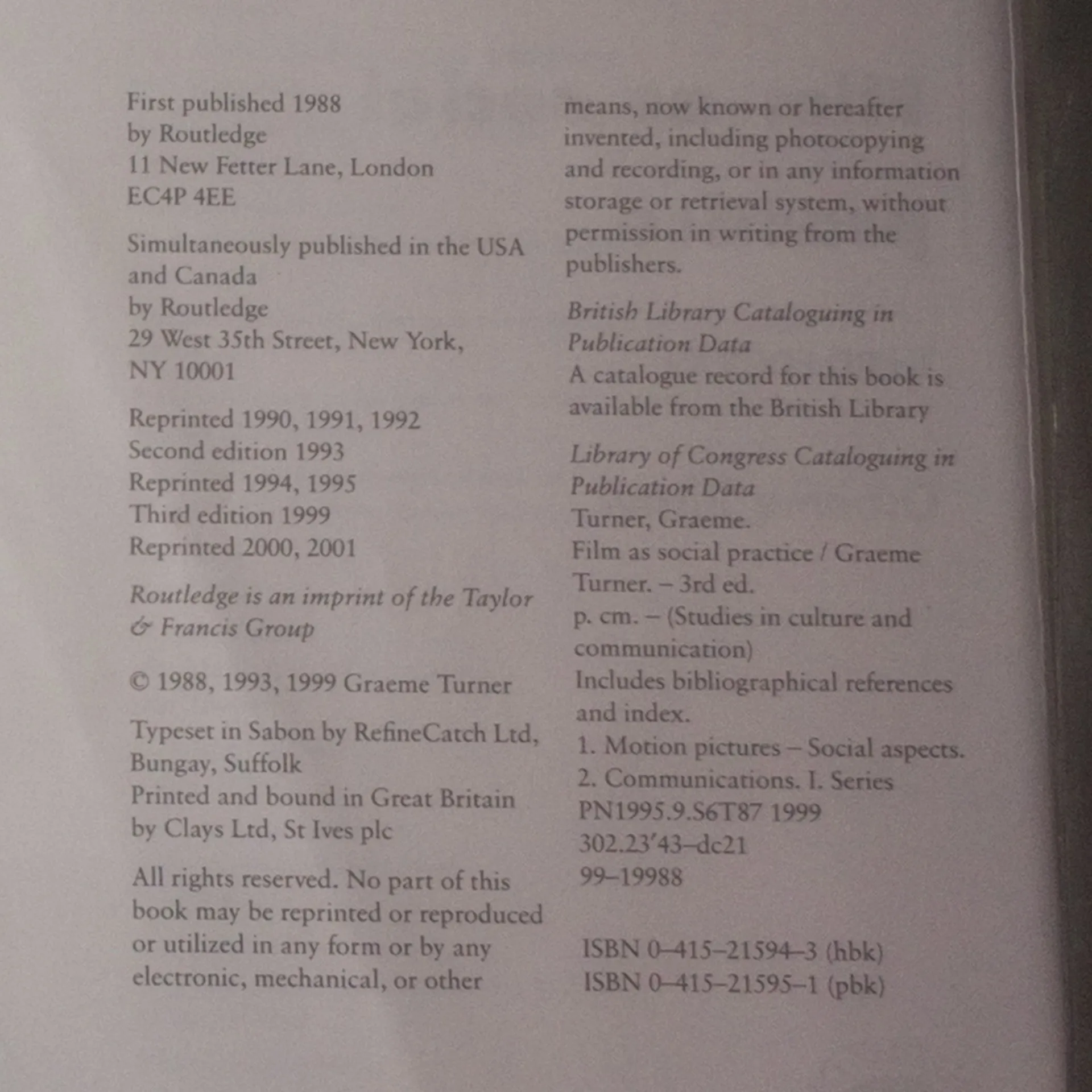
- Psychology Press
- Publicado en
- 2001
- Formato
- Tapa blanda
- Páginas
- 221
- ISBN10
- 0415215951
- ISBN13
- 9780415215954
- Serie
- Etiquetas
- No ficción, Arte / Cultura, Libros de texto, Escuela, Temática cinematográfica, Cine, Universidad
- Calificación
- 3,6 de 5
- Descripción
- This textbook explores the feature film as entertainment, as narrative and as cultural event. Graeme Turner provides an introduction to major theoretical issues in the history of film production and film studies, examining the function of film as a national cultural industry, and its place in our popular culture. This third edition includes: analysis of classic and popular contemporary films, now including "Scream 2", "The Wedding Singer" and "Lethal Weapon 4", with a selection of film stills; updated and expanded discussion of debates surrounding film narrative, feminist film theory, the film industry, including the New Hollywood, and audiences and spectatorship, including the rise of the multiplex. Arguments have been revised throughout to take into account late-1990s developments in film and cultural theory and changing cinematic trends.