

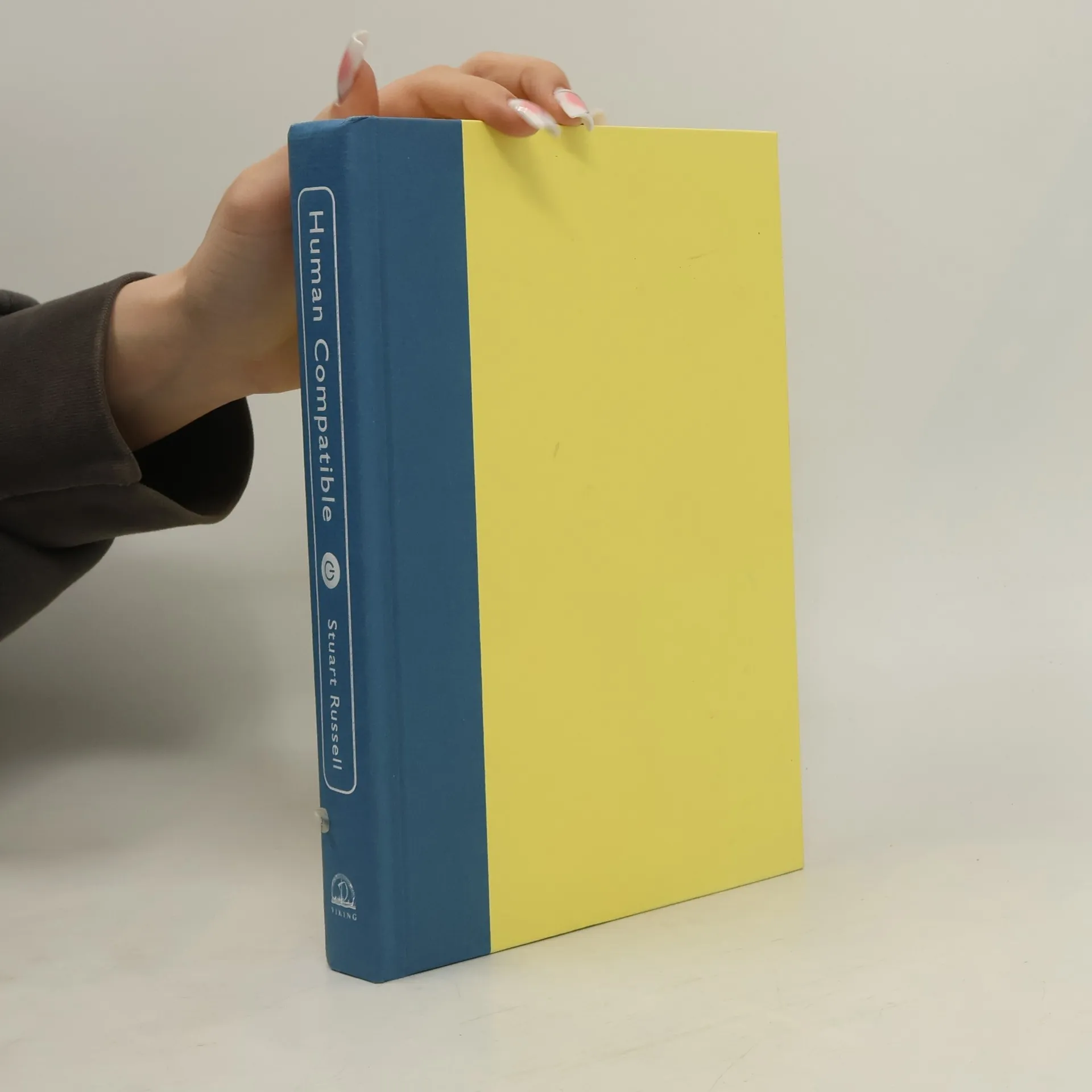
Más información sobre el libro
A leading artificial intelligence researcher explains why uncontrolled superhuman AI poses an existential threat to humanity and offers a new approach for successful coexistence with intelligent machines. Superhuman AI is often viewed as an impending disaster that could disrupt jobs, relationships, and civilization itself, leading to inevitable conflict between humans and machines. In this groundbreaking work, distinguished AI researcher Stuart Russell argues that this dire scenario can be avoided through a fundamental rethinking of AI. He examines the nature of intelligence in both humans and machines, highlighting the near-term benefits of AI, such as intelligent personal assistants and accelerated scientific research, while also addressing the potential for misuse, including lethal autonomous weapons and viral sabotage. If superhuman AI emerges, it could surpass human capabilities, raising concerns about control. Russell proposes a new foundation for AI, where machines are designed to be uncertain about human preferences, making them humble and altruistic, focused on pursuing human objectives rather than their own. This approach aims to create machines that are both deferential and beneficial. Russell emphasizes that solving the control problem is crucial for unlocking a future filled with promise, echoing his sentiment from a 2014 editorial with Stephen Hawking that the creation of AI could be humanity's greatest achieveme





Compra de libros
Human Compatible, Stuart J. Russell
- Idioma

- Publicado en
- 2019
Métodos de pago
Nos falta tu reseña aquí
- Título
- Human Compatible
- Subtítulo
- Artificial Intelligence and the Problem of Control
- Idioma
- Inglés
- Autores
- Stuart J. Russell
- Editorial
- Penguin Books
- Publicado en
- 2019
- Páginas
- 349
- ISBN10
- 0525558624
- ISBN13
- 9780525558620
- Serie
- Etiquetas
- No ficción, Ciencias sociales, Comercio, Negocios & Gestión, Tecnología & Ingeniería, Filosofía, Ordenadores & Internet, Ciencia, Tecnología, Marketing & Ventas, Inteligencia Artificial
- Calificación
- 4,05 de 5
- Descripción
- A leading artificial intelligence researcher explains why uncontrolled superhuman AI poses an existential threat to humanity and offers a new approach for successful coexistence with intelligent machines. Superhuman AI is often viewed as an impending disaster that could disrupt jobs, relationships, and civilization itself, leading to inevitable conflict between humans and machines. In this groundbreaking work, distinguished AI researcher Stuart Russell argues that this dire scenario can be avoided through a fundamental rethinking of AI. He examines the nature of intelligence in both humans and machines, highlighting the near-term benefits of AI, such as intelligent personal assistants and accelerated scientific research, while also addressing the potential for misuse, including lethal autonomous weapons and viral sabotage. If superhuman AI emerges, it could surpass human capabilities, raising concerns about control. Russell proposes a new foundation for AI, where machines are designed to be uncertain about human preferences, making them humble and altruistic, focused on pursuing human objectives rather than their own. This approach aims to create machines that are both deferential and beneficial. Russell emphasizes that solving the control problem is crucial for unlocking a future filled with promise, echoing his sentiment from a 2014 editorial with Stephen Hawking that the creation of AI could be humanity's greatest achieveme