

Parámetros
- 288 páginas
- 11 horas de lectura
Más información sobre el libro
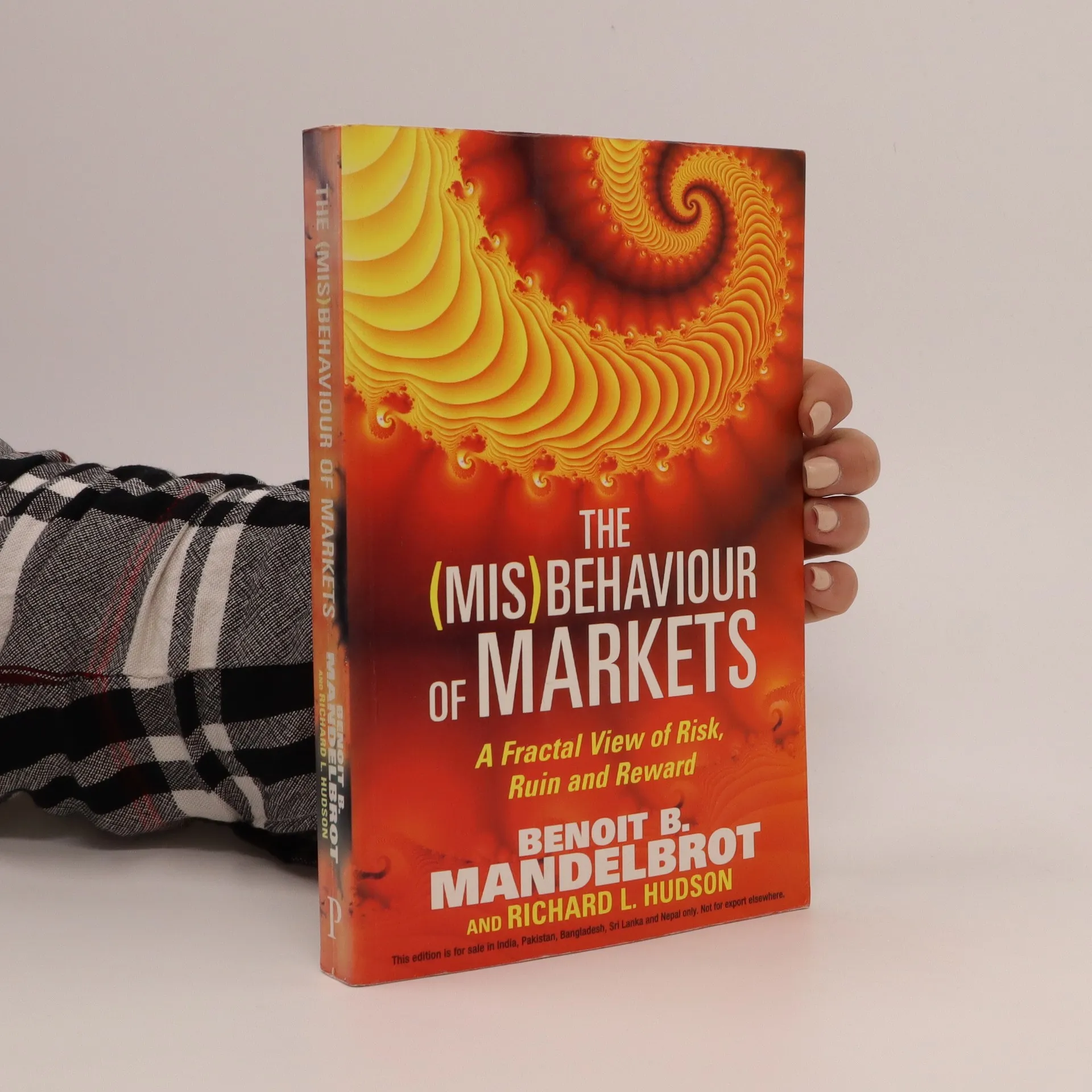
From the world-famous inventor of fractal geometry, a revolutionary new theory that turns on its head our understanding of how markets work. Fractal geometry is the mathematics of roughness: how to reduce the outline of a jagged leaf, a rocky coastline or static in a computer connection to a few simple mathematical properties - to make the complex simple. With his fractal tools, Benoit Mandelbrot has got to the bottom of how financial markets really work. He finds they have a shifting sense of time, a unique dimension and a wild kind of behaviour that makes them volatile, dangerous - and also beautiful. In Mandelbrot's fractal models, the complex gyrations of IBM's stock price, the FTSE 100, cotton trading and exchange rates can be reduced to straightforward formulae that yield a much more accurate description of the risks involved.



Compra de libros
The (mis)Behaviour of Markets, Benoît B. Mandelbrot, Richard L. Hudson
- Idioma

- Publicado en
- 2004
- product-detail.submit-box.info.binding
- (Tapa dura)
Métodos de pago
Nos falta tu reseña aquí
- Idioma
- Inglés
- Editorial
- Profile
- Publicado en
- 2004
- Formato
- Tapa dura
- Páginas
- 288
- ISBN10
- 1861977654
- ISBN13
- 9781861977656
- Serie
- Etiquetas
- No ficción, Comercio, Negocios & Gestión, Ciencia y Matemáticas, Ciencia, Economía, Matemáticas, Finanzas, Dinero
- Calificación
- 4,05 de 5
- Descripción
- From the world-famous inventor of fractal geometry, a revolutionary new theory that turns on its head our understanding of how markets work. Fractal geometry is the mathematics of roughness: how to reduce the outline of a jagged leaf, a rocky coastline or static in a computer connection to a few simple mathematical properties - to make the complex simple. With his fractal tools, Benoit Mandelbrot has got to the bottom of how financial markets really work. He finds they have a shifting sense of time, a unique dimension and a wild kind of behaviour that makes them volatile, dangerous - and also beautiful. In Mandelbrot's fractal models, the complex gyrations of IBM's stock price, the FTSE 100, cotton trading and exchange rates can be reduced to straightforward formulae that yield a much more accurate description of the risks involved.