



Más información sobre el libro
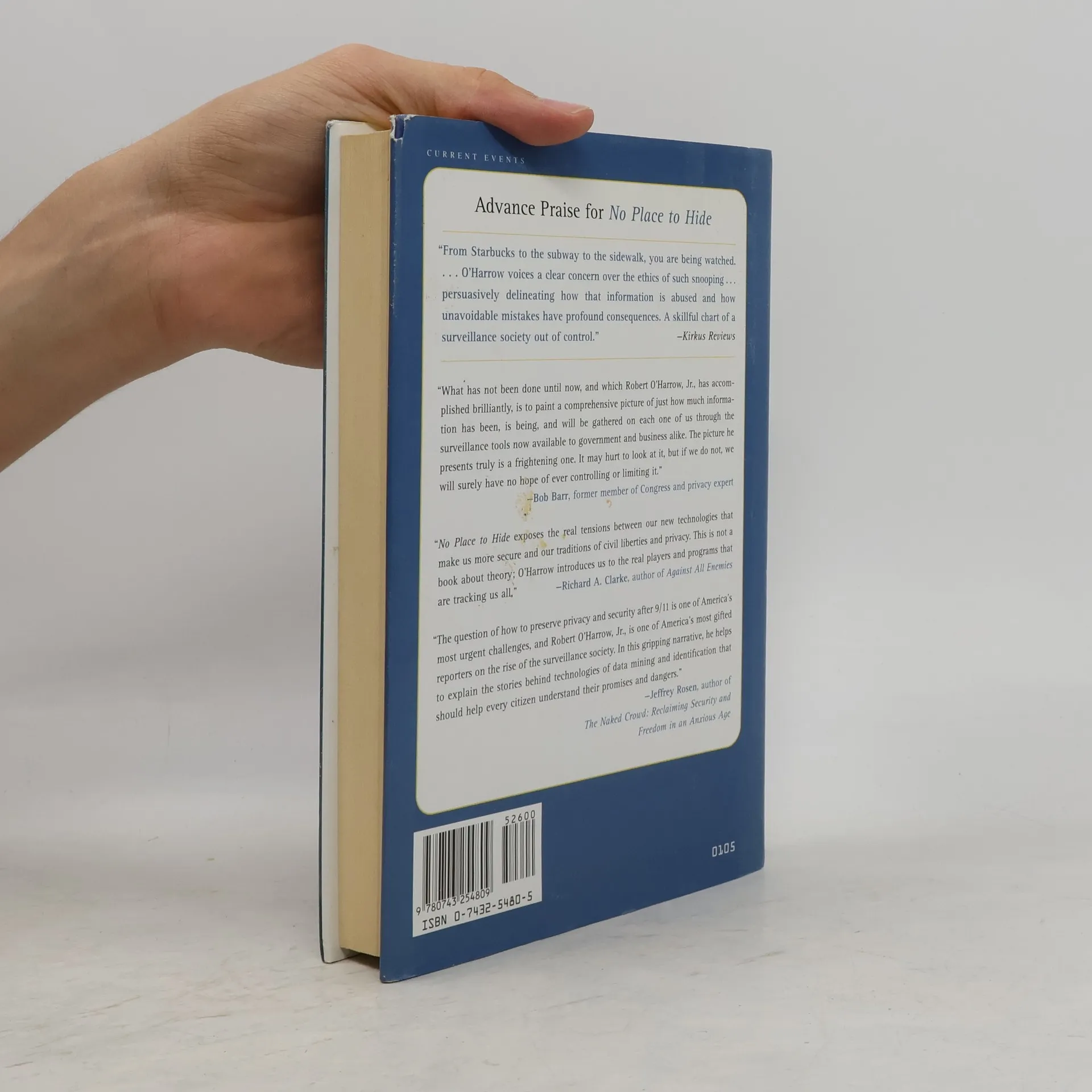
In "No Place to Hide," award-winning reporter Robert O'Harrow, Jr. explores the unsettling convergence of private data, technology companies, and government anti-terror initiatives post-9/11, leading to the emergence of a security-industrial complex. Drawing from extensive investigations, O'Harrow reveals how the government increasingly relies on vast private data reservoirs to enhance homeland security and combat terrorism. For instance, cell phone usage allows companies to track your location, while discount cards record and analyze your grocery and prescription purchases. Modern vehicles often come equipped with tracking devices, and software firms can create detailed link-analysis charts showing relationships among individuals. Astonishingly, anyone can purchase a comprehensive dossier on you for under fifty dollars, containing enough information for identity theft. This scenario, once deemed science fiction, is now commonplace as the information industry flourishes alongside government collaboration. O'Harrow provides insights into the key figures shaping this landscape, from software developers to counterintelligence officials, and scrutinizes the implications for civil liberties, autonomy, and privacy. He warns that this evolving security framework threatens to undermine fundamental societal values, leading us toward a surveillance society with minimal regulations. In this high-tech world of domestic intelligence, there


Compra de libros
No Place to Hide, Robert O'Harrow Jr.
- Idioma

- Publicado en
- 2005
- Encuadernación
- (Tapa dura),
- Estado del libro
- Bueno
- Precio
- 1,39 €
Métodos de pago
Nos falta tu reseña aquí
- Título
- No Place to Hide
- Idioma
- Inglés
- Autores
- Robert O'Harrow Jr.
- Editorial
- Free Press
- Publicado en
- 2005
- Formato
- Tapa dura
- Páginas
- 368
- ISBN10
- 0743254805
- ISBN13
- 9780743254809
- Serie
- Etiquetas
- No ficción, Tecnología & Ingeniería, Tecnología
- Calificación
- 1 de 5
- Descripción
- In "No Place to Hide," award-winning reporter Robert O'Harrow, Jr. explores the unsettling convergence of private data, technology companies, and government anti-terror initiatives post-9/11, leading to the emergence of a security-industrial complex. Drawing from extensive investigations, O'Harrow reveals how the government increasingly relies on vast private data reservoirs to enhance homeland security and combat terrorism. For instance, cell phone usage allows companies to track your location, while discount cards record and analyze your grocery and prescription purchases. Modern vehicles often come equipped with tracking devices, and software firms can create detailed link-analysis charts showing relationships among individuals. Astonishingly, anyone can purchase a comprehensive dossier on you for under fifty dollars, containing enough information for identity theft. This scenario, once deemed science fiction, is now commonplace as the information industry flourishes alongside government collaboration. O'Harrow provides insights into the key figures shaping this landscape, from software developers to counterintelligence officials, and scrutinizes the implications for civil liberties, autonomy, and privacy. He warns that this evolving security framework threatens to undermine fundamental societal values, leading us toward a surveillance society with minimal regulations. In this high-tech world of domestic intelligence, there