

Parámetros
Más información sobre el libro
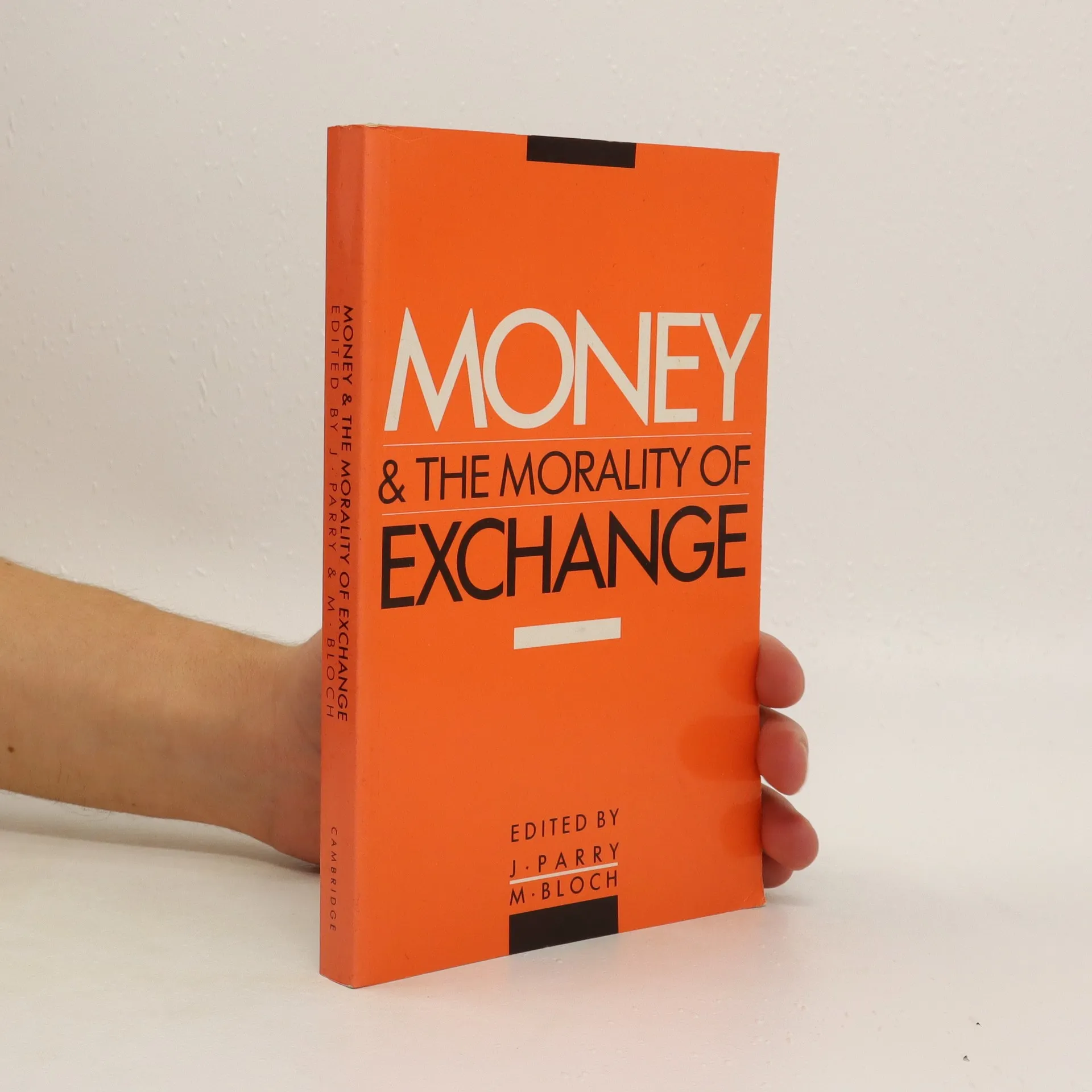
This volume explores the symbolic representation of money across various cultures, including those in South and Southeast Asia, Africa, and South America. It examines the moral evaluations of monetary versus other types of exchanges. The essays challenge many Western beliefs about money, such as the idea that it erodes community, depersonalizes relationships, and reduces qualitative differences to mere quantities. Instead of asserting that money directly alters worldviews, the focus is on how existing worldviews and economic systems shape specific representations of money. However, this relativistic view is nuanced when considering the broader system of exchange. A general pattern emerges, revealing two interconnected transactional orders, with many systems allowing for impersonal, competitive, and individualistic activities. This suggests that even in non-monetary economies, such features can exist in certain contexts, making it misleading to attribute them solely to money. Consequently, contrasts within cultures become contrasts between cultures, reinforcing the idea that money has the power to transform social relationships.
Compra de libros
Money and the morality of exchange, Jonathan P. Parry, Maurice Bloch
- Idioma

- Publicado en
- 1989
- Encuadernación
- (Tapa blanda)
Métodos de pago
Nos falta tu reseña aquí
- Título
- Money and the morality of exchange
- Idioma
- Inglés
- Autores
- Jonathan P. Parry, Maurice Bloch
- Editorial
- Cambridge University Press
- Publicado en
- 1989
- Formato
- Tapa blanda
- ISBN10
- 0521367743
- ISBN13
- 9780521367745
- Serie
- Etiquetas
- Comercio
- Calificación
- 3 de 5
- Descripción
- This volume explores the symbolic representation of money across various cultures, including those in South and Southeast Asia, Africa, and South America. It examines the moral evaluations of monetary versus other types of exchanges. The essays challenge many Western beliefs about money, such as the idea that it erodes community, depersonalizes relationships, and reduces qualitative differences to mere quantities. Instead of asserting that money directly alters worldviews, the focus is on how existing worldviews and economic systems shape specific representations of money. However, this relativistic view is nuanced when considering the broader system of exchange. A general pattern emerges, revealing two interconnected transactional orders, with many systems allowing for impersonal, competitive, and individualistic activities. This suggests that even in non-monetary economies, such features can exist in certain contexts, making it misleading to attribute them solely to money. Consequently, contrasts within cultures become contrasts between cultures, reinforcing the idea that money has the power to transform social relationships.