

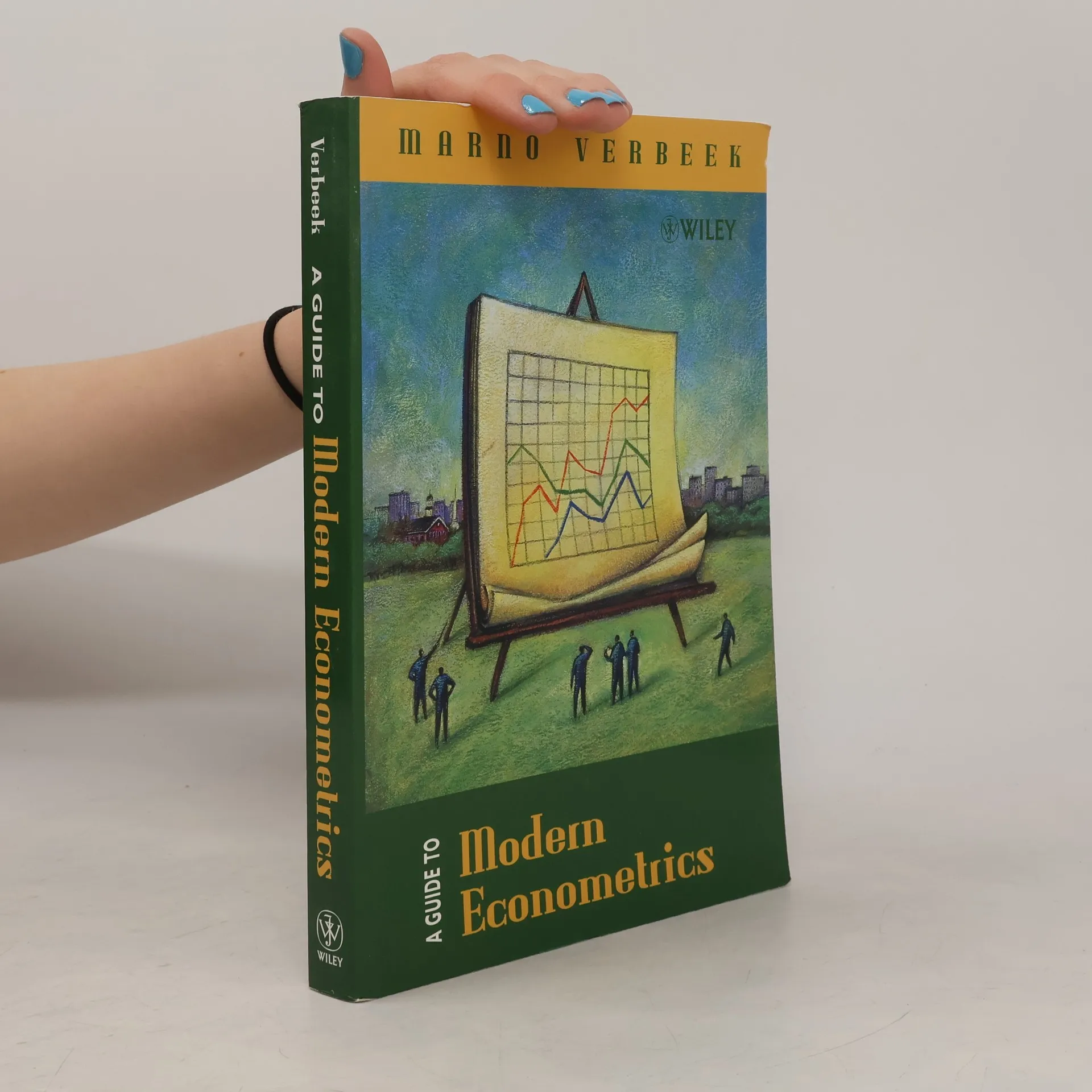
Más información sobre el libro
Marno Verbeek's intermediate level textbook explores a wide range of topics in modern econometrics and focuses on what is important for doing and understanding empirical work. A wide range of new topics are covered including time series analysis, limited dependent variables, cointegration and panel data analysis. FEATURES Concentrates on the intuition behind various techniques and their practical relevance rather than the formulae End of chapter exercises review key concepts in light of empircal examples discussed in the chapter Examples are drawn from a wide variety of fields including labour economics, environmental economics, finance, international economics and macroeconomics CONTENTS: Introduction; An Introduction to Linear Regression; Interpreting and Comparing Regression Models; Heteroskedasticity and Autocorrelation; Stochastic Regressors; Maximum Likelihood Estimation; Models with Limited Dependent Variables; Univariate Time Series Modelling; Multivariate Time Series Analysis; Models Based on Panel Data.


Compra de libros
A Guide to Modern Econometrics, Marno Verbeek
- Idioma

- Publicado en
- 2000
- Encuadernación
- (Tapa blanda)
Métodos de pago
Nos falta tu reseña aquí
- Título
- A Guide to Modern Econometrics
- Idioma
- Inglés
- Autores
- Marno Verbeek
- Editorial
- WILEY
- Publicado en
- 2000
- Formato
- Tapa blanda
- Páginas
- 400
- ISBN10
- 0471899828
- ISBN13
- 9780471899822
- Serie
- Etiquetas
- Comercio
- Calificación
- 3,6 de 5
- Descripción
- Marno Verbeek's intermediate level textbook explores a wide range of topics in modern econometrics and focuses on what is important for doing and understanding empirical work. A wide range of new topics are covered including time series analysis, limited dependent variables, cointegration and panel data analysis. FEATURES Concentrates on the intuition behind various techniques and their practical relevance rather than the formulae End of chapter exercises review key concepts in light of empircal examples discussed in the chapter Examples are drawn from a wide variety of fields including labour economics, environmental economics, finance, international economics and macroeconomics CONTENTS: Introduction; An Introduction to Linear Regression; Interpreting and Comparing Regression Models; Heteroskedasticity and Autocorrelation; Stochastic Regressors; Maximum Likelihood Estimation; Models with Limited Dependent Variables; Univariate Time Series Modelling; Multivariate Time Series Analysis; Models Based on Panel Data.