

Valoración del libro
Parámetros
- 79 páginas
- 3 horas de lectura
Más información sobre el libro
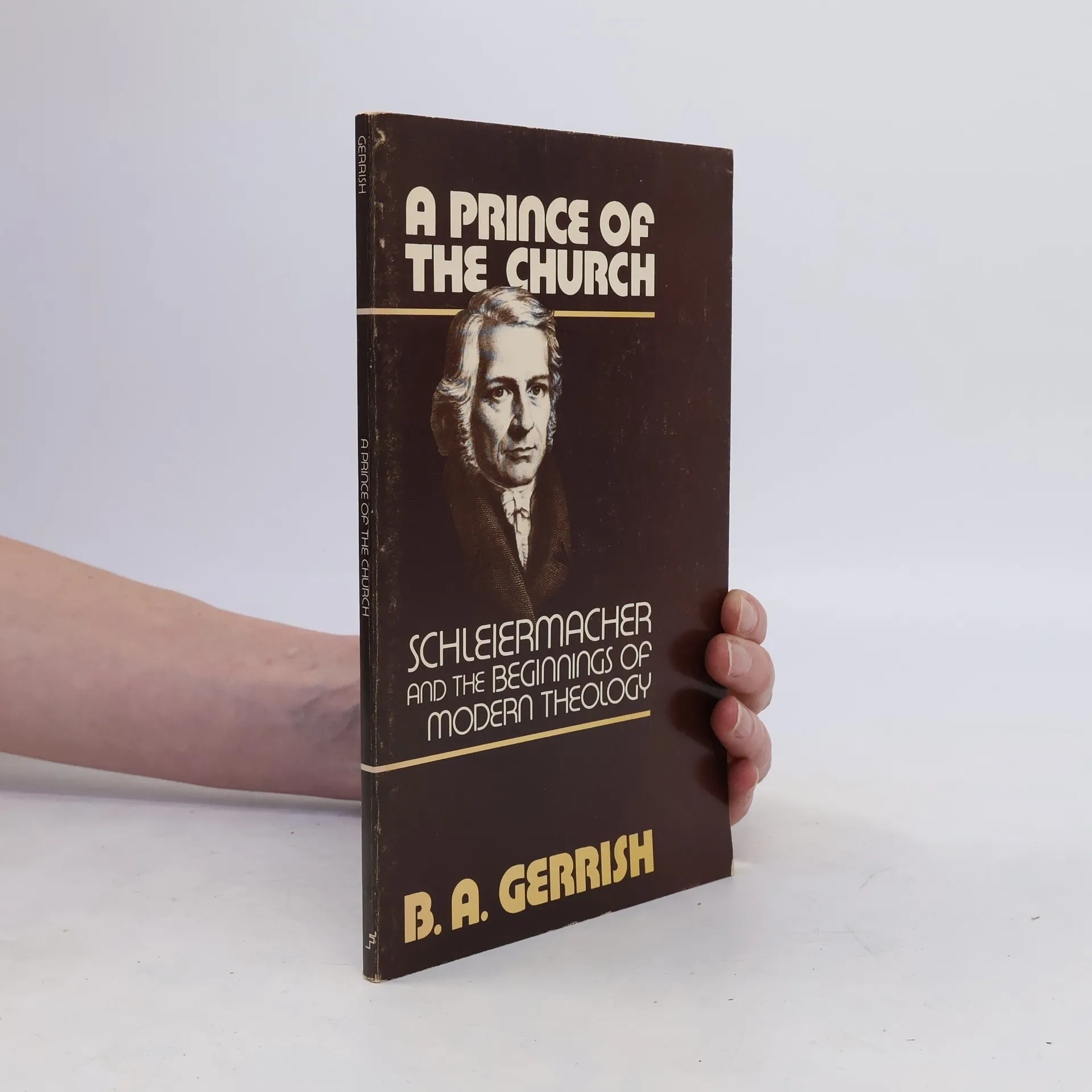
Although Friedrich Schleiermacher (1768-1834) is commonly regarded as the father of modern theology, many contemporary Christians think of him only as a difficult and outmoded German theologian. With this work, B.A. Gerrish offers a fresh view of Schleiermacher that breaks through the stereotypes and places Schleiermacher's work as a theologian into a broader context. Gerrish examines the elements of Schleiermacher's twofold theology - a specifically Christian relationship with Christ and a universally human consciousness of God - in the hope that this view of Schleiermacher's theological enterprise will lead contemporary Christians to reappraise him as a church theologian in the legitimate succession of Luther and Calvin.
Compra de libros
A Prince of the Church, B. A. Gerrish
- Idioma

- Publicado en
- 1984
- product-detail.submit-box.info.binding
- (Tapa blanda)
Métodos de pago
Nos falta tu reseña aquí
- Título
- A Prince of the Church
- Subtítulo
- Schleiermacher and the Beginnings of Modern Theology
- Idioma
- Inglés
- Autores
- B. A. Gerrish
- Editorial
- Augsburg Fortress Publishing
- Publicado en
- 1984
- Formato
- Tapa blanda
- Páginas
- 79
- ISBN10
- 0800617878
- ISBN13
- 9780800617875
- Serie
- Etiquetas
- No ficción, Tema histórico, Historia, Historias reales, Esoterismo y religión, Biografías, Temas religiosos, Religión, Teología
- Calificación
- 4,4 de 5
- Descripción
- Although Friedrich Schleiermacher (1768-1834) is commonly regarded as the father of modern theology, many contemporary Christians think of him only as a difficult and outmoded German theologian. With this work, B.A. Gerrish offers a fresh view of Schleiermacher that breaks through the stereotypes and places Schleiermacher's work as a theologian into a broader context. Gerrish examines the elements of Schleiermacher's twofold theology - a specifically Christian relationship with Christ and a universally human consciousness of God - in the hope that this view of Schleiermacher's theological enterprise will lead contemporary Christians to reappraise him as a church theologian in the legitimate succession of Luther and Calvin.