

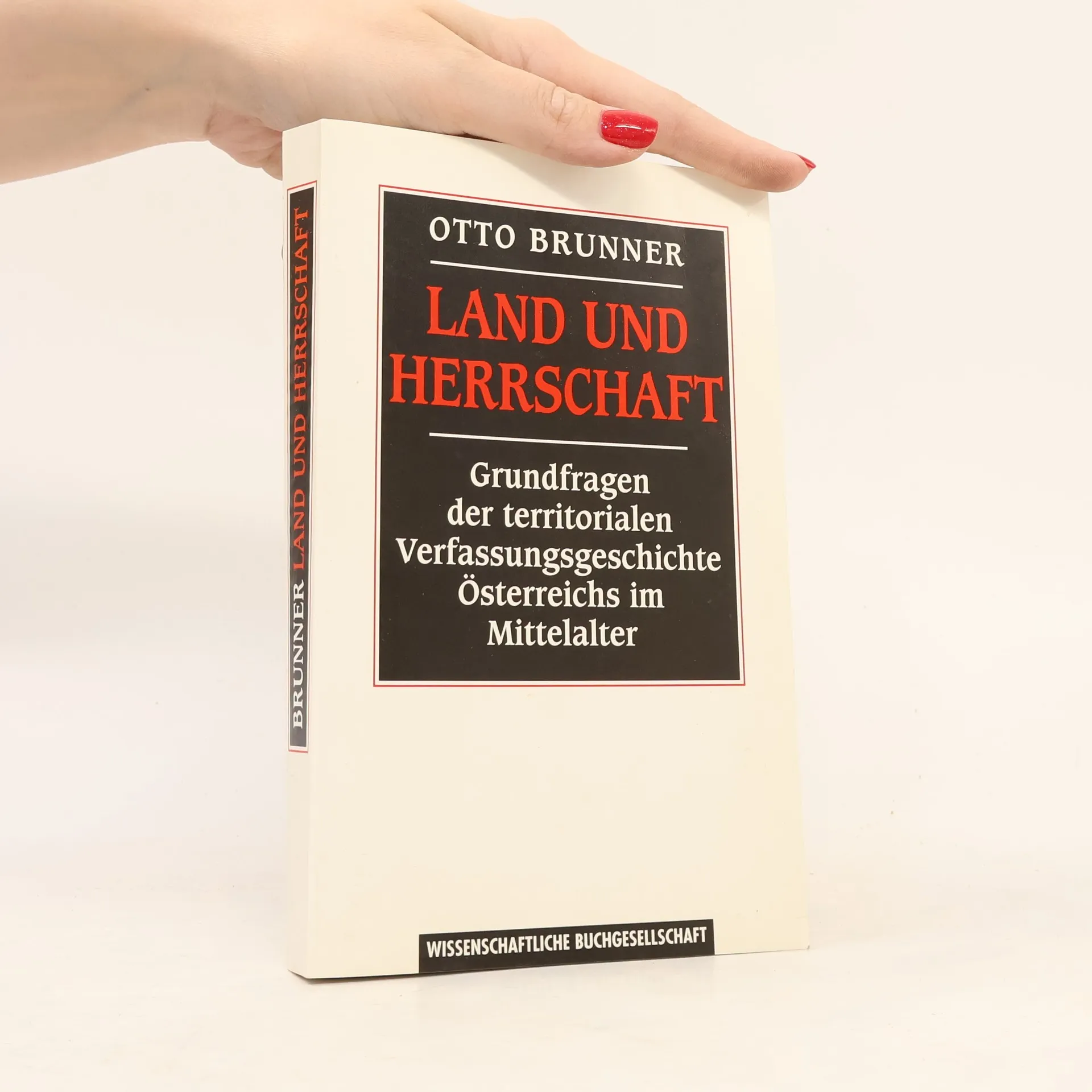


Land und Herrschaft
Grundfragen der territorialen Verfassungsgeschichte Österreichs im Mittelalter
Autores
Valoración del libro
Más información sobre el libro
Otto Brunner contends that prevailing notions of medieval social and constitutional history had been shaped by the nineteenth-century nation state and its "liberal" order. Whereas a sharp distinction between the public and the private might be appropriate to descriptions of contemporary society, such a dichotomy could not be projected back onto the Middle Ages. Focusing particularly on forms of lordship in late medieval Austria, Brunner found neither a "state" in the modern sense nor any distinction between the public and private spheres. Behind the apparent disorder of late medieval political life, however, Brunner discovered a coherent legal and constitutional order rooted in the the rights and obligations of noble lordship. In carefully reconstructing this order, Brunner's study weaves together social, legal, constitutional, and intellectual history.

Publicación


Compra de libros
Land und Herrschaft, Otto Brunner
- Idioma

- Publicado en
- 1965
- Encuadernación
- (Tapa blanda)
Métodos de pago
Nos falta tu reseña aquí
- Título
- Land und Herrschaft
- Subtítulo
- Grundfragen der territorialen Verfassungsgeschichte Österreichs im Mittelalter
- Idioma
- Alemán
- Autores
- Otto Brunner
- Editorial
- Wissenschaftliche Buchgesellschaft
- Publicado en
- 1965
- Formato
- Tapa blanda
- Páginas
- 463
- ISBN10
- 3534094662
- ISBN13
- 9783534094660
- Serie
- Etiquetas
- Tema histórico, Medieval
- Título original
- Land und Herrschaft
- Calificación
- 3,7 de 5
- Descripción
- Otto Brunner contends that prevailing notions of medieval social and constitutional history had been shaped by the nineteenth-century nation state and its "liberal" order. Whereas a sharp distinction between the public and the private might be appropriate to descriptions of contemporary society, such a dichotomy could not be projected back onto the Middle Ages. Focusing particularly on forms of lordship in late medieval Austria, Brunner found neither a "state" in the modern sense nor any distinction between the public and private spheres. Behind the apparent disorder of late medieval political life, however, Brunner discovered a coherent legal and constitutional order rooted in the the rights and obligations of noble lordship. In carefully reconstructing this order, Brunner's study weaves together social, legal, constitutional, and intellectual history.