

Más información sobre el libro
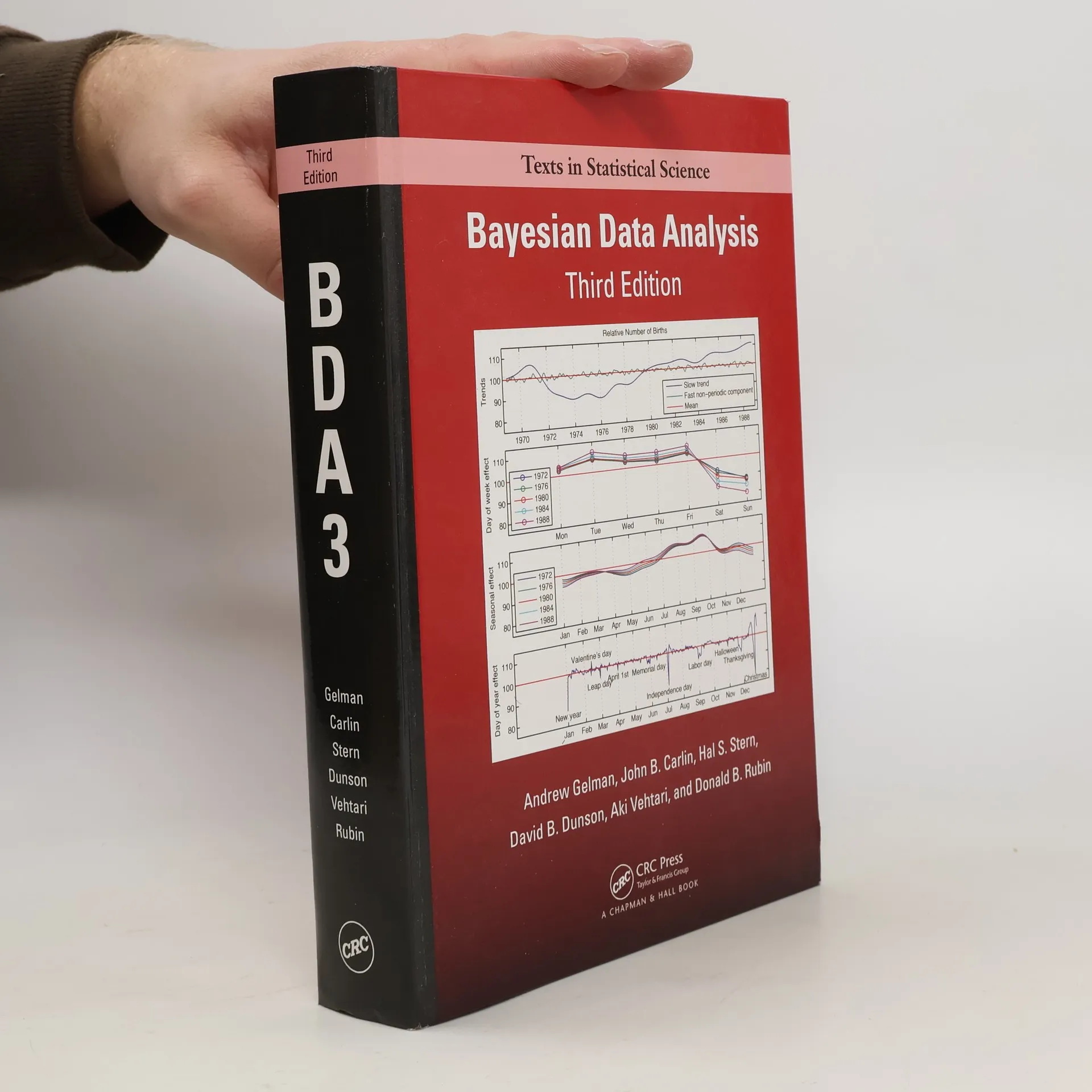
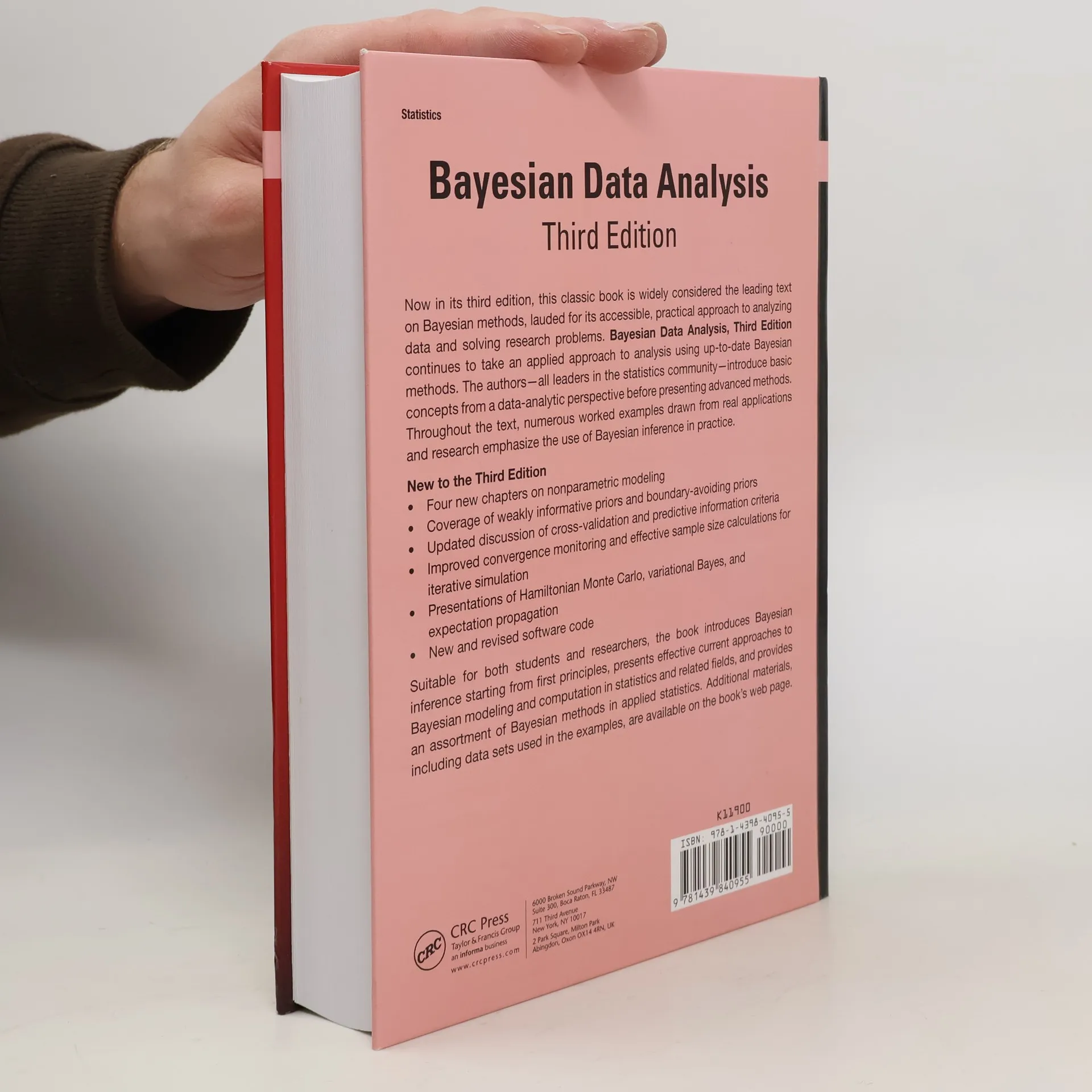
This book serves three key roles: as an introductory text on Bayesian inference from first principles, a graduate-level guide on current Bayesian modeling and computational approaches, and a practical handbook for applied statistics users and researchers. While the early sections are introductory, the content is not elementary and requires a foundation in basic probability, statistics, elementary calculus, and linear algebra. Chapter 1 provides a review of probability notation and outlines the assumed knowledge. The book emphasizes practical applications, recognizing that readers should have experience in probability, statistics, and linear algebra with a strong computational focus. Merely presenting an introductory text would leave readers lacking guidance for real-world applications, especially where Bayesian methods align with traditional non-Bayesian analyses. Conversely, introducing advanced methods without foundational concepts would be inadequate. The text includes a variety of worked examples from real applications to illustrate current Bayesian methodologies. To maintain clarity, bibliographic notes are provided at the end of each chapter, along with a comprehensive list of references at the conclusion of the book.


Compra de libros
Bayesian Data Analysis, Autores varios
- Idioma

- Publicado en
- 2013
- product-detail.submit-box.info.binding
- (Tapa dura)
Métodos de pago
Nos falta tu reseña aquí
- Título
- Bayesian Data Analysis
- Idioma
- Inglés
- Autores
- Autores varios
- Editorial
- CRC Press
- Publicado en
- 2013
- Formato
- Tapa dura
- ISBN10
- 1439840954
- ISBN13
- 9781439840955
- Serie
- Etiquetas
- No ficción, Libros de texto, Tecnología & Ingeniería, Guías y Manuales, Ordenadores & Internet, Ciencia, Tecnología, Libros de texto de matemáticas
- Calificación
- 4,35 de 5
- Descripción
- This book serves three key roles: as an introductory text on Bayesian inference from first principles, a graduate-level guide on current Bayesian modeling and computational approaches, and a practical handbook for applied statistics users and researchers. While the early sections are introductory, the content is not elementary and requires a foundation in basic probability, statistics, elementary calculus, and linear algebra. Chapter 1 provides a review of probability notation and outlines the assumed knowledge. The book emphasizes practical applications, recognizing that readers should have experience in probability, statistics, and linear algebra with a strong computational focus. Merely presenting an introductory text would leave readers lacking guidance for real-world applications, especially where Bayesian methods align with traditional non-Bayesian analyses. Conversely, introducing advanced methods without foundational concepts would be inadequate. The text includes a variety of worked examples from real applications to illustrate current Bayesian methodologies. To maintain clarity, bibliographic notes are provided at the end of each chapter, along with a comprehensive list of references at the conclusion of the book.