

Parámetros
Más información sobre el libro
Kierkegaard concluded his studies in theology and philosophy with a dissertation on irony, which became the foundation of his thought and writing. He focused on Socratic irony, analyzed through Xenophon, Plato, and Aristophanes. He views Socrates as an independent figure, distinct from Plato's dialogues, and defends Aristophanes' non-philosophical approach, which better captures Socrates' sense of irony. Aristophanes' negative portrayal of Socrates paradoxically reveals what Socrates aimed to achieve through irony—questioning the presumed ownership of truth and knowledge. Ironical questioning leads to introspection and the search for personal existential answers. Kierkegaard learns the mastery of irony from Socrates and seeks to disrupt the contemporary leveling and faith in science and progress that suppress individuality. He believes people suffer from an excess of knowledge that obscures their personal existence. This work serves as the starting point for Kierkegaard's oeuvre and contains the seeds of existentialism. Irony liberates but does not provide a positive guide; it represents "absolute negativity" and the first step toward self-discovery. Kierkegaard adhered to the maxim "know thyself" throughout his work, with irony as his constant companion. He further reflects on the irony of romantic authors and praises Shakespeare's controlled irony, which allows characters to remain "their own artists."


Compra de libros
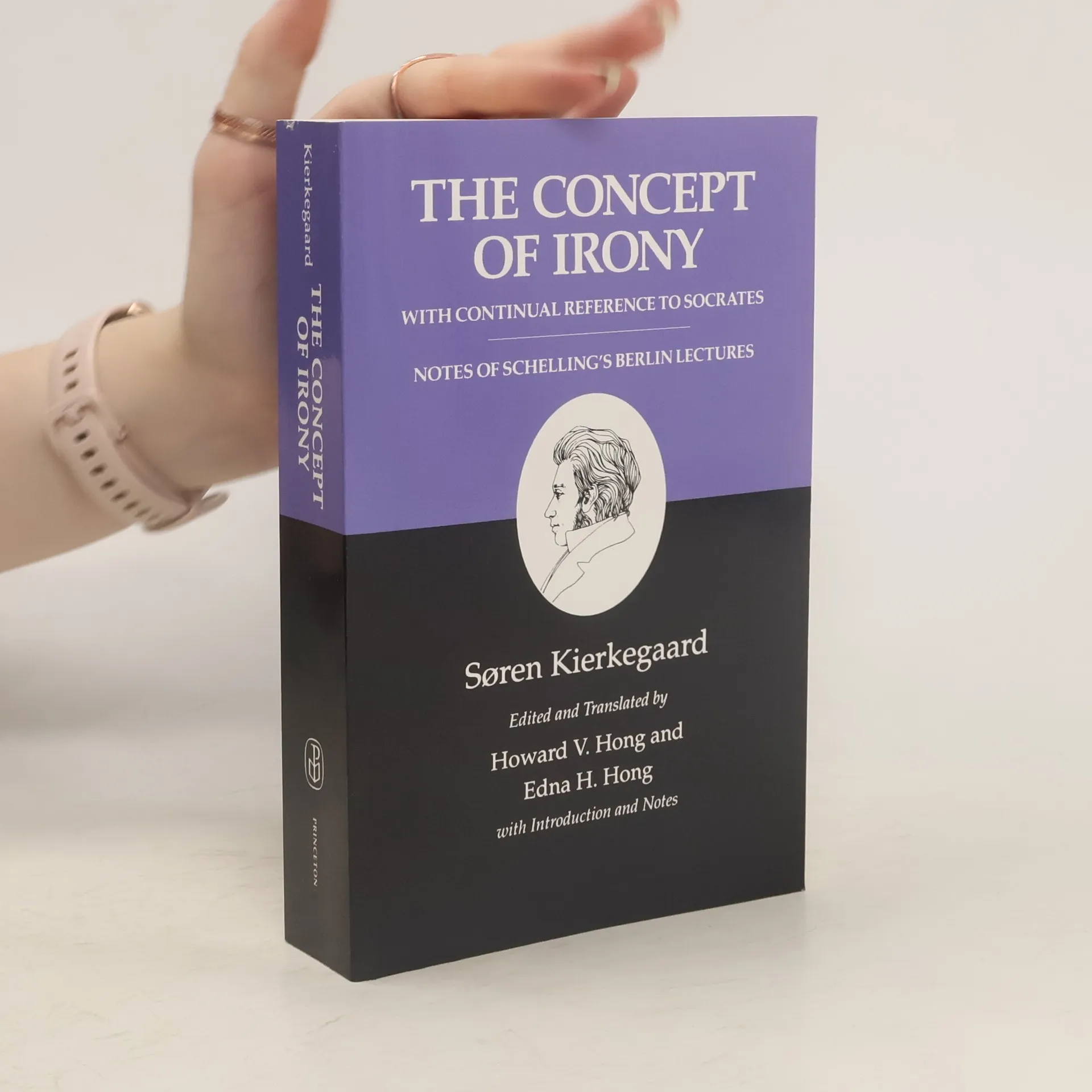
The Concept of Irony, Soren Kierkegaard, Howard V. Howard Vincent Hong, Edna H. Edna Hatlestad Hong
- Idioma

- Publicado en
- 1992
- Encuadernación
- (Tapa blanda)
Métodos de pago
Nadie lo ha calificado todavía.
- Título
- The Concept of Irony
- Idioma
- Inglés
- Editorial
- Princeton University Press
- Publicado en
- 1992
- Formato
- Tapa blanda
- Serie
- Descripción
- Kierkegaard concluded his studies in theology and philosophy with a dissertation on irony, which became the foundation of his thought and writing. He focused on Socratic irony, analyzed through Xenophon, Plato, and Aristophanes. He views Socrates as an independent figure, distinct from Plato's dialogues, and defends Aristophanes' non-philosophical approach, which better captures Socrates' sense of irony. Aristophanes' negative portrayal of Socrates paradoxically reveals what Socrates aimed to achieve through irony—questioning the presumed ownership of truth and knowledge. Ironical questioning leads to introspection and the search for personal existential answers. Kierkegaard learns the mastery of irony from Socrates and seeks to disrupt the contemporary leveling and faith in science and progress that suppress individuality. He believes people suffer from an excess of knowledge that obscures their personal existence. This work serves as the starting point for Kierkegaard's oeuvre and contains the seeds of existentialism. Irony liberates but does not provide a positive guide; it represents "absolute negativity" and the first step toward self-discovery. Kierkegaard adhered to the maxim "know thyself" throughout his work, with irony as his constant companion. He further reflects on the irony of romantic authors and praises Shakespeare's controlled irony, which allows characters to remain "their own artists."