



Más información sobre el libro
Through his death on the cross, Christ atoned for sin and reconciled people to God. New Testament authors utilized various metaphors to describe this act, leading to diverse theories of atonement throughout Christian history. While Christ's sacrifice is central to the faith, the exact mechanism of how it achieves salvation remains controversial for many. In this work, William Lane Craig conducts an interdisciplinary investigation into this vital doctrine, drawing from Old and New Testament studies, historical theology, and analytic philosophy. The study unfolds in three parts: first, Craig examines the biblical basis of atonement, highlighting the range of motifs used to characterize it. Next, he discusses alternative theories from prominent premodern Christian thinkers. Finally, Craig engages with the philosophy of law, presenting a coherent understanding of atonement through penal substitution. He interacts with contemporary systematic theories to establish a position that is both scripturally faithful and philosophically robust. The result is a multifaceted perspective that portrays Christ's suffering as a substitutionary, representational, and redemptive act that satisfies divine justice, while also addressing the rich Old Testament imagery that early Christians used to explain how the sinless Christ saved his people from sin's guilt.
Compra de libros
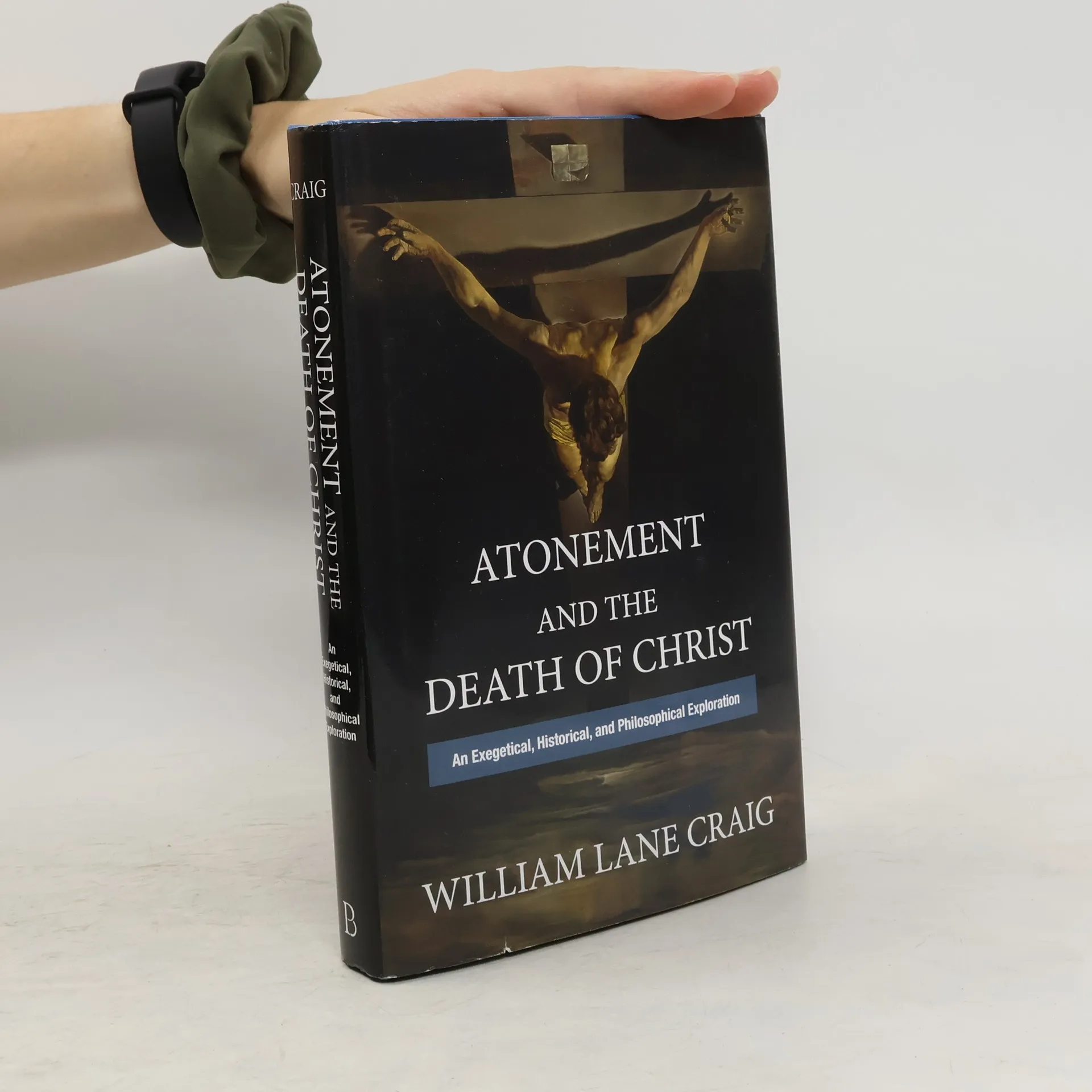
Atonement and the Death of Christ, William Lane Craig
- Idioma

- Publicado en
- 2020
- Encuadernación
- (Tapa dura)
Métodos de pago
Nos falta tu reseña aquí
- Título
- Atonement and the Death of Christ
- Idioma
- Inglés
- Autores
- William Lane Craig
- Editorial
- Baylor University Press
- Publicado en
- 2020
- Formato
- Tapa dura
- Páginas
- 328
- ISBN10
- 1481312049
- ISBN13
- 9781481312042
- Serie
- Categorías
- Etiquetas
- Crucifixión
- Calificación
- 4,4 de 5
- Descripción
- Through his death on the cross, Christ atoned for sin and reconciled people to God. New Testament authors utilized various metaphors to describe this act, leading to diverse theories of atonement throughout Christian history. While Christ's sacrifice is central to the faith, the exact mechanism of how it achieves salvation remains controversial for many. In this work, William Lane Craig conducts an interdisciplinary investigation into this vital doctrine, drawing from Old and New Testament studies, historical theology, and analytic philosophy. The study unfolds in three parts: first, Craig examines the biblical basis of atonement, highlighting the range of motifs used to characterize it. Next, he discusses alternative theories from prominent premodern Christian thinkers. Finally, Craig engages with the philosophy of law, presenting a coherent understanding of atonement through penal substitution. He interacts with contemporary systematic theories to establish a position that is both scripturally faithful and philosophically robust. The result is a multifaceted perspective that portrays Christ's suffering as a substitutionary, representational, and redemptive act that satisfies divine justice, while also addressing the rich Old Testament imagery that early Christians used to explain how the sinless Christ saved his people from sin's guilt.