

Más información sobre el libro
In this book, John B. Davis examines the change and development in Keynes's philosophical thinking, from his earliest work through to The General Theory, arguing that Keynes came to believe himself mistaken about a number of his early philosophical concepts. The author begins by looking at the unpublished Apostles papers, written under the influence of the philosopher G.E. Moore. These display the tensions in Keynes's early philosophical views, and outline his philosophical concepts of the time, including the concept of intuition. Davis then shows how development and change in Keynes's philosophical thinking affected the development of his later economic thinking, and goes on to demonstrate how Keynes's later philosophy is implicit in the economic argument of The General Theory. He argues that Keynes's philosophy had by this time changed radically, that he had adjusted and revised his earlier philosophical thinking, and had abandoned the concept of intuition for the concept of convention. The author sees this as being the central idea in The General Theory, and looks at the philosophical nature of this concept of convention in detail.
Compra de libros
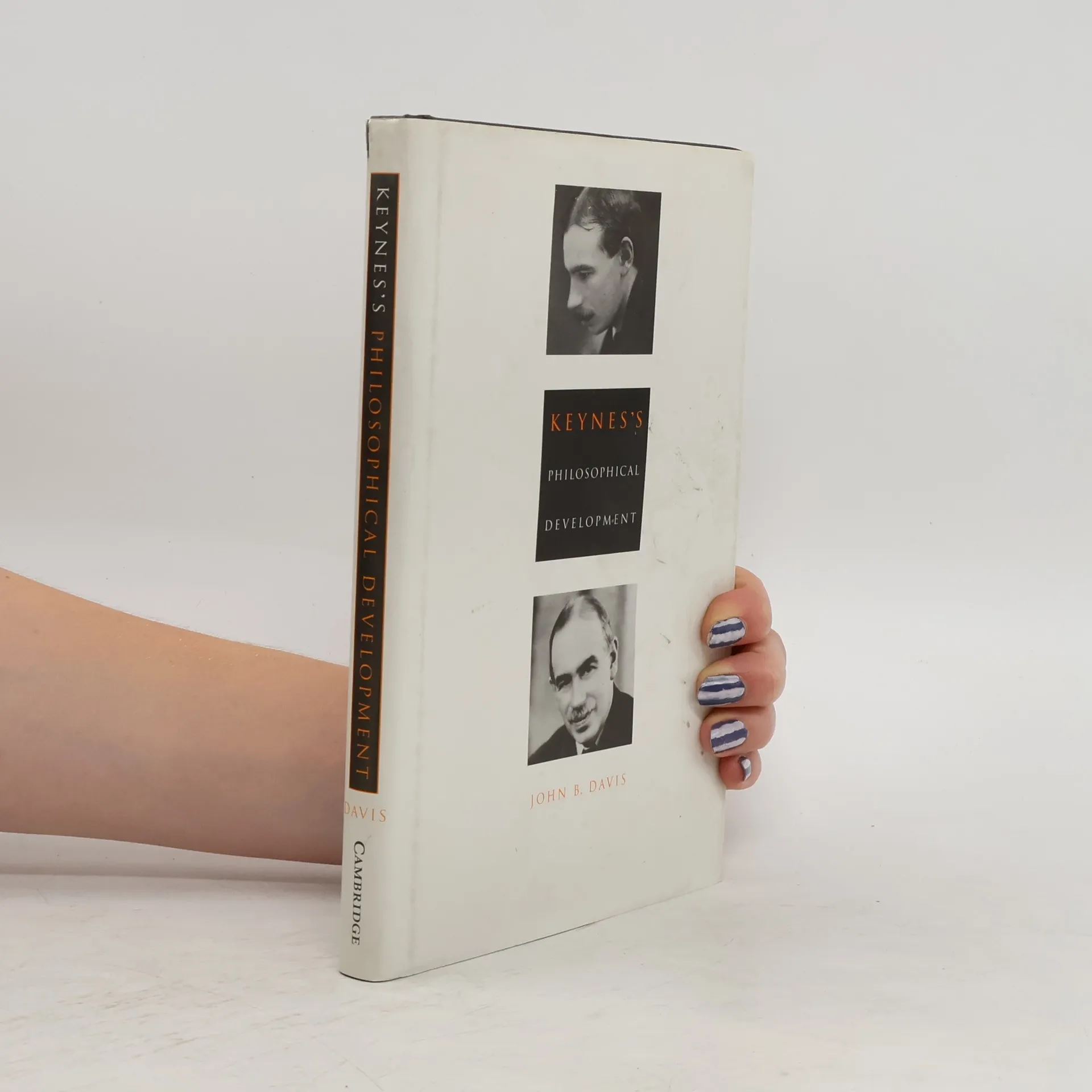
Keynes's Philosophical Development, John Davis
- Idioma

- Publicado en
- 1994
- Encuadernación
- (Tapa dura)
Métodos de pago
Nadie lo ha calificado todavía.
- Título
- Keynes's Philosophical Development
- Idioma
- Inglés
- Autores
- John Davis
- Editorial
- Cambridge University Press
- Publicado en
- 1994
- Formato
- Tapa dura
- Páginas
- 238
- ISBN10
- 0521419026
- ISBN13
- 9780521419024
- Serie
- Etiquetas
- Temática filosófica
- Descripción
- In this book, John B. Davis examines the change and development in Keynes's philosophical thinking, from his earliest work through to The General Theory, arguing that Keynes came to believe himself mistaken about a number of his early philosophical concepts. The author begins by looking at the unpublished Apostles papers, written under the influence of the philosopher G.E. Moore. These display the tensions in Keynes's early philosophical views, and outline his philosophical concepts of the time, including the concept of intuition. Davis then shows how development and change in Keynes's philosophical thinking affected the development of his later economic thinking, and goes on to demonstrate how Keynes's later philosophy is implicit in the economic argument of The General Theory. He argues that Keynes's philosophy had by this time changed radically, that he had adjusted and revised his earlier philosophical thinking, and had abandoned the concept of intuition for the concept of convention. The author sees this as being the central idea in The General Theory, and looks at the philosophical nature of this concept of convention in detail.