



Parámetros
- 348 páginas
- 13 horas de lectura
Más información sobre el libro
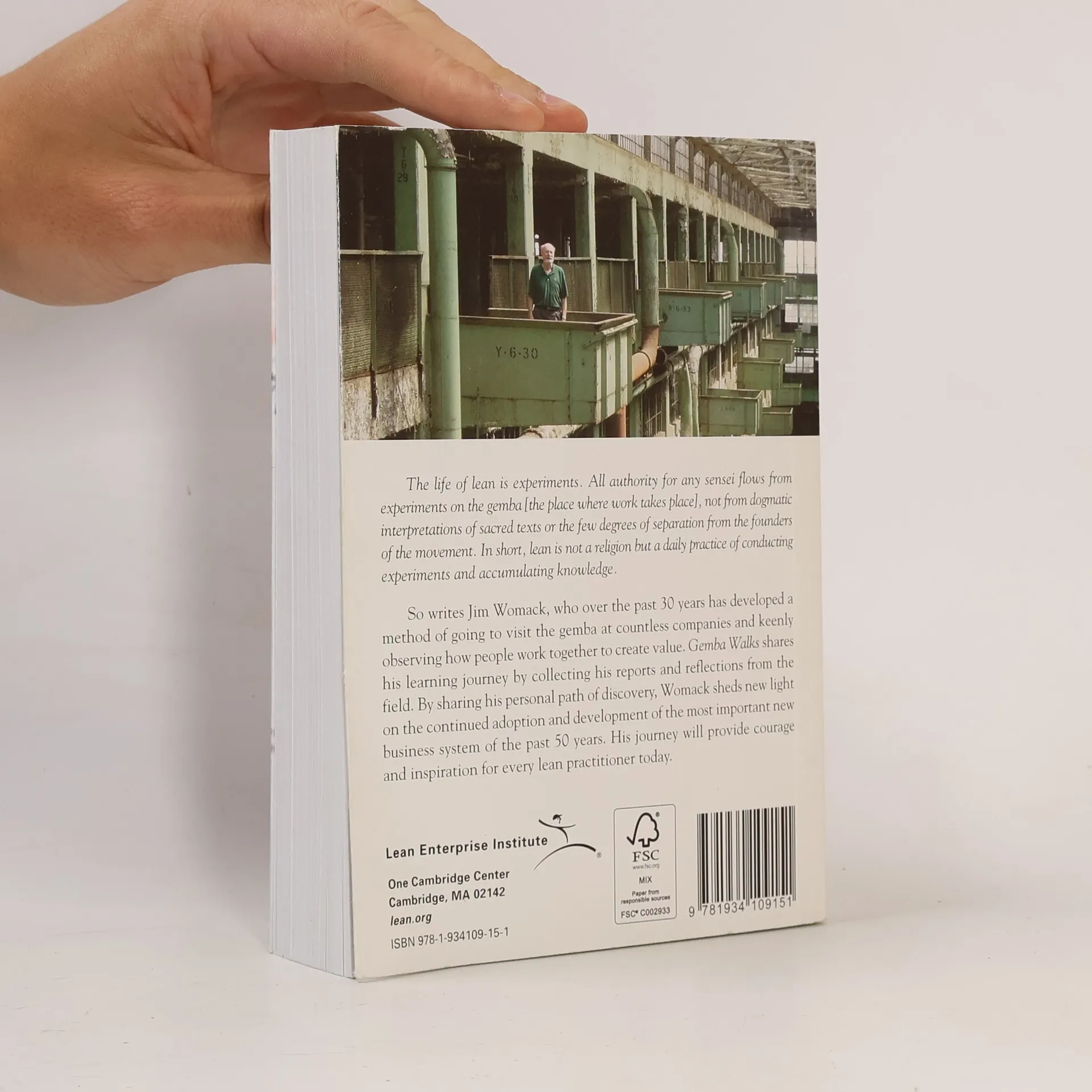
The life of lean revolves around experiments, with authority stemming from real-world observations at the gemba, rather than rigid interpretations of doctrine. Jim Womack emphasizes that lean is a daily practice of experimentation and knowledge accumulation. Over three decades, he has visited numerous companies to observe how teams create value, sharing his insights with the Lean Community through a monthly letter. In Gemba Walks, he compiles and reorganizes these letters, adding new material for context. The book explores various lean principles and the essential practice of "go see, ask why, and show respect." Womack discusses the need for organizations to prioritize continuous improvement over heroics, explaining how "good" employees can become ineffective in flawed processes. He highlights the importance of empowering workers to identify and solve their own issues, and how short-term lean tool gains can lead to lasting change through effective management. Furthermore, he describes the lean manager's role as one of relentless inquiry into organizational challenges, probing root causes, and leading experiments to identify effective solutions. Womack's personal journey of discovery offers valuable insights into the transformative potential of lean practices.
Compra de libros
Gemba Walks, James P. Womack, John Shook
- Idioma

- Publicado en
- 2011
- Encuadernación
- (Tapa blanda)
Métodos de pago
Nos falta tu reseña aquí
- Título
- Gemba Walks
- Idioma
- Inglés
- Autores
- James P. Womack, John Shook
- Editorial
- Lean Enterprises Inst Inc
- Publicado en
- 2011
- Formato
- Tapa blanda
- Páginas
- 348
- ISBN10
- 1934109150
- ISBN13
- 9781934109151
- Serie
- Etiquetas
- Comercio, Tecnología, Liderazgo
- Calificación
- 3,85 de 5
- Descripción
- The life of lean revolves around experiments, with authority stemming from real-world observations at the gemba, rather than rigid interpretations of doctrine. Jim Womack emphasizes that lean is a daily practice of experimentation and knowledge accumulation. Over three decades, he has visited numerous companies to observe how teams create value, sharing his insights with the Lean Community through a monthly letter. In Gemba Walks, he compiles and reorganizes these letters, adding new material for context. The book explores various lean principles and the essential practice of "go see, ask why, and show respect." Womack discusses the need for organizations to prioritize continuous improvement over heroics, explaining how "good" employees can become ineffective in flawed processes. He highlights the importance of empowering workers to identify and solve their own issues, and how short-term lean tool gains can lead to lasting change through effective management. Furthermore, he describes the lean manager's role as one of relentless inquiry into organizational challenges, probing root causes, and leading experiments to identify effective solutions. Womack's personal journey of discovery offers valuable insights into the transformative potential of lean practices.