

Agotado


Parámetros
- 366 páginas
- 13 horas de lectura
Más información sobre el libro
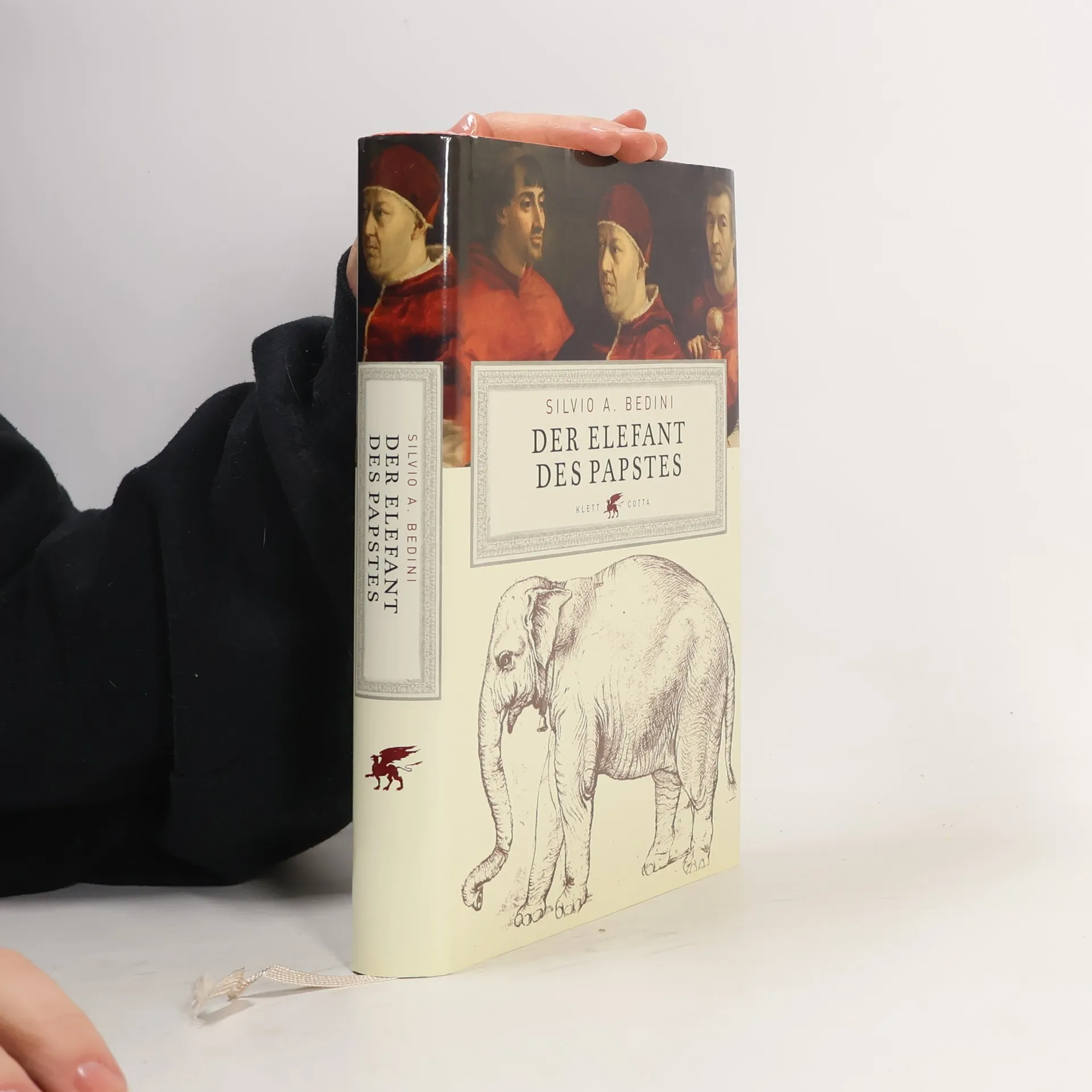
Rome, 1514. It is the high summer of the Italian Renaissance. The Turks have extinguished Constantinople, Rome's thousand-year rival. The ships of Portugal and Spain are gaining access to "new" worlds both east and west. Architects, craftsmen and artists - Bramante, Michelangelo and Raphael among themswarm for commissions to rebuild and embellish the long-derelict city. The Eternal City is once again the undisputed center of Christendom. So what on earth is the pope doing with a baby white elephant? In this tour de force of original scholarship, Silvio Bedini gives us an elephant's-back view of early modern Europe unlike any we have seen before.
Compra de libros
Der Elefant des Papstes, Klaus Kochmann, Silvio A. Bedini
- Idioma

- Publicado en
- 2006
- Encuadernación
- (Tapa dura)
Te avisaremos por correo electrónico en cuanto lo localicemos.
Métodos de pago
Nos falta tu reseña aquí
- Título
- Der Elefant des Papstes
- Idioma
- Alemán
- Autores
- Klaus Kochmann, Silvio A. Bedini
- Editorial
- Klett-Cotta Verlag
- Publicado en
- 2006
- Formato
- Tapa dura
- Páginas
- 366
- ISBN10
- 3608940251
- ISBN13
- 9783608940251
- Serie
- Categorías
- Etiquetas
- Tema histórico, Naturaleza, Temas religiosos, Animales, Cristianismo, Italia, Europa del Sur, Historia del arte
- Calificación
- 3 de 5
- Descripción
- Rome, 1514. It is the high summer of the Italian Renaissance. The Turks have extinguished Constantinople, Rome's thousand-year rival. The ships of Portugal and Spain are gaining access to "new" worlds both east and west. Architects, craftsmen and artists - Bramante, Michelangelo and Raphael among themswarm for commissions to rebuild and embellish the long-derelict city. The Eternal City is once again the undisputed center of Christendom. So what on earth is the pope doing with a baby white elephant? In this tour de force of original scholarship, Silvio Bedini gives us an elephant's-back view of early modern Europe unlike any we have seen before.